As a reading teacher and student of phonics I’m fascinated. The written language of the Vietnamese has a unique feature: diacritics. These are the 5 symbols over the vowels that indicate tone, and four vowel modifications indicating pronunciation. With these vowels included, and several of our consonants removed, the Vietnamese alphabet has 29 letters.
At first it seems very complicated, but the notation tells an educated reader or speaker exactly how to pronounce and inflect the word, and it very much matters.
Consider Pho, which in the US is widely mispronounced and means noodle soup…
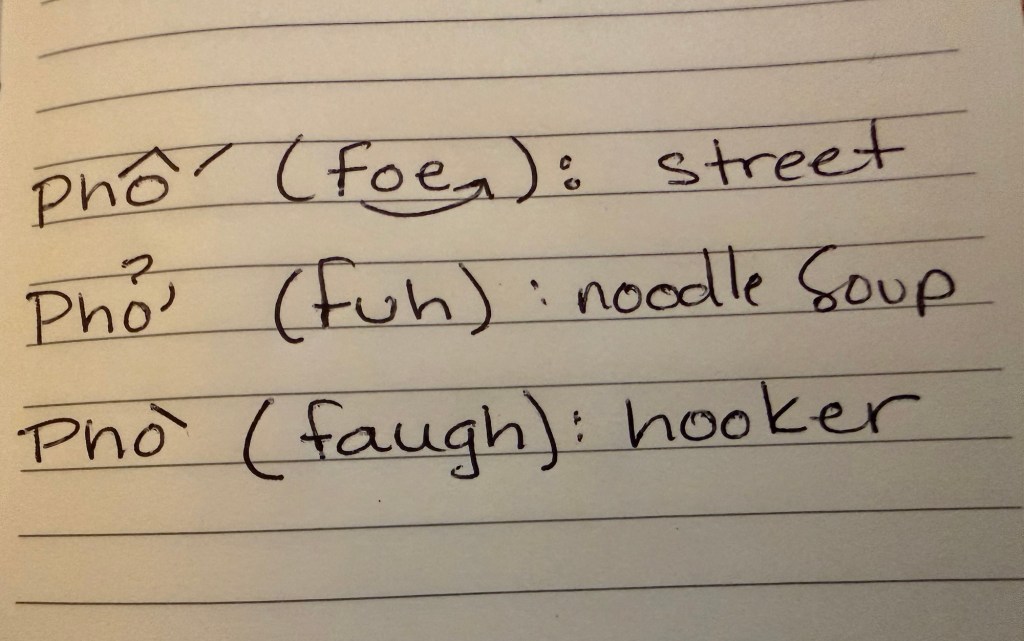
(So I’m going down to the Pho to get some Pho with my favorite Pho? Be careful!)
The word Ma, depending on its diacritic, can mean – mom, horse, cemetery or ghost. And so on.
Vietnamese music developed in parallel and reflects this dynamic sing-song language. In order to create the sounds that wobble and bend, and rise and fall, they need flexibility. Variations within a single note – bends, slides etc mimic the variations in a given vowel.
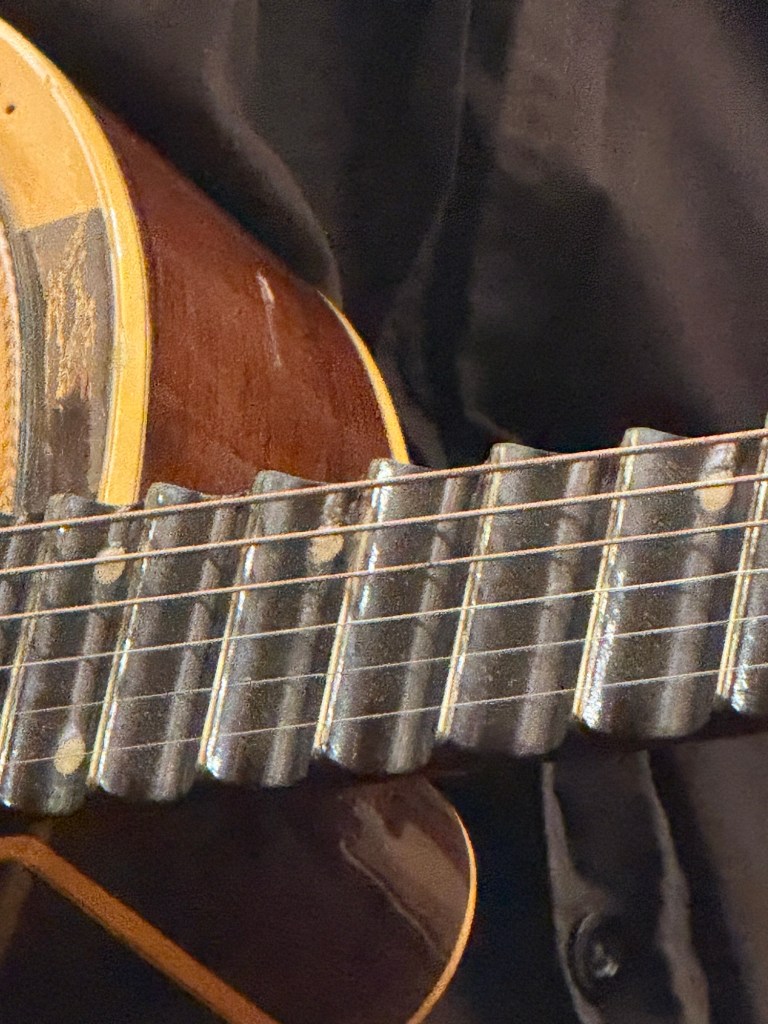
Their instrument design, for example the guitar fret board, also provides this flexibility
Interestingly their scale also has fewer notes in a scale, 5 versus 7 with no B or E. The scale of 5 notes is meant to reflect the elements (fire, water, earth, metal, and wood.)
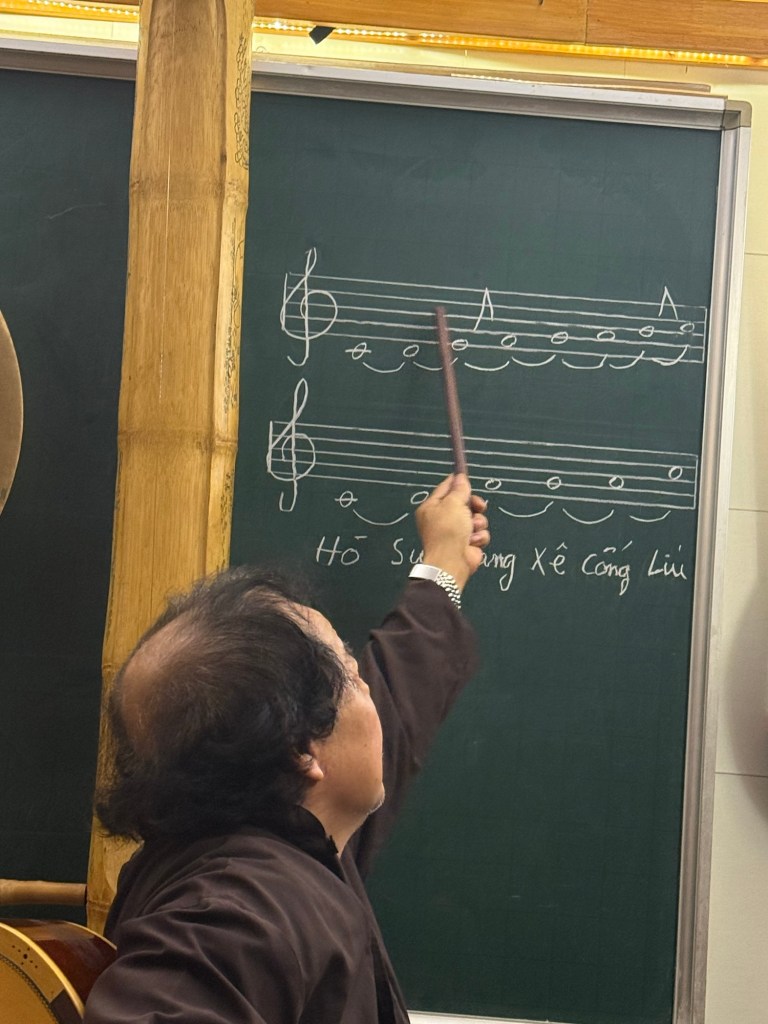
Meanwhile Mac and I are struggling to get the right sounds on hello and thank you
 Mac and Juju explore Southeast Asia
Uh oh. Now I am going to be self conscious every time I go out for Pho
LikeLike