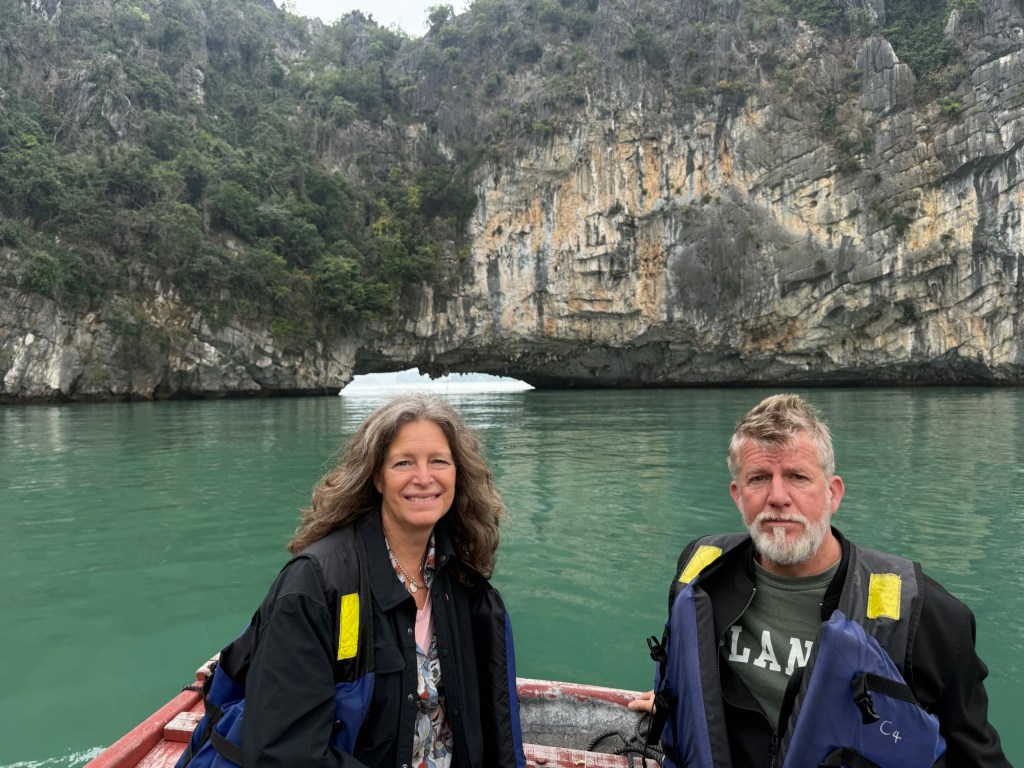
Short trip this morning at 6am to Vung Vieng, a floating fishing village of about 50 families. The families live in small huts on rafts, or aboard their boats. Some are connected, some separate.
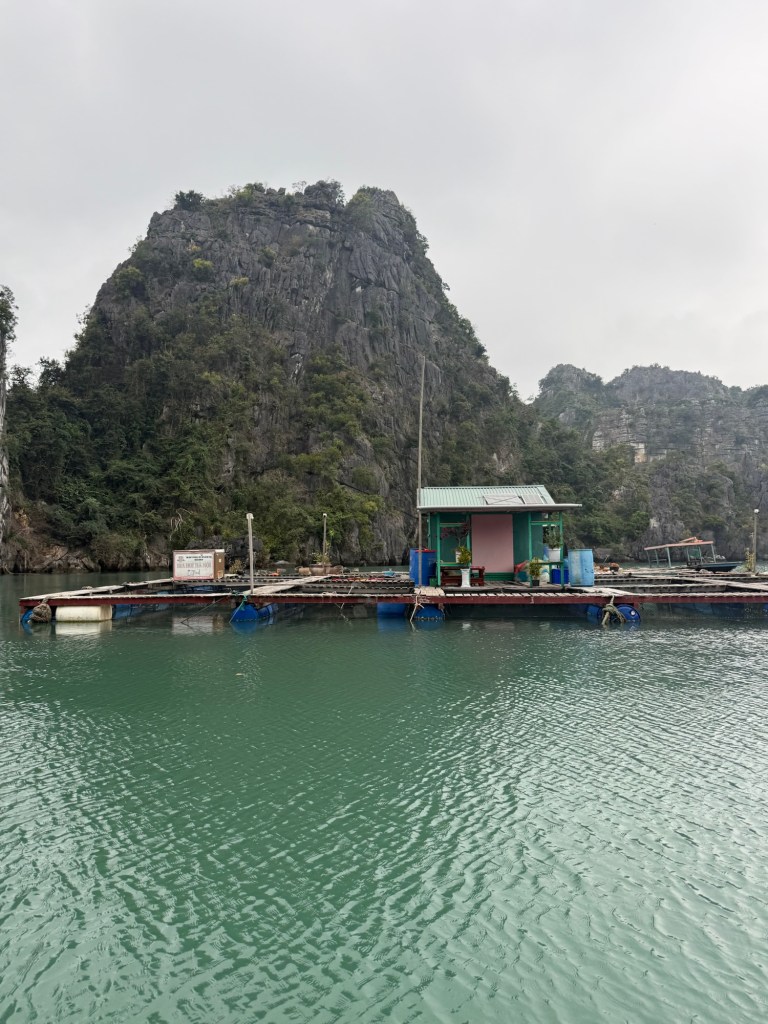
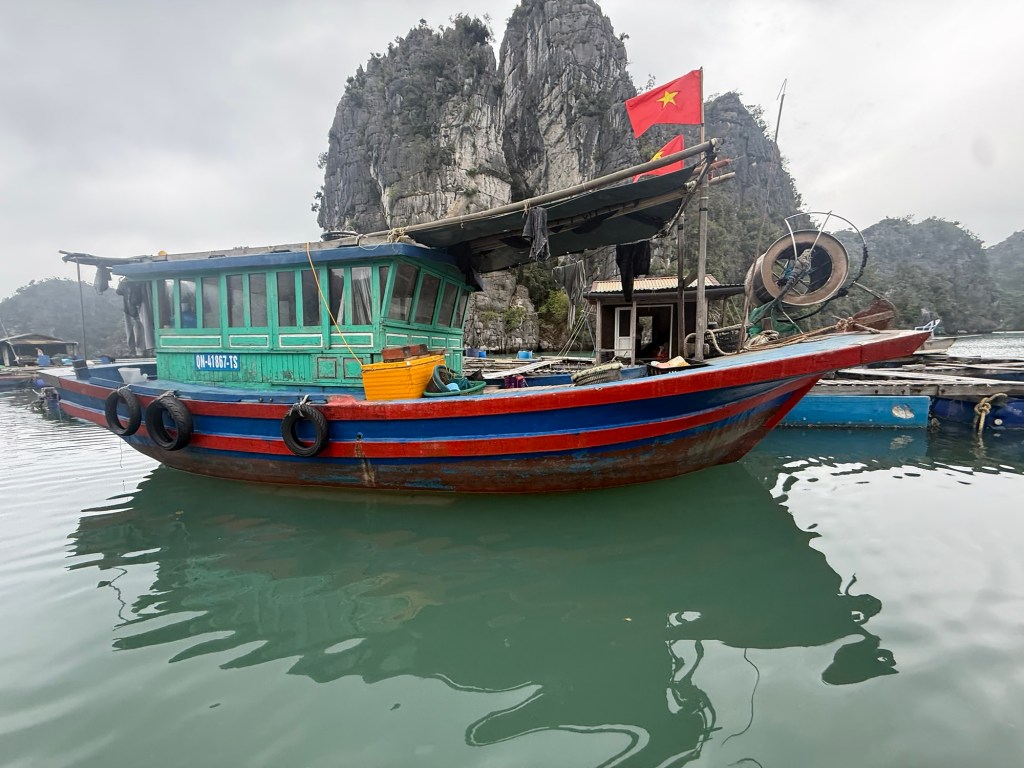
The community formed centuries ago in an area of closely clustered karsts that provide “Vung Vieng” or quiet and shelter from wind (and the occasional typhoon). The theory is that this temporary shelter evolved to permanence as the people started farming oysters, grouper, etc.
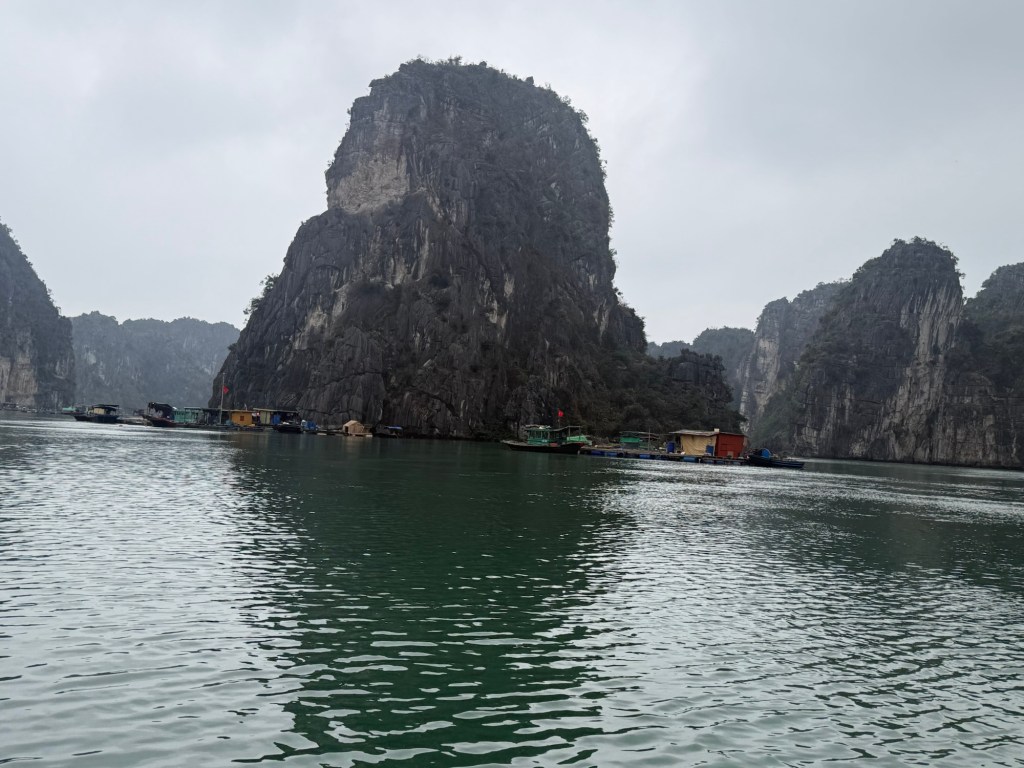
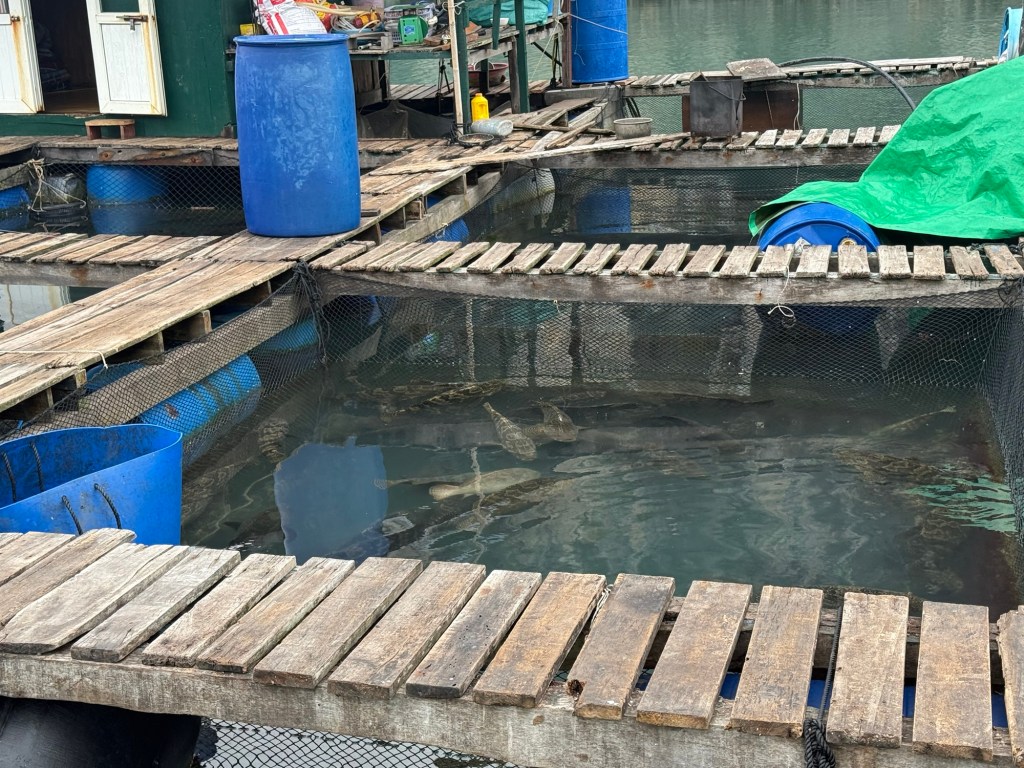
The village has had many changes since 2014 when it numbered 100 families and USAID and other global charitable organizations engaged. They were seeking to address both severe poverty, health issues and poor education. This, while also maintaining the history and traditions of Halong Bay fisherfolk.
Today, Vietnam pays for the children to be schooled and housed on the mainland from Monday to Friday. A tourist business, primarily boat tours and the sale of pearls has been established.
Leo told us that his tour company “IndoChine Junk” contributes significant fresh water from their onboard systems to the fisherfolk – one of the most expensive aspects of living on the ocean 3 hours from the city.
We were rowed into the village from a staging area outside the grotto – the only way in, which helps to limit some tourist volume. It was quiet and relatively empty as the children were away and many of the adults were out fishing.
Powered by “Ms. Guave”
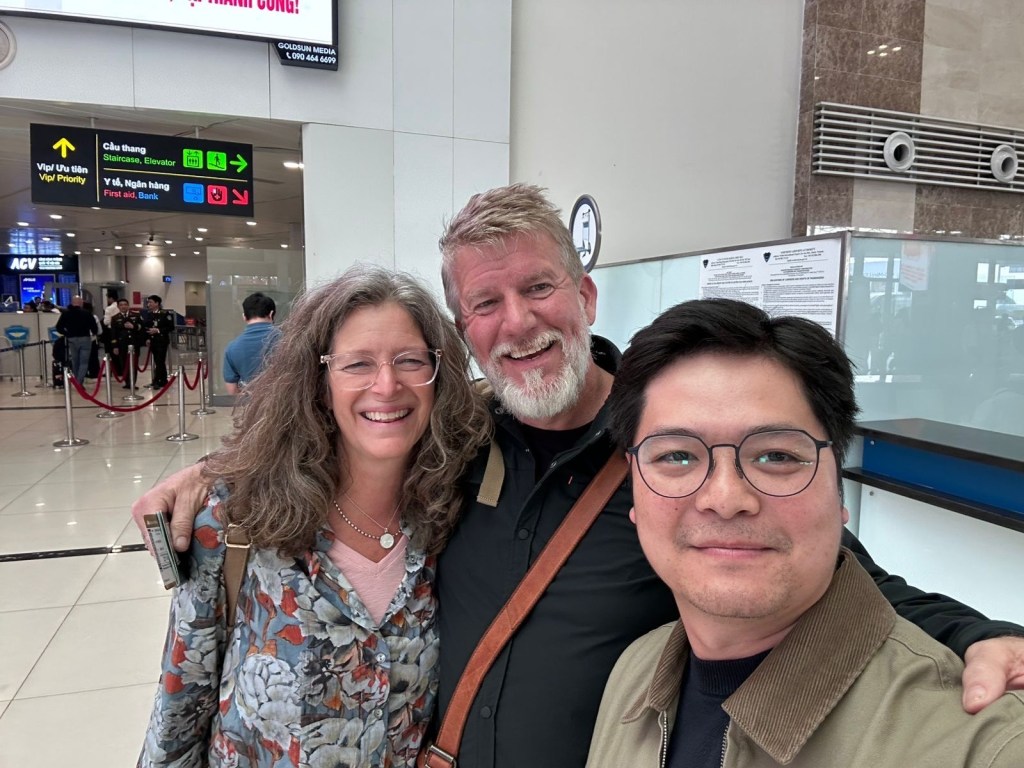
We were on the boat, packed up, back on the dock, and off to Hanoi airport by 10am. Somehow they managed to feed us twice before we left. Good to see Q and Angh again for a bit! Good bye friend 🥲
Not a lot today, so JuJu and I went back through our notes and grabbed some random anthropological notes that didn’t make the blog.
1.) in Vietnam a first introduction always starts with age. This allows due deference and also an understanding of what parts of their history impacts their language, perspectives, etc
2.) The Vietnamese daughter in law is responsible to produce pillows (1,5,20) for guests to sit on. The quality and craftsmanship is a huge social metric.
3.) Hanoi is 38% Buddhist, 50% atheist (though some of this is communist social positioning), ~1% Christian and ~1% Muslim. Outside the main population centers there are a huge number of hybrids or tribe and regional traditions – many Animist, Tao, nature-spirit or ancestor based.
4.) A “siesta” culture is very much evident. People stop for an hour or two early afternoon for a nap (or in the cities, a coffee).
5.) Shoes OFF even in a peasants home. Naked toes, and bare shoulders are low class. Shorts and logo t-shirts are not stylish.
6.) It’s the little things. But when we fly Juju loves being called “Dear Passenger”
We arrived Hue at 6:45 and met our guide Tien (sound goes up at end), and our driver Hien (sounds goes down at end). He’s energetic, young, solid English, and a Danang/Hue local. Checked in at the beautiful La Residence.
Quick bite and chat at the bar with a Scottish couple. They’re in NATO so we pretended to be Canadian for a bit. We eventually confessed and WTF’d our idiot in chief for a bit.
9 am start start tomorrow.
 Mac and Juju explore Southeast Asia