Unfortunately, we did not have an opportunity to meet many women along our leg in Cambodia. However, we did have a few meaningful exchanges.
Southeast Asia has pockets of wealth, but much of the population lives in extreme poverty. From what we could tell, there were several organizations in Cambodia that seek to empower individuals by providing job training.
One area is hospitality training. Our guide shared that there were at least 10 schools that provide training in hospitality specifically in Siem Reap alone. Students are provided training and internships that lead to full time positions. Tour guides are given intense training and need to pass both history and language tests. These jobs are an absolute life line to their families. As one can imagine, COVID was devastating to this area as tourism ground to a halt. Our guide in Cambodia was unemployed for 3 years.
I met Moly (rhymes with Holly) who was training at our hotel in Siem Reap, she was anxious to practice her English and tried to teach me how to say simple greeting in Khmer (my inability to hear foreign phonemes is astonishingly horrible.) Moly shared that she has aspirations of higher education but needs this job to support her family. She attends school in the morning and works at night. She rides her bike as transportation and is not home until 2 am!
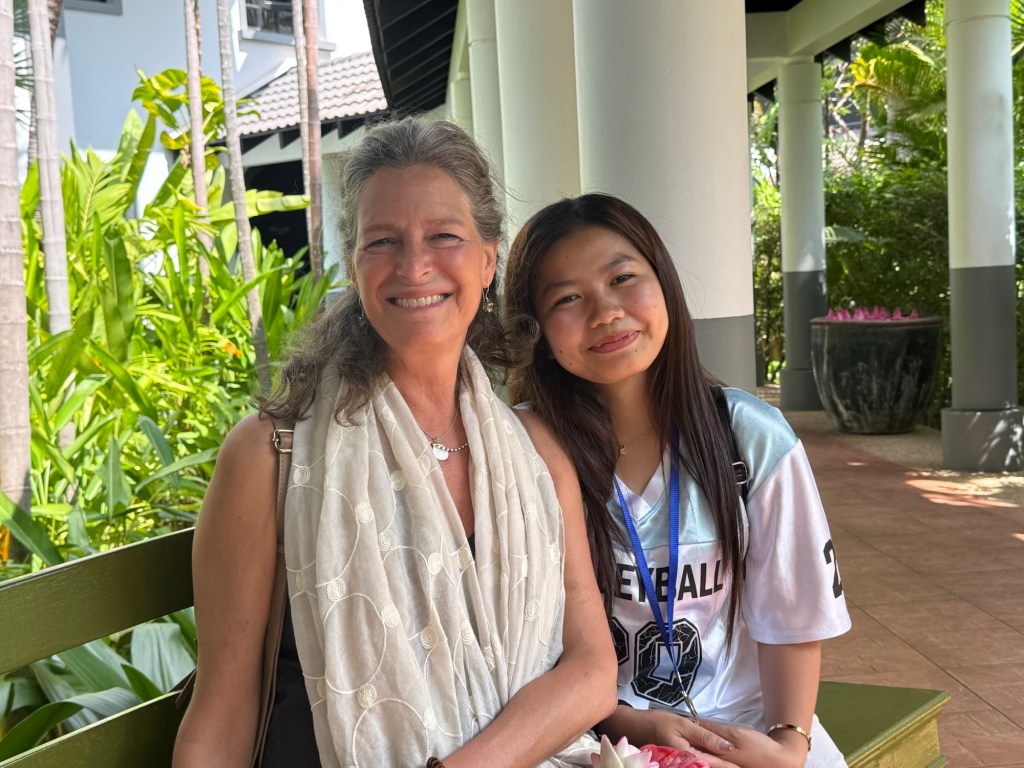
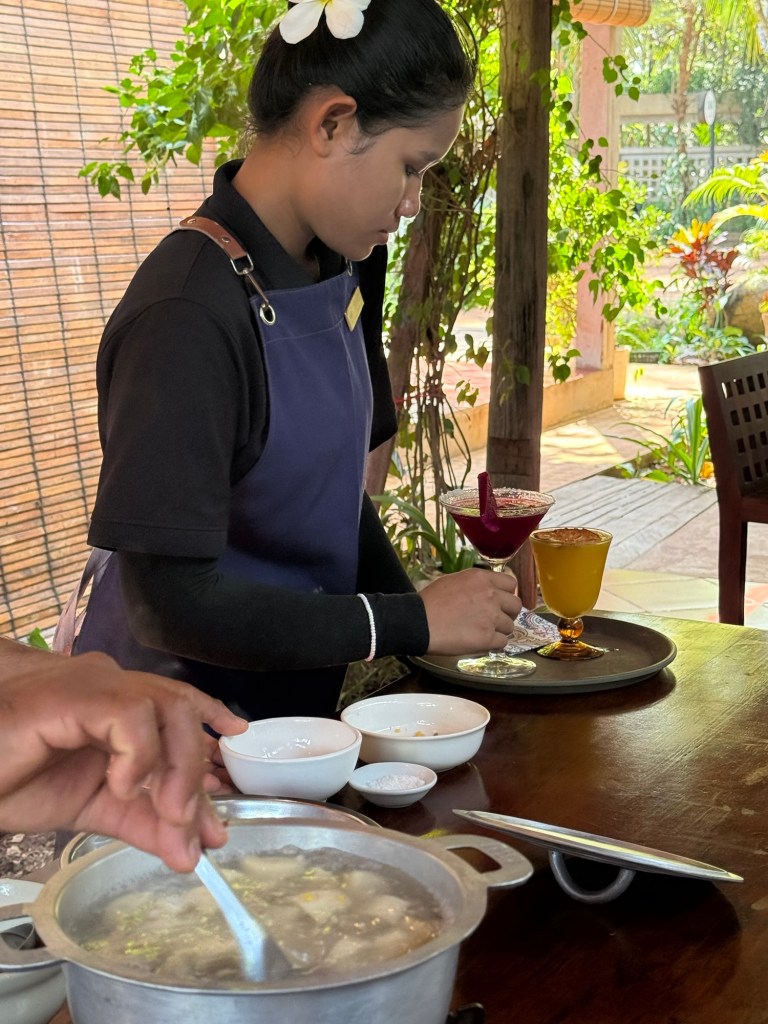
We took a tour of the local markets and a cooking class with Neang, the manager of Lum Orng, a beautiful restaurant, cooking school and inn. While there we encountered a young women, Tia, who was an intern. She was highly professional and self-assured. It was clear that she was an apprentice showing a lot of respect to a master. Mr. Orng shared that his team is committed to bettering their community and consistently takes on new interns for training.
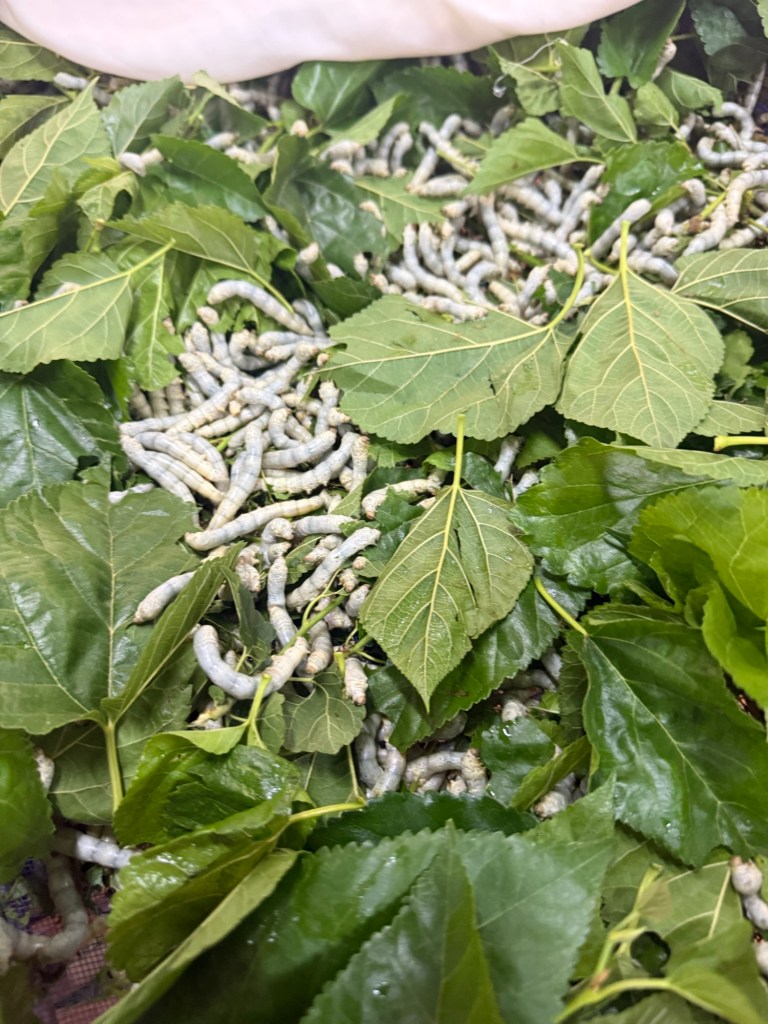
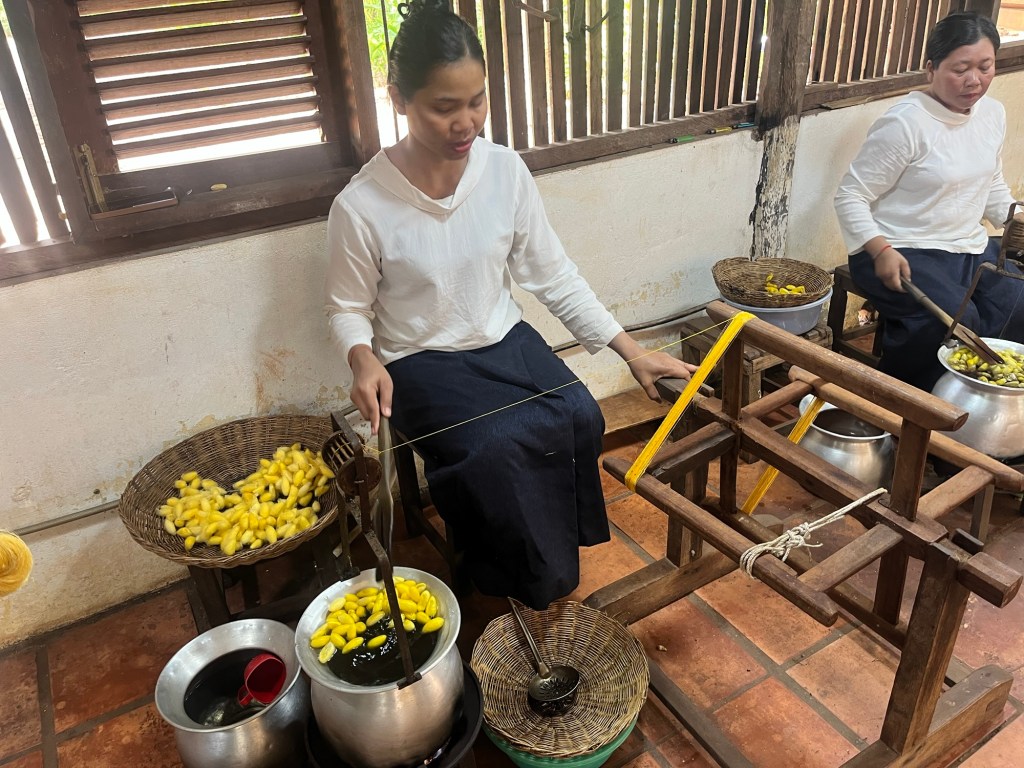
Also deeply committed to the community was Ms. Pheach, the owner and operator of a silk farm. She was the daughter of an Uruguayan diplomat – born in Cambodia but educated in France. She was an expat during the devastations of Pol Pot, but has a deep love of Cambodia and spent over an hour with us to discuss its history.
There were times that she held back tears while expressing the impact of years of war. She returned to Cambodia as an adult to work at refugee camps. But she wanted to do more, so she and her husband financed and started a silk farm.
Her goal with this farm is to employ the local women with meaningful work while keeping a long tradition of silk making. The garments they create are intricate with complex hand written patterns. Her work has been featured in many museums and she does custom work for wealthy benefactors.
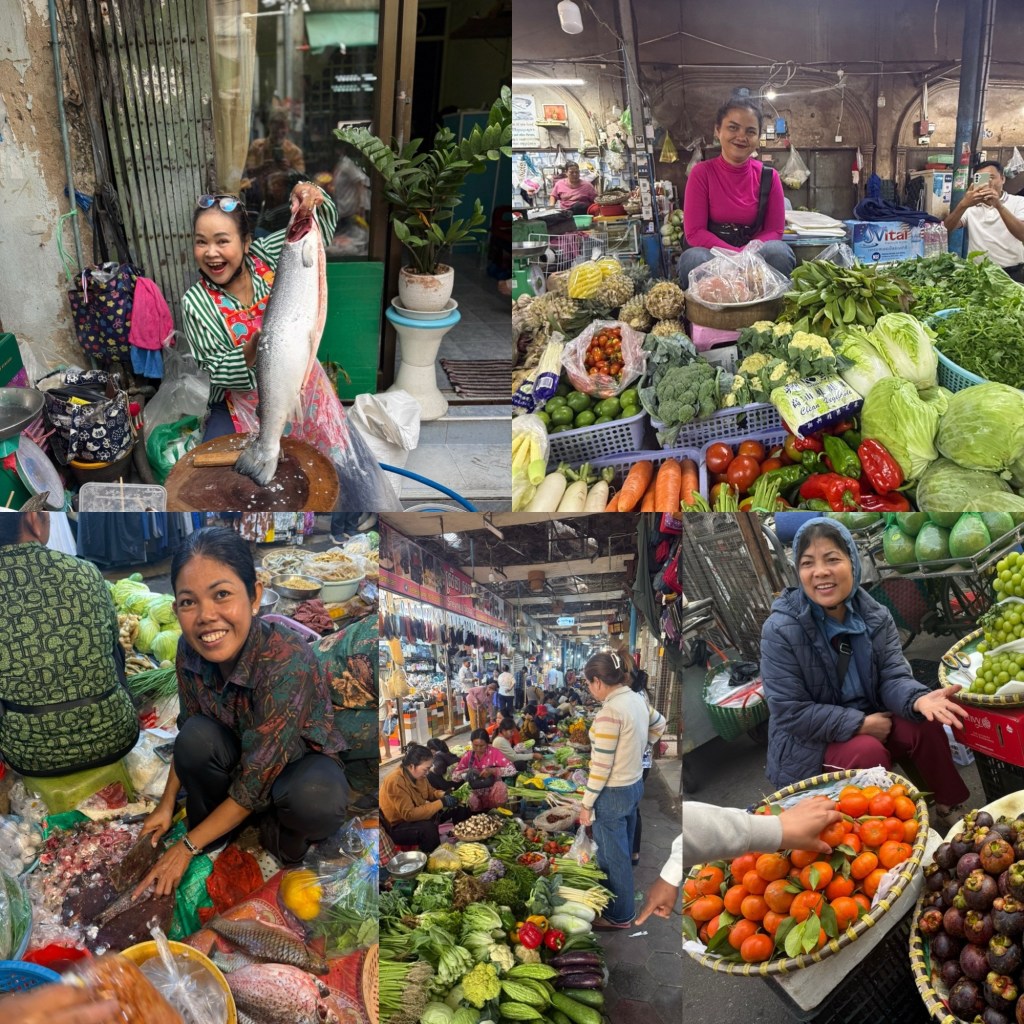
In the markets we encountered on our trip, the women are the primary business operators. The women organize transportation, set up shop early in the morning and sell what their community farms have produced.
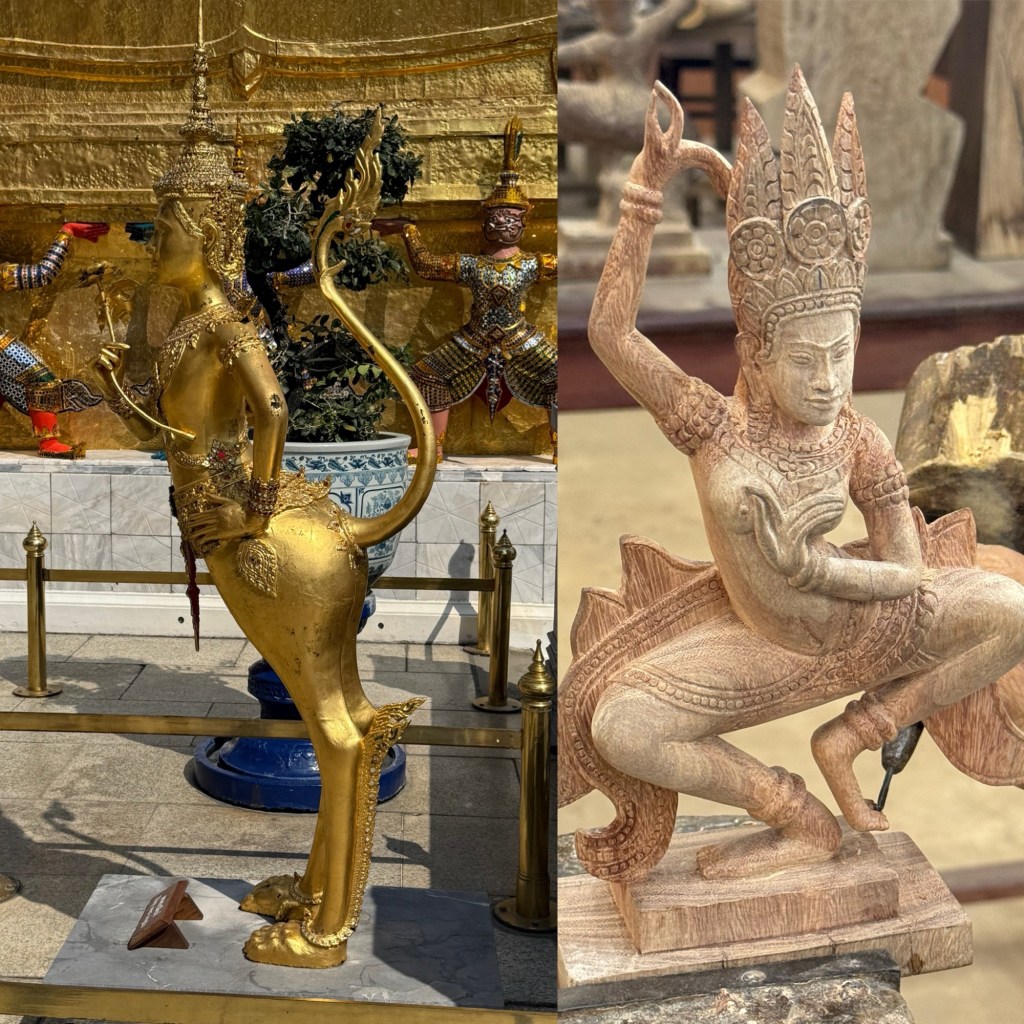
Mac mentioned the Apsara earlier and they’re dominant female figures in both Cambodia and Thailand. Apsara are part of the Hindu creation story, dancers who mimic the churning of primordial waters.
The Cambodian version has both the historic Apsara in their temples, and current-day Apsara – trained dancers who serve in their religious ceremonies.
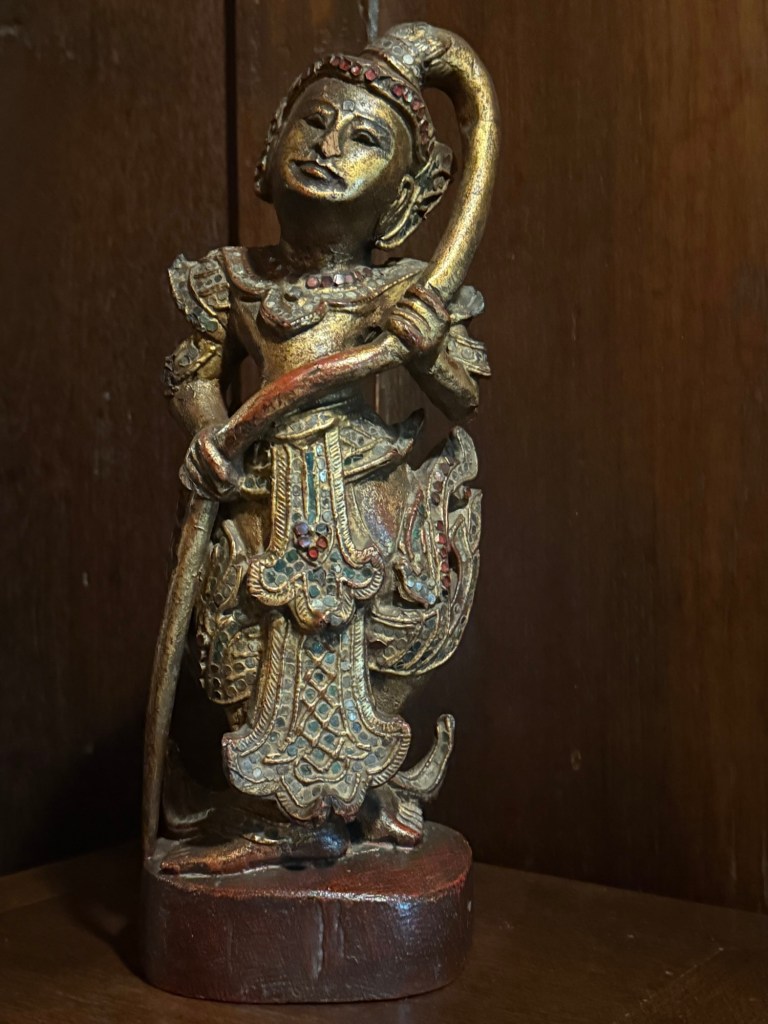
The Thai Apsara are heavenly entities, Angels and Guardians, with both human and animal characteristics.
In general the Thai version of Hindu-Buddhism’s is a much more feminine spiritual and earthly practice. Animist nature spirits (usually female) are a big part. The wives of Vishnu and role of the Thai Queen are also pronounced. Another character we mentioned, Phra Mae Thoranee, the Thai earth mother, is omnipresent. Apparently, Buddah was tempted by demons while meditating under a tree. Phra Mae Thoranee wrung water from her hair creating a flood that washed the tempters away.
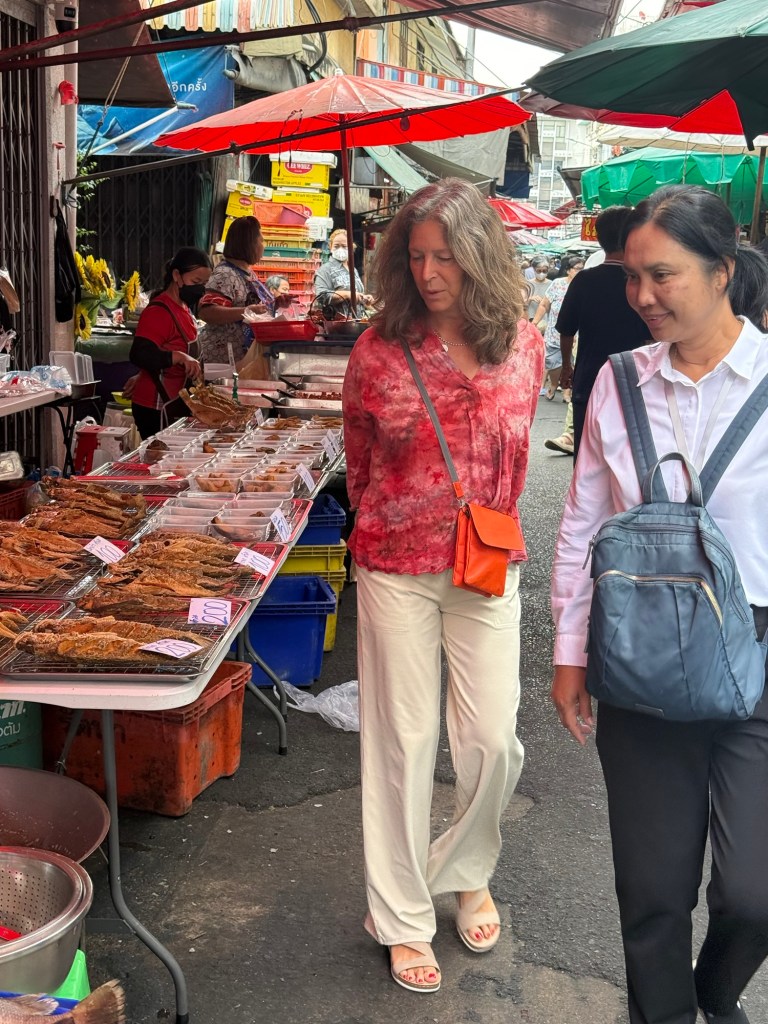
Unlike in Vietnam and Cambodia, our guides in Thailand were both women – highly educated, self possessed ladies in full command of the tour. It took our guides a bit to understand we loved street food and did NOT want to restaurant. Once they figured us out the experience was awesome!
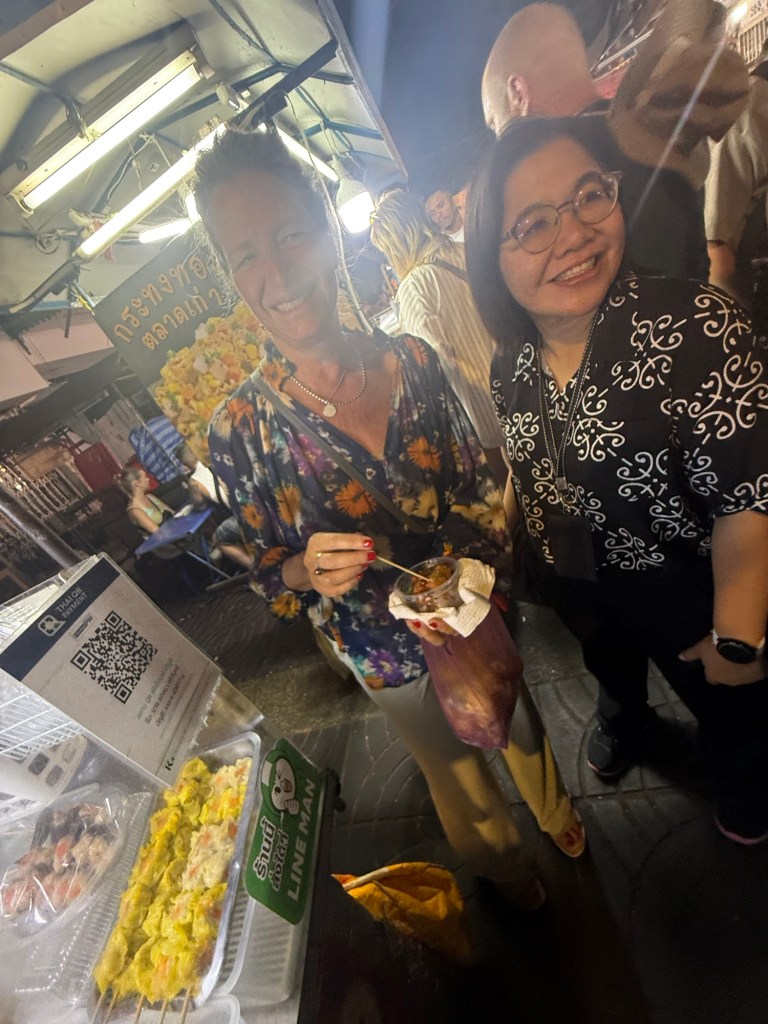
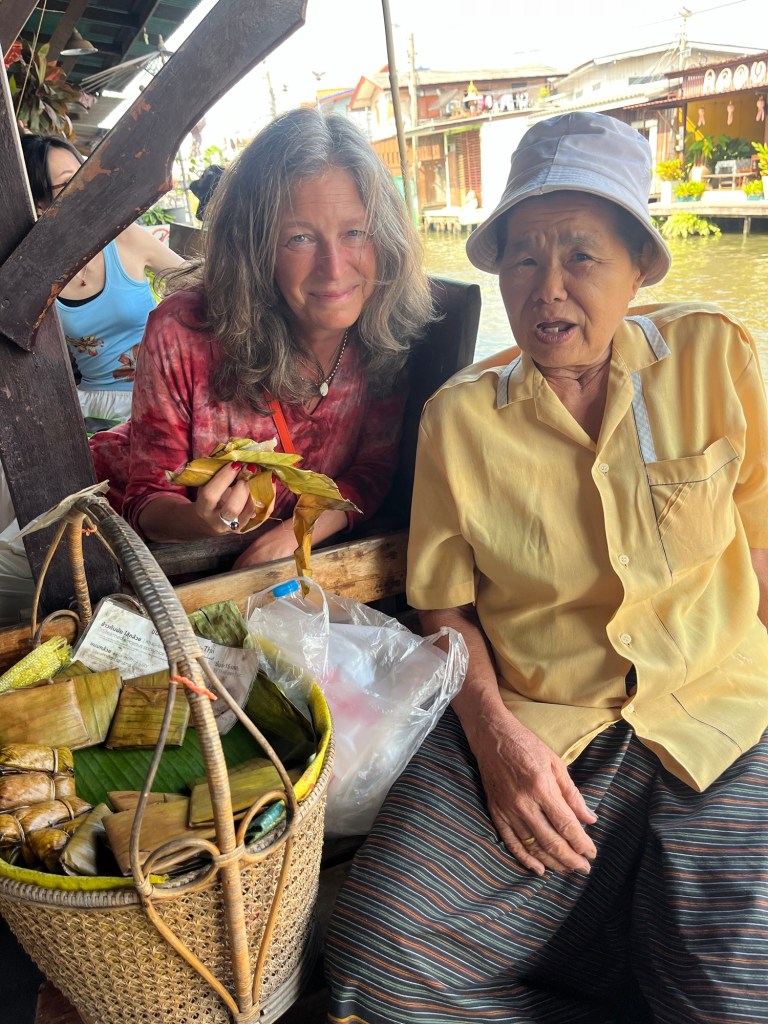
While in a small floating market, I (Juju) met an older woman selling sticky rice in banana leaves. With the help of our guide, Siri, she shared that she makes her sticky rice the old fashioned way and takes a great deal of time and care. The younger generation doesn’t have the patience to carry on this tradition. She said she comes to the market daily to see her friends and meet people. While we chatted she asked me to try her sticky rice so she could watch my expression. They were quite good…I was so relieved I didn’t have to fake it!
 Mac and Juju explore Southeast Asia