Hoi An Foodies and Walking the City

Hoi An is a coastal city that had been the largest port in central VN until the late 1800’s. This spanned the era of the Spice Road and earlier colonization of Hong Kong, Australia etc . Sailors from Europe and all of Asia developed a thriving multicultural trade city.

Over time the Hoia River (river of memories) silted in. Ship traffic became difficult and a new peninsula formed on the north side of the river. The major trade shifted north to Danang and a new sister-city formed on the peninsula.

Today Hoi An is a thriving tourist city. The new city on the new peninsula bustles with restaurants, tailor shops, and markets. Old Town is a UNESCO site with the Japanese, Chinese and original Vietnamese enclaves protected, and a history dating back to the early 1500’s.

Our first event today is a Hoi An culinary immersion experience. Ms. Vy is an entrepreneur with 14 restaurants and ownership of a dedicated supply chain of farmers, fishing boats, and fresh markets. She also offers a 1/2 day cooking and cuisine class. That’s us!

We started with a tour of the Hoi An market led by our host-chef Mr. Bon
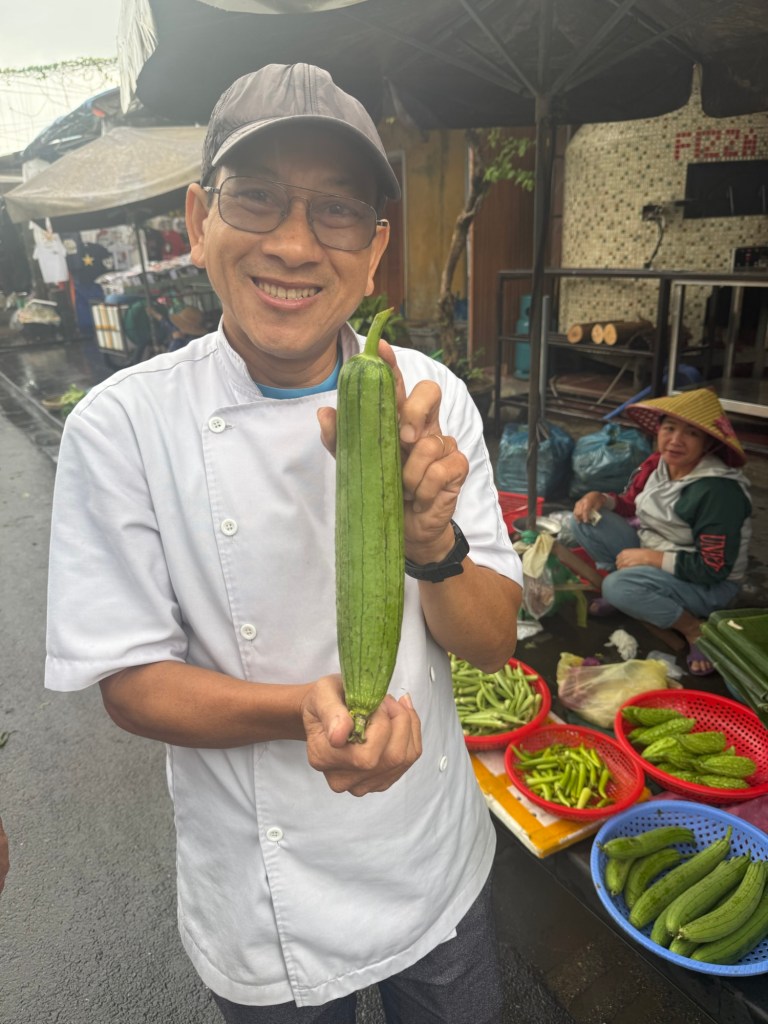
Mr. Bon

The market opens at 5 am as fishing boats offload the nights catch and farmers cart in vegetables from the surrounding farms. Housewives typically shop from 5AM to 7 to get the freshest, best options – a point of pride. The market closes at eleven but wholesalers, grocers and restaurants buy up the bulk at wholesale prices starting around 9.
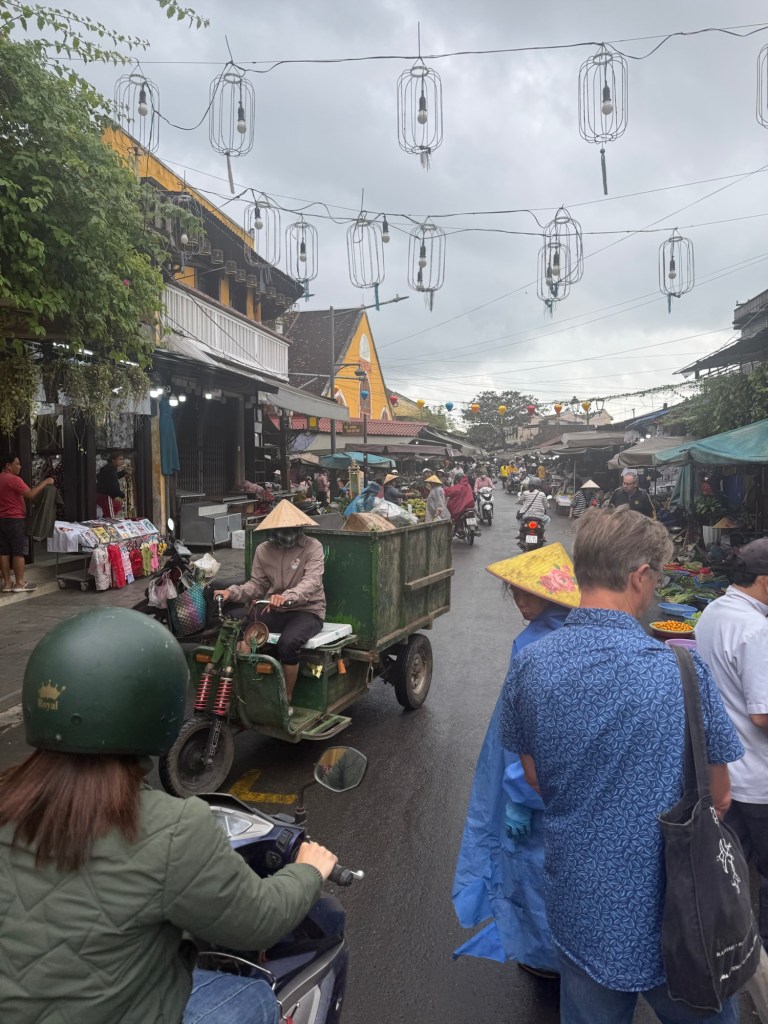
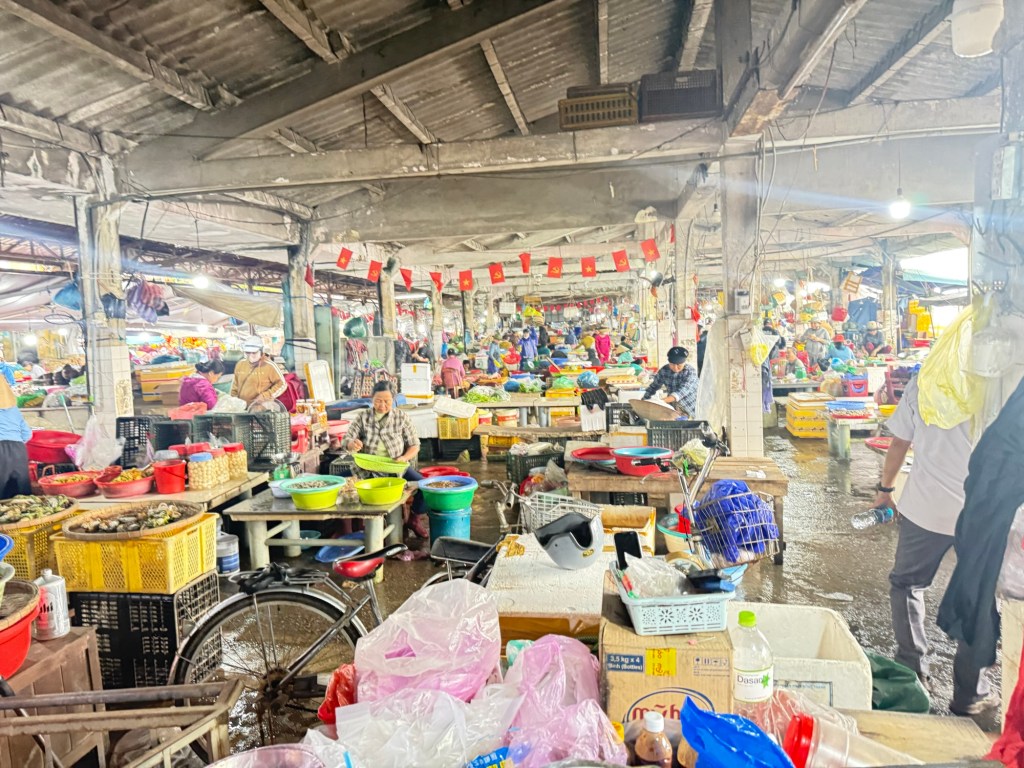
Hoi An Market – 6:30 AM

Covered Market

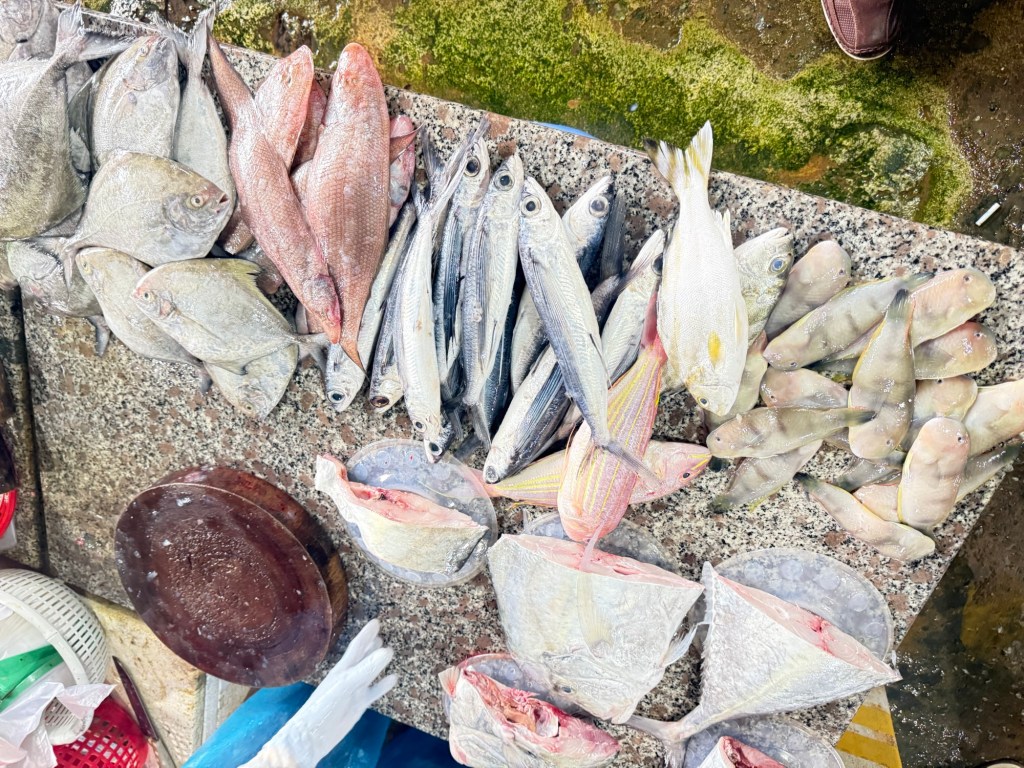
Freshness is at such a premium that what is not sold, is thrown away. I’ll let the pictures tell the tale.
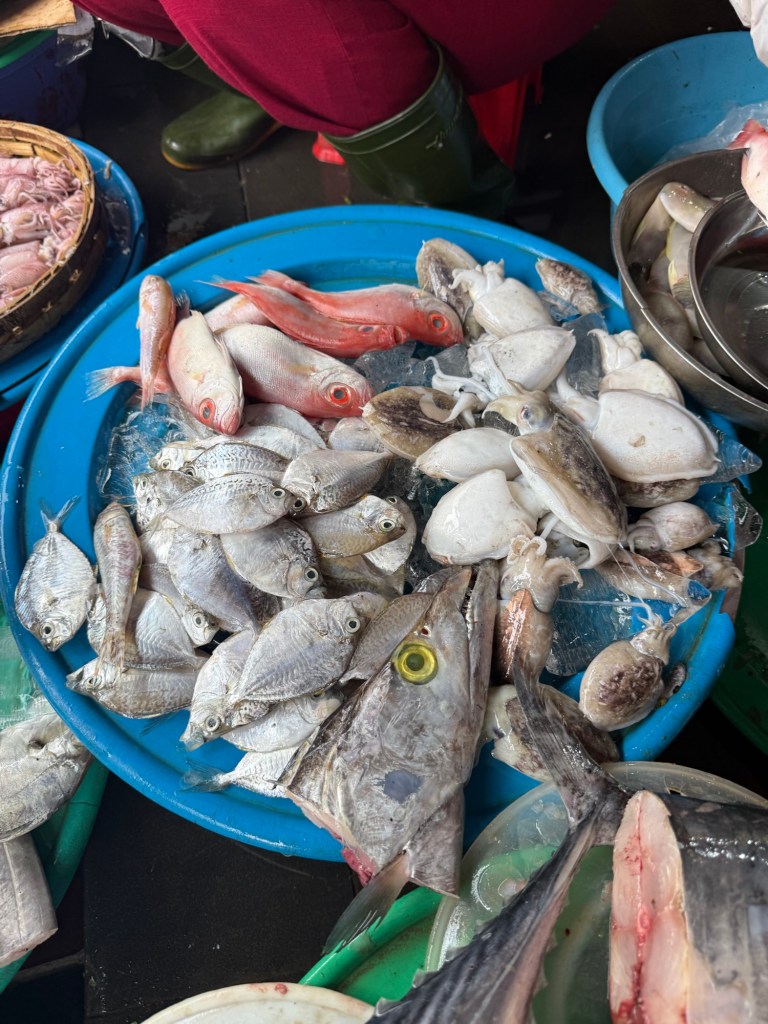
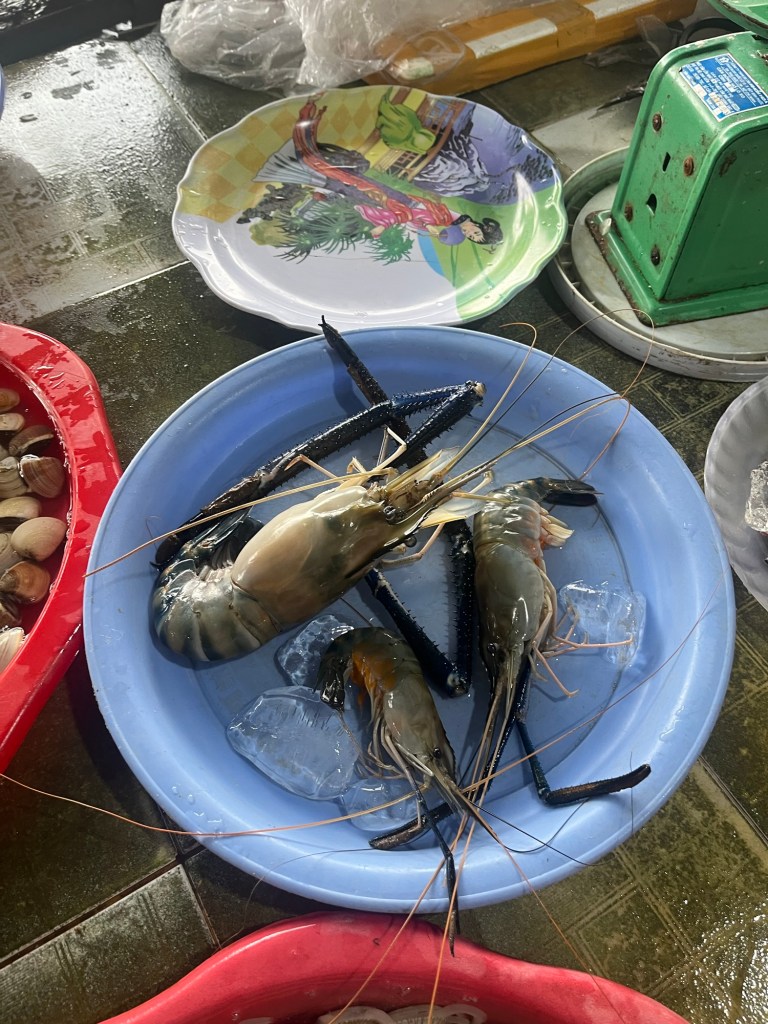
Fresh!
Still twitching
Wow
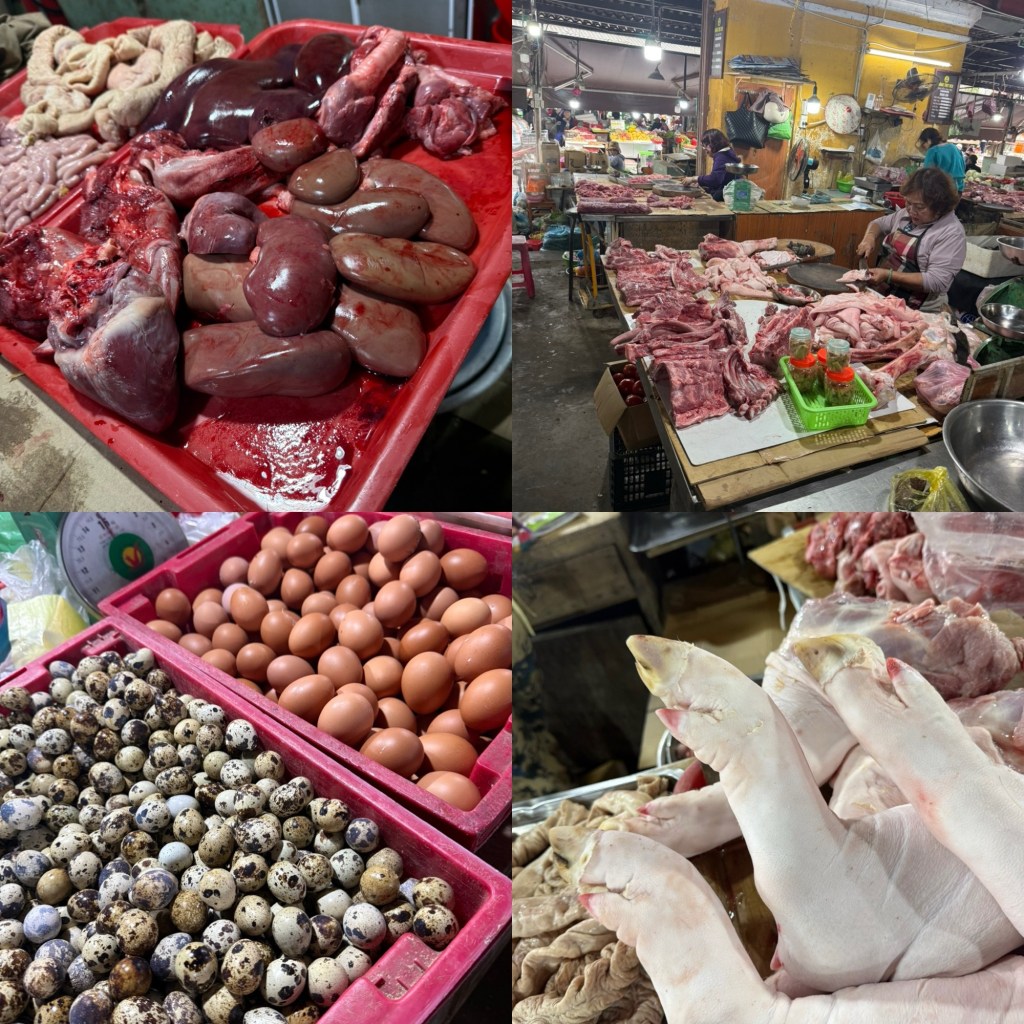
Meat and Eggs

Next we headed off to Ms. Vy’s market. Four “experience-stations” were set up for us. At the first station we watched Guau Lo noodles being formed and steamed. A very specific water from the public Ba Li well is blended with gum tree ash resulting in a bright yellow noodle. Our lesson was in cutting these to shape before steaming. Humbled!
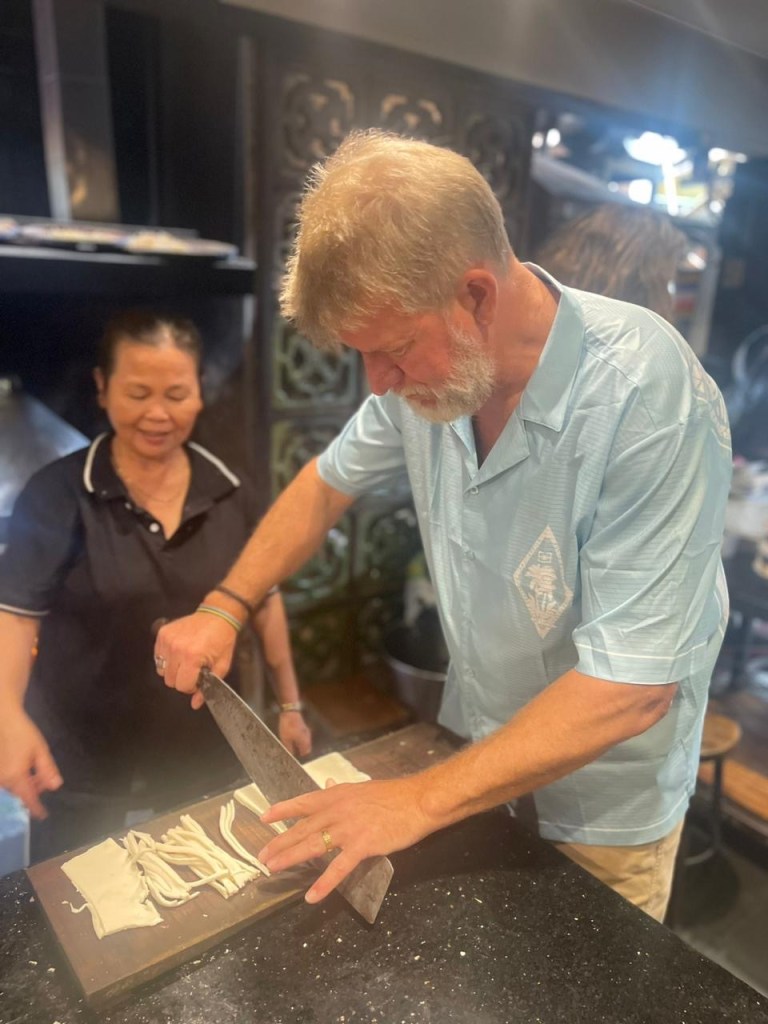
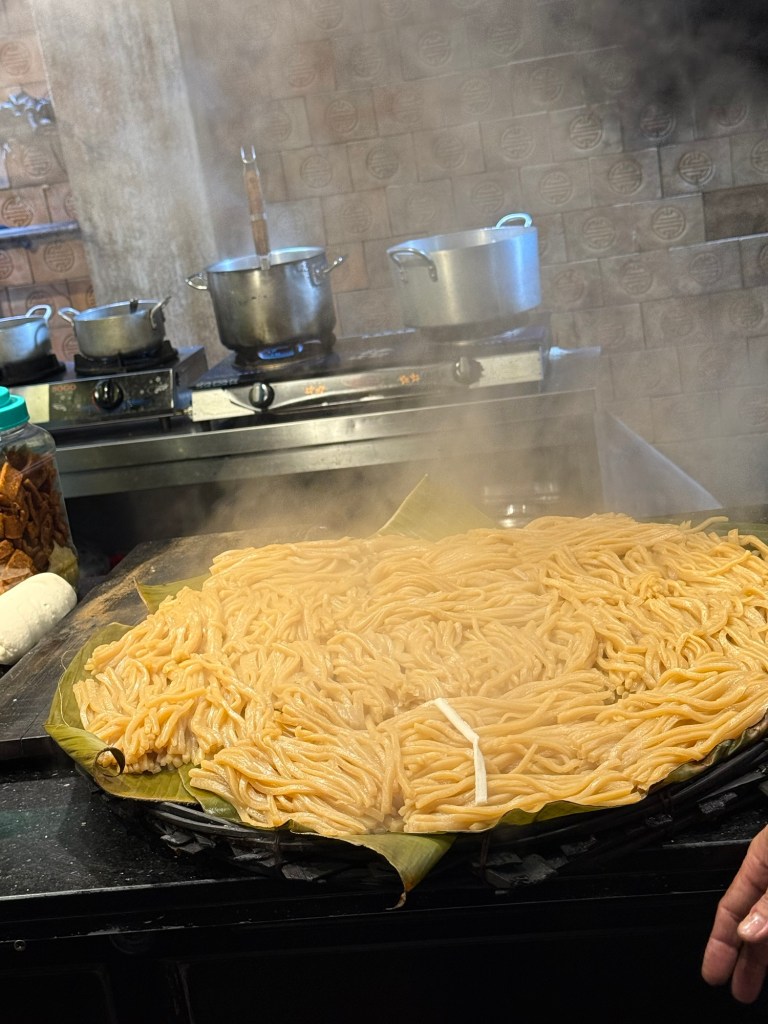
Guau Lo
She’s getting it…

Yellow Steamer

Our second stop was the White Rose Dumpling station. A practiced chef can form hundreds of these in an hour. Beautiful right? We tried our hand at this as well. Humbled again.
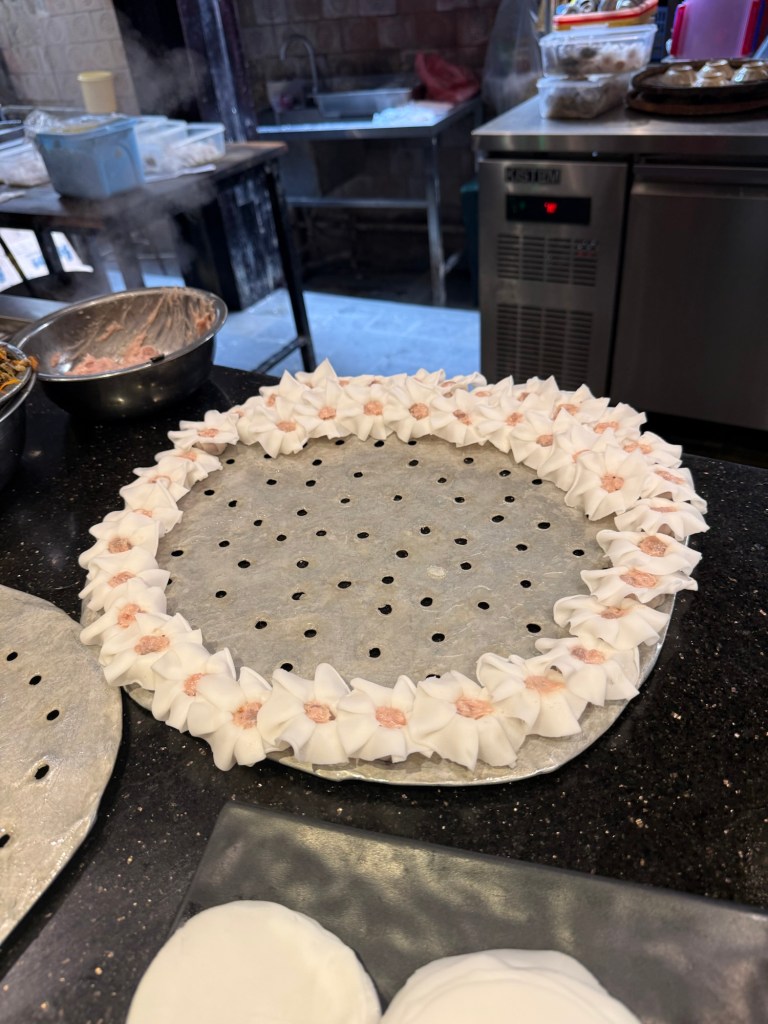
White Rose Dumpling

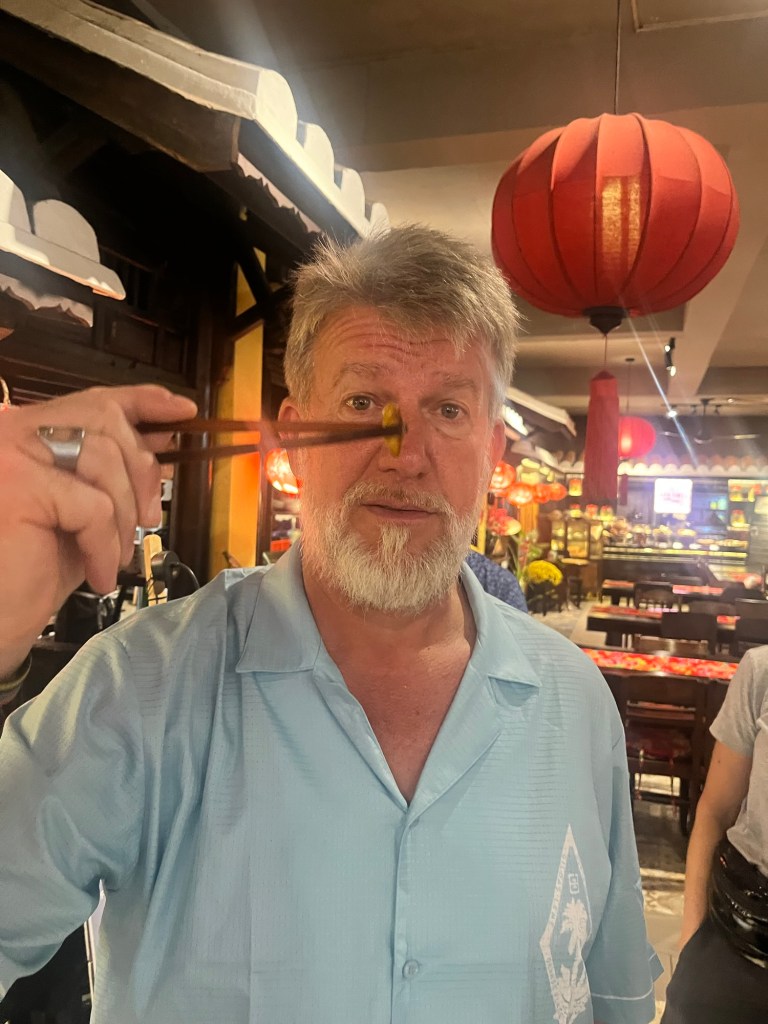
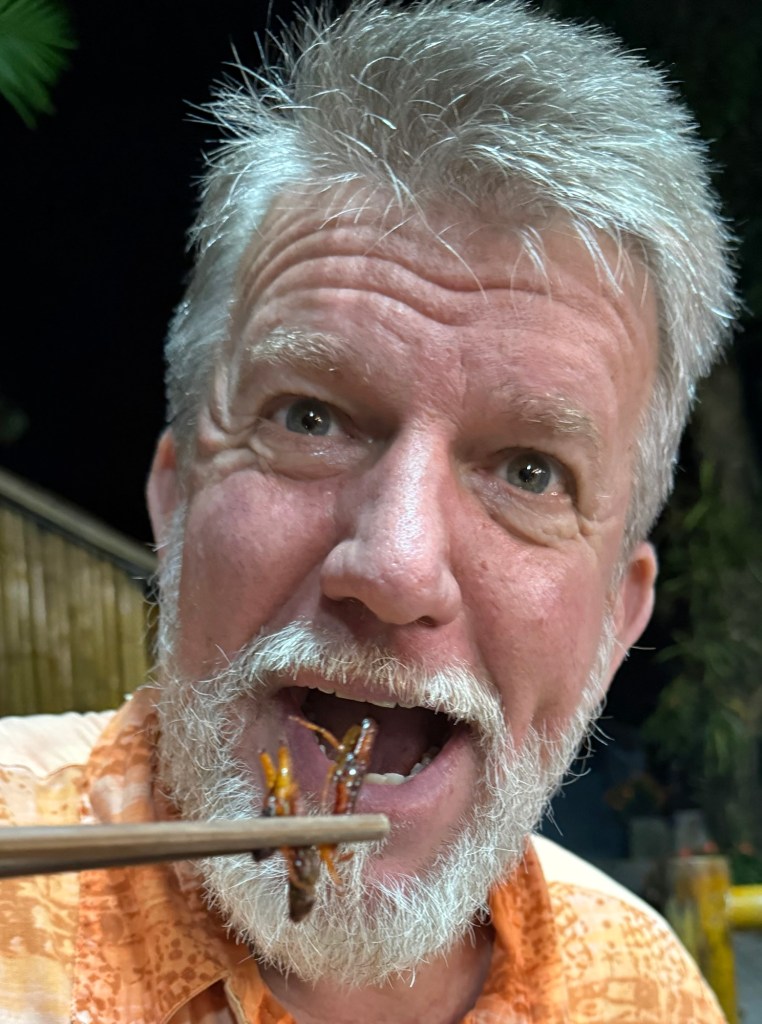
The third station consisted of a variety of challenging dishes aimed at shocking and testing westerners. It was called “Weird and Wonderful” and here JuJu and I were finally at the front of the pack. As our lame western classmates looked on we tried frog legs, snails (two varieties), and balut (a hard boiled egg with a developed duck embryo inside). I added silk worms (blech), but we both passed on blood sausage and offal. Juju wants to go back for that.
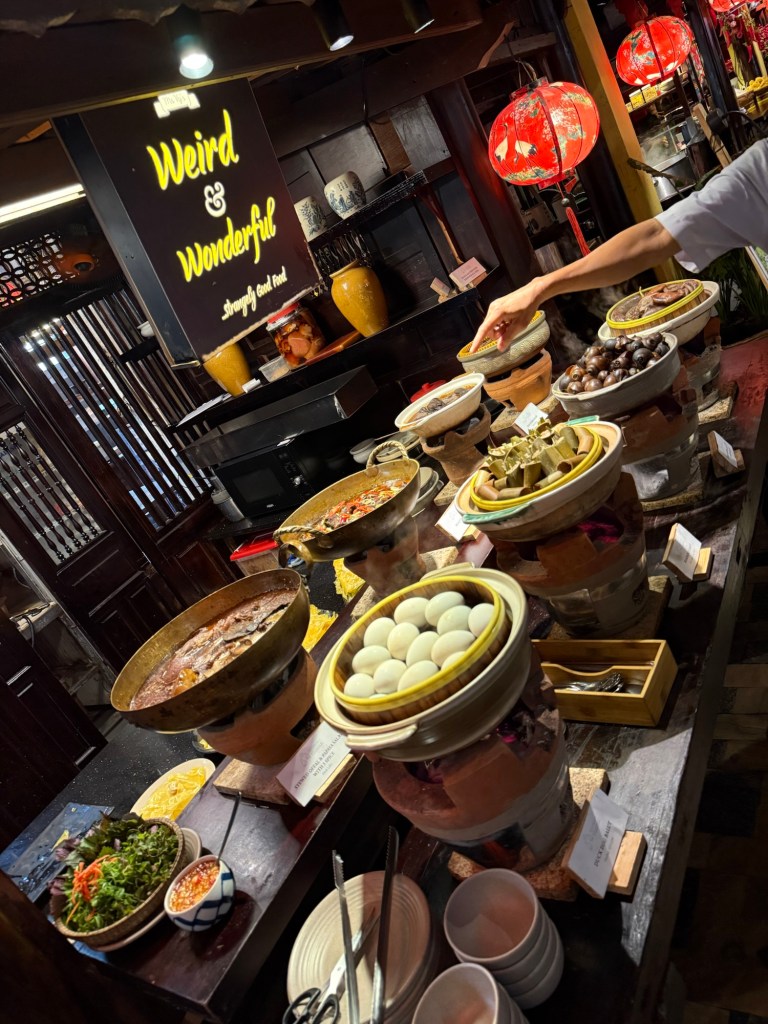
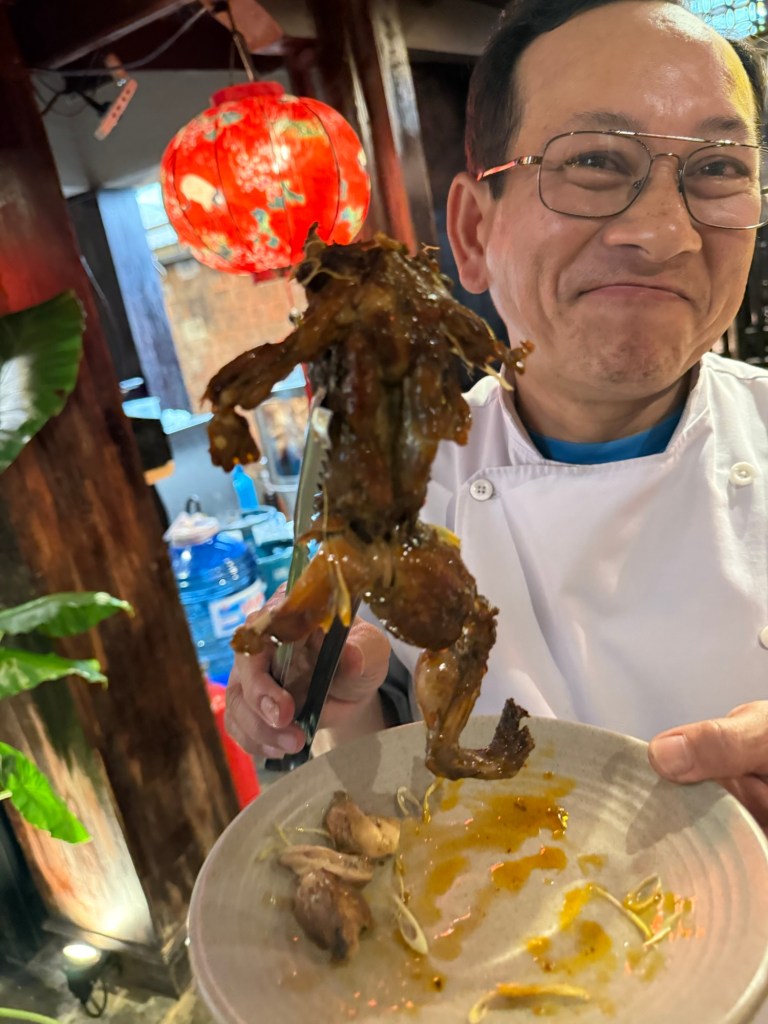
Weird and Wonderful
Ribbit
Silk Worm

At the fourth, we tried to use an automated noodle press to produce the omnipresent white rice noodle (think Pho again). Results were mixed.

Making Noodles

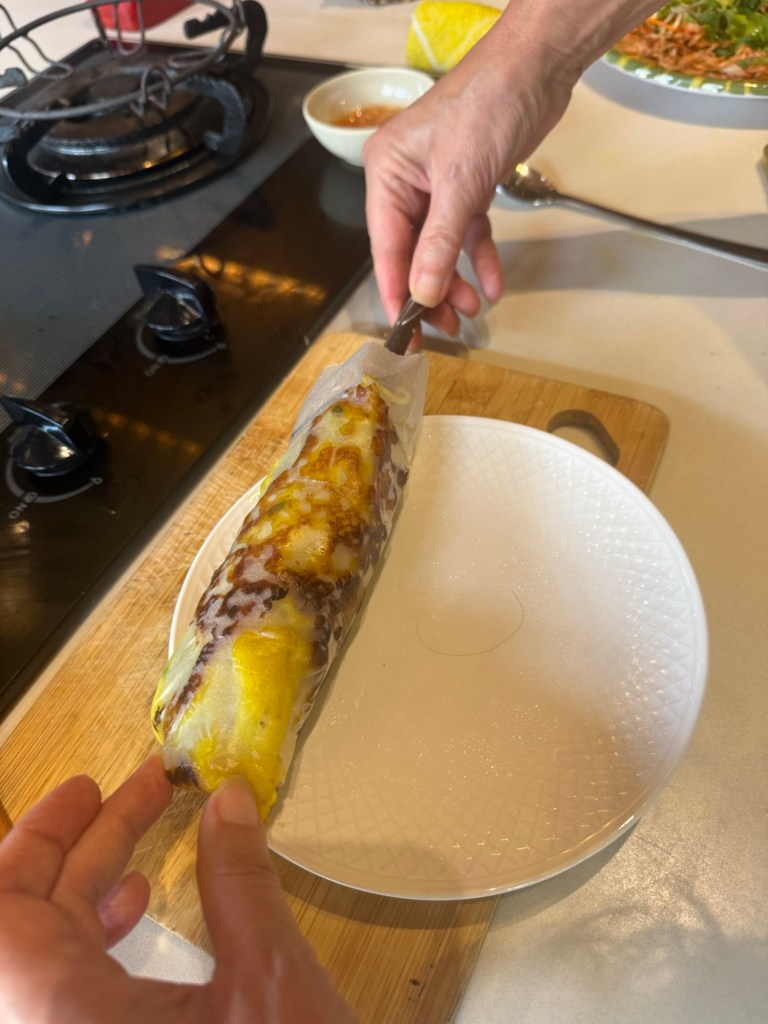
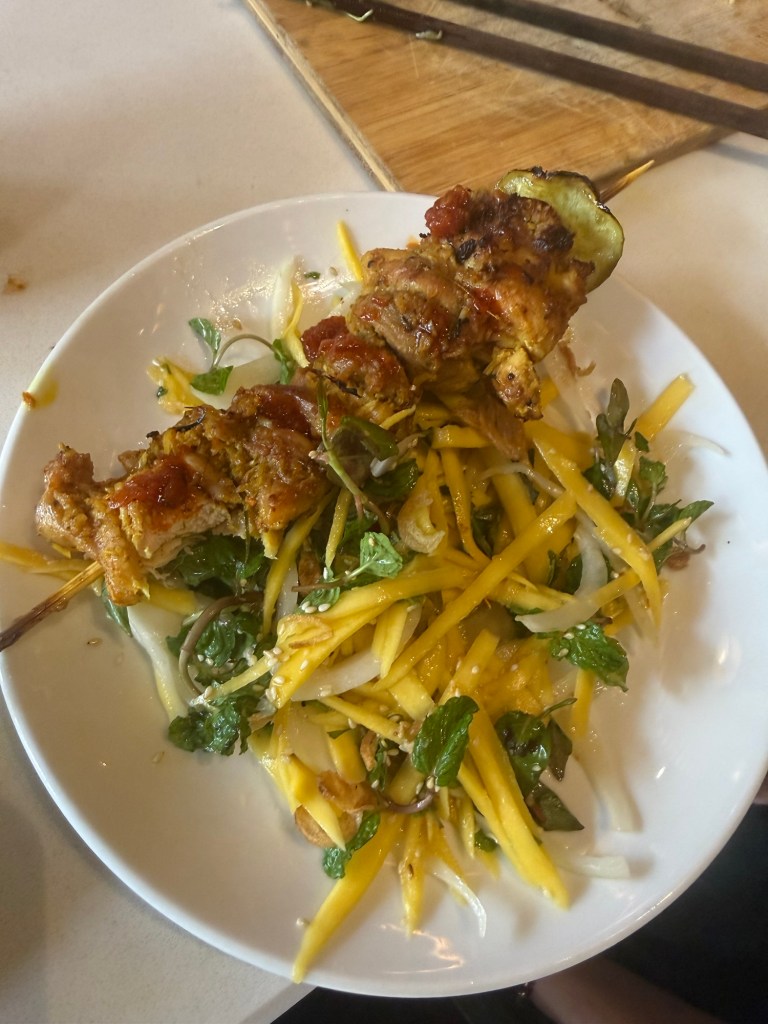
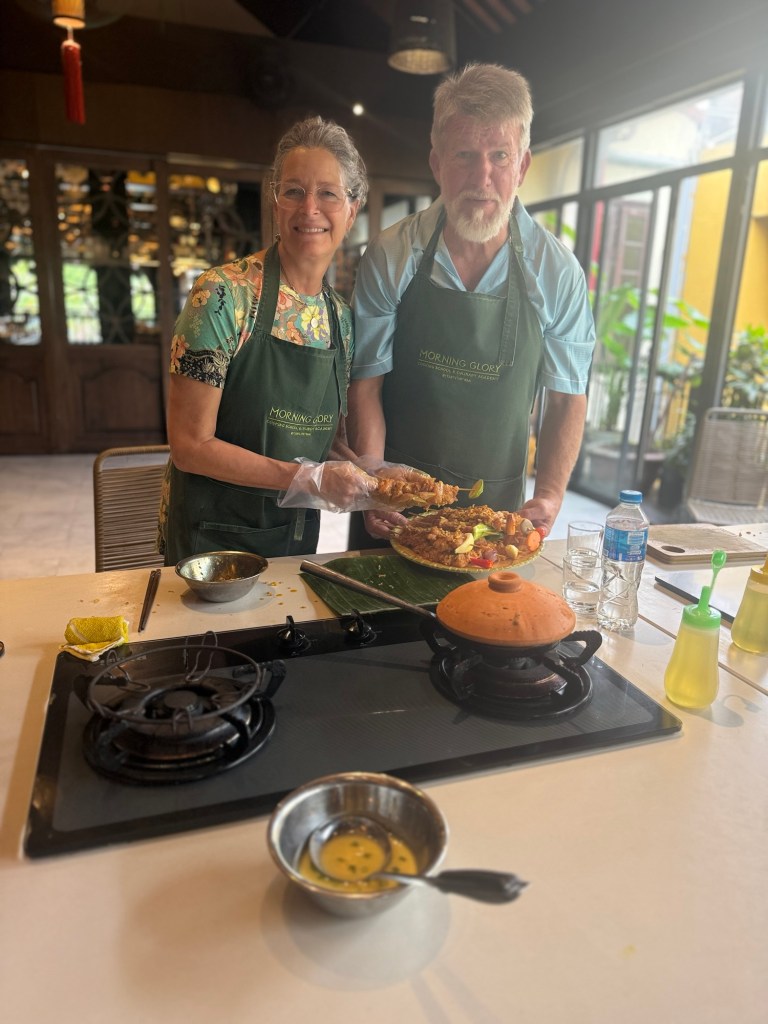
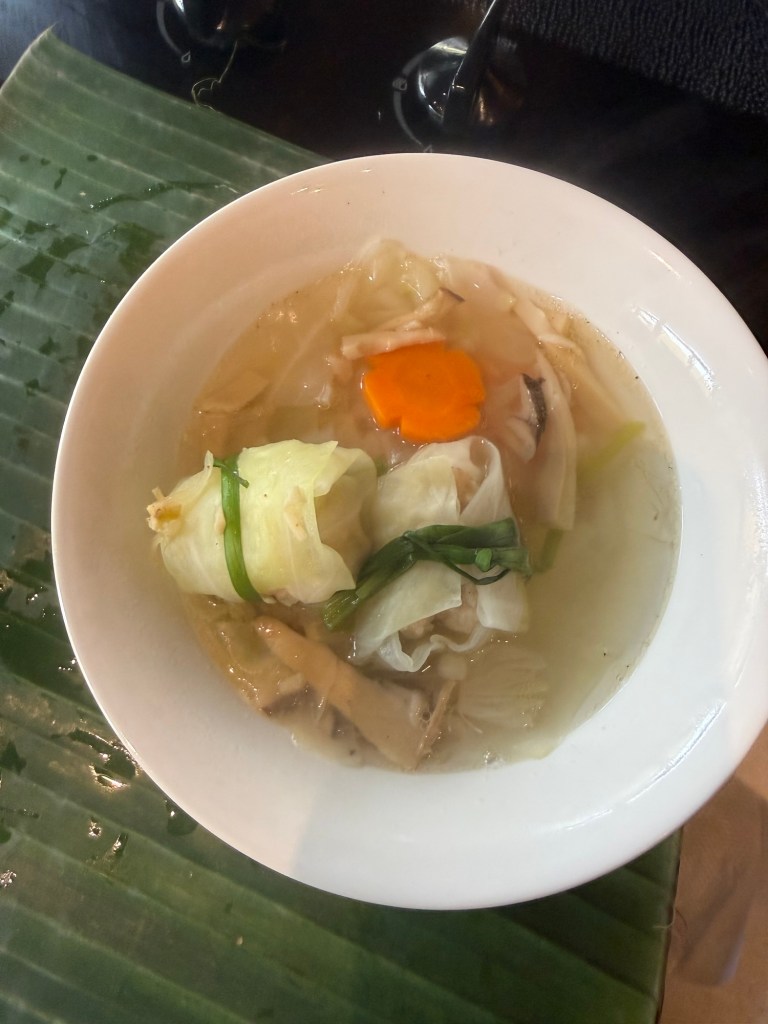
And now for our actual cooking class. Our host LuLu took us through four dishes – a cabbage parcel soup, a crispy Vietnamese pancake, Viet marinated chicken skewers, and a green papaya salad.
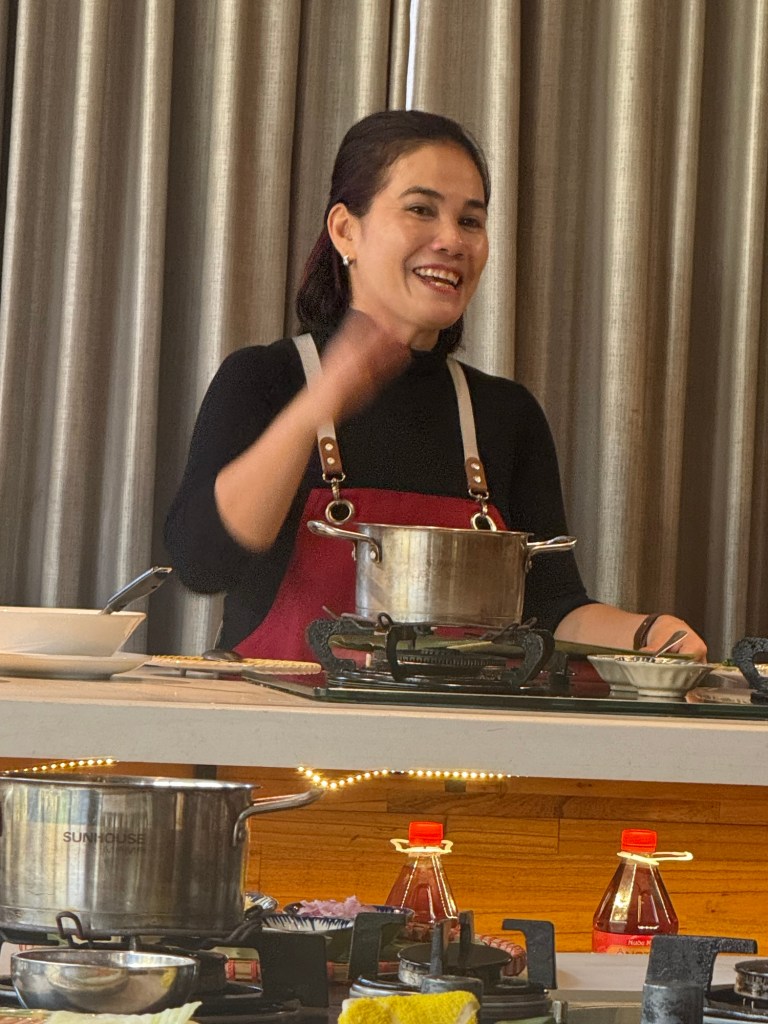
Chef LuLu

Cabbage Parcel Soup

Crispy Vietnamese Pancake

Papaya Salad and Viet Pork Skewer
Ready to Eat

It was a step by step hands on instructional. The results were amazing. But all credit has to go to LuLu and the tastes and techniques of Vietnam
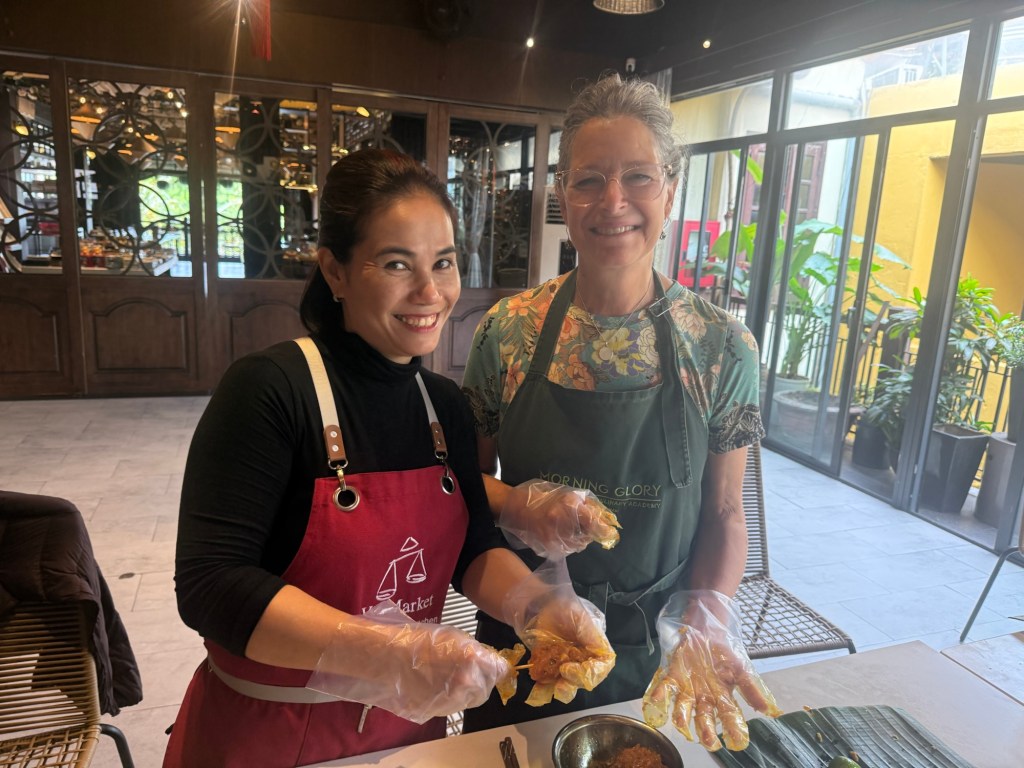
LuLu and JuJu

Tien met us after class for a walk through the Old City and quick tour of the market areas. Juju had a goal to find a treat called Hot-Cold soup, a mix of hot tapioca, coconut milk, ice cubes, ginger and lemon peel. Found!
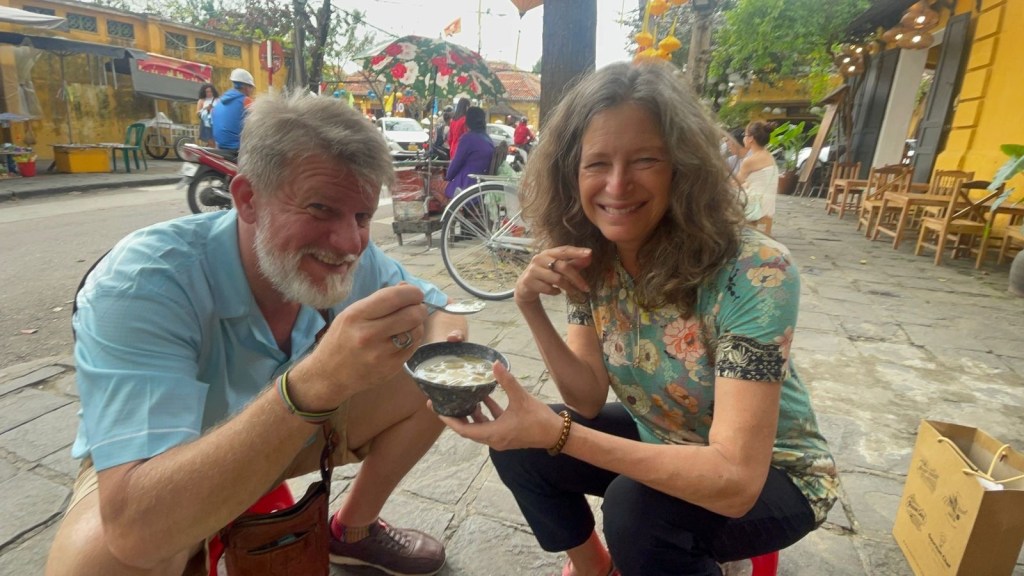
Hot-Cold Soup

The Old Town was where foreign traders, generally prevented from moving inland, gathered and built homes. It was dominated by the Japanese in the 15-1600’s, and they were joined by a large Chinese population from there through the mid 1800’s. The two populations lived separately with a third zone dedicated to the Vietnamese.

Many of their gathering places, structures and even some residential buildings are there and still protected.

The Chinese, in particular, had a large governance structure and sought to have a little China within the district.

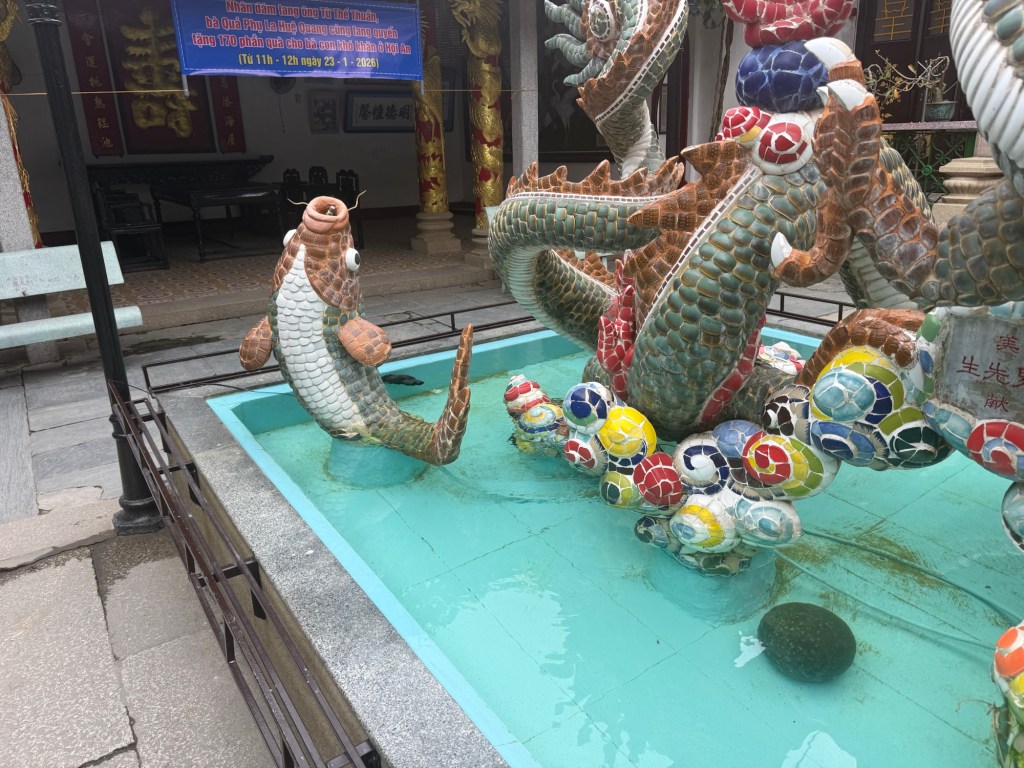
One interesting anecdote of Chinese lore (really unrelated but I needed a place to stick it.) Each year, one million catfish leave the ocean and charge to heaven to become the great dragon. Only one makes the cut.
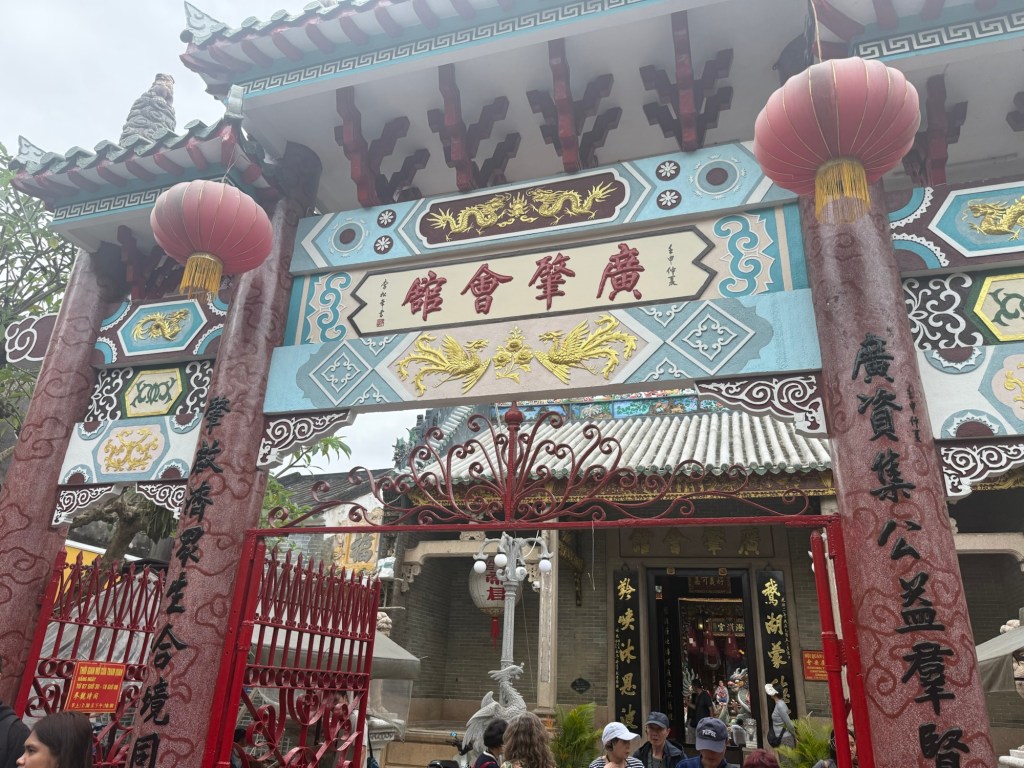
Chinese Assembly Hall (1800’s)
The Millionth Catfish

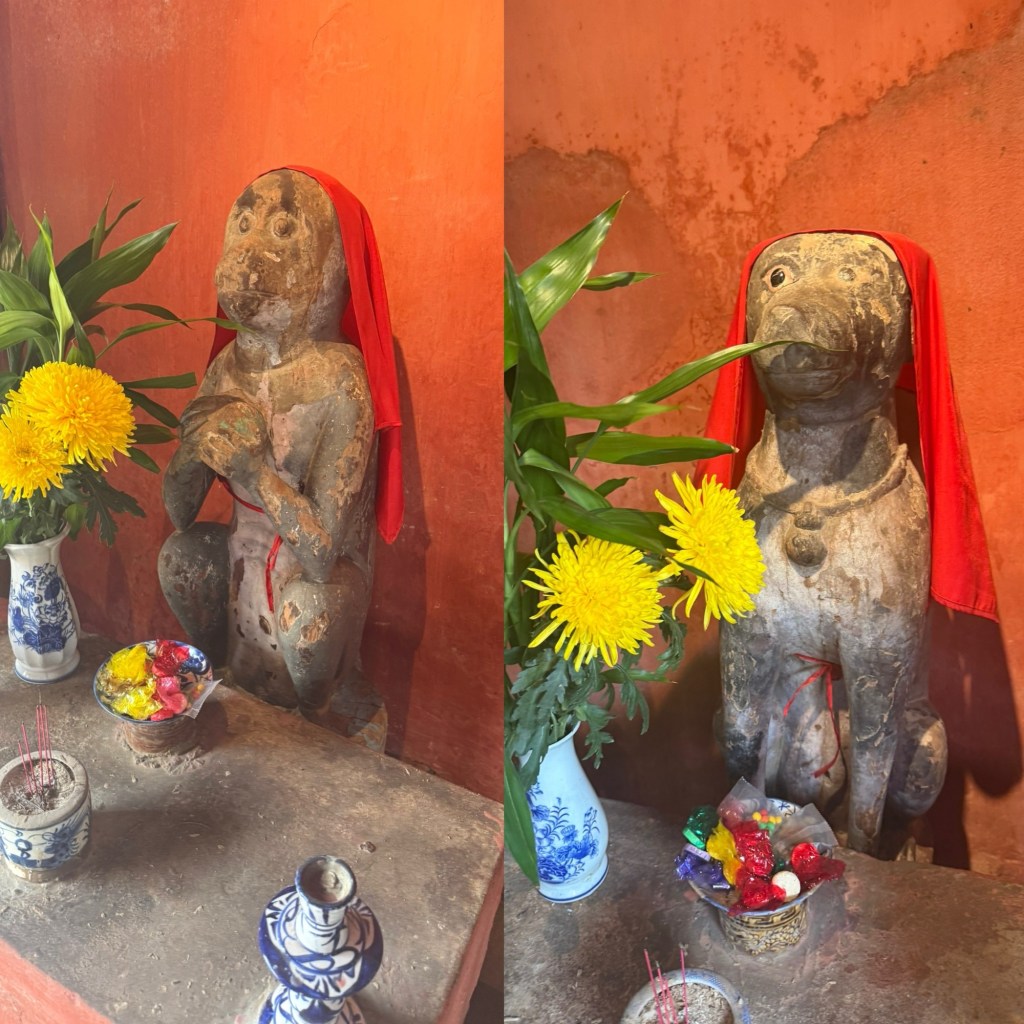
One of the oldest structures is the Japanese Pagoda Bridge. It is protected at each end by a guardian spirit, one monkey and one dog. These spirits prevent an attack on the district from the Japanese Crocodile God NaMa Zu.
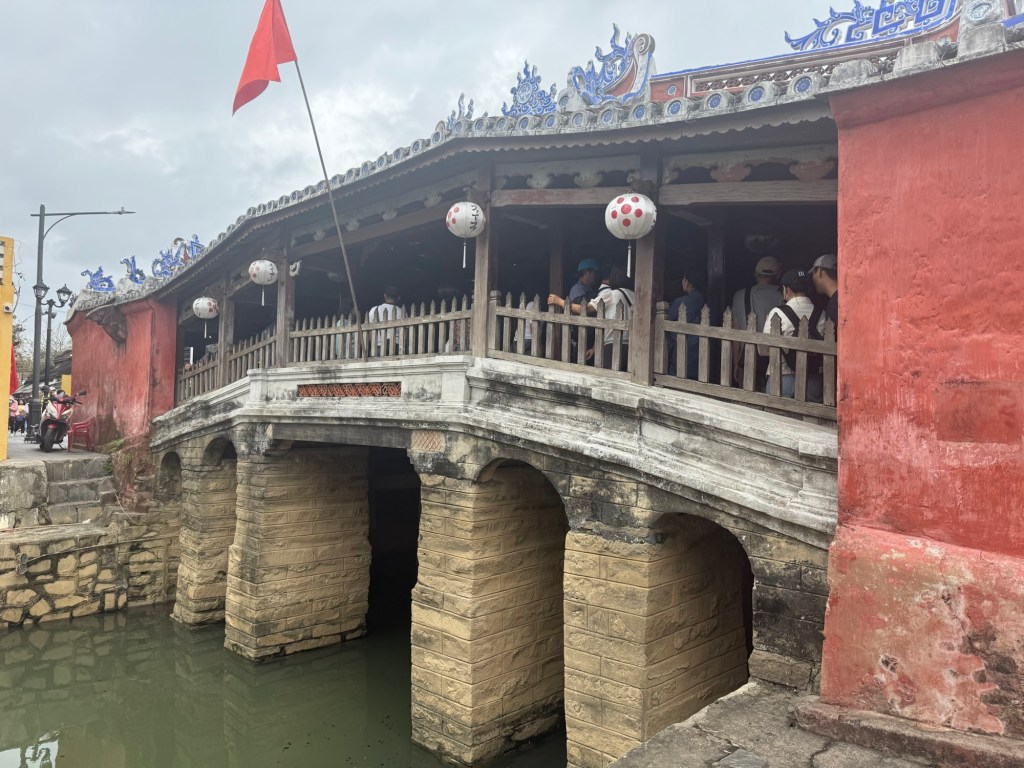
Japanese Pagoda Bridge (15-1600’s)
Monkey and Dog – Bridge Guardians

We plan on spending more time there tomorrow. We’ll have to because Mac ordered a pair of custom “hot trade” sneakers that will be ready for pick up tomorrow afternoon (fingers crossed). By the way, fingers crossed means something very different in VN…it means sexy time.
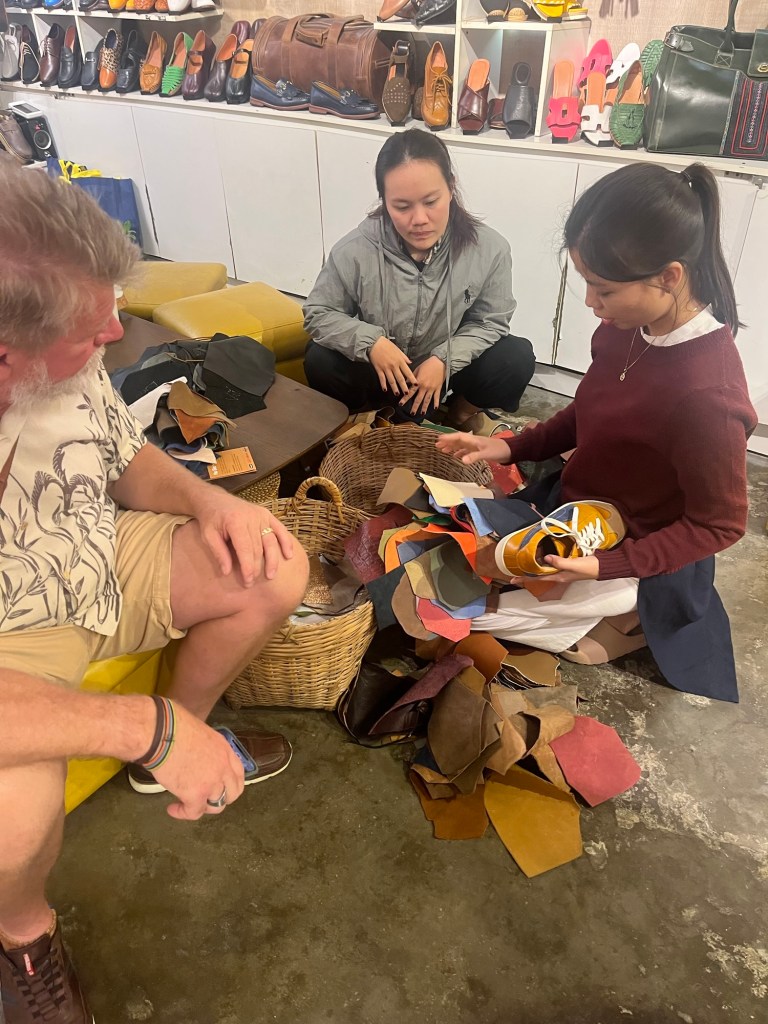
Shoe Shopping

We chilled at the hotel and had dinner with a a nice couple from Florida that we met in Hue. Downright pedestrian.
Crabbing, Fish Sauce, and Hoi An

We left the Le Residence in Hue at a reasonable hour on Thursday the 22nd. We’re more or less at the halfway point in our journey with Hoi An left in Vietnam, and then Cambodia and Thailand still in front of us.

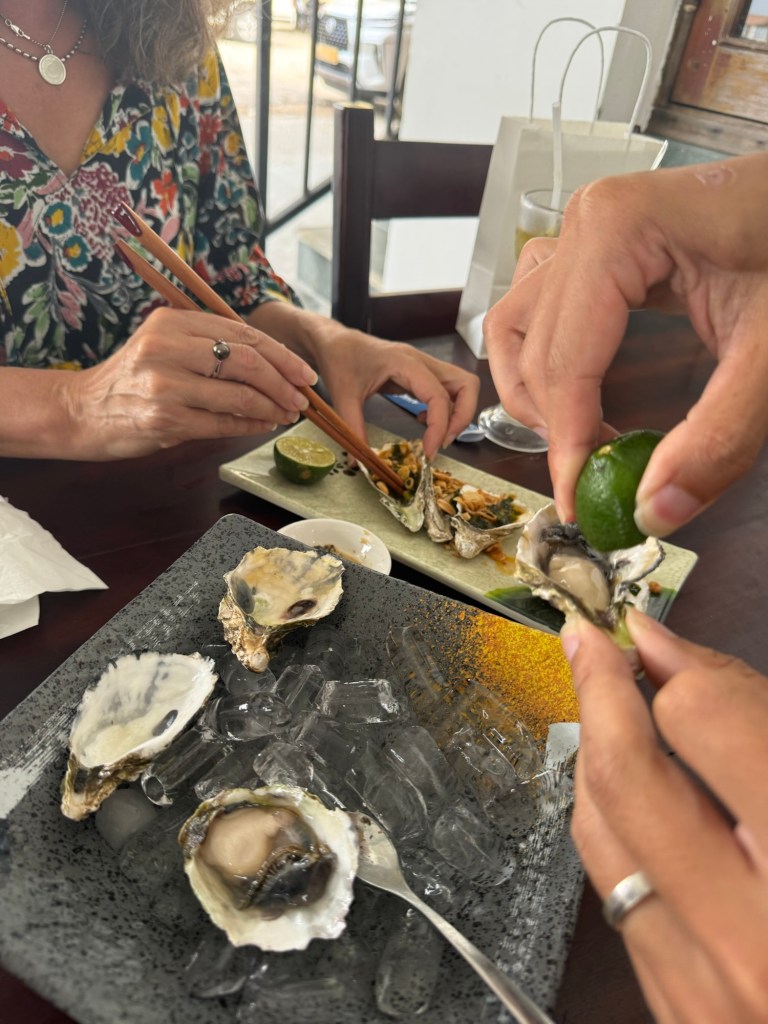
First stop today was an oyster farming village. We stopped at a little restaurant in town for oysters – raw (super muddy) and grilled (super delicious). We had quite an audience.

River oysters – not a favorite

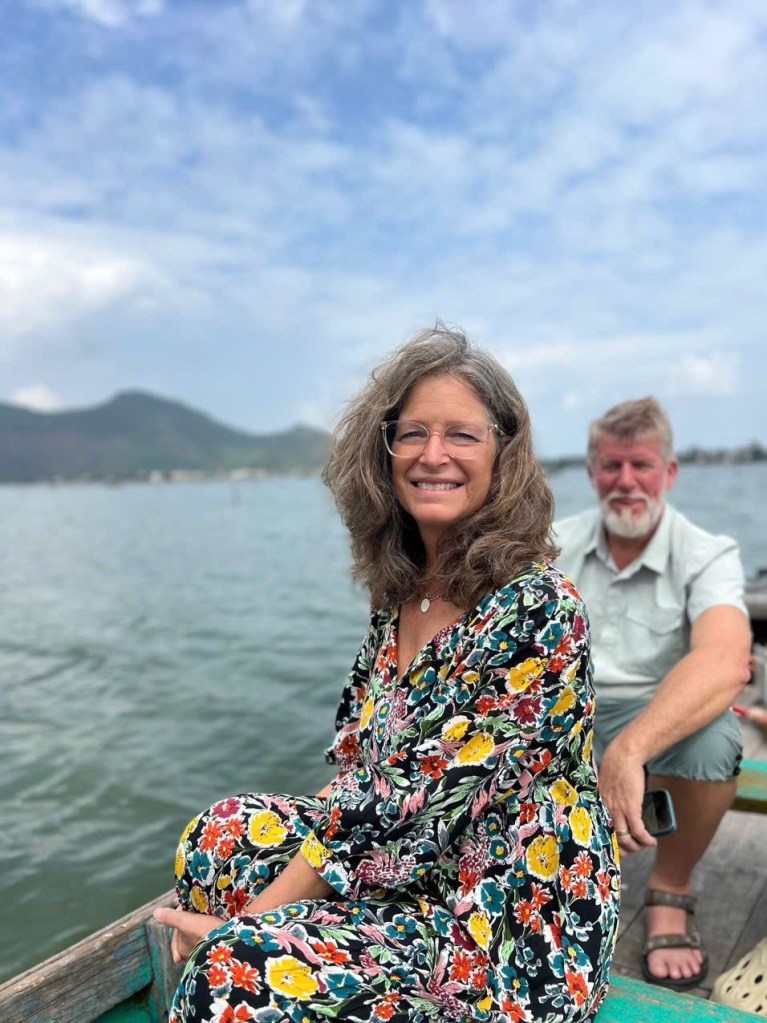
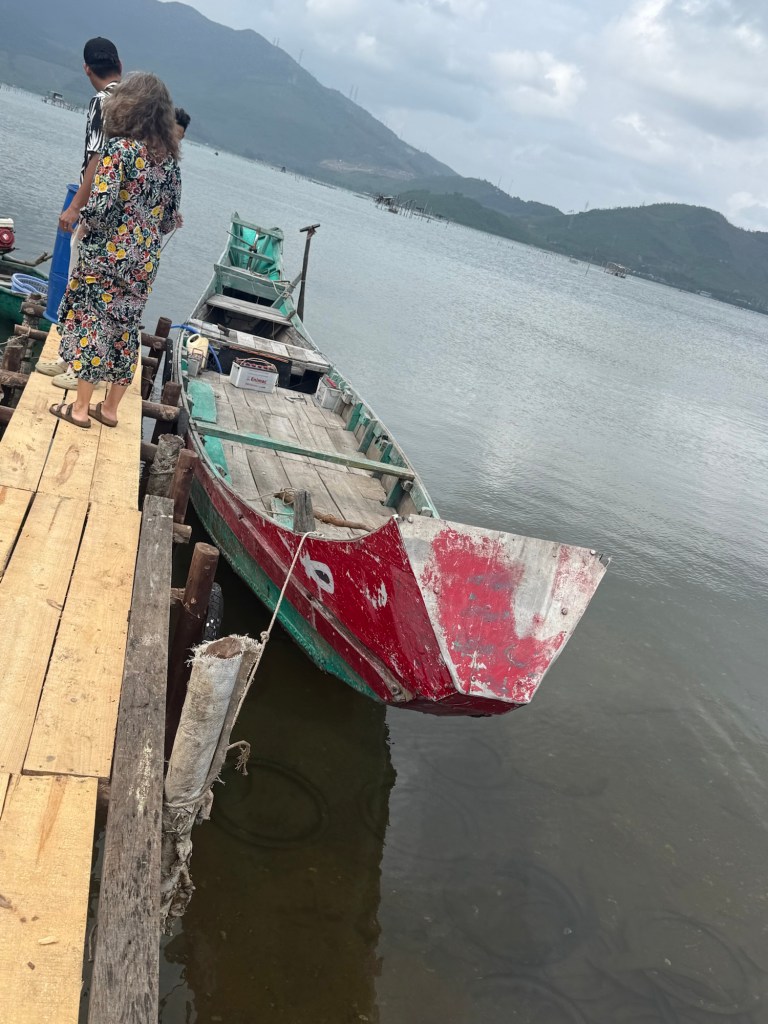
Tien promised an “experience” next, and man did he deliver. We took a banana boat out to where the fishermen work and live during the season.

Dragon Boat
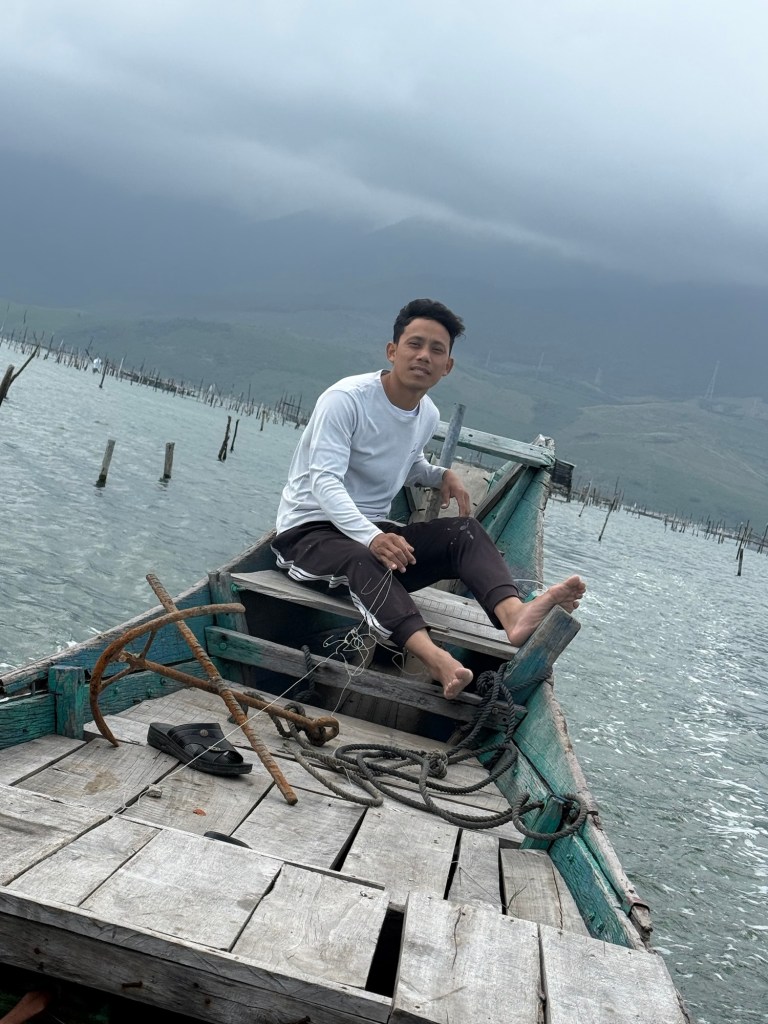
Captain Quic

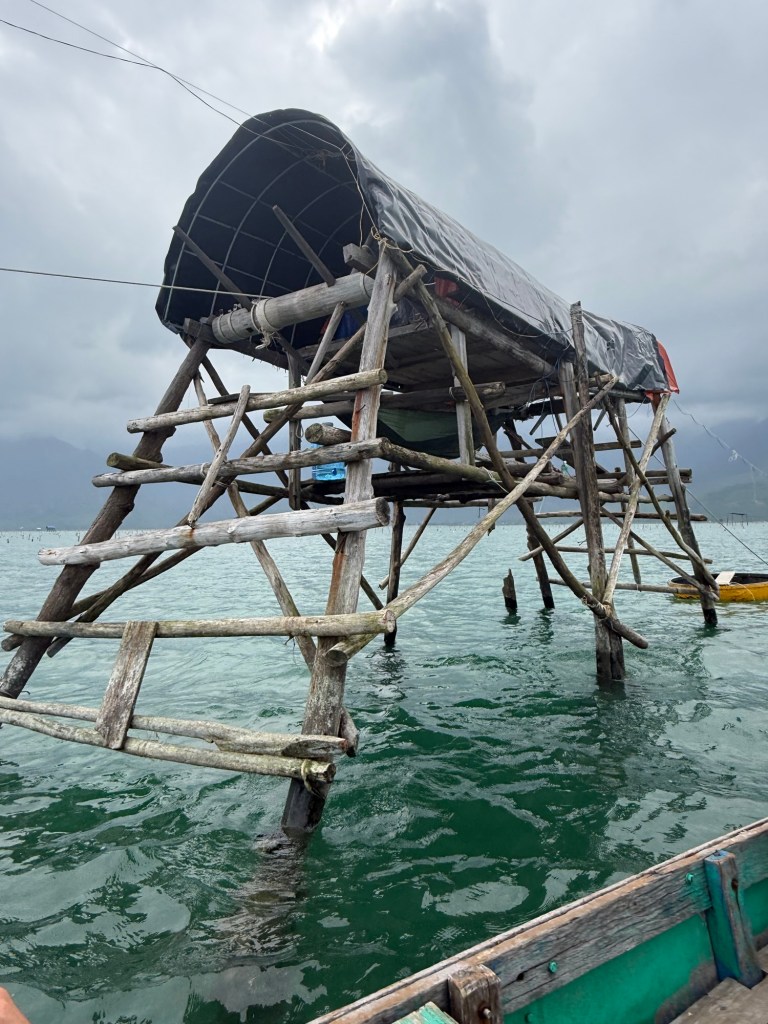
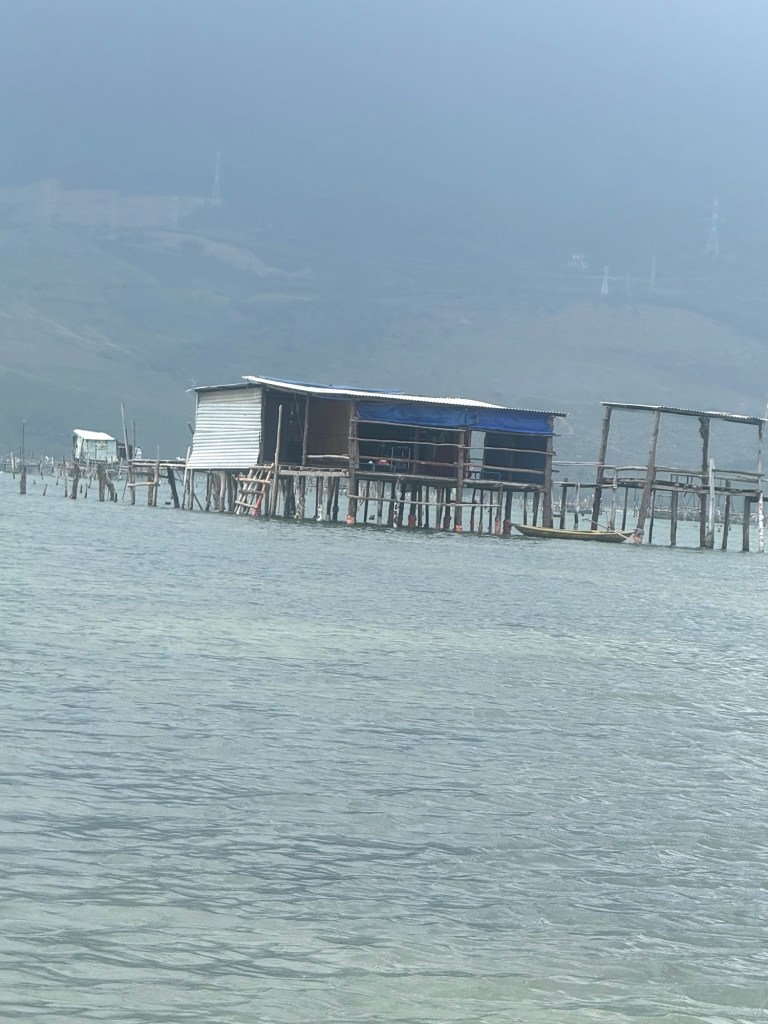
The first structure below manages the nets and oyster cages. The second is where the fisherman lives all season. (They pull nets once an hour all night and sleep during the day.)

Fish Farm Tower
Fisherman’s hut

Hien the driver insisted on a photo shoot. She’s an interesting character and a very rare female driver. Hien does not eat meat and we’re told she does NOT like men. Well, she sure does likes JuJu.

“Make love to the camera”
Hien’s got talent

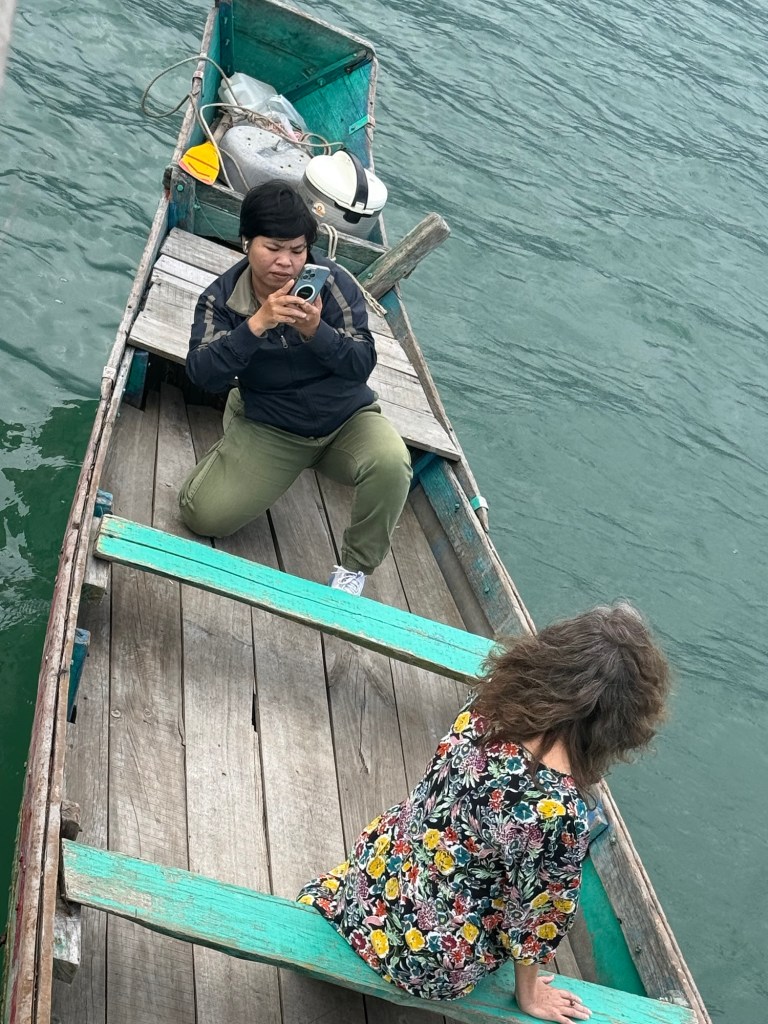
The fisherman had us clamber up into his work shop and experience one round of checking the nets. (Juju had some regrets about her choice of wardrobe.)

Oops. Wrong outfit
Earning our lunch

Hauling a 50 foot square net into the air with a hand crank? This was every bit as hard as it looks. We caught two tiny crabs and a guppy.

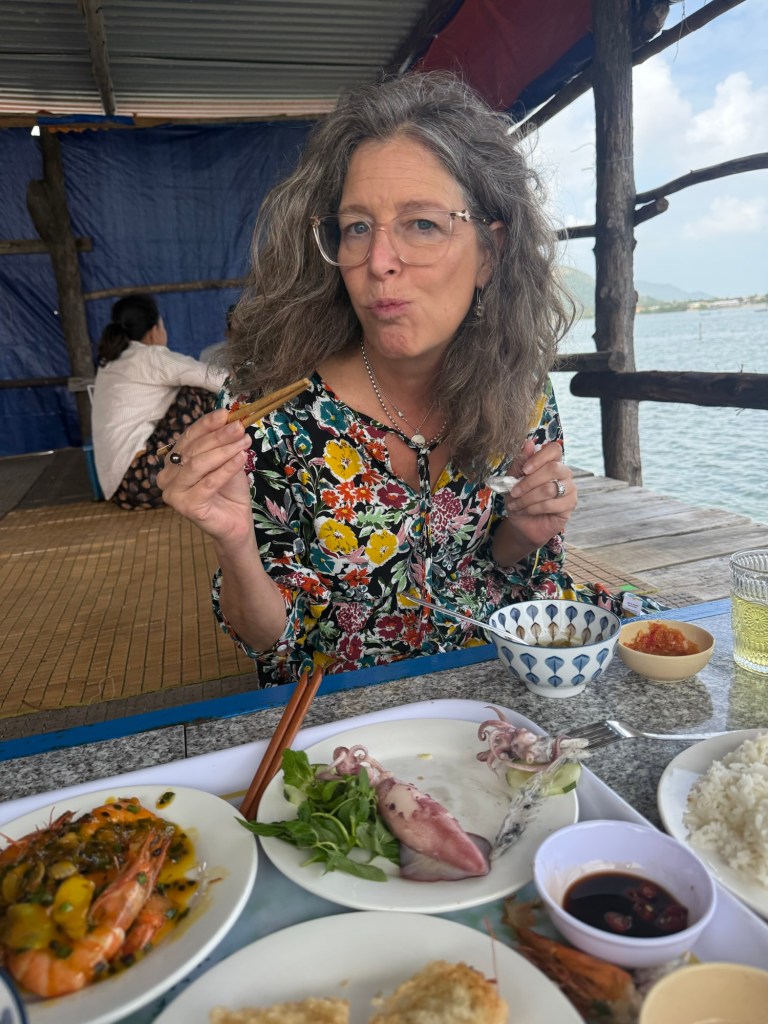
We were then invited into Quoc’s home on stilts where his mother cooked us (yet another) amazing meal. Big hugger this Mom and our host really appreciate a gift from our home.

Lunch on Stilts

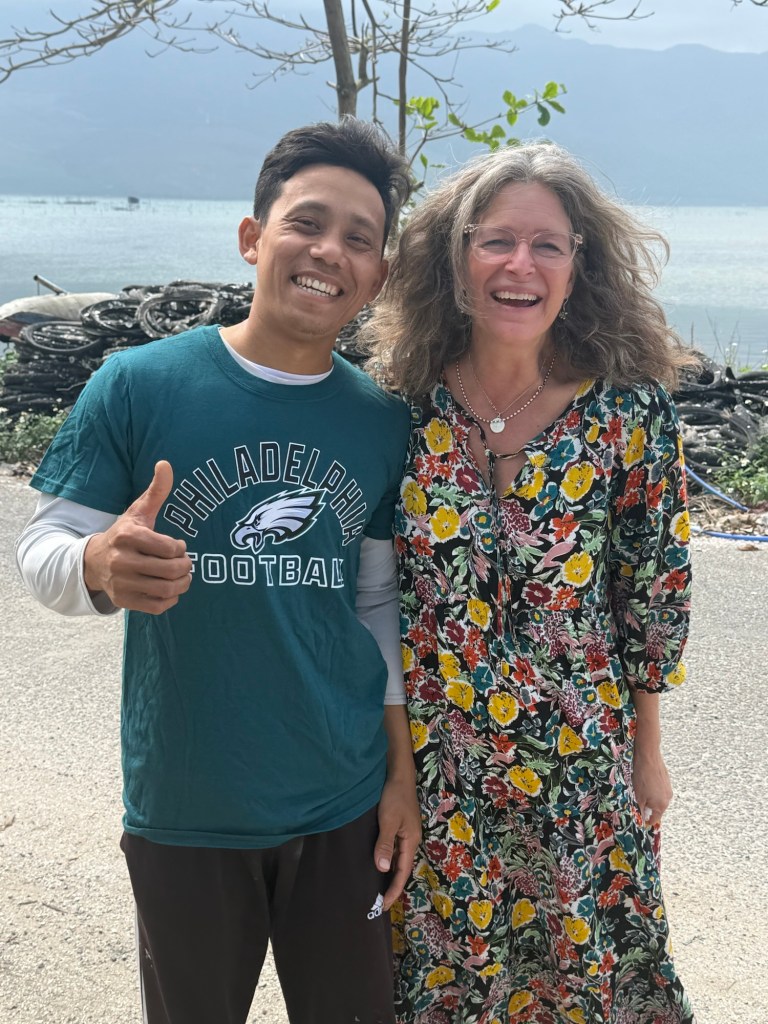
Quic: Go Birds!

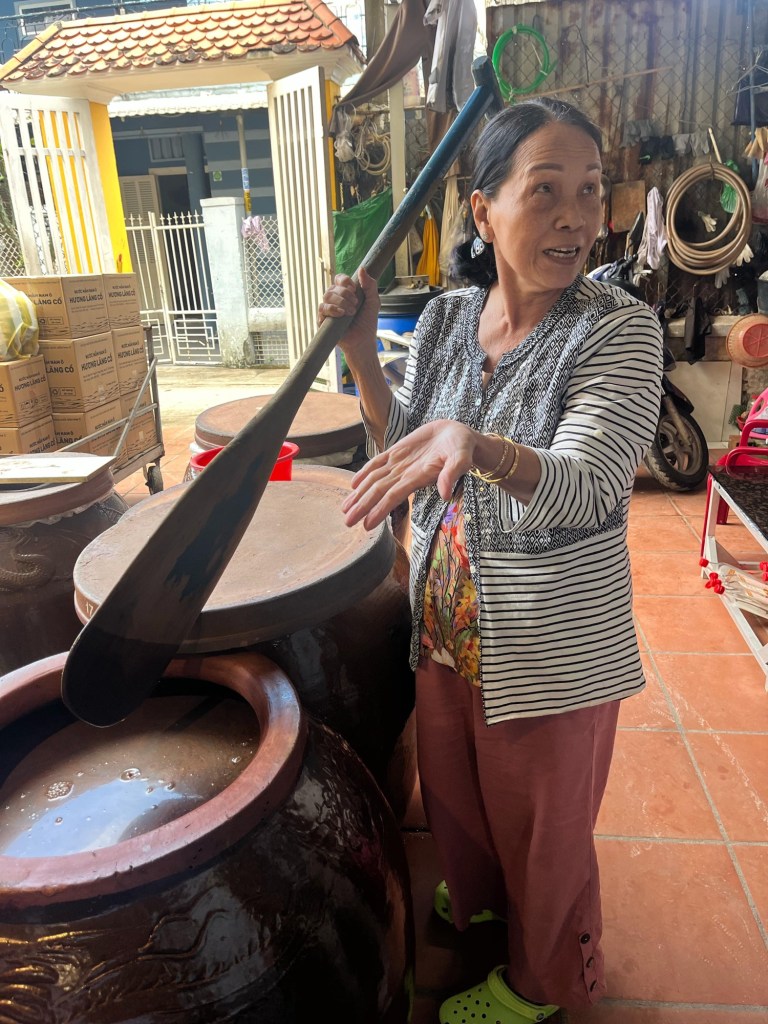
We passed through Danang next and stopped down a tiny backroad to a house where they make (and export!) fish sauce. They basically soaked tiny anchovies in salt for 6 months to a year until they dissolve. Strain, bottle and sell. The aroma, which we picked up from two blocks away, was….special.

Fish Sauce Entrepreneur
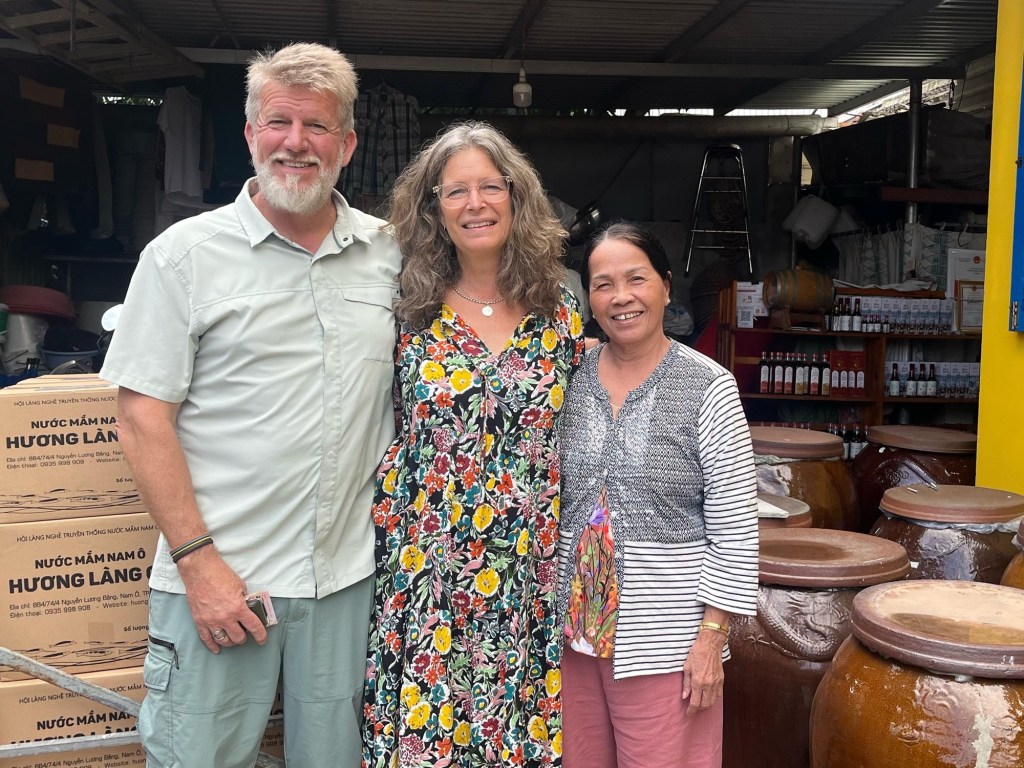
The Proprietess

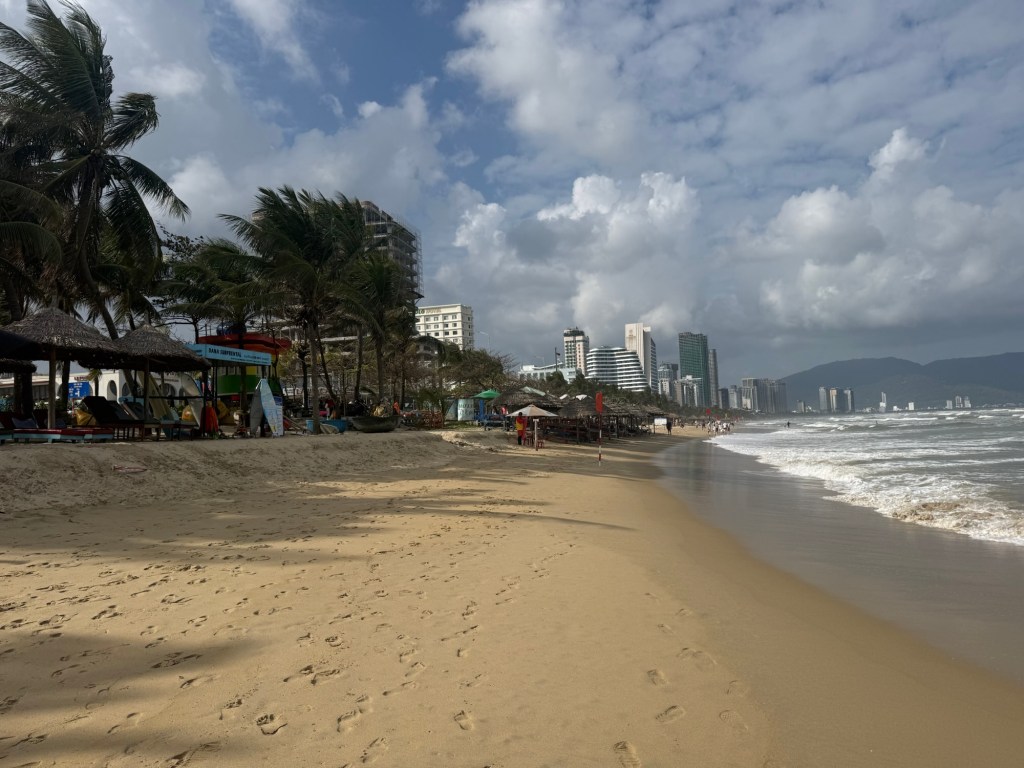
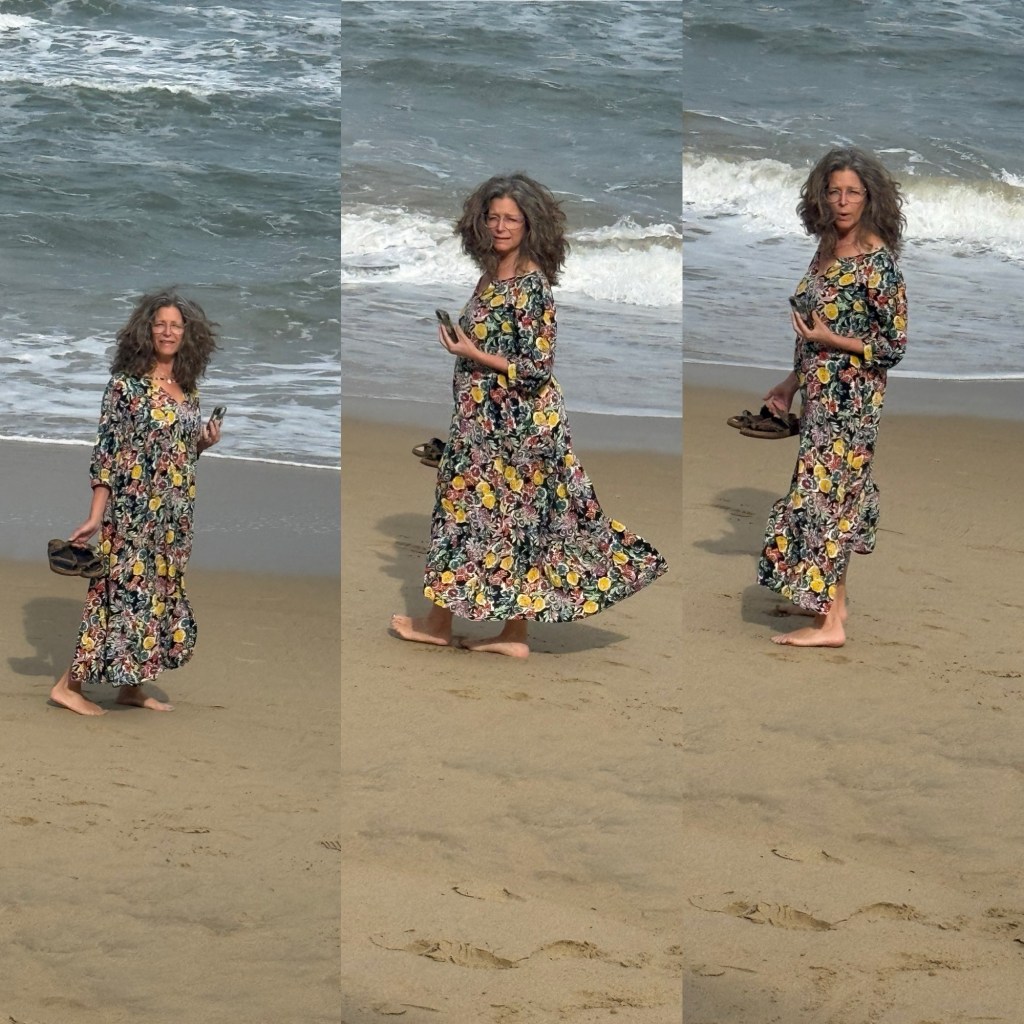
After a mandatory photo op on Danang Beach (our guide Tien can be a bit of a bully)…

Danang Beach
Damn!

… we arrived in Hoi An. It’s a beautiful coastal city, a tourist Mecca and Asia’s center of “hot-tailoring.” You can get a suit in a day. The hotel Anantara is beautiful.

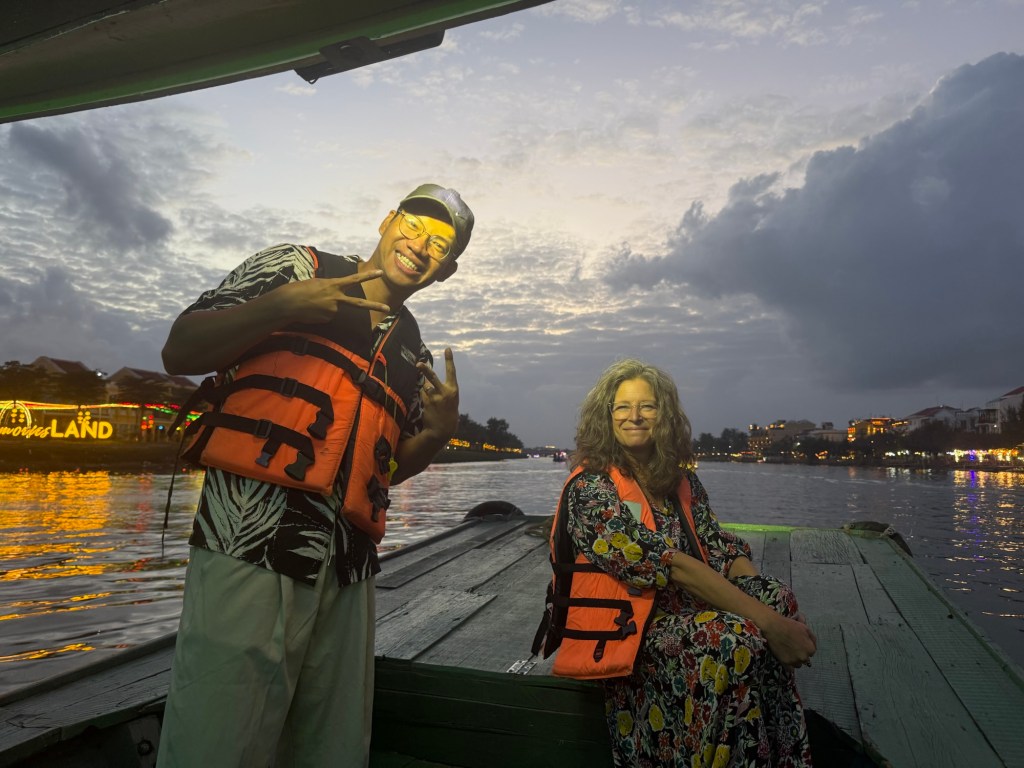
We took a sunset launch into town for dinner (after our captain went diving semi-naked to untangle a rope from the prop). Then we finished the night with Monique and Sophie, our two new Aussie friends.

Weird Shrek Vibes
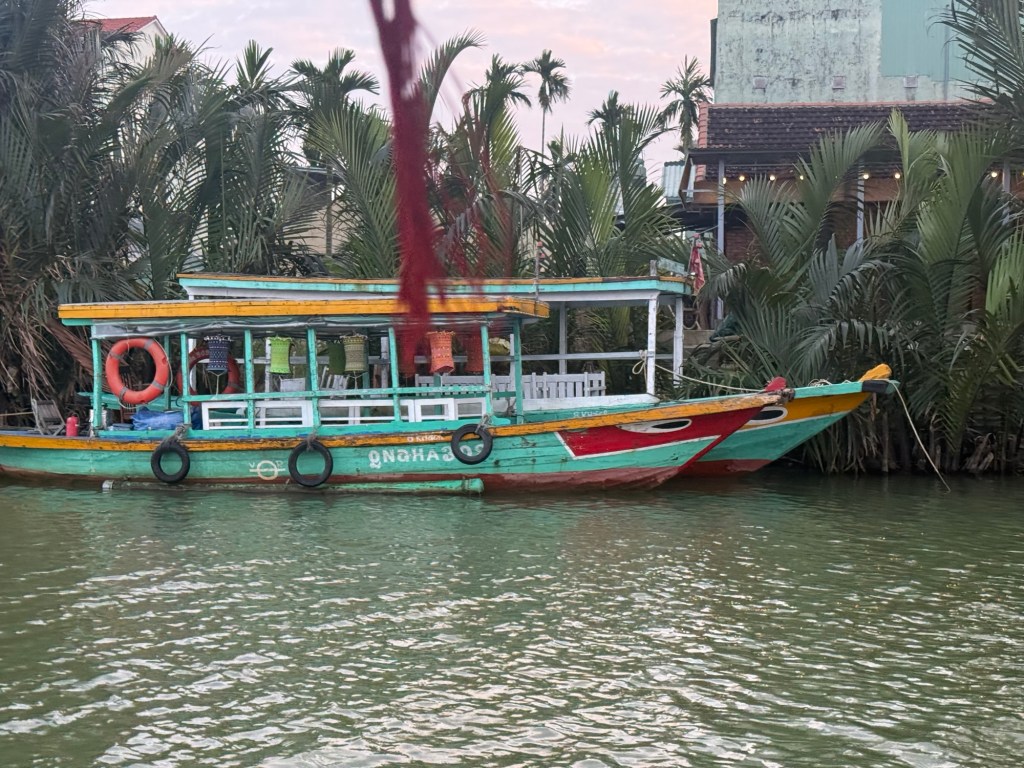
Hoi An Public Transportation
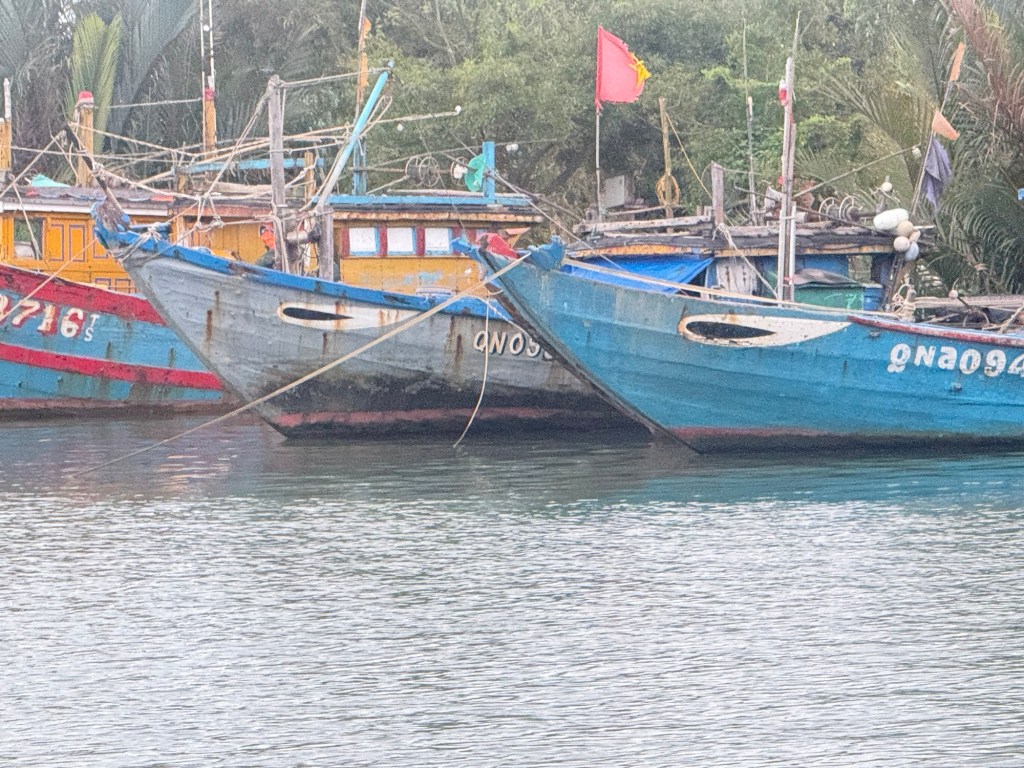
Fishing Boats

Ubiquitous Phở

It’s a ubiquitous belly filler!

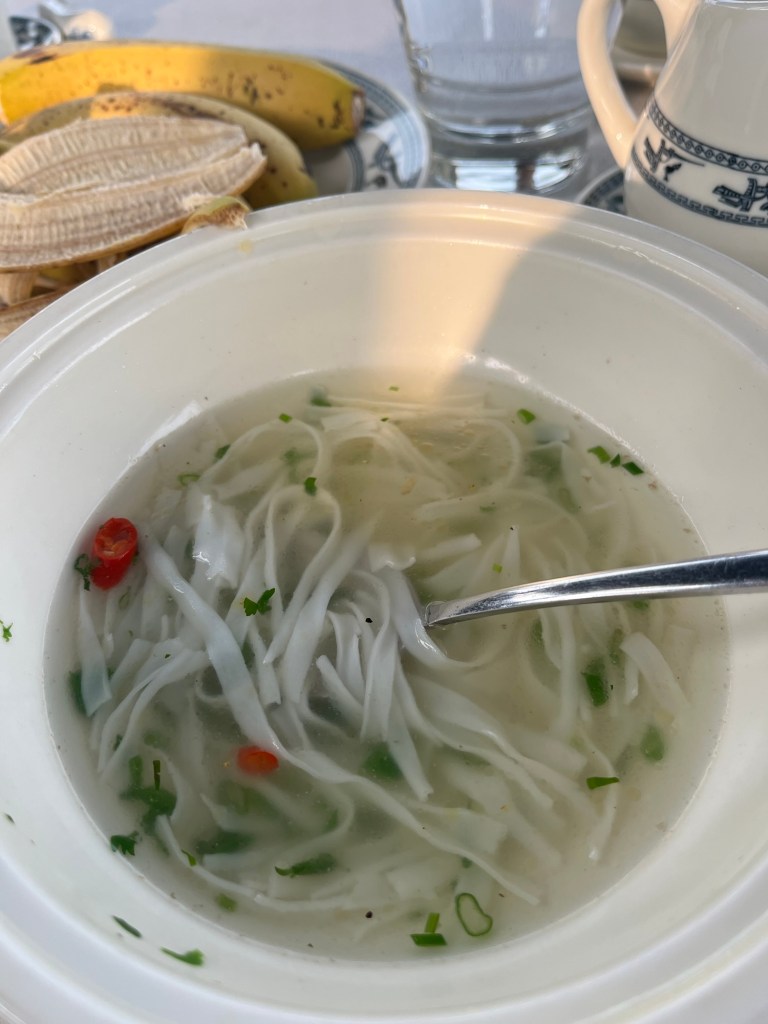
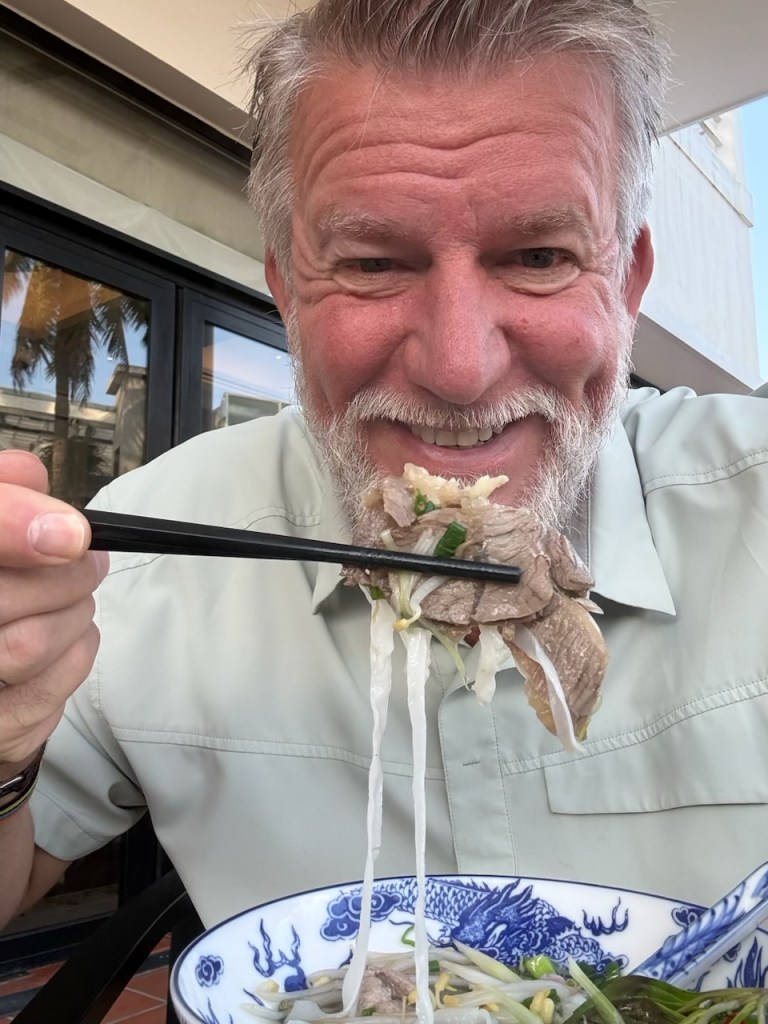
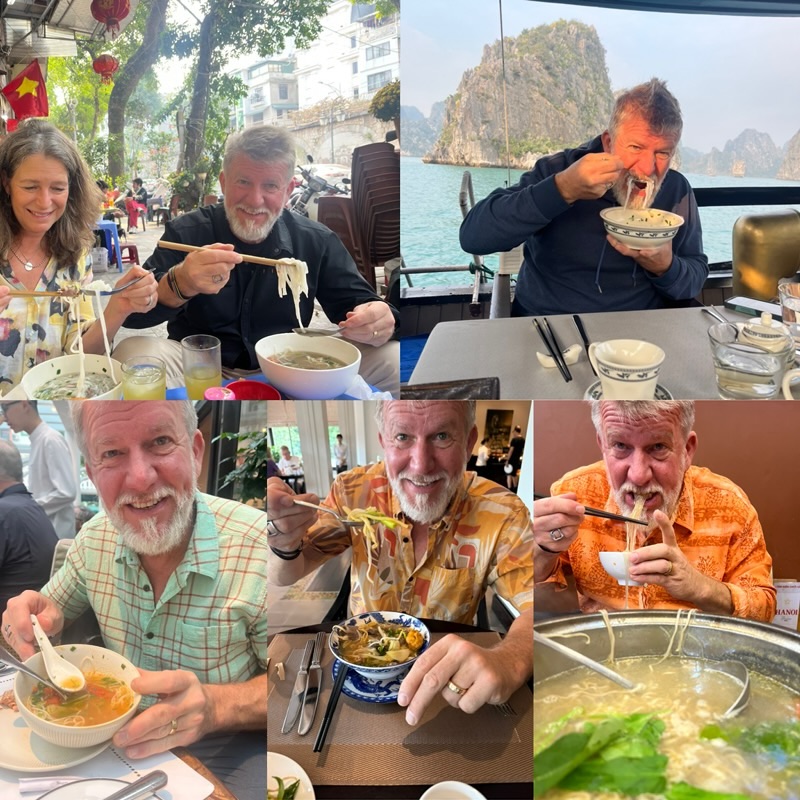
Yes, this amazing noodle soup is eaten any time of day…including breakfast. From what I can tell, Phở is an open tent kind of soup with many permutations. However, it does appear to have a few parameters.

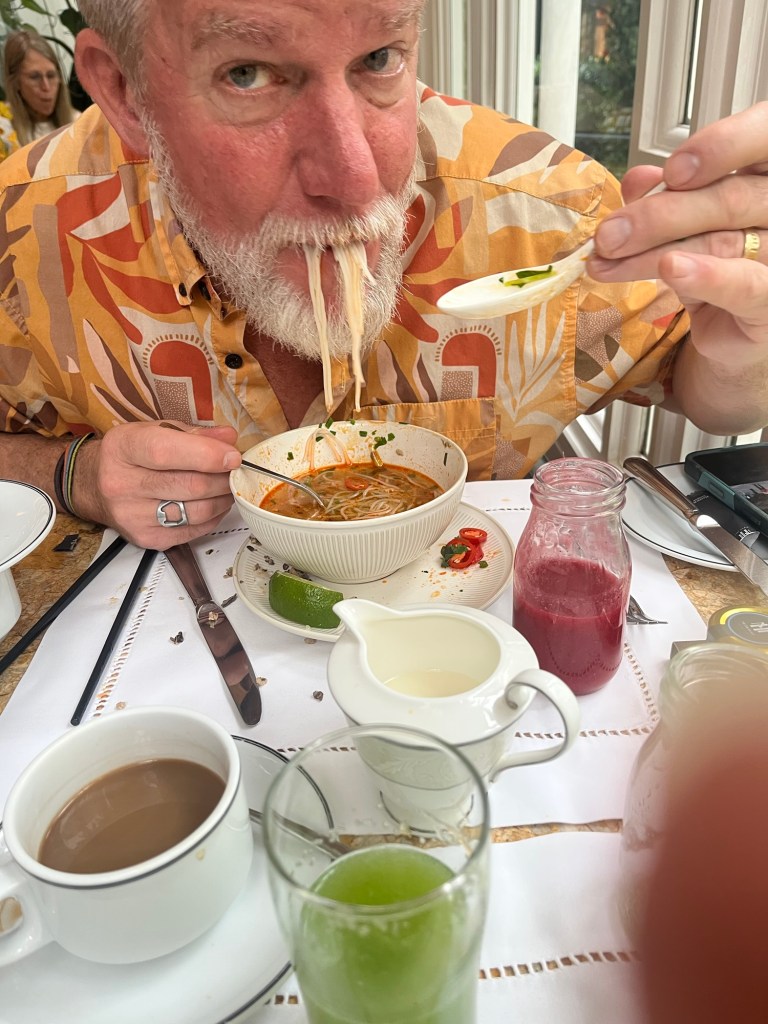
Adding additional sauces (soy, oyster) is a no go. Bean sprouts are nowhere to be found. We learned that the most authentic shops choose either chicken or beef stock as a specialty and do not offer both. As you eat, each bite is constructed in the spoon. Metal spoons are far superior because you can easily cut the long noodles.

While I love the big hearty beef stock, my favorite has been a more delicate chicken base with anise and cinnamon.

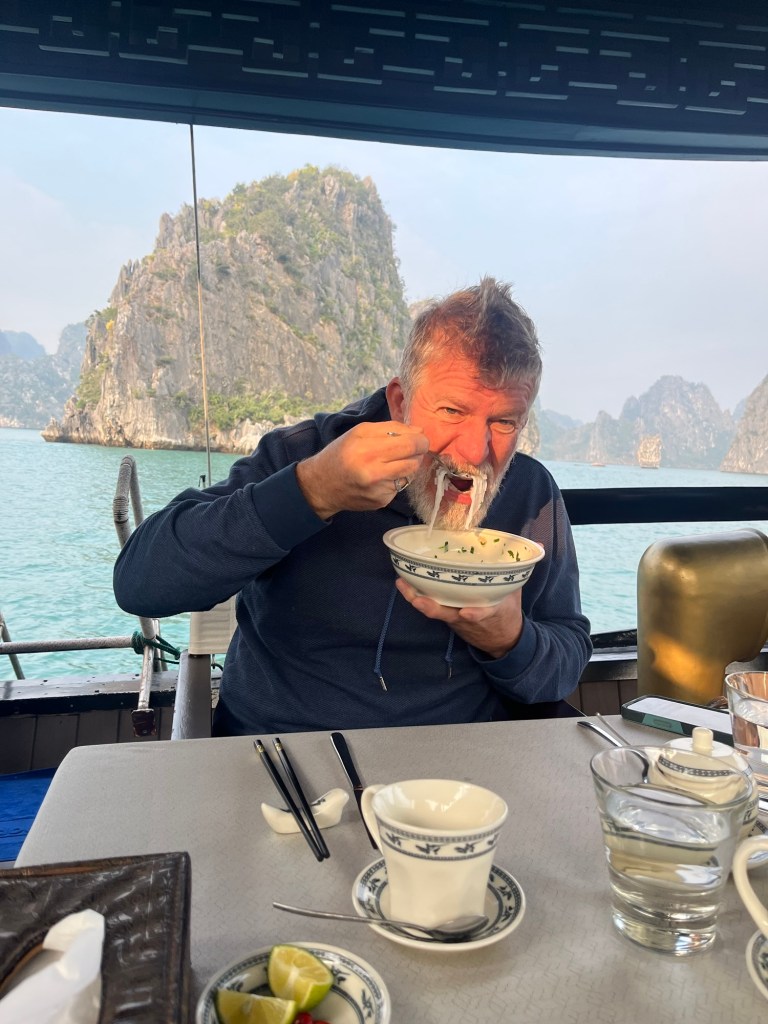
HaLong Bay – Chicken Cinnamon Pho

Phở for breakfast has been a bit of a paradigm shift. We’ve learned it’s a great start to the day!

Nope. Not sick of it.
Mac likes Pho!
Breakfast of Champions

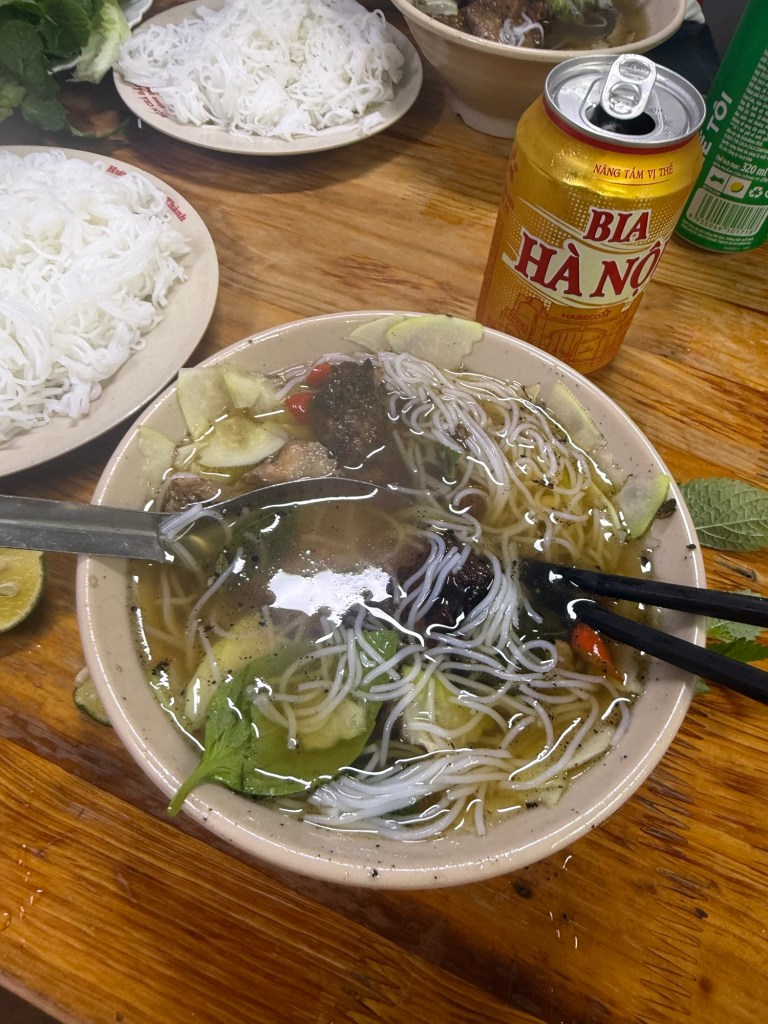
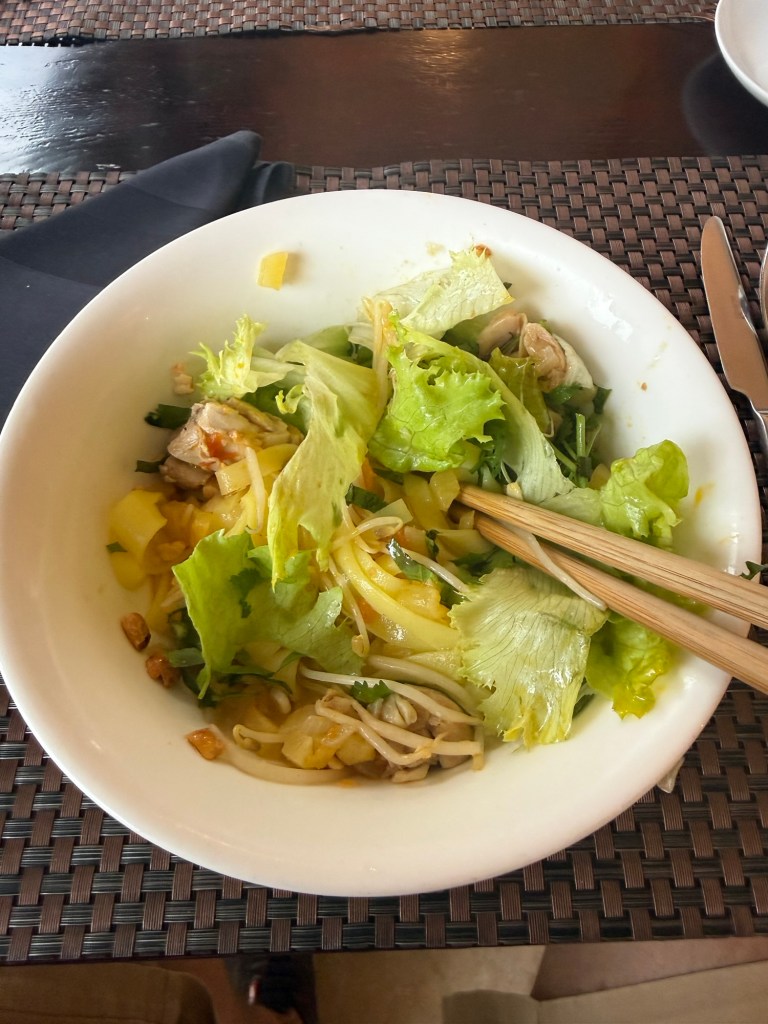
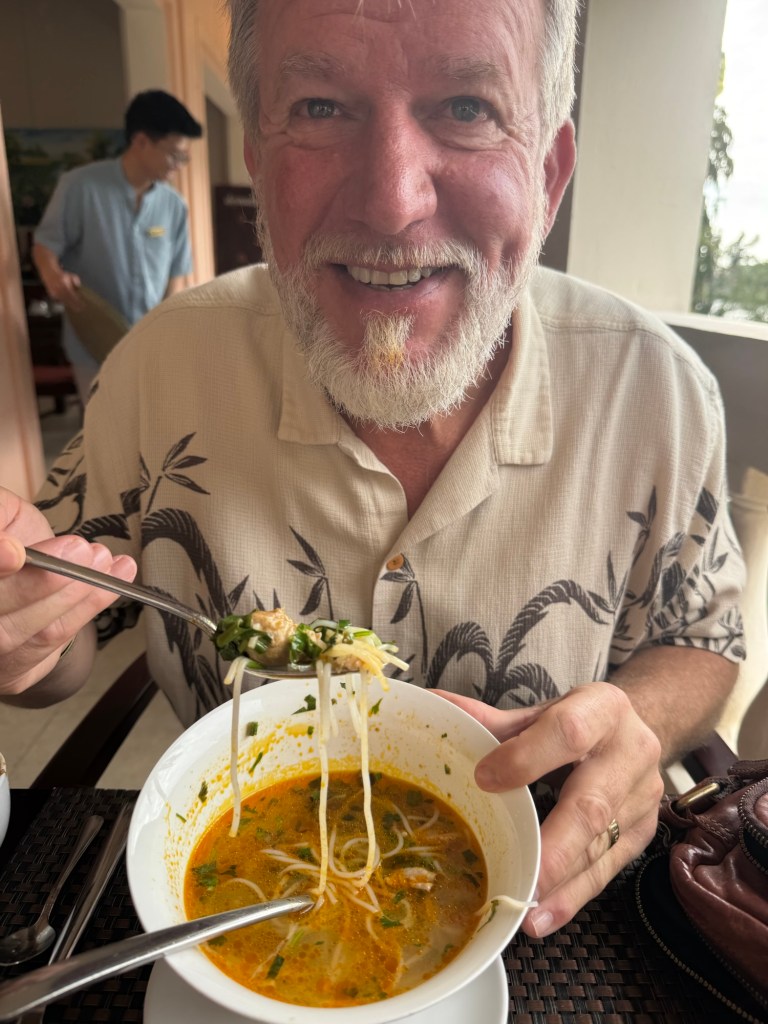
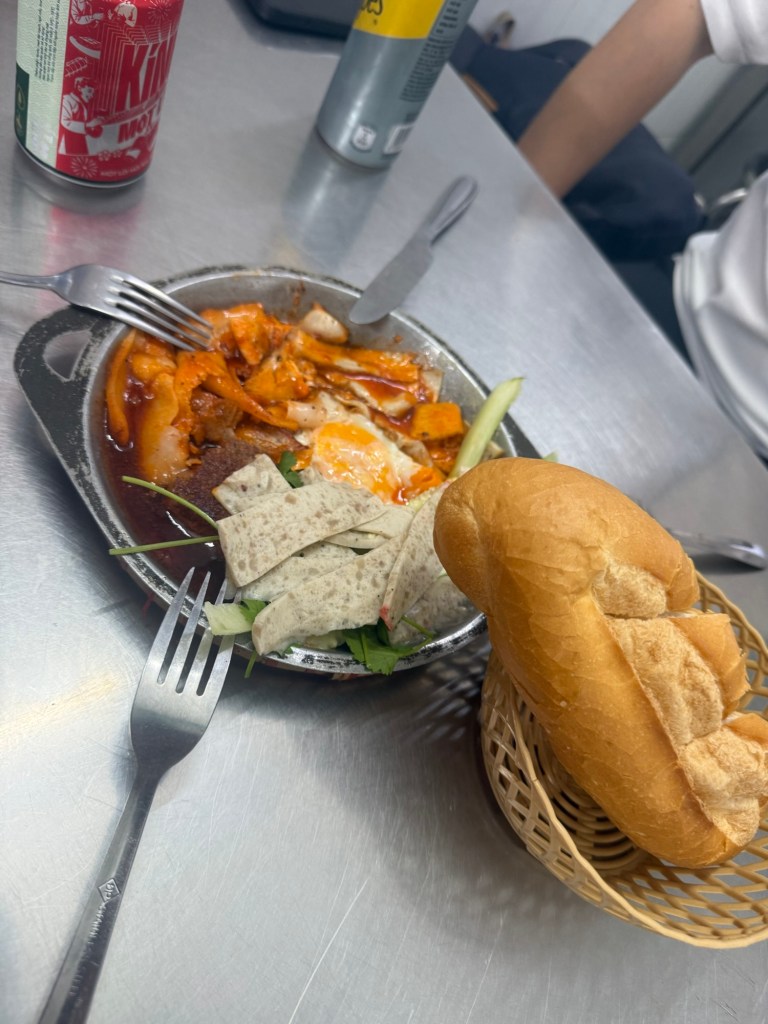
There are other variations, or at least noodle soups we ran into. Bun Cha with BBQ pork – Bourdain’s favorite. My Quang, a southern take and the favorite of our driver Hien. And Bun Bo Hue (a Viet Kimchee Soup)

Bun Cha
My Quang
Bun Bo Hue (Viet Kimchee Soup)

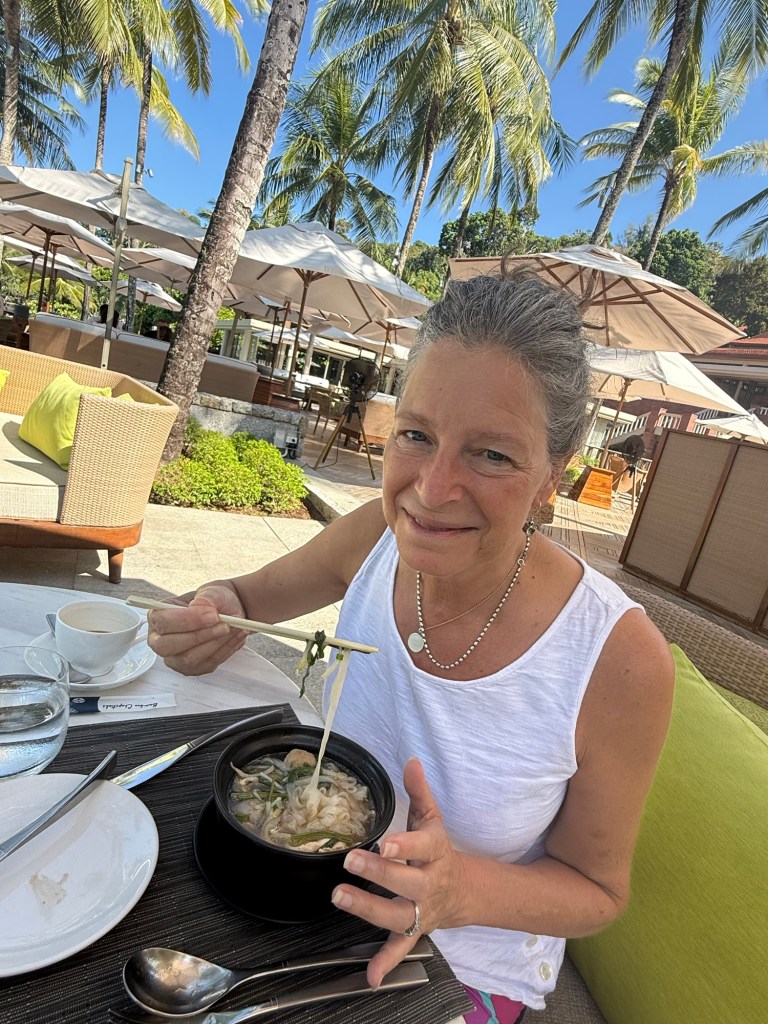
Phuket offers a variety with chicken sausages and BIG cinnamon tones.

Juju PhoPho

It’s also a great way to end the day.

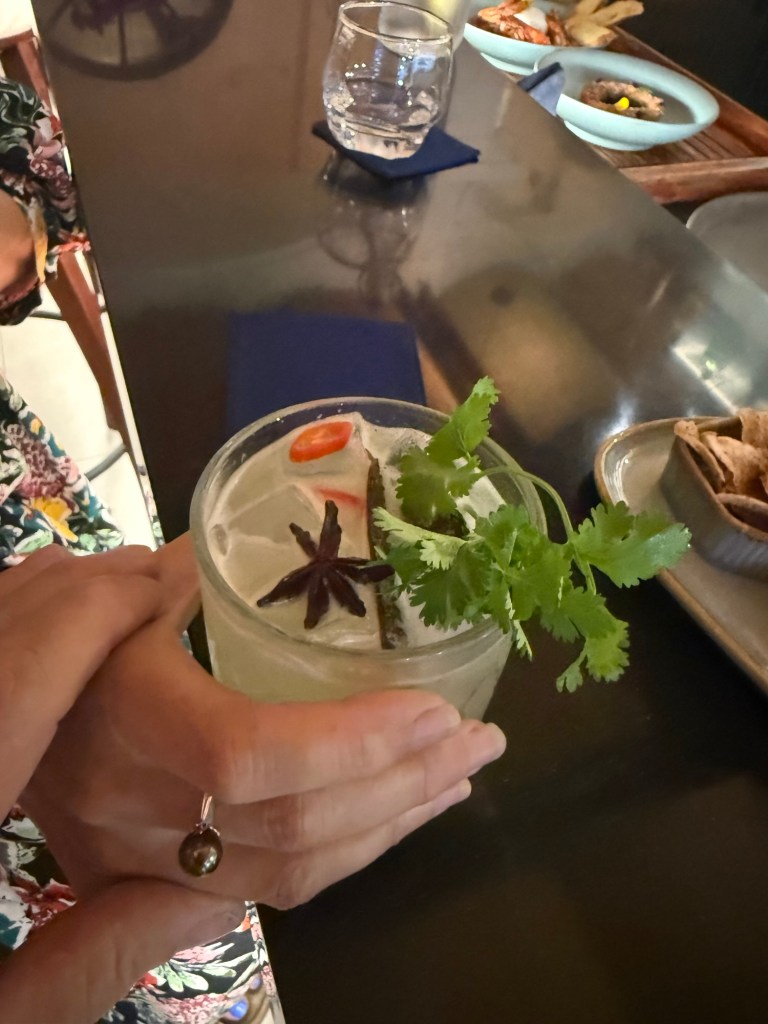
Phở Cocktail at the Anantara, Hoi An

Hue: A Tale of Two Emperors…

We spent a full, and I mean FULL day yesterday in Hue – the Imperial Capitol of Old Vietnam.

Our new guide Tien (accent up at end) and driver Hien (accent down at end) are wonderful. Tien is 6’1″, huge by VN standards, and owns a ladies-only gym. Hien is a five foot tall lady from the rural north but learning karate. We have quite the body guards.

A long post today, and if you’re interested in Colonial Vietnamese history (1802-1945) you can ride along. You can also just scan through and look at pictures of the incredible architecture (and my beautiful smiling JuJu).

A timeline:

1601 – early Nguyen history, begins construction of the Cellestial Lady Pagoda

1802 – Nguyen Dynasty under Gia Long, first Emperor, consolidates control of Vietnam.

1845 – French colonization begins

~1900 – the Nguyen Dynasty (with French support) consolidates Vietnam, Laos and Cambodia. A series of puppet or “scarecrow” Emperors (one as young as 9) rule the populace but under strict French control

1941 – the Japanese army conquers VN, and enslaves the populous to maximize rice production for their army. Millions die and the Vichy French (now German allies) withdraw to the South

1945- the Japanese exit under terms of the Paris treaty. The French attempt to retake VN and send the last, and 13th Nguyen Emperor Bao Dai into exile in Paris

1945-54 – the French battle Ho Chi Min for control, losing the North decisively at the battle of Dien Bien Phu

1955 – the US enters VN, and sets up a South Vietnamese Government

1955-73 – The Vietnam War (the American War in VN parlance); Kennedy, Johnson and Nixon embrace the “domino theory” seeking to stop the spread of communism into South Asia. Major US ground troop involvement is from 1963-1973. America exits but the North-South civil war continues until 1975.

April 3, 1975 – Vietnam Independence Day, the Geneva Accords

Yesterday’s marathon-day was focused primarily on the Nguyen Dynasty. Our first stop is the Sky Lady or Cellestial Lady Pagoda. Construction was started in 1601 and expanded to its current state under the Nguyen leaders in 1845.

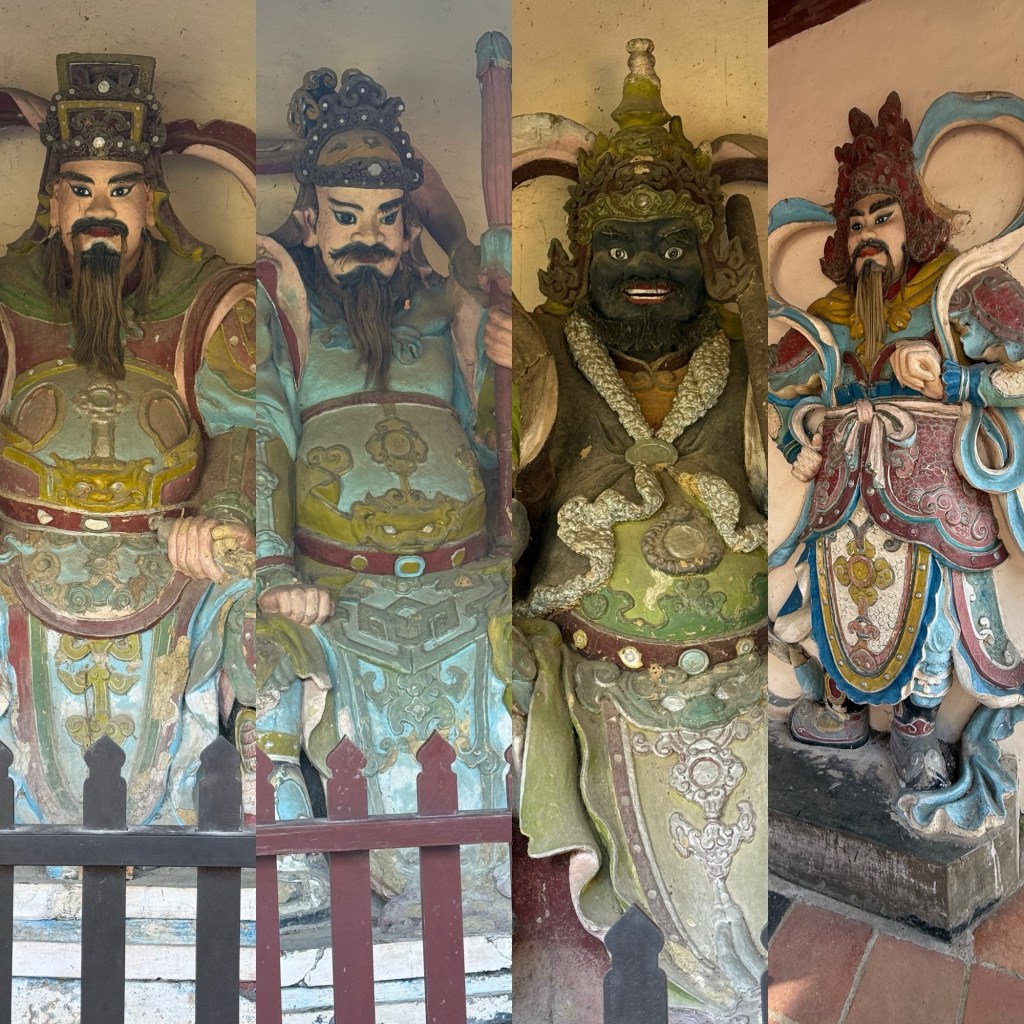
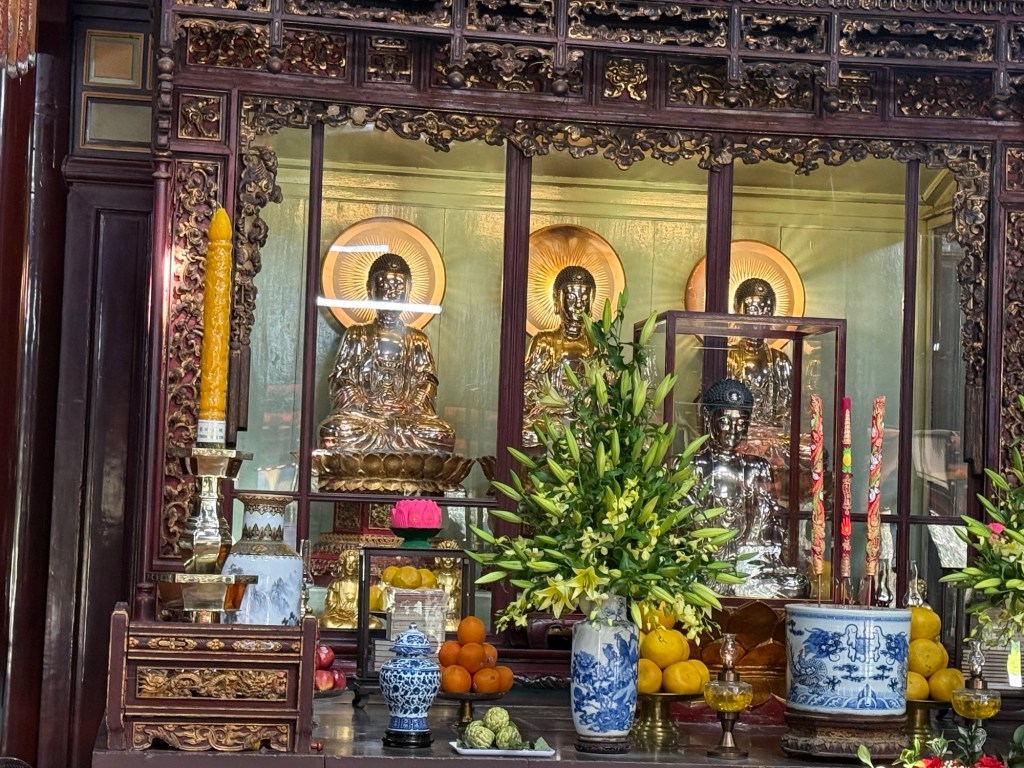
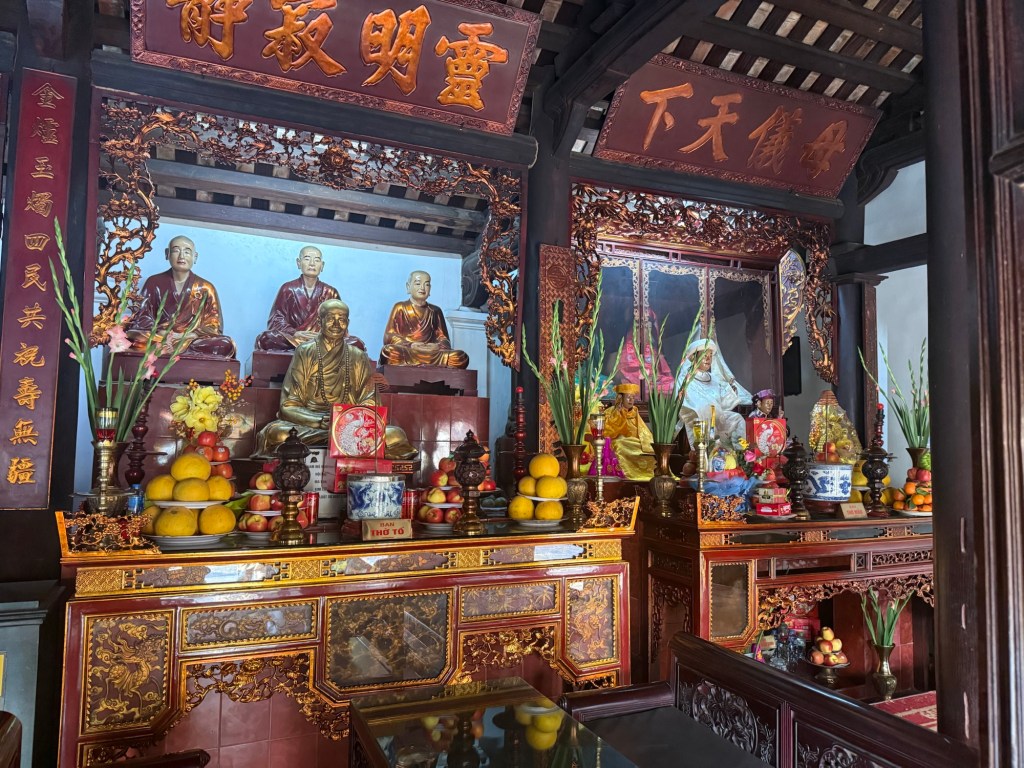
It was another sheep-dip on the Buddhist way, including discussion of the Gaurdians, the role of the Lady Buddha and the ranking systems of the monks (a top monk in yellow robes can pull down $500,000 a year and flies business class?). We’re still confused on how reincarnation, offerings to dead ancestors, karma and self-actualization all fit together.

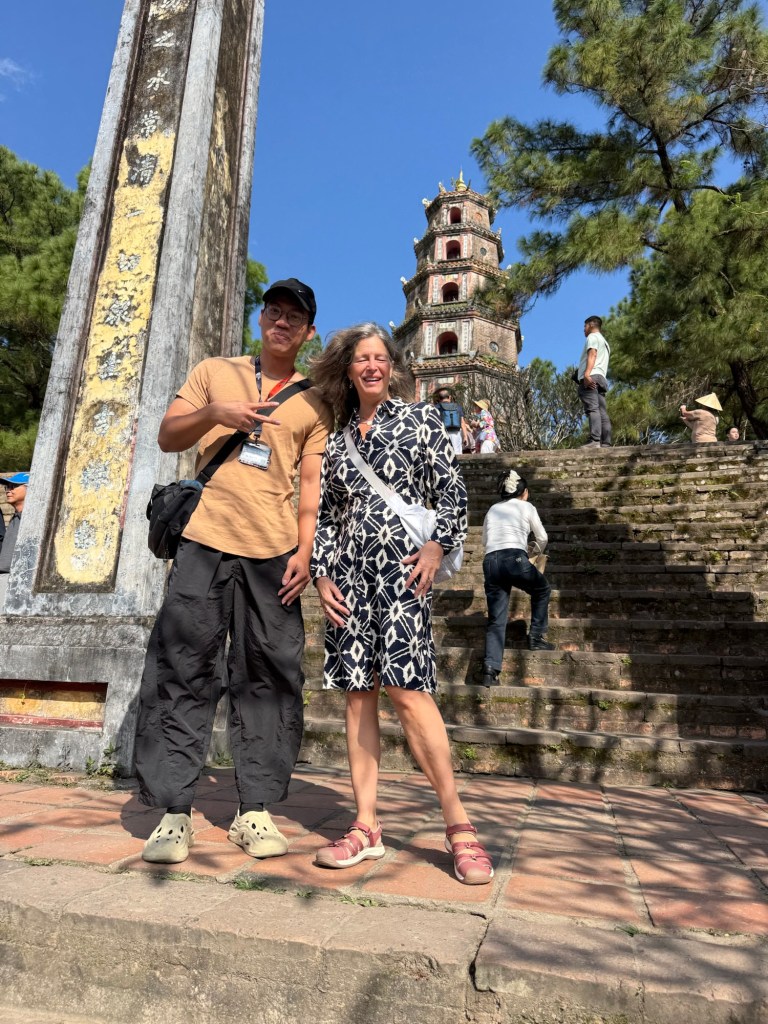
Tien and JuJu at Celestial Lady Pagoda
The Four Gaurdians

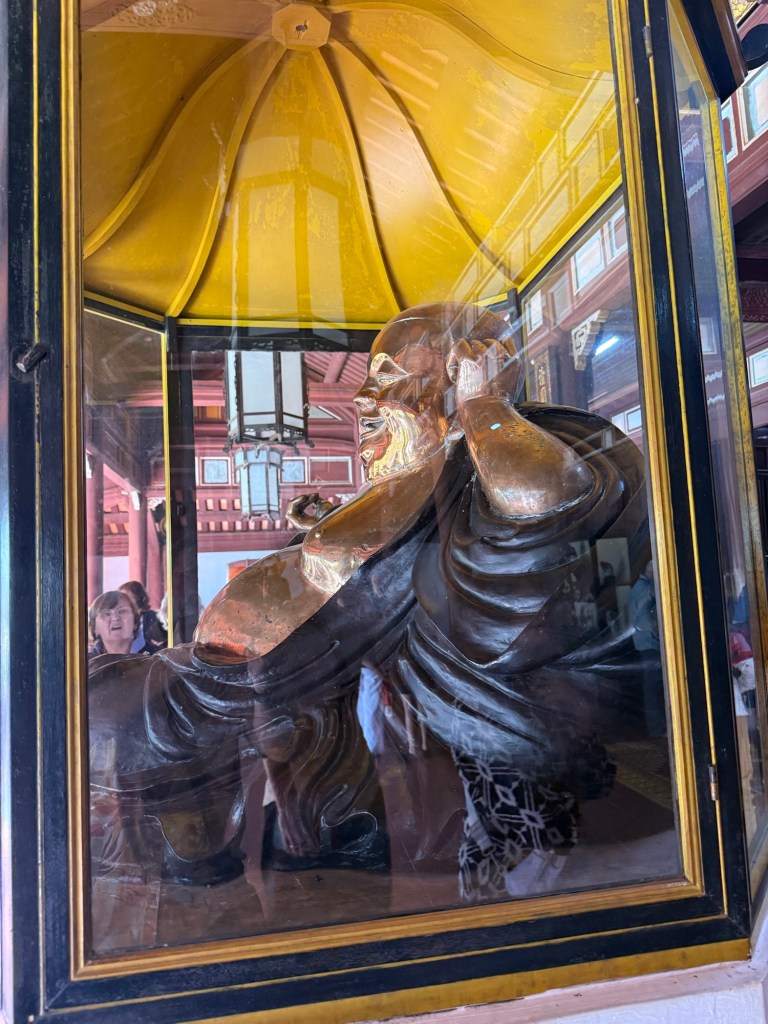
Laughing Buddha

Past, Present, Future Buddha

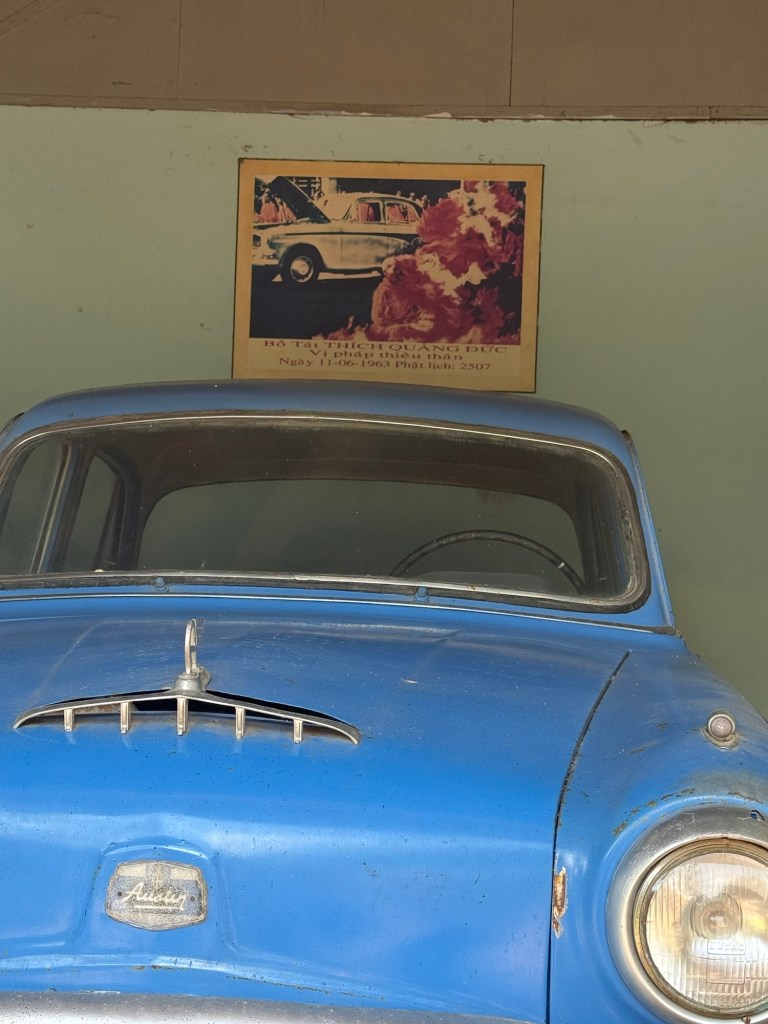
One of the exhibits commemorated the self-immolation of the monk Bo Tat Quang Duc in 1963. When the US first entered Vietnam they encouraged the new government to persecute and drive out the Buddhists (who supported Uncle Ho). Duc set himself on fire in front of the US embassy in protest, a visual that was a first wake up call to nascent protestors in the US.

Bo Tat Quang Duc Auto

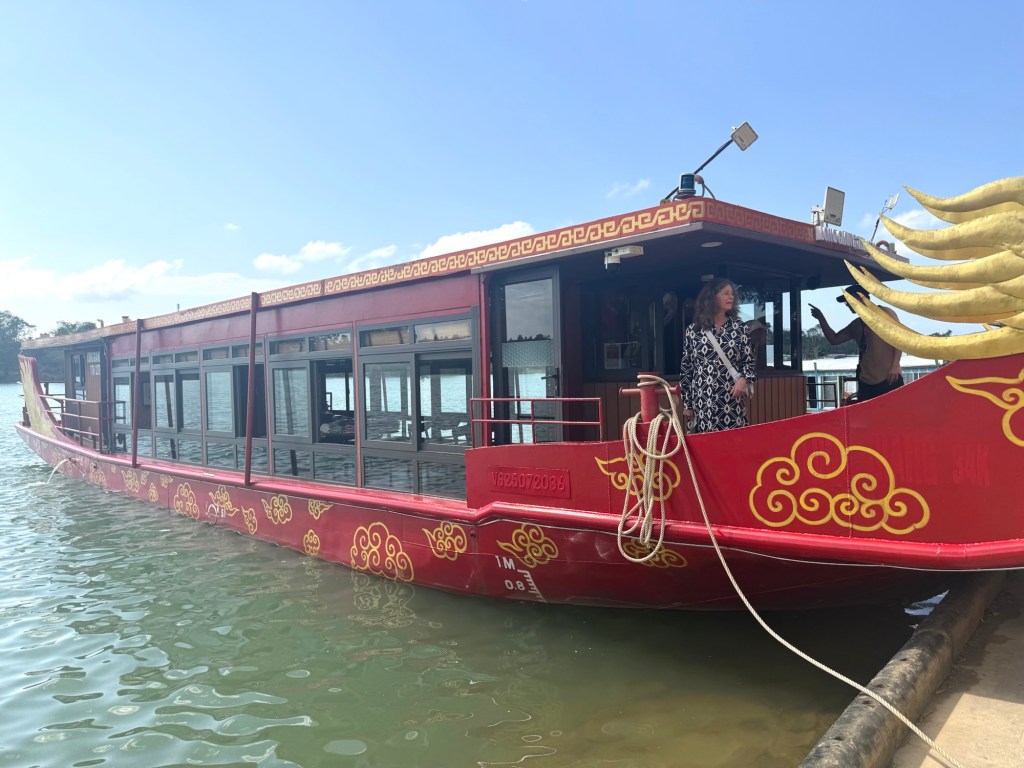
Tien put us on a boat from the Pagoda to our next stop. It was 50 foot long with seating for 30+. We were alone. Cost of transit, $27.

Private Dragon Boat

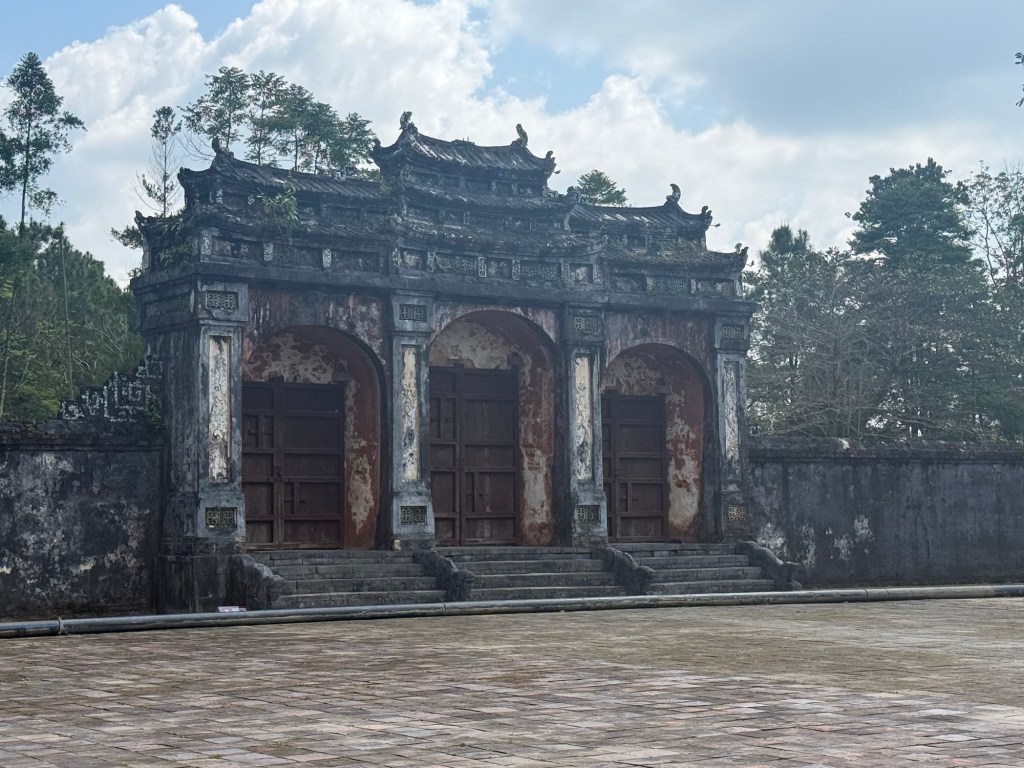
Our next stop was the tomb of Minh Mangh, the second Nguyen Empower. It was a huge complex dating to 1841 including a series of gates, homes for his Mandarins (ministers of finance, war, agriculture, etc) and his concubines. Mangh had 141 children as did many of the Emperors. A huge number of Vietnamese still have Nguyen as a surname today.

Minh Mangh Gate (sealed)
Corner detail
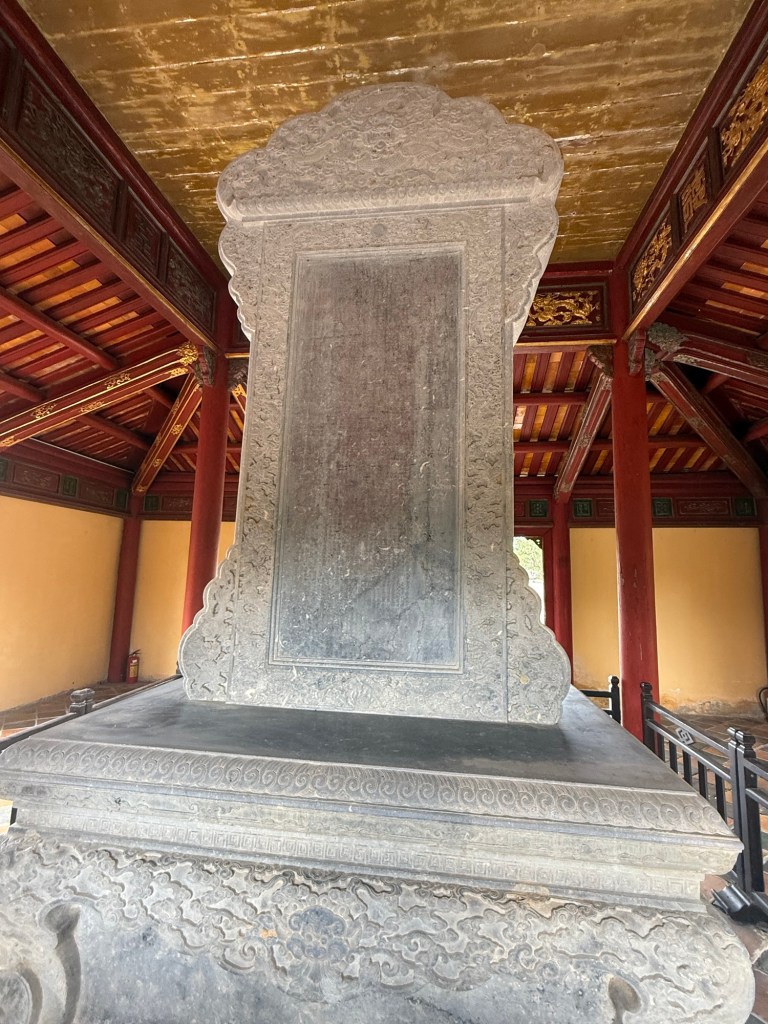
Sele (commemorative stone)

The Coveted Ao Dai Dress

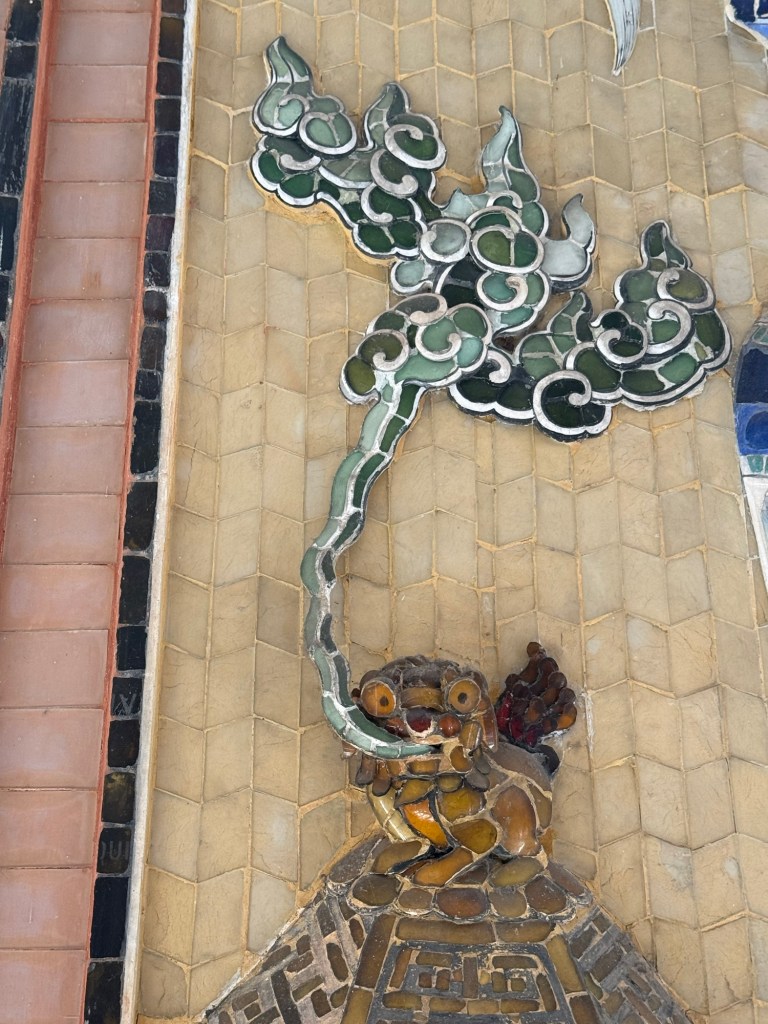
Jumping to the other end of the Dynasty we visited the Tomb of Kahl Dinh, the 12th and second to last Nguyen Emperor. Dinh was completely owned by the French. But he lived in royal splendor with all the trappings and wealth. His tomb, dating to 1925 was composed of beautiful, colorful ceramic mosaics. French influences were seen in the art, and in his ceremonial uniforms.

Kahl Din Detail
The Emperor as the Sun
More Detail
Kahl Din (1885-1925)

Great local lunch and more awesome coffee was arranged by Tien. Tien refers to American coffee as “Starsucks”. Some of the local flavors (sour river fish soup?) were a bit tough but the egg and salt coffee were sublime.

Our next stop was the Imperial City – really three cities the Citadel City for citizens, the Imperial City for the military and the Mandarins, and the Purple Forbidden City for the Emperor himself.

The Forbidden City was a huge 100 acre complex consisting of a barrier wall, a series of gates and a series of governmental management offices and temporary residences for the governing Mandarins. The complex contained the Emperors palace, library, treasury, temple, and gardens as well as palatial residences for his mother, mother in law and primary wives. More basic dormitories were on site for his hundreds of concubines.

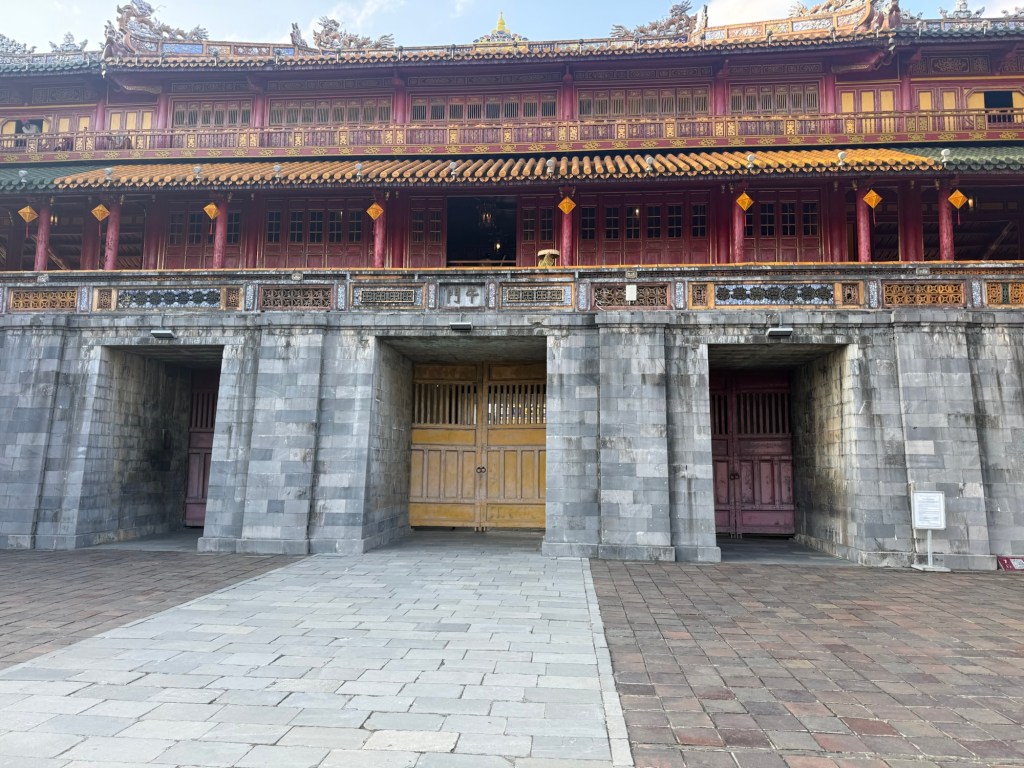
Forbidden City Gates
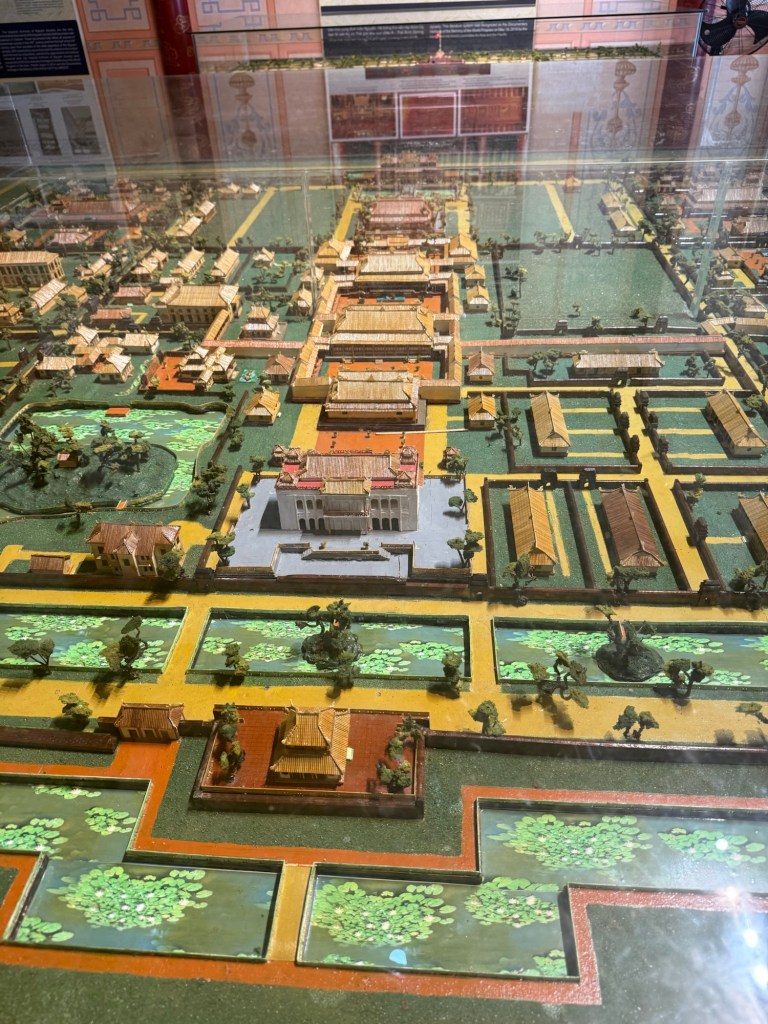
City Map
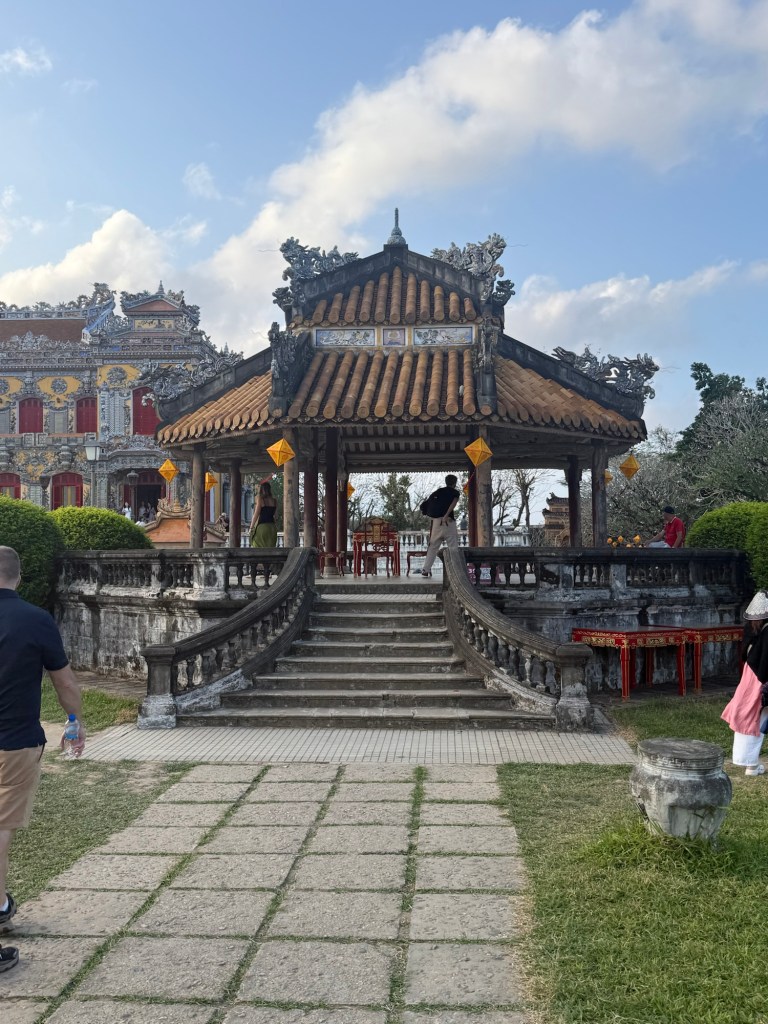
Emperors Pagoda
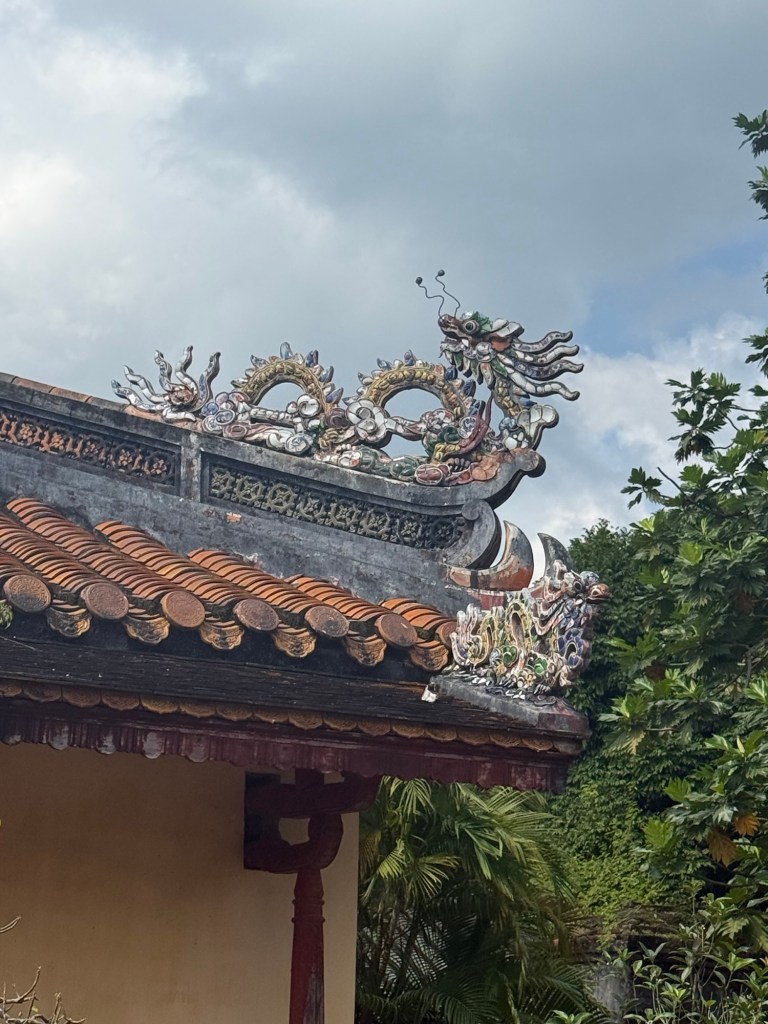
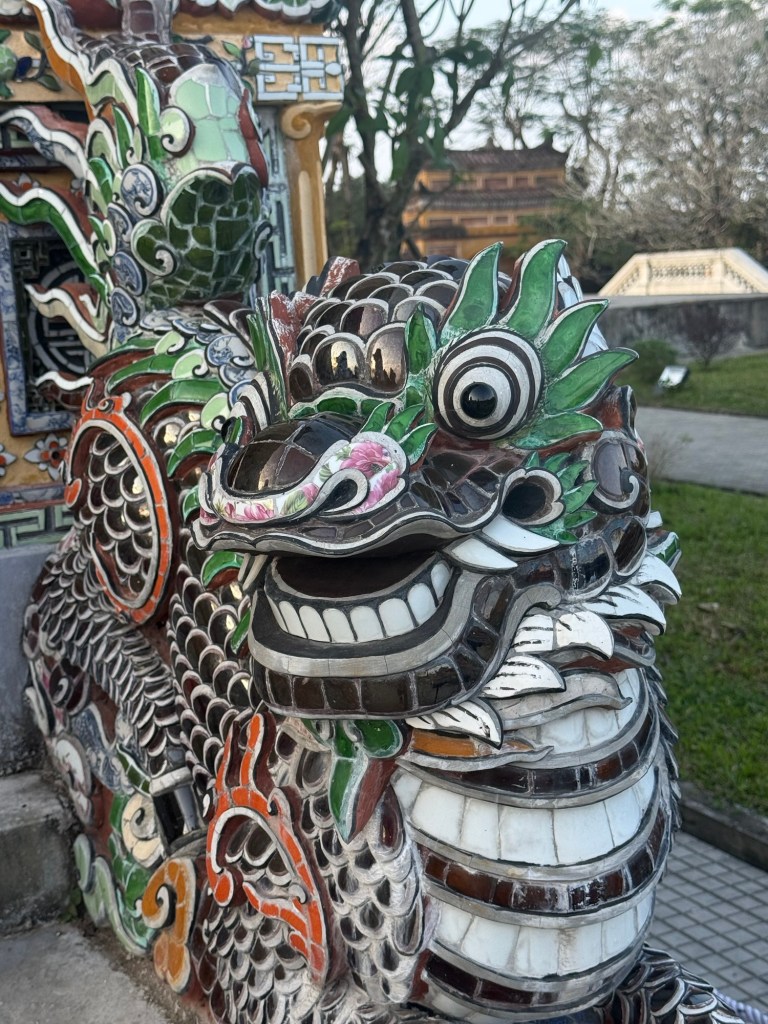
Corner Detail
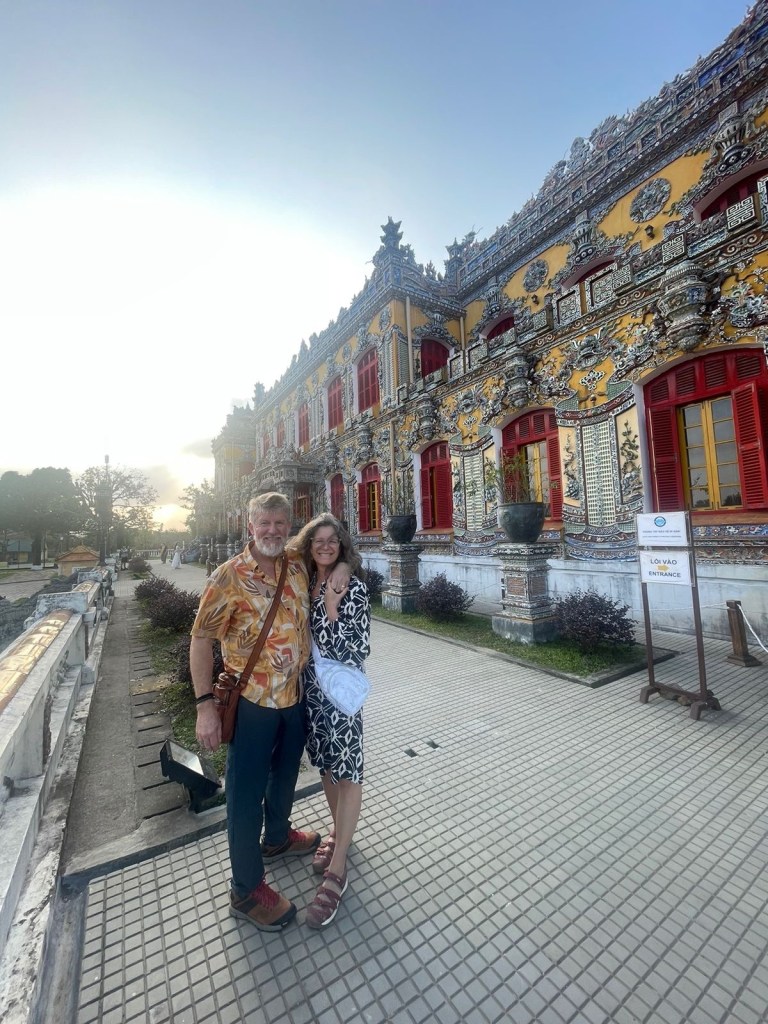
Imperial Palace

The center of the complex, including a series of three lesser palaces, had been destroyed by French bombs during a conflict with Emperor #8. They were in the early phases of reconstruction with UNESCO support.

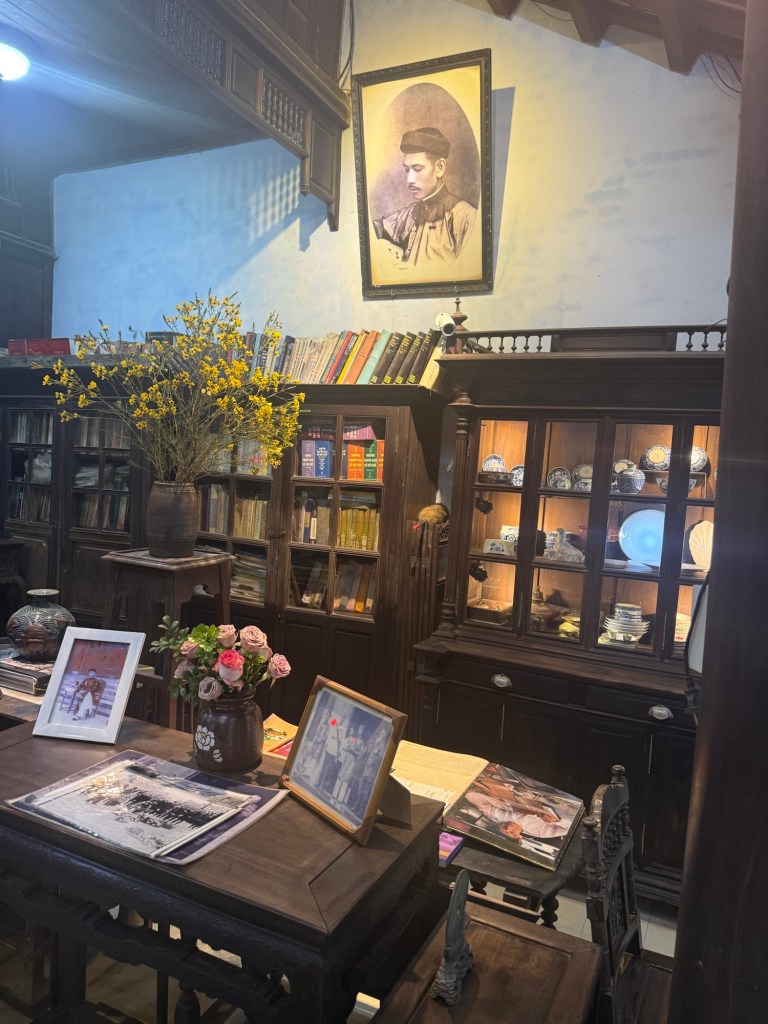
The last stop for the day was a private dinner at the Temple of Princess Ngoc Sun Ho – actually not a Temple but one one of the private residences of a ruling Mandarin.

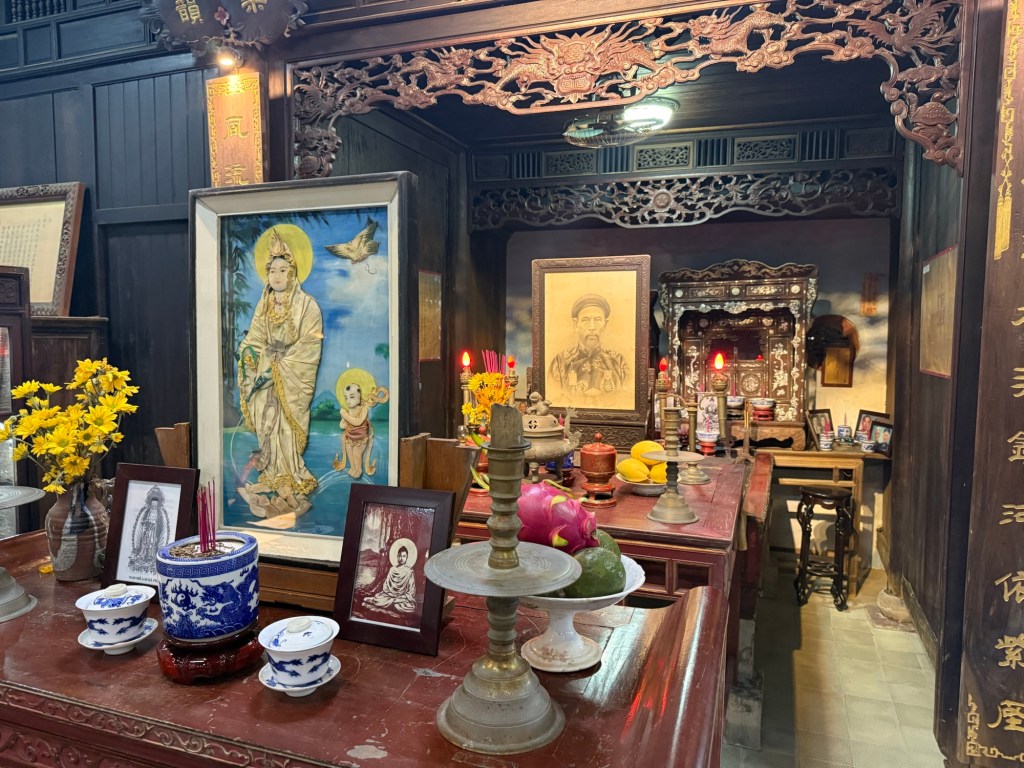
Family Shrine
The Mandarin’s Study

Our host Huong (perfume) carried us through the story of her 6th grandfather (a Principle of War under Emperor 12), and her 5th grandfather (a Mandarin under the last Emperor). This emperor, Bao Dai, was a bisexual French pawn who was eventually banished to Paris and died in 1997.

The Mandarin lost his first wife, a royal princess and built his home in honor of her. His second wife, with whom he had 14 children, was buried on the premises. The home was filled with photographs and historical family artifacts as well as a shrine to various ancestors.

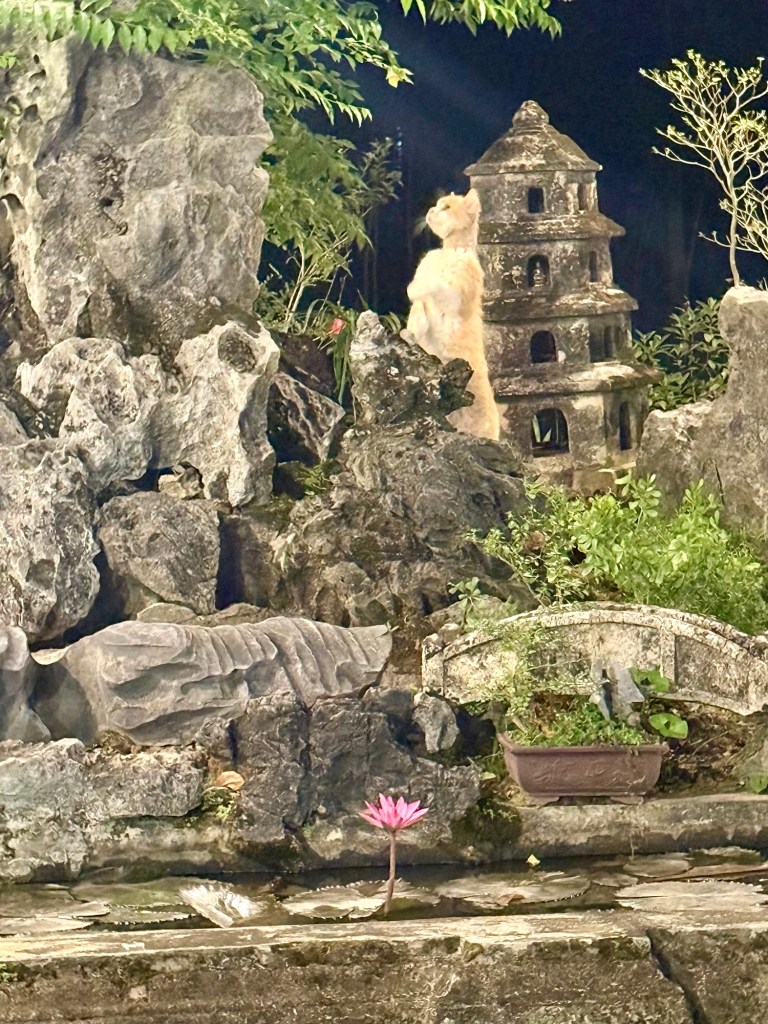
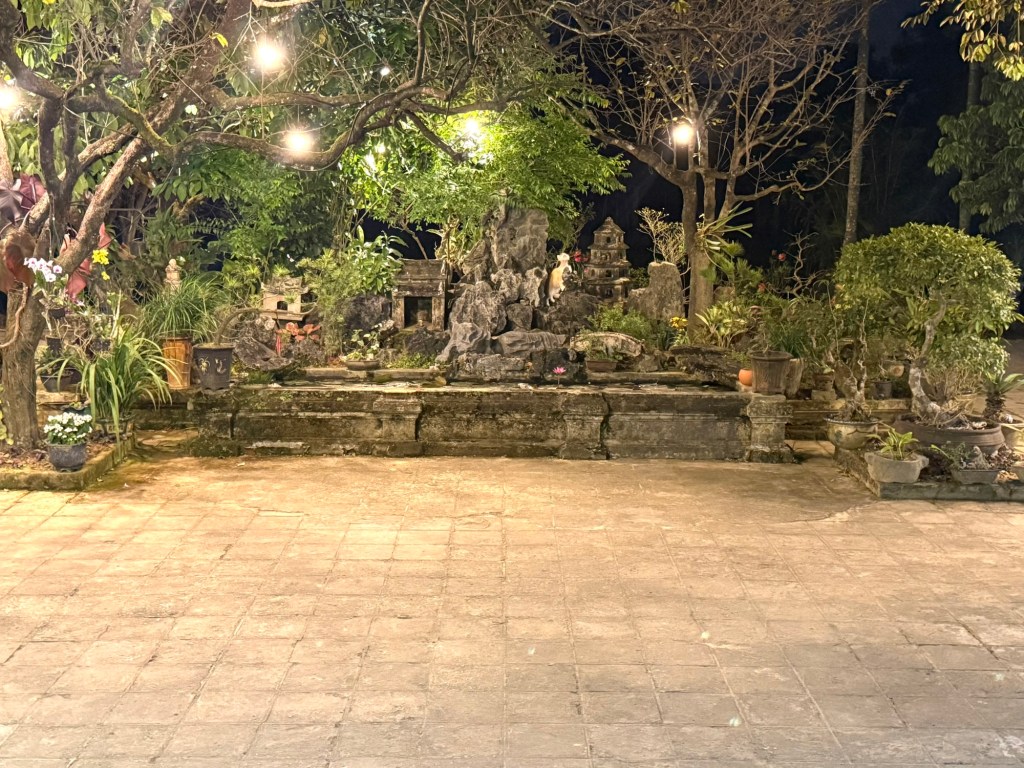
The gardens surrounding the home were incredible and Ms. Huong educated us on the feng shui principles involved in the layout of water features, seasonal gardening and stone features.

Lotus & Cat
Feng Shui Garden

We discussed a variety of historic stories and language lessons over a traditional Mandarin dinner.

But the most interesting parts were insights into Huong’s life as a recent college graduate, fiancé, and typical 22 year old Viet trying to find her place in a changing culture.

Exit Halong, Enter Hue

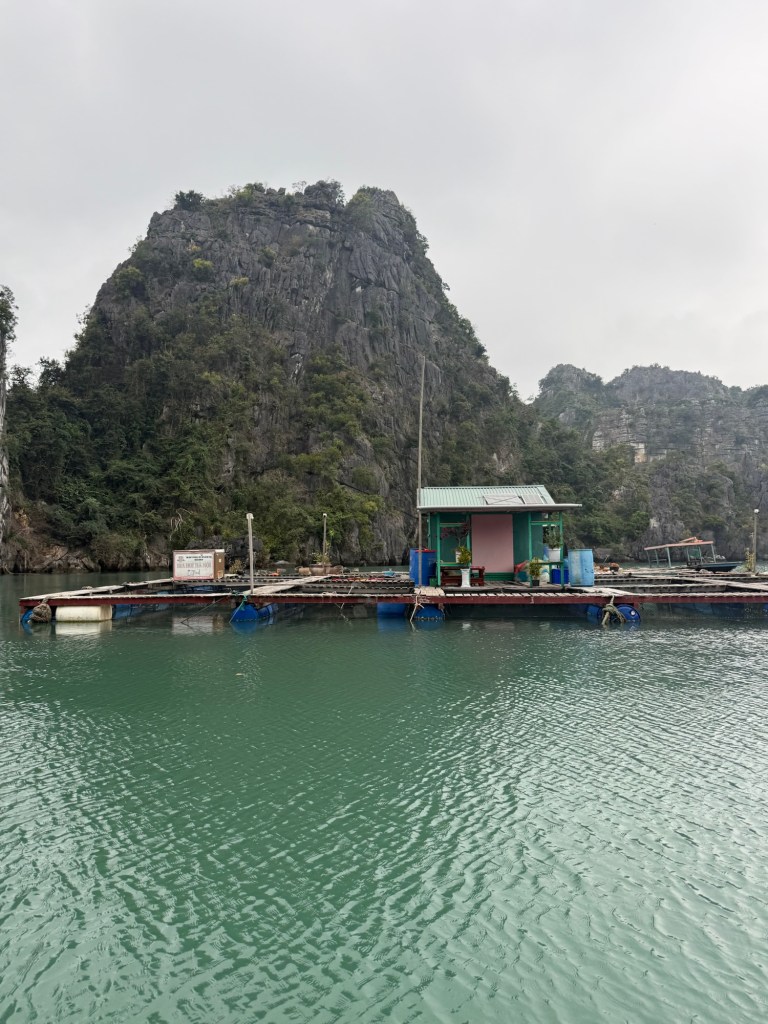
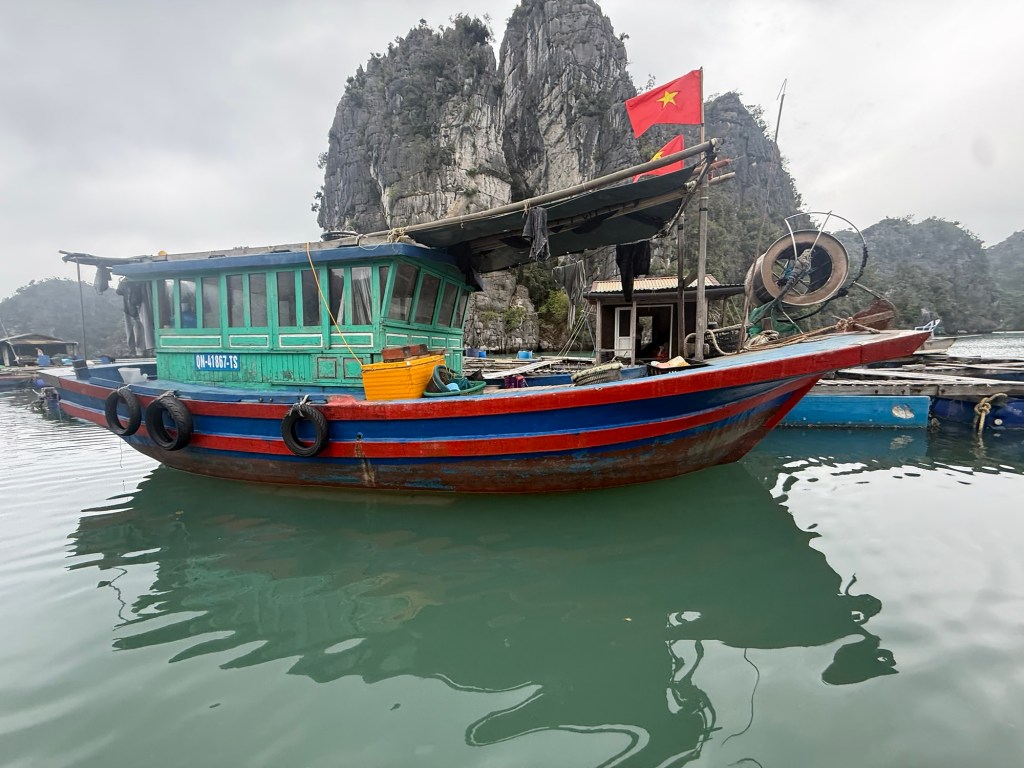
Short trip this morning at 6am to Vung Vieng, a floating fishing village of about 50 families. The families live in small huts on rafts, or aboard their boats. Some are connected, some separate.

Floating Home
A Live-aboard

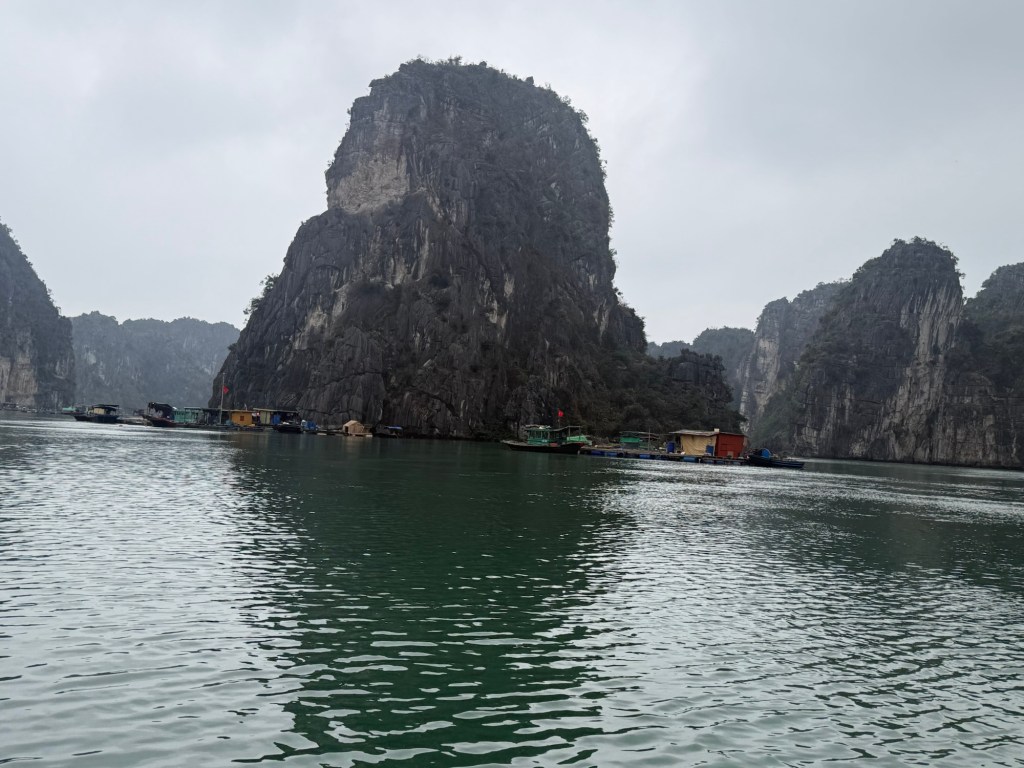
The community formed centuries ago in an area of closely clustered karsts that provide “Vung Vieng” or quiet and shelter from wind (and the occasional typhoon). The theory is that this temporary shelter evolved to permanence as the people started farming oysters, grouper, etc.

Gate to Vung Vien
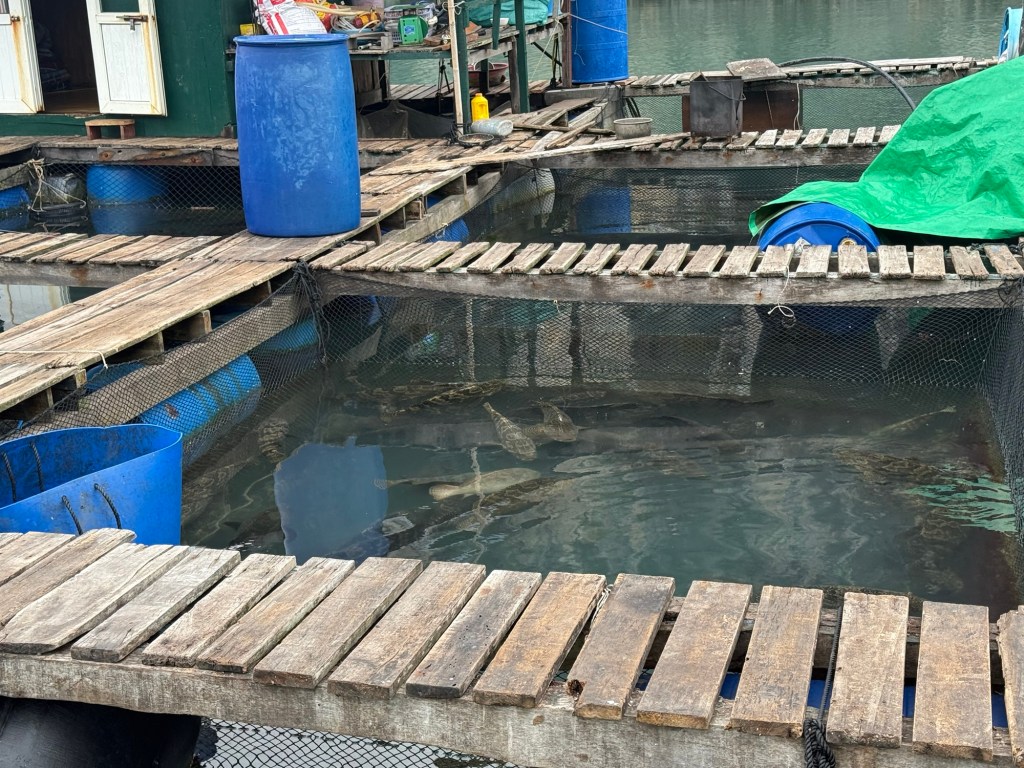
Grouper pens

The village has had many changes since 2014 when it numbered 100 families and USAID and other global charitable organizations engaged. They were seeking to address both severe poverty, health issues and poor education. This, while also maintaining the history and traditions of Halong Bay fisherfolk.

Today, Vietnam pays for the children to be schooled and housed on the mainland from Monday to Friday. A tourist business, primarily boat tours and the sale of pearls has been established.

Leo told us that his tour company “IndoChine Junk” contributes significant fresh water from their onboard systems to the fisherfolk – one of the most expensive aspects of living on the ocean 3 hours from the city.

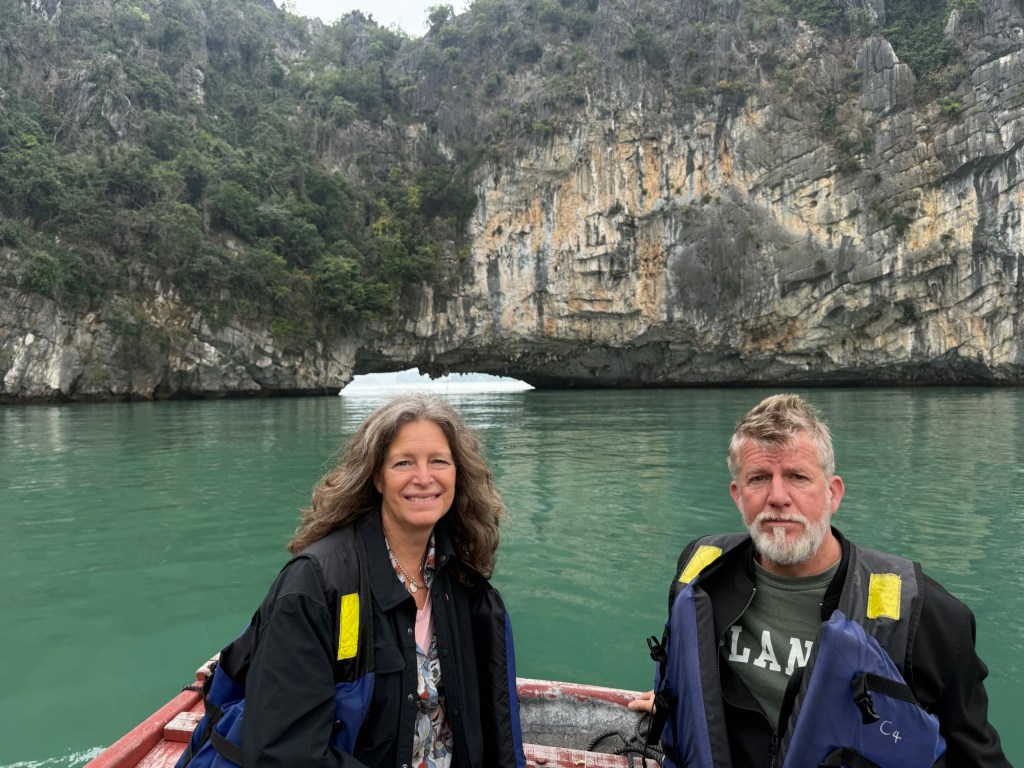
We were rowed into the village from a staging area outside the grotto – the only way in, which helps to limit some tourist volume. It was quiet and relatively empty as the children were away and many of the adults were out fishing.

Powered by “Ms. Guave”

Inside the grotto

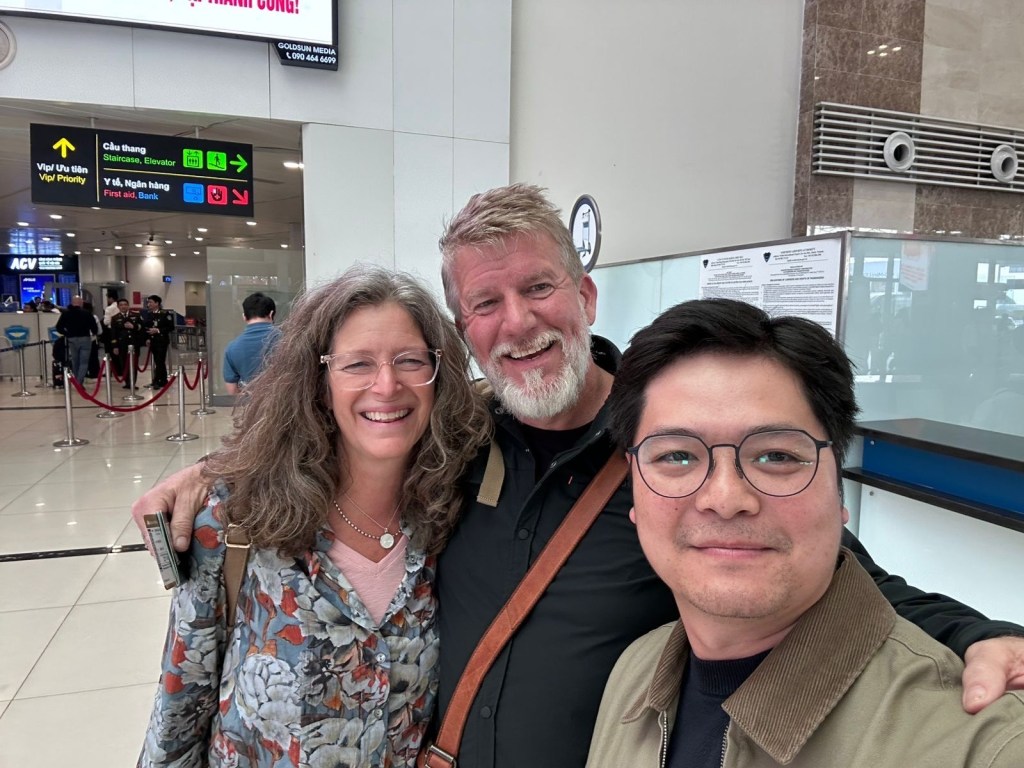
We were on the boat, packed up, back on the dock, and off to Hanoi airport by 10am. Somehow they managed to feed us twice before we left. Good to see Q and Angh again for a bit! Good bye friend 🥲

G’bye Q

Not a lot today, so JuJu and I went back through our notes and grabbed some random anthropological notes that didn’t make the blog.

1.) in Vietnam a first introduction always starts with age. This allows due deference and also an understanding of what parts of their history impacts their language, perspectives, etc

2.) The Vietnamese daughter in law is responsible to produce pillows (1,5,20) for guests to sit on. The quality and craftsmanship is a huge social metric.

3.) Hanoi is 38% Buddhist, 50% atheist (though some of this is communist social positioning), ~1% Christian and ~1% Muslim. Outside the main population centers there are a huge number of hybrids or tribe and regional traditions – many Animist, Tao, nature-spirit or ancestor based.

4.) A “siesta” culture is very much evident. People stop for an hour or two early afternoon for a nap (or in the cities, a coffee).

5.) Shoes OFF even in a peasants home. Naked toes, and bare shoulders are low class. Shorts and logo t-shirts are not stylish.

6.) It’s the little things. But when we fly Juju loves being called “Dear Passenger”

We arrived Hue at 6:45 and met our guide Tien (sound goes up at end), and our driver Hien (sounds goes down at end). He’s energetic, young, solid English, and a Danang/Hue local. Checked in at the beautiful La Residence.

Quick bite and chat at the bar with a Scottish couple. They’re in NATO so we pretended to be Canadian for a bit. We eventually confessed and WTF’d our idiot in chief for a bit.

9 am start start tomorrow.

Halong Day (chill and sleepy) & Arts and Crafts Night on the L’ Amour

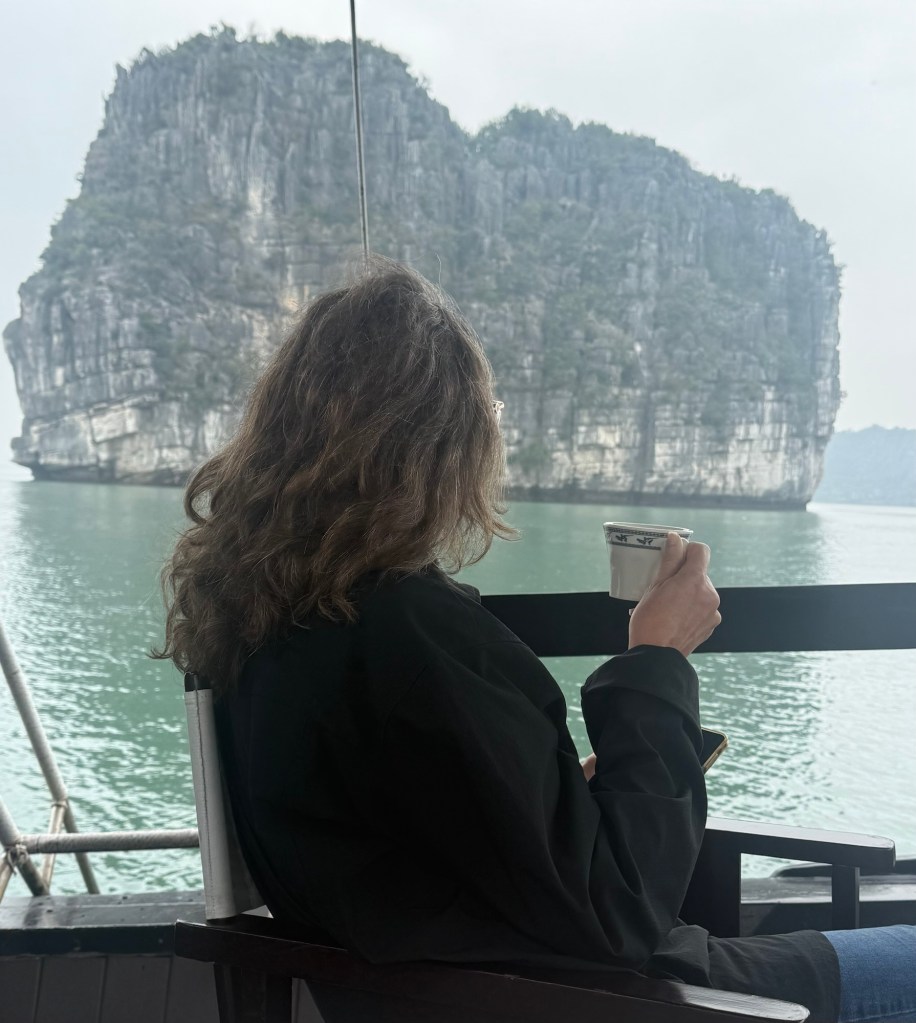
It was a slow start to the day, noodles for breakfast and slowly cruising through the Karsts. It’s cool and comfortable, and decompressing in one of the 7 natural wonders of the world is no hard duty.

Breakfast Noodle and Karsts
Morning Beauty

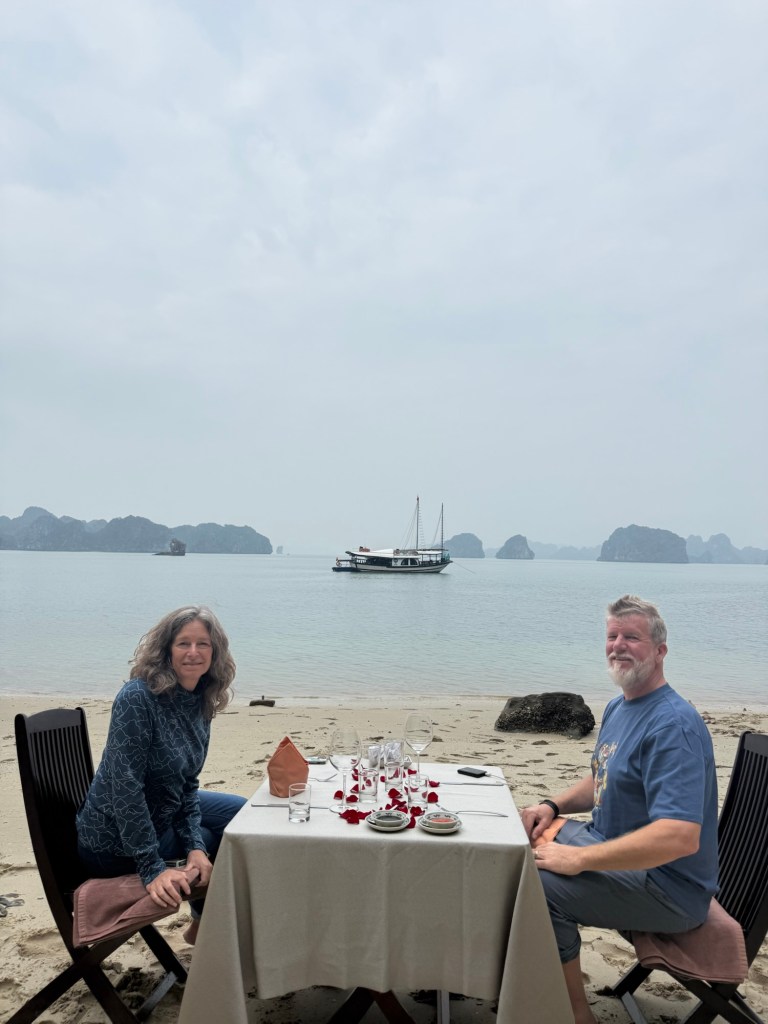
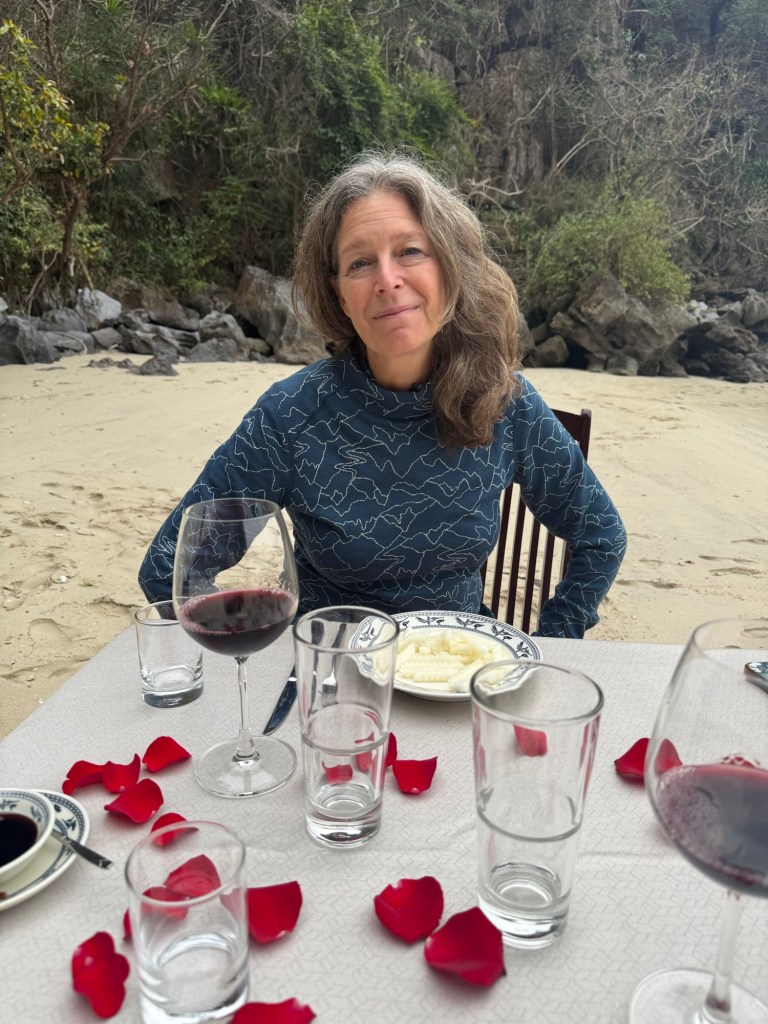
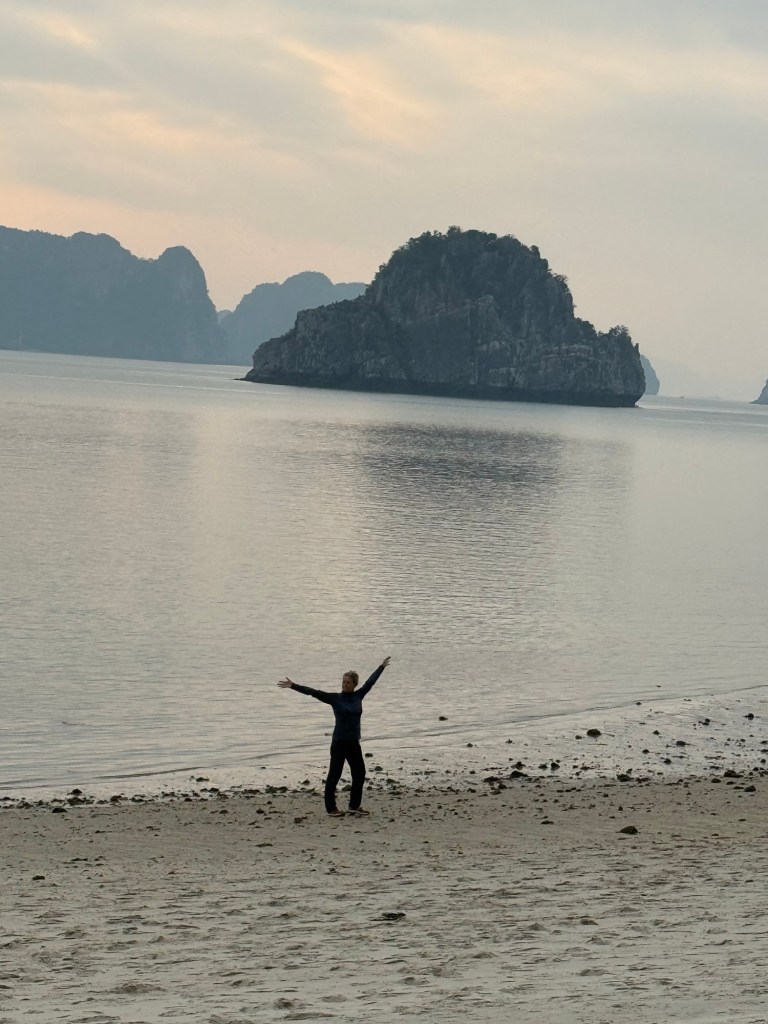
By mid day we were at the far northeast end of Halong near the Van Gigio island chain. A BBQ on the beach was in order. The “BBQ” turned into another amazing meal with all the fine finishes. We should have dressed.

Grilled prawns, pork, mackerel (amazing) and other wonders
Rose pedals on the beach

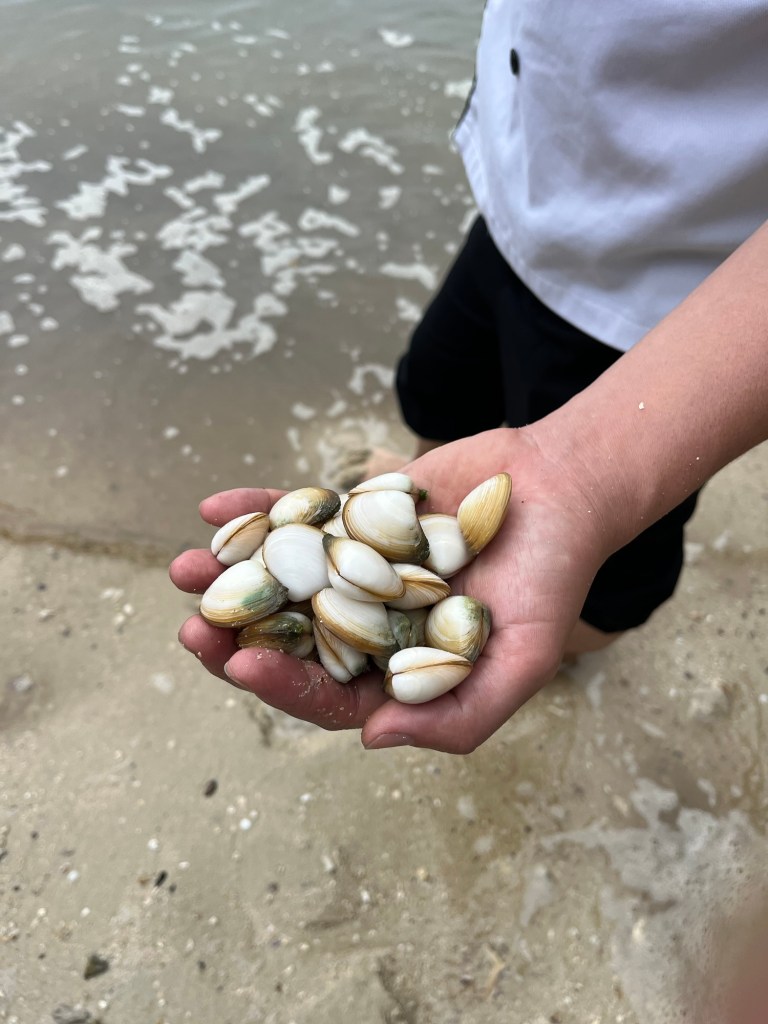
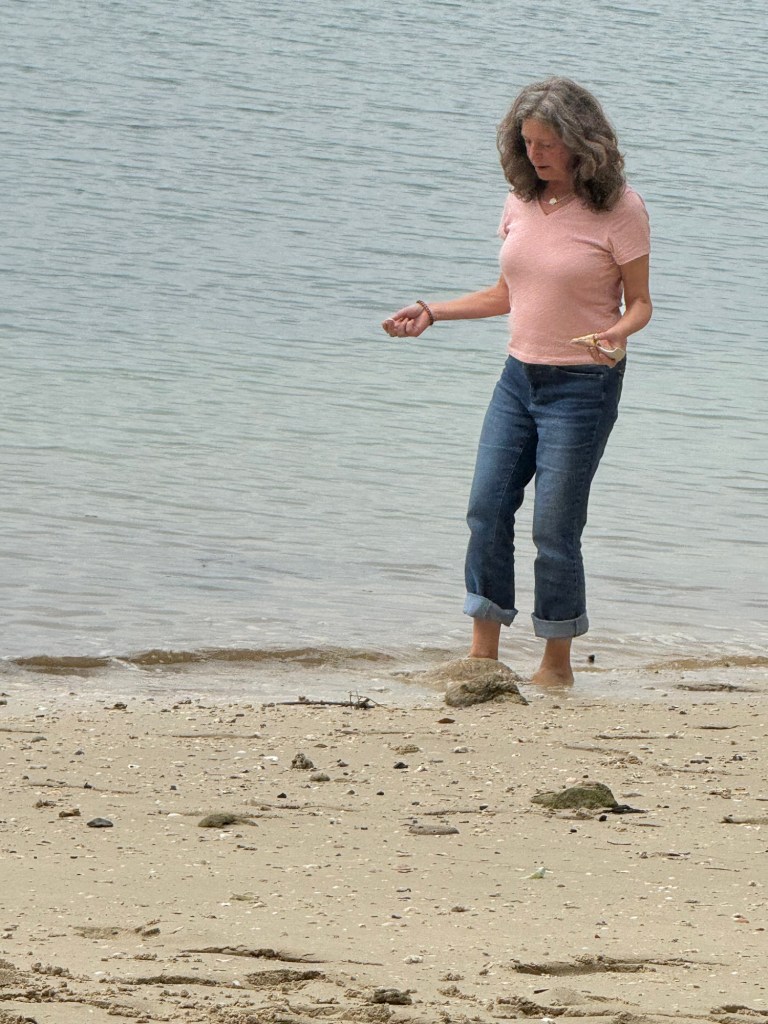
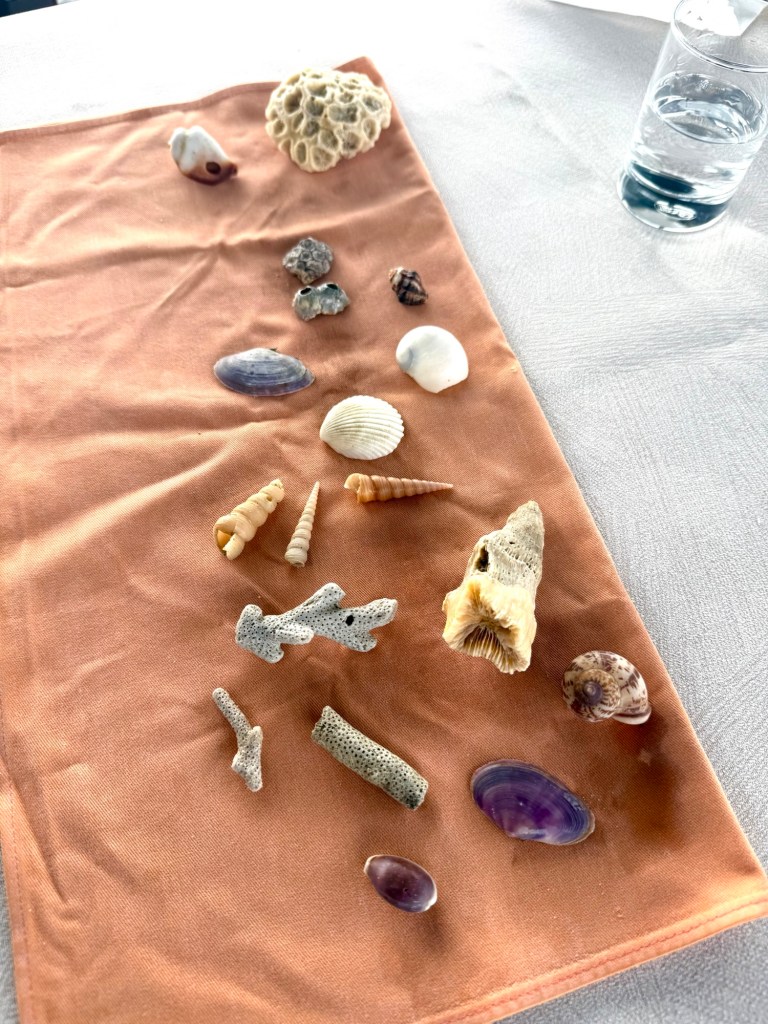
We did get in some more typical Kinnaird activity like beach-combing and yes, foraging! Not sure if we’ll get to eat them but we did contribute 4 clams to the bucket.

Forage
Clamming JuJu
Treasures

While we were beach-combing one of the crew scaled the cliff for some traditional medicine for his diabetes. Don’t see that in Cape May.

We were very excited after lunch when Captain Tuan put up the sails on the junk! This, however, was just a photo opp for the spoiled Americans and they came down quickly.

Sailing to nowhere

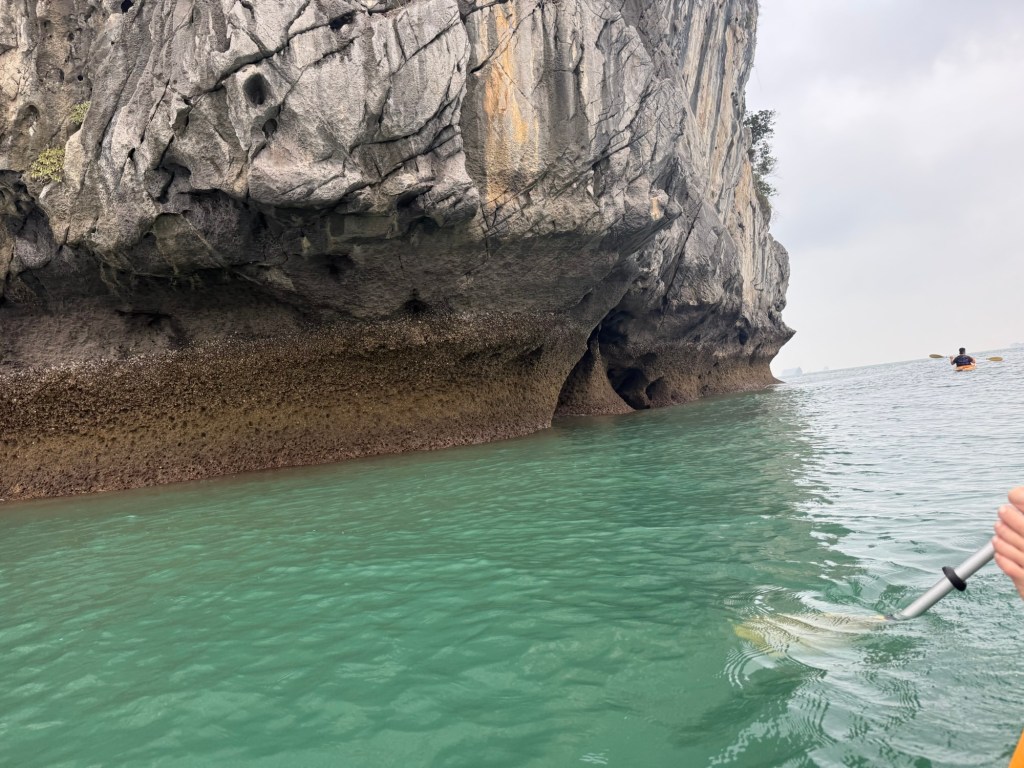
We did some more kayaking, this time at ultra low tide. That opened an amazing number of “wet caves” in the karsts and we could see tons of coral in the shallow emerald waters.

Wet caves

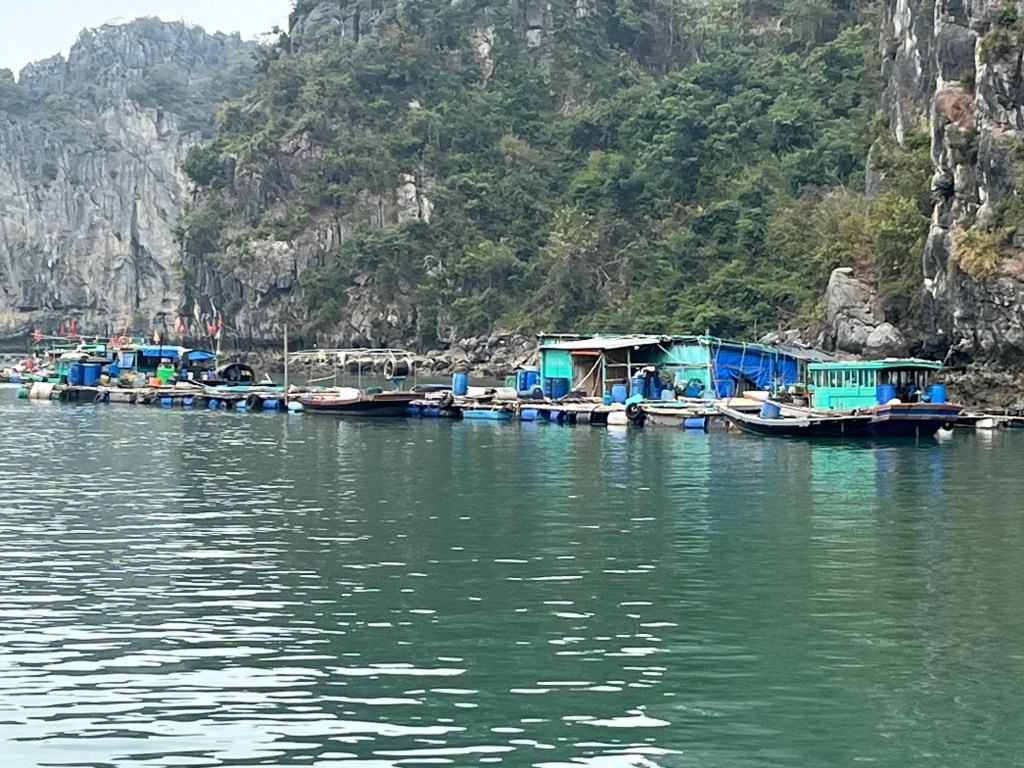
We were in a local fishing area. The fisher families live on their boats and raft up in villages of 5 to 50 families for community. They also farm grouper – something new to us. Interesting to see some of the older guys rowing gracefully with their feet!

Fishing village
This Device on Hands-Free Mode

(An observation, we are NOT used to having our hands held, helped in and out of boats, forced to wear life jackets kayaking in flat water, and constantly asked if the staff can be of service. Every time I reach for my beer Leo jumps to his feet. He hovers constantly. Parts of it are cool, but it’s getting a bit overbearing. I know, I know, first world problems but they kind of treat us like we’re 80.)

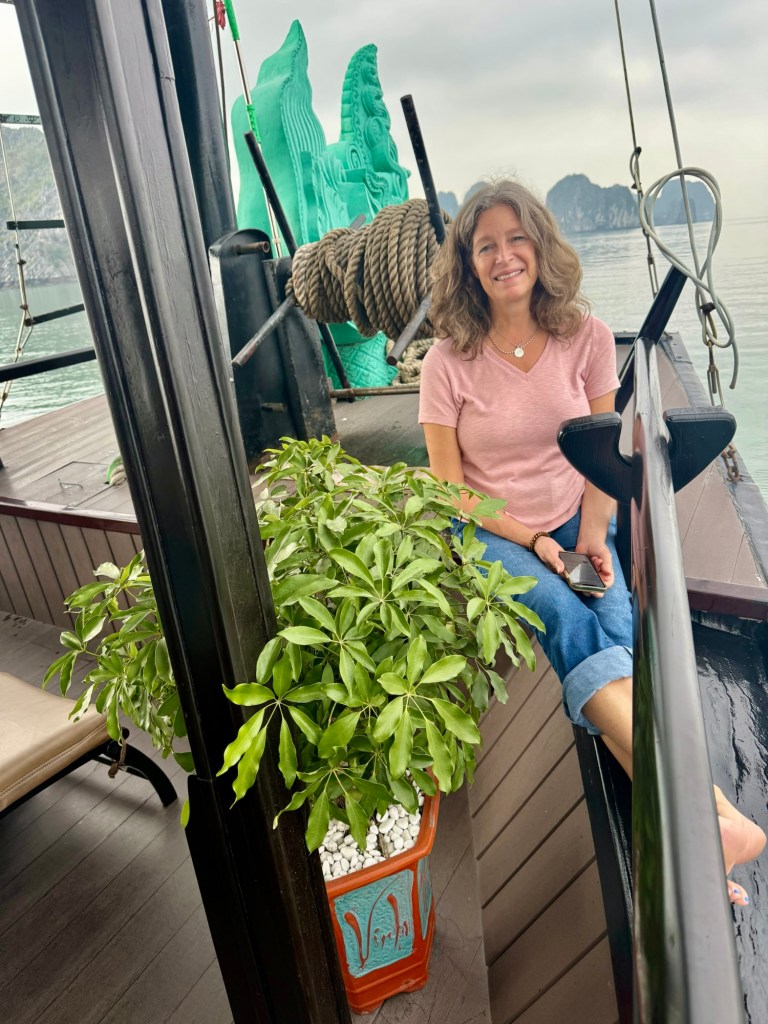
That said, this has been soooo restful. We have spent 60+% of our time just sitting in a boat watching beauty float by. We find ourselves talking in whispers. It’s almost sacred. Half awake, half the time. It’s not usually my jam – too mellow and self indulgent. But ya know….

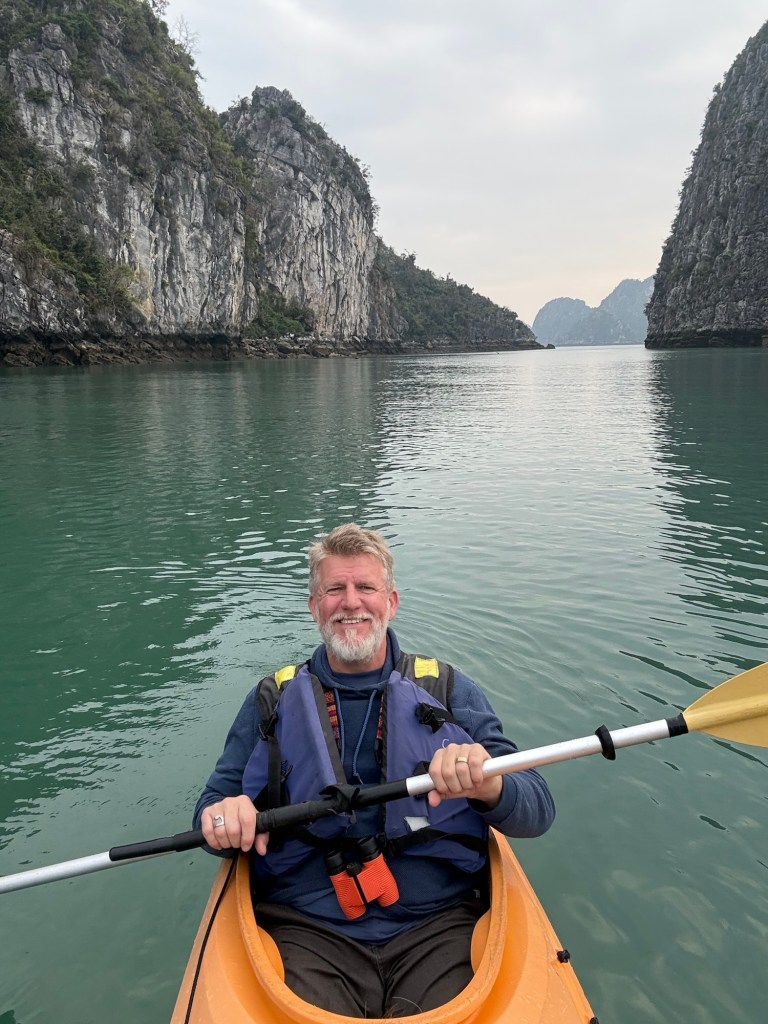
I’m on a boat
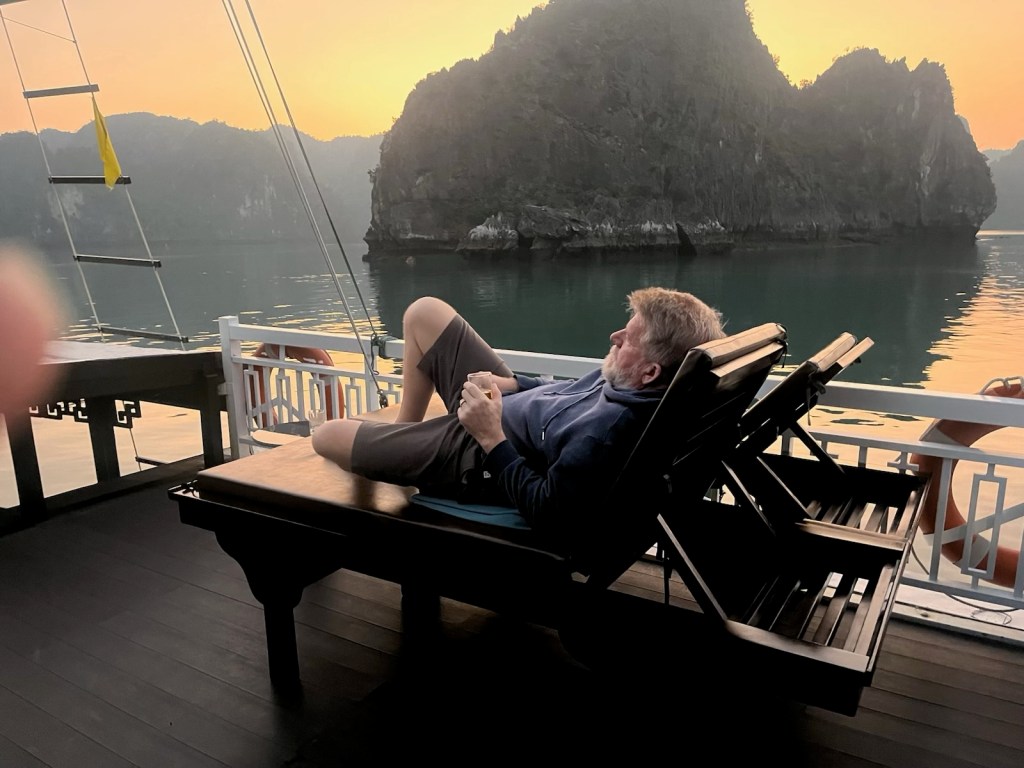
Topside Nap

We’re wrapping up Halong Bay with a flight out to Hue tomorrow. It was a flurry of activity last night. I feel like Leo went to his cabin to check the list of stuff he was supposed to show guests and went “Oh shit”

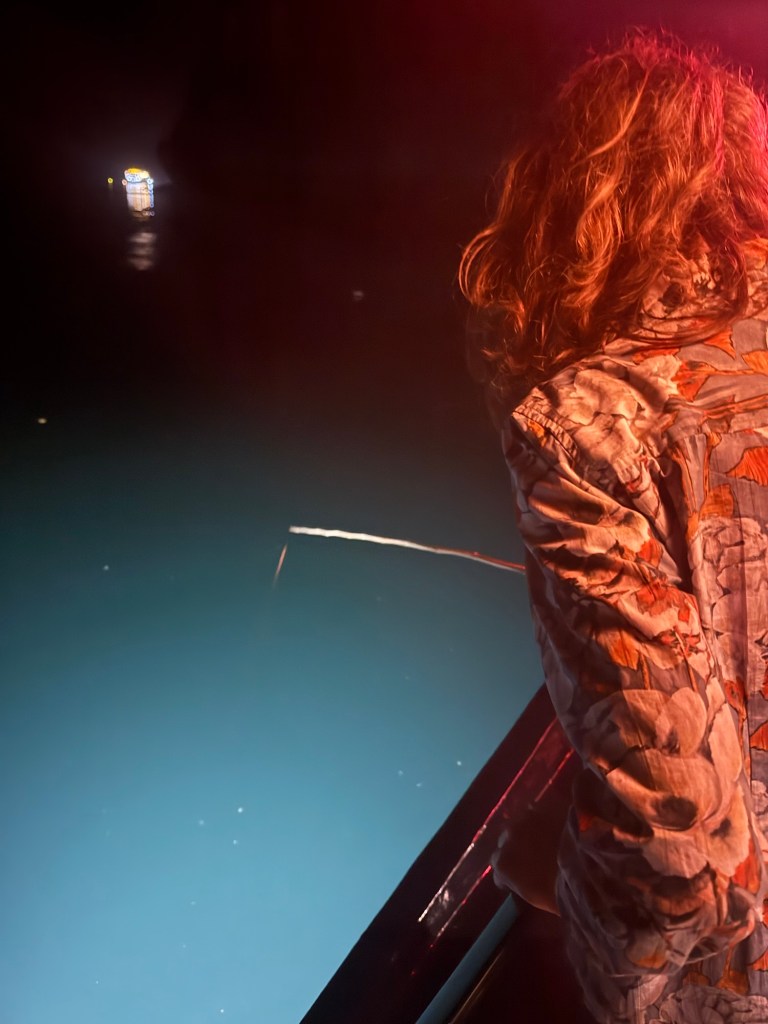
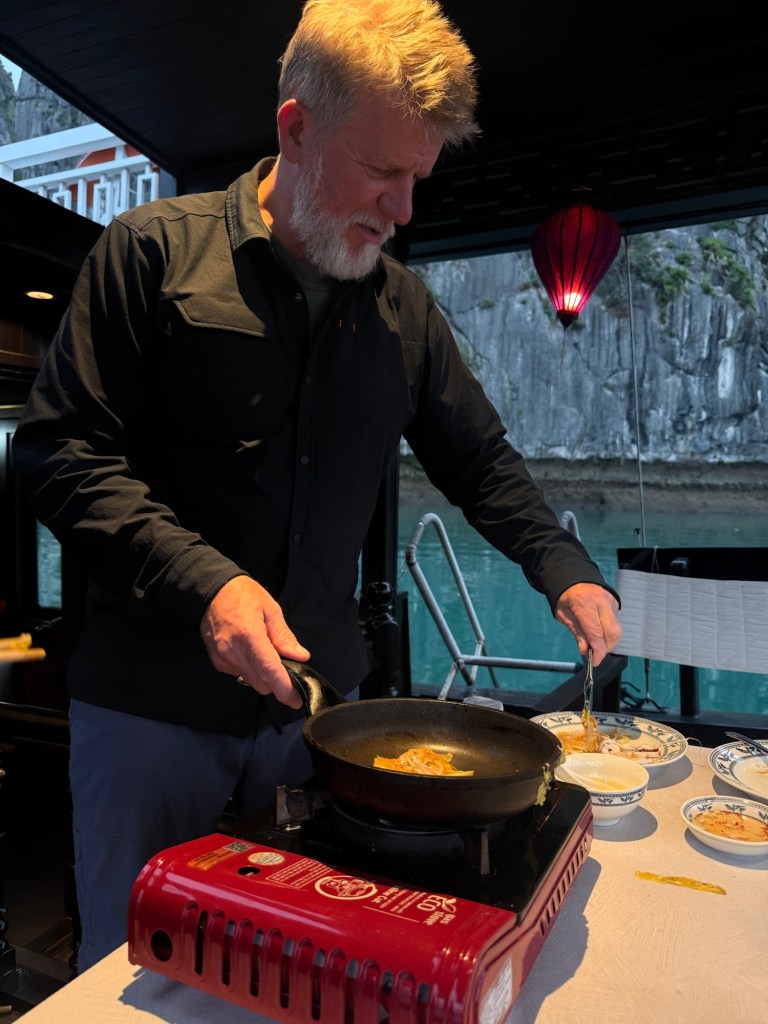
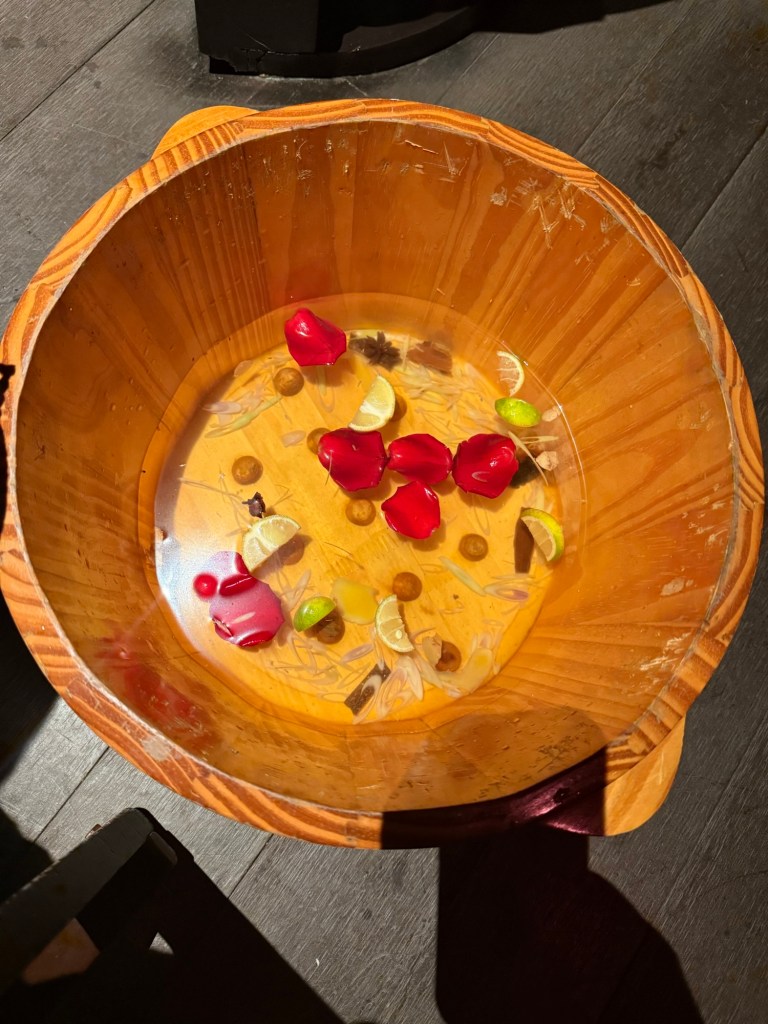
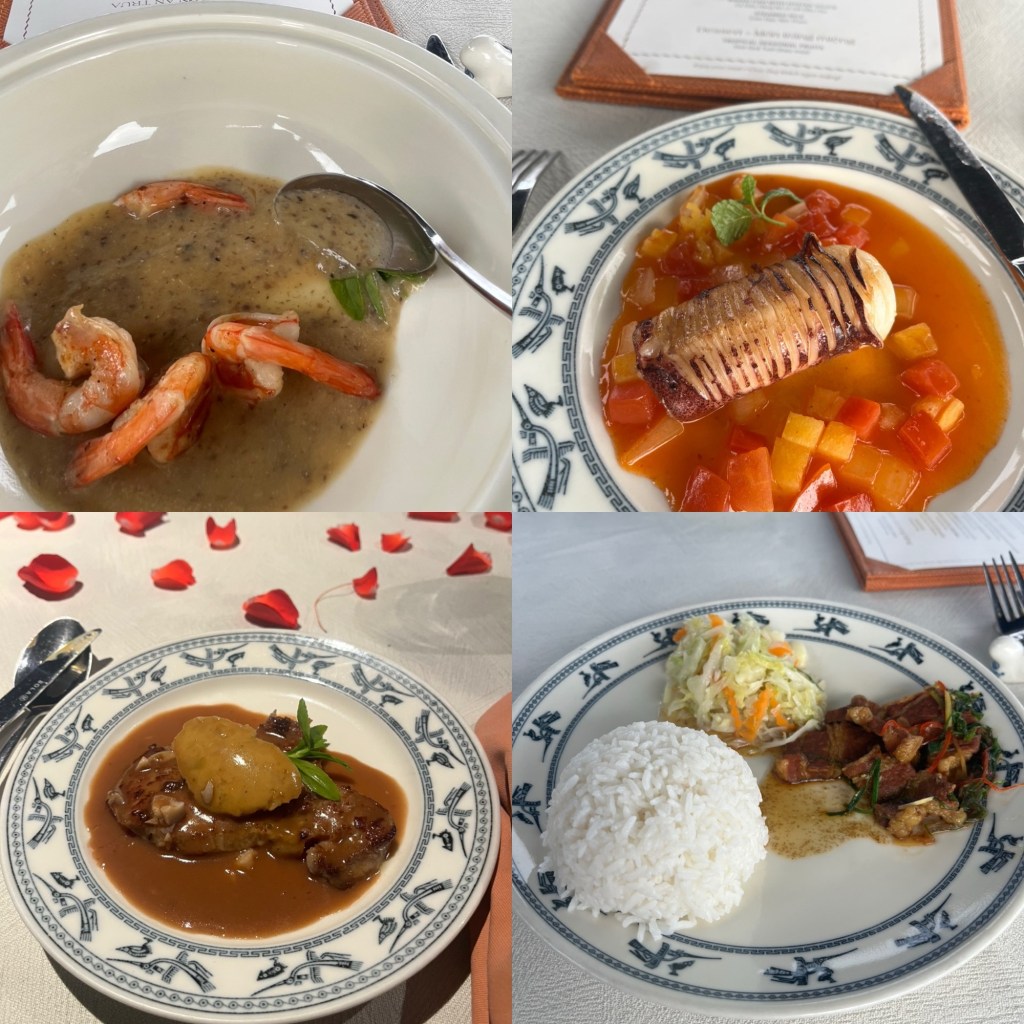
So we tried squid fishing (fail), had a crispy Vietnamese pancake cooking class (success), had a foot bath, and then another wonderful 5 course meal. Bun Cha was on the menu but a very different version from the Bourdains experience in Hanoi.

Squid Jigging
Crispy Pancake Lessons
Foot Bath
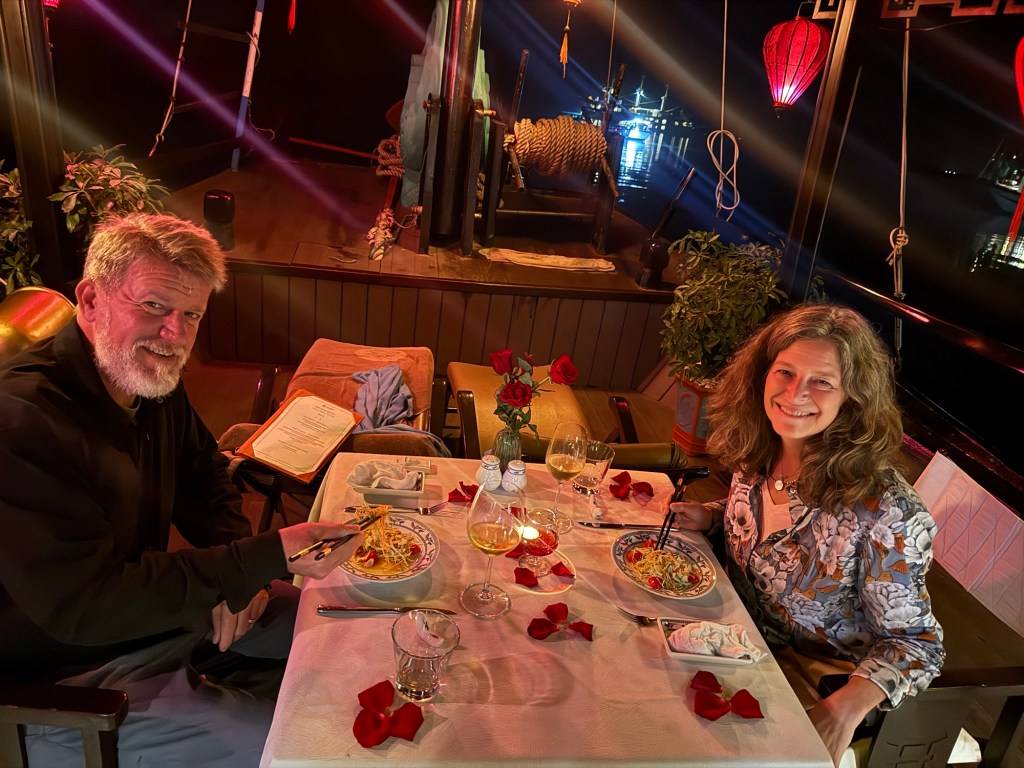
Romantic Dinner

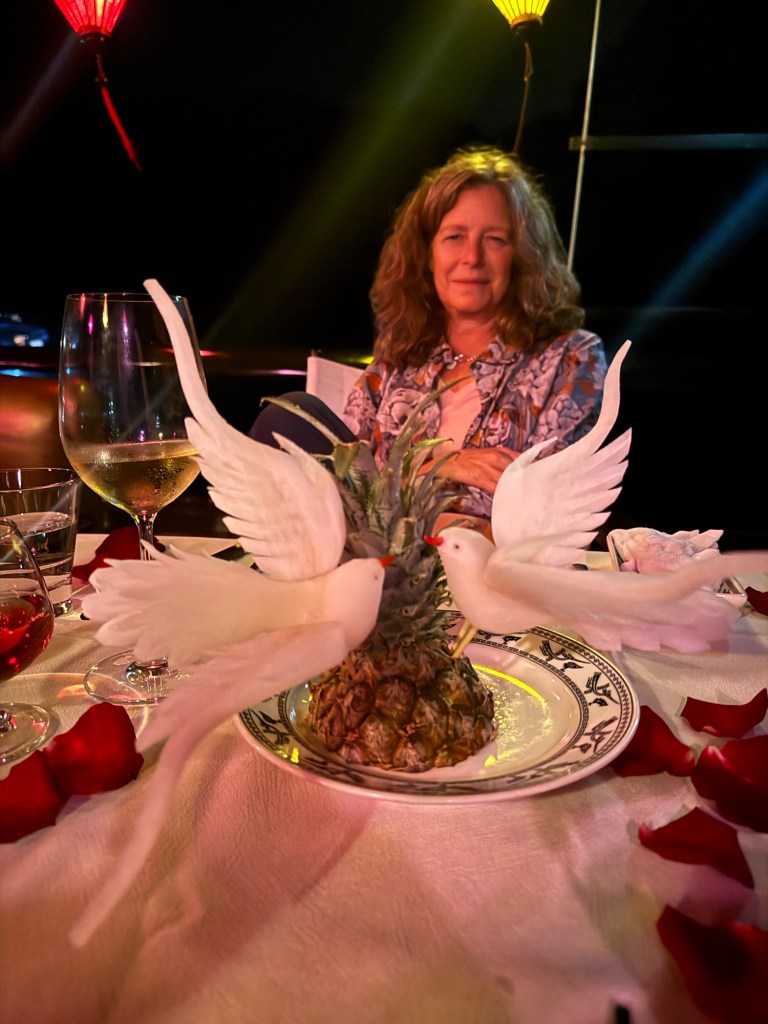
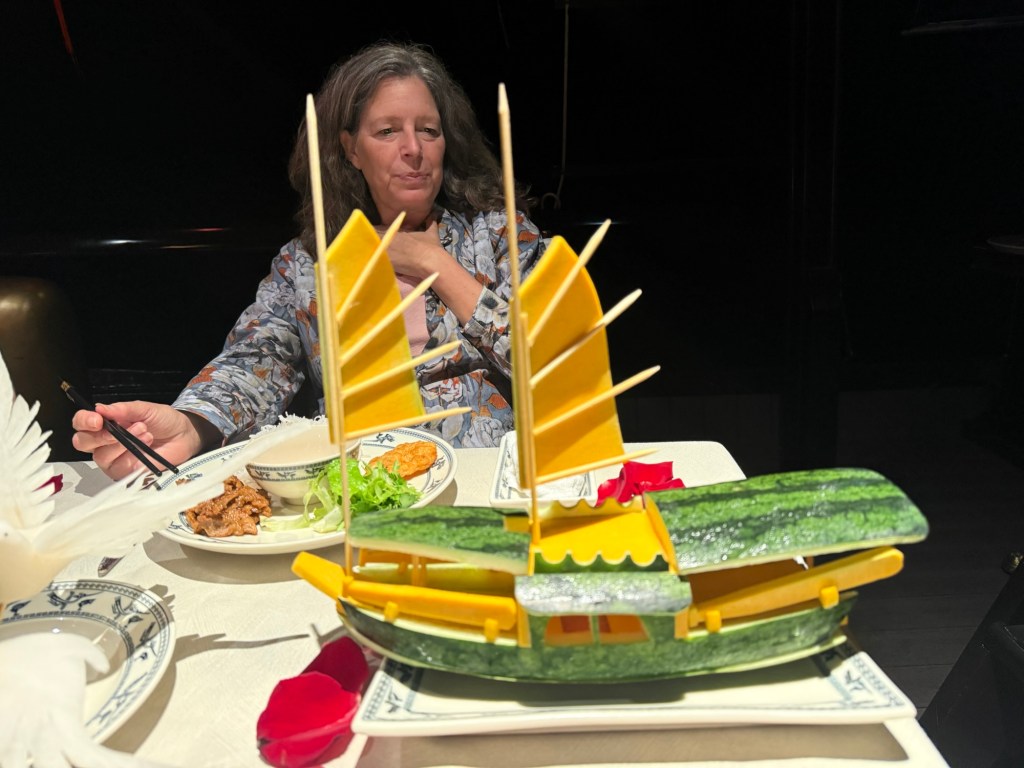
It was also arts and crafts night. The cook showed us his food-art (apparently he’s famous for it) with two radish doves and a watermelon and pumpkin version of the ship – in photo op mode of course. Really impressive and we were told he did it during our one hour kayak trip.

Radish Doves

Then we had what was truly a compelling experience. Leo pulled out a bamboo flute and played us a traditional Hmong song from his home in the Northern mountains.

Leo jamming Hmong style

G’night from Halong Bay. Monday January 19.

Dawn gathering, Pearl shopping, and off to Halong Bay…

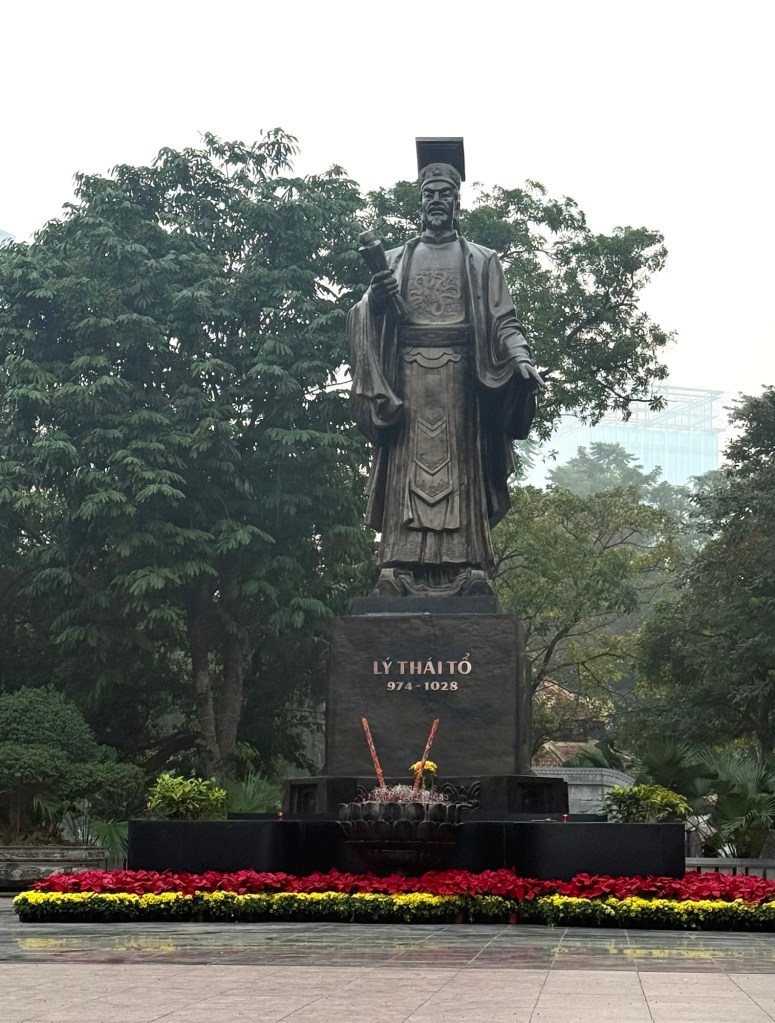
Quyen suggested a dawn walk to Ly Thai To Park – named after the emperor of the Ly dynasty 1010 AD.

Ly Thai To

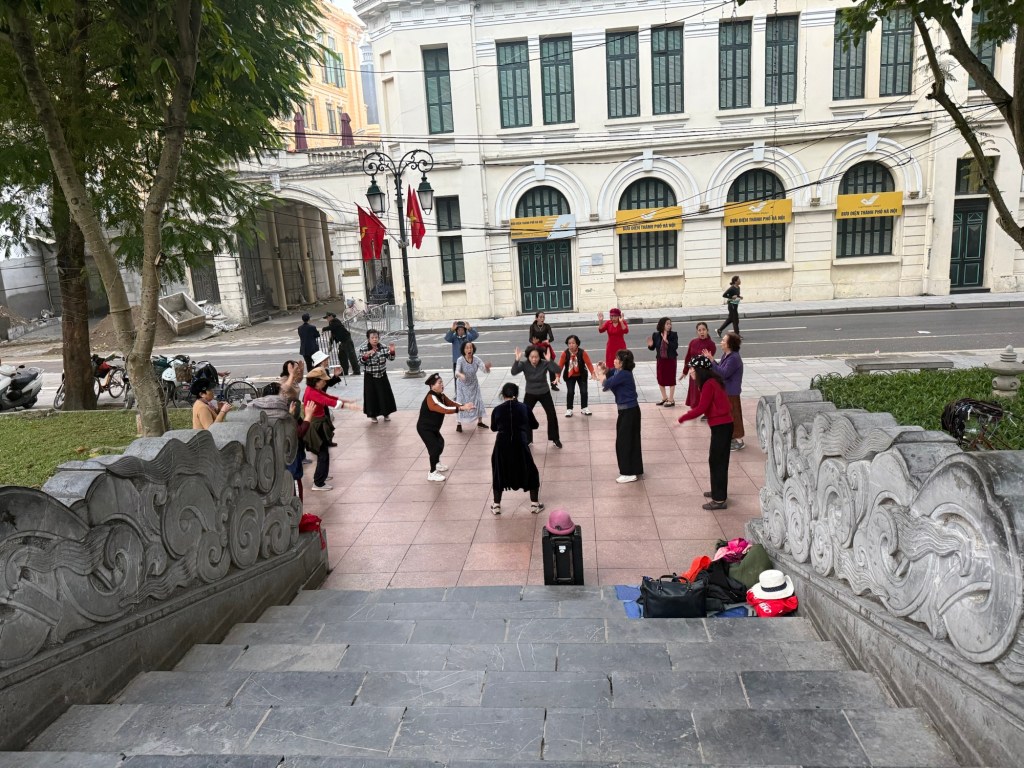
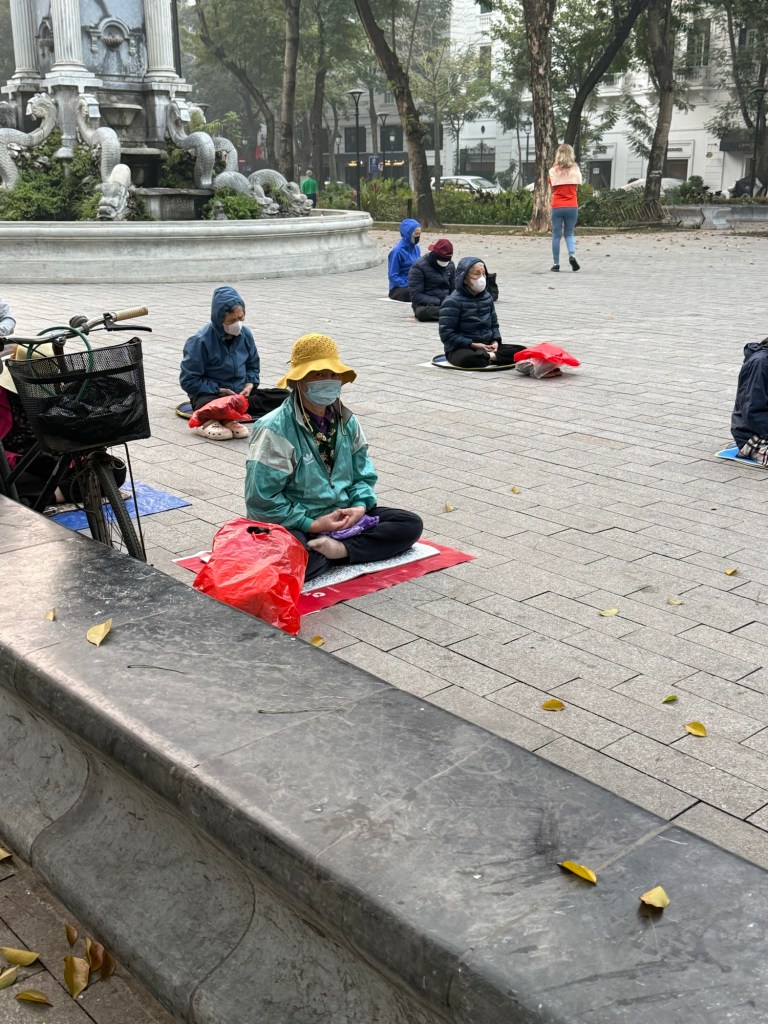
The road was closed to traffic from the Metropol to the Lake. In the early Sunday light, there were about 300 people doing Tai Chi, Falun Gong meditation, salsa dancing, aerobics, badminton, hackysack, and laughing-yoga – the mix of sounds, music and voices was cacophonous. There were also another couple hundred running a 1/2 marathon along the lake. It was 6:15 AM.

Laughing Yoga
Dance Partners
Tai Chi

At 9 we’ll leave for a 2 and a half hour drive East for three days in Halong Bay.

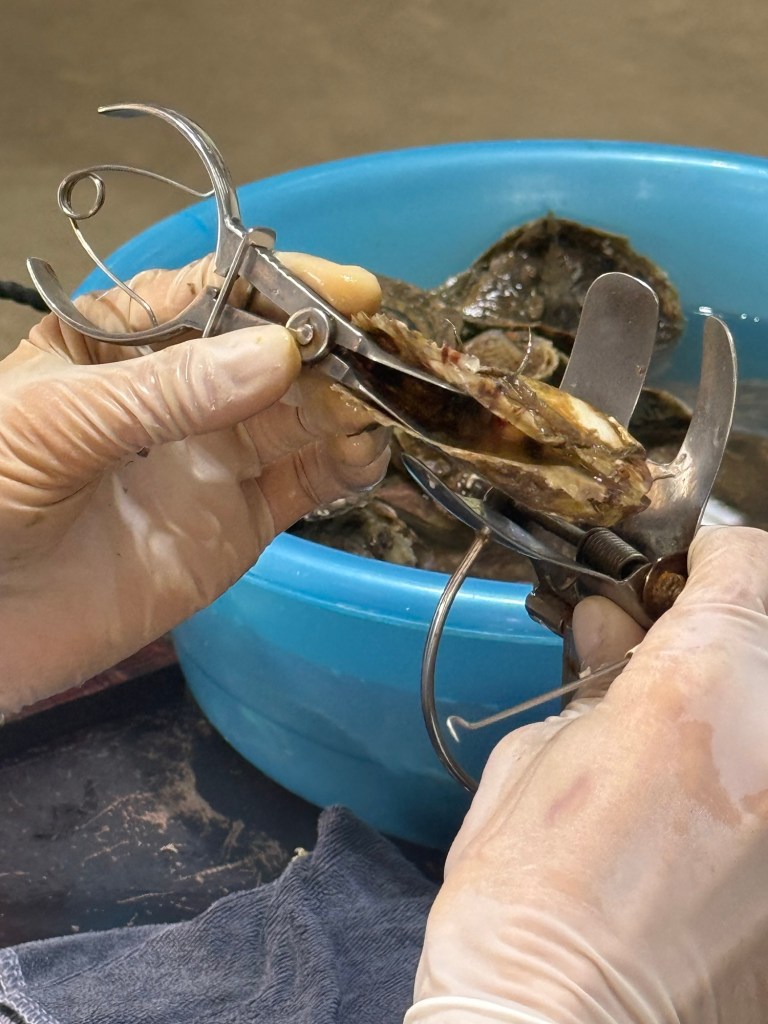
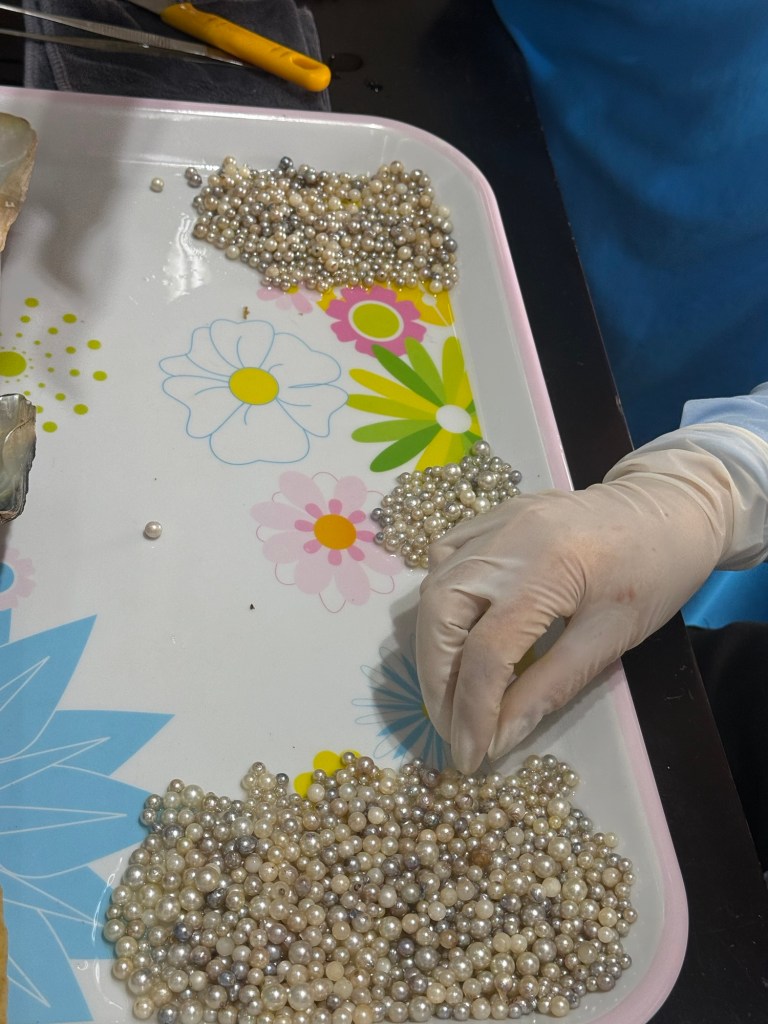
But first, a stop at the Legend Pearl farm. We had a cool (if somewhat canned) tour and a live demonstration of seeding individual oysters (a lot like IVF), then harvesting and removing the finished pearls (2-10 years later) and finally sorting the pearls by shape, quality, size, color and luster. The highest rating is AAAA.

Pearl Seeding
Recovering
Sorting
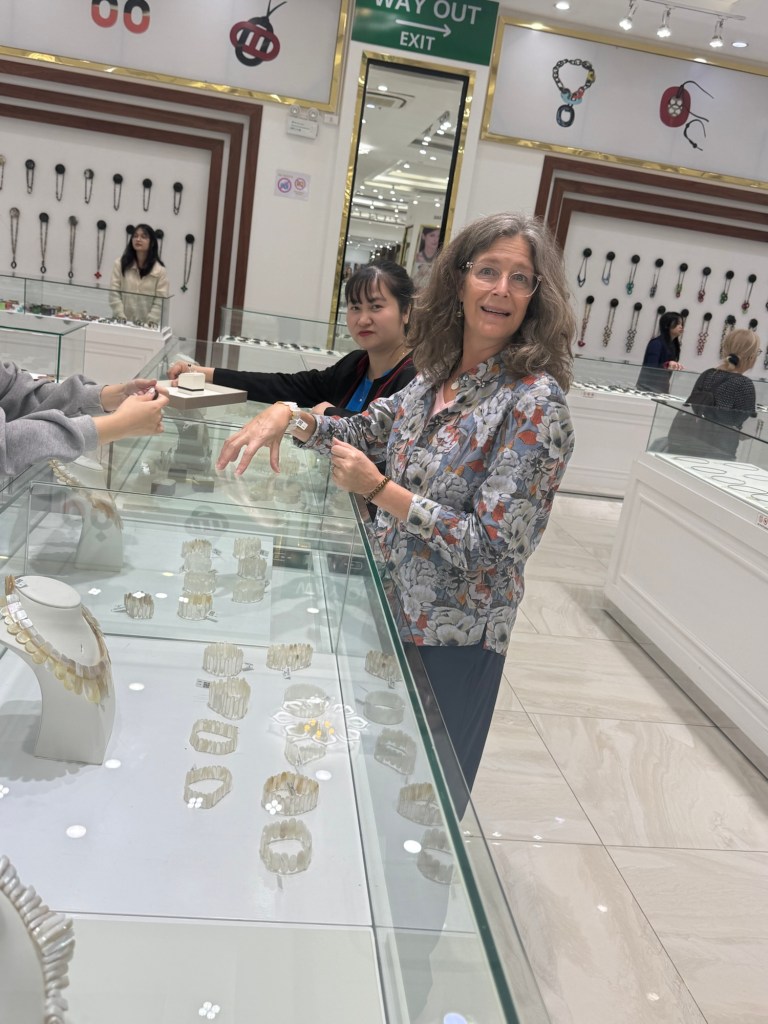
Shopping
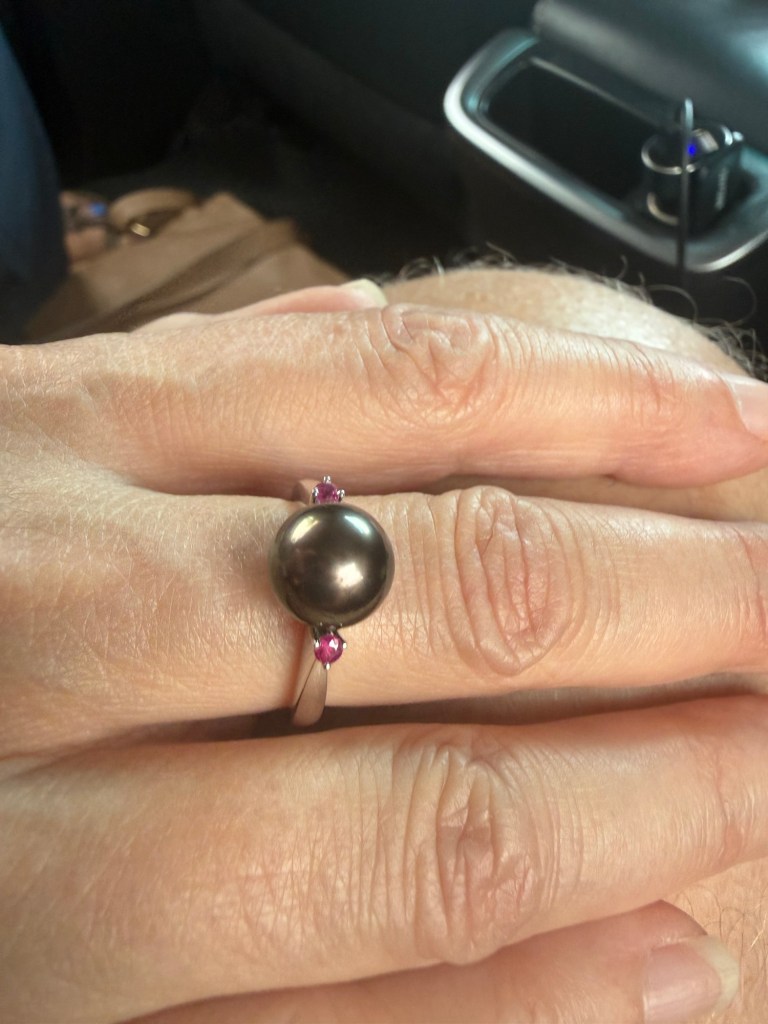
SOLD! (AAA honey, sorry)

So here’s some proud history from the locals. The Mongols under Kublai Khan dominated all of China, India, Asia and much of Eastern Europe. Two exceptions were Japan and Vietnam. The fleet invading Japan was destroyed as two storm systems collided. (The Japanese considered this a Divine Wind and coined the phrase Kamikaze).

In 1285 the Vietnamese navy lured the invading Mongolians through Halong Bay deliberate grounding their larger ships on shoals and rocks. They then lured the balance of the fleet up the Ben Binh River in their small boats, and stranded them as the tide retreated. The invasion failed and the Mongolian admiral was, of course, beheaded for his loss.

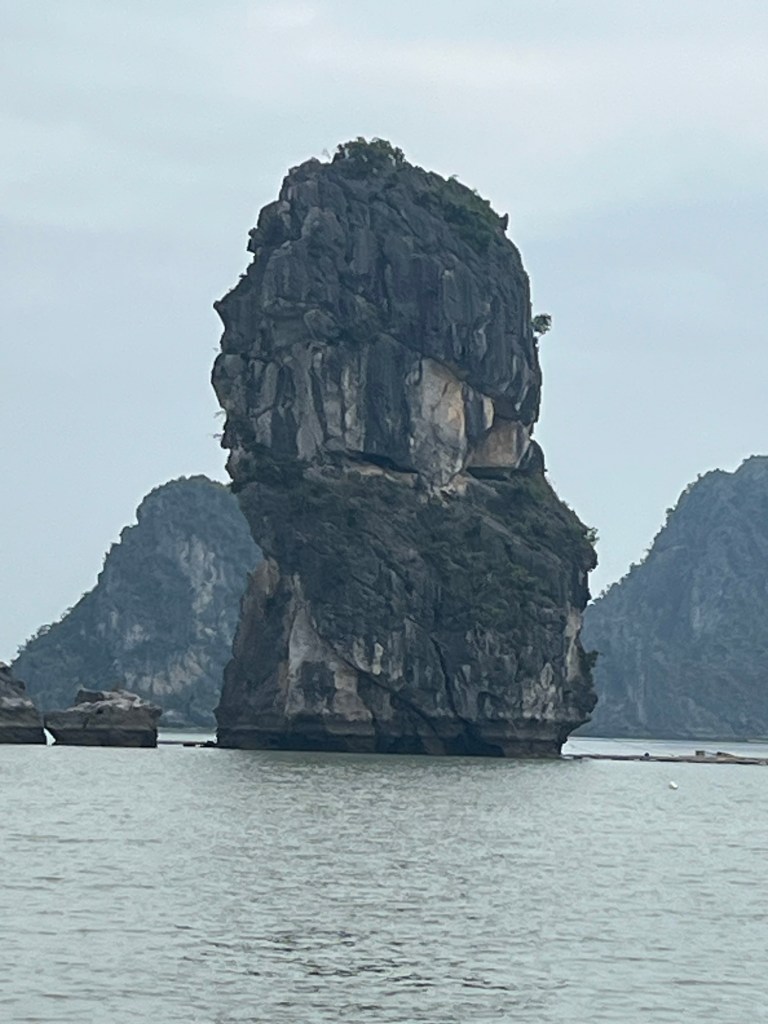
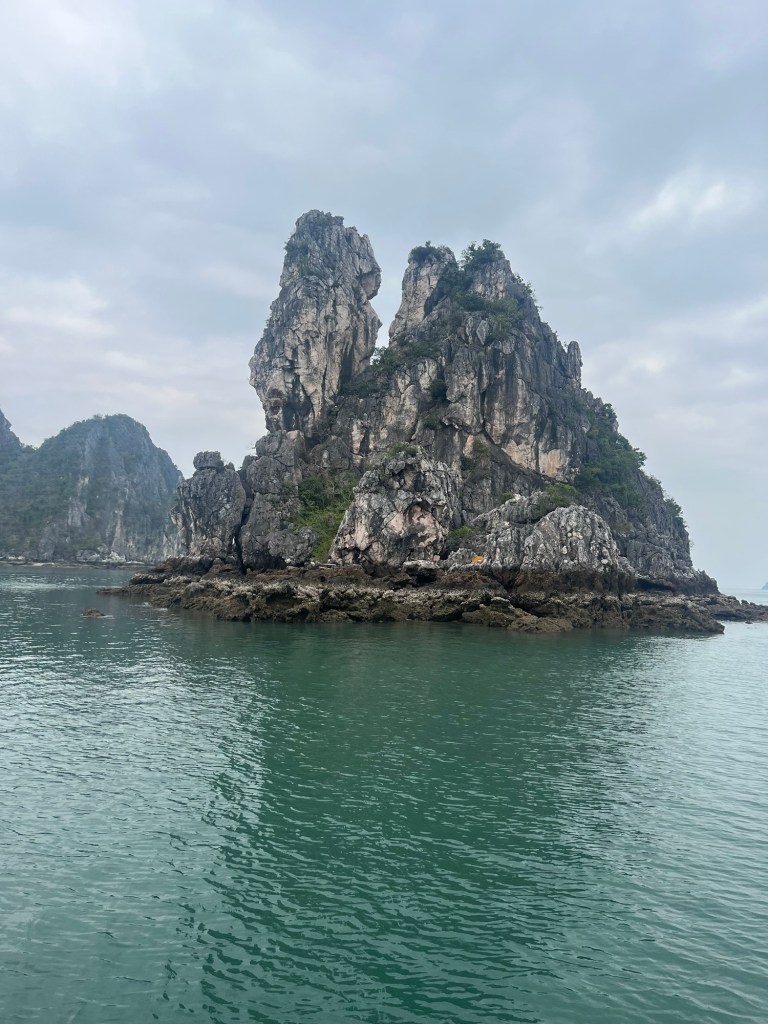
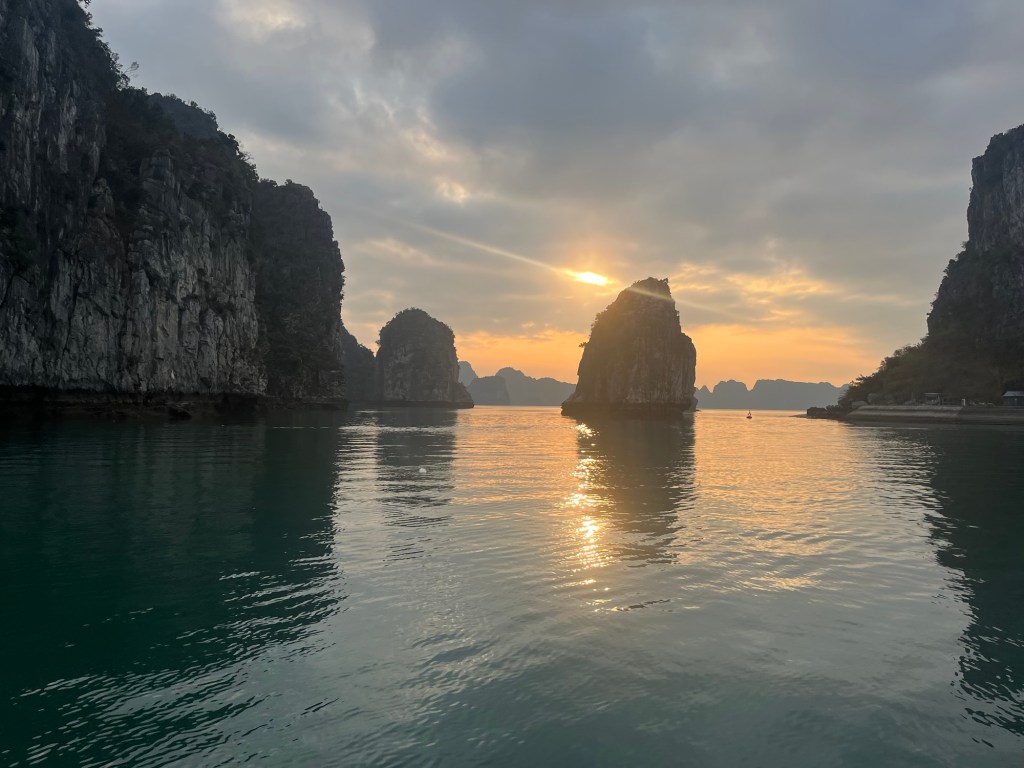
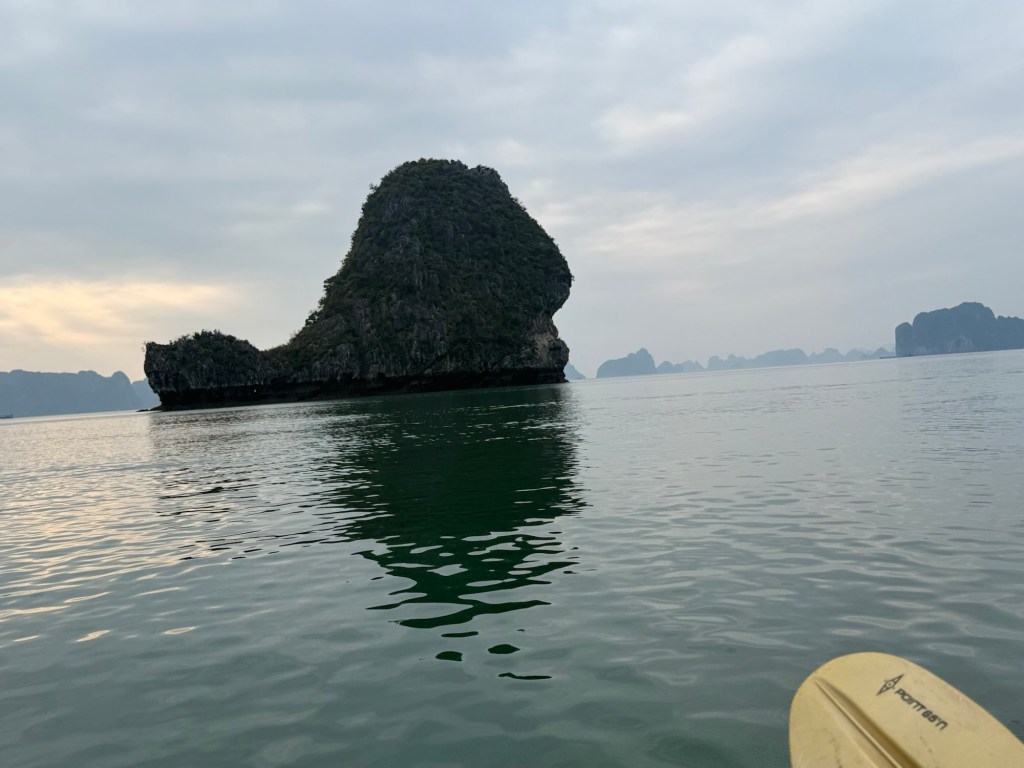
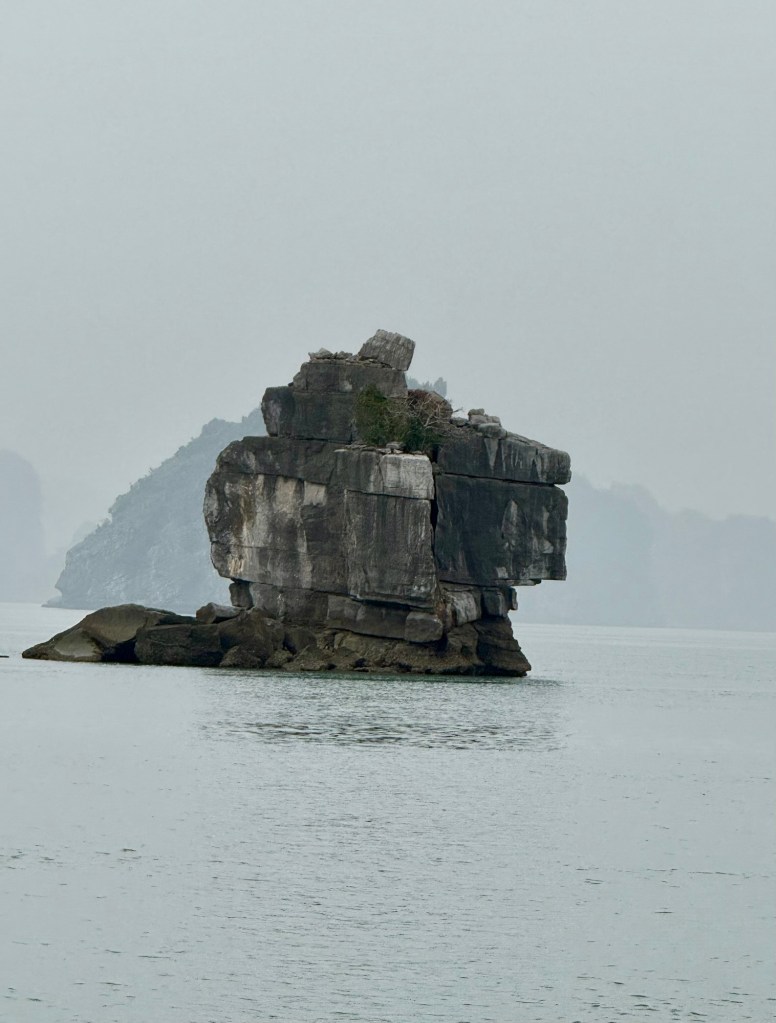
Halong is close to the GuangXi province of China, in the Gulf of Tonkin, on the Northwest end of the South China Sea. Halong Bay is also a UNESCO heritage site. The predominate (and stunning) feature are Karsts – tall mini mountains of limestone pushed up by continental shifts. Over millions of years tides, rain and wind carved the karsts into fascinating forms and mushroom-like knobs with undercut bottoms.

Typical karst

Teapot Karst
Wow
Vineyard Vines Karst
Mustafa Karst

We have two nights booked on a private boat and we’re promised very little connectivity so no idea when this will post.

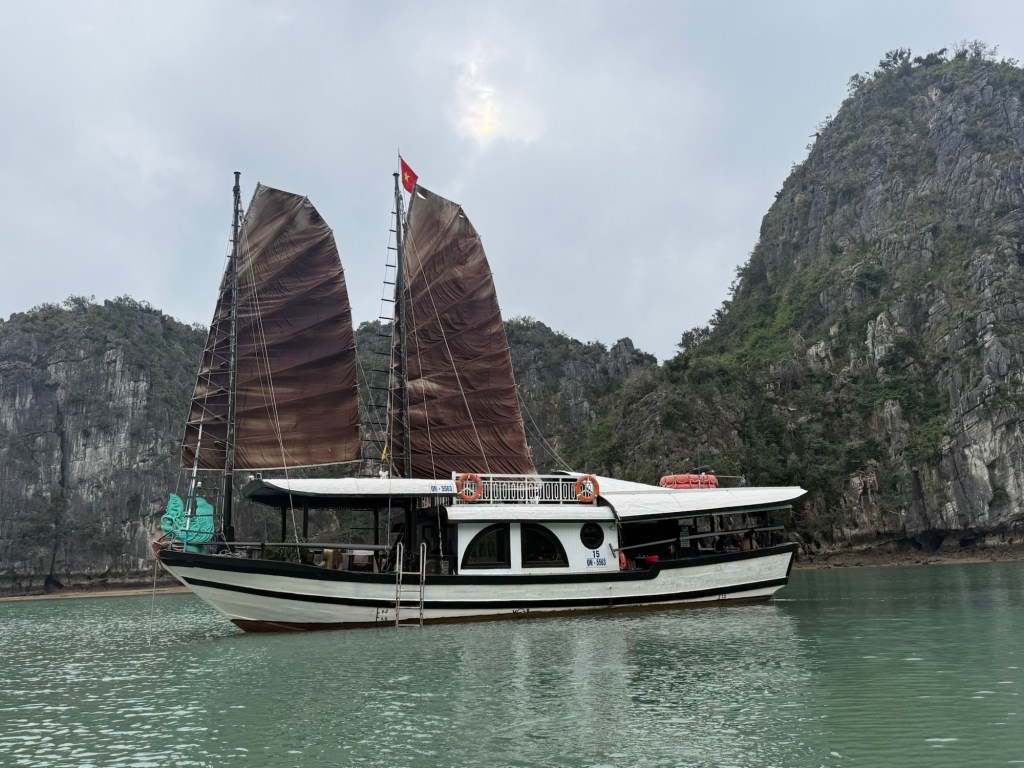
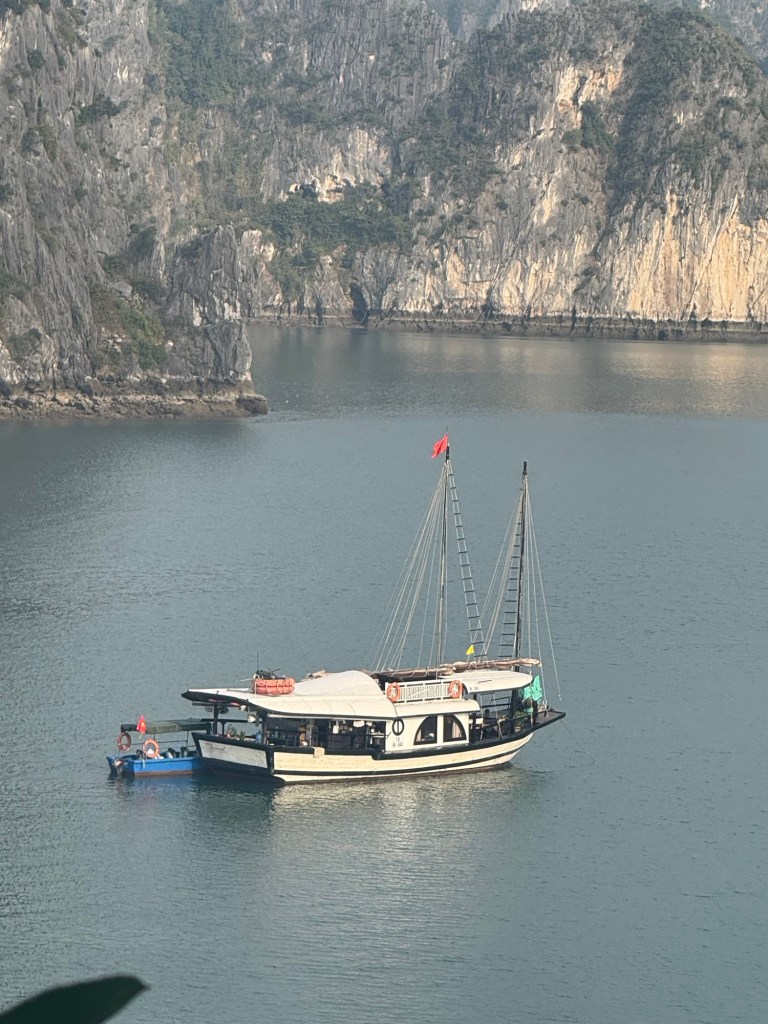
Boats are limited in Halong to local fisherman, and tour services using (somewhat) traditional junks of various sizes. Our boat, the Princess 4 (the crew call it the L’ Amour), is a single cabin beauty. The effect of the boating limitations is a very serene and quiet journey – no jet ski’s, bubbas, cigarette boats, or college chicks.

All aboard!
The Princess 4 (L’Amour)

What a day! An amazing 6 course tasting lunch on board, cruising through the karsts. Leo, our new guide educated us, and pointed out highlights as we went. He is great. But his English is very poor and we may be missing somethings. He’s new to the firm, nervous and a bit too obsequious. We’re slowly getting a friendship but he’s no Q.

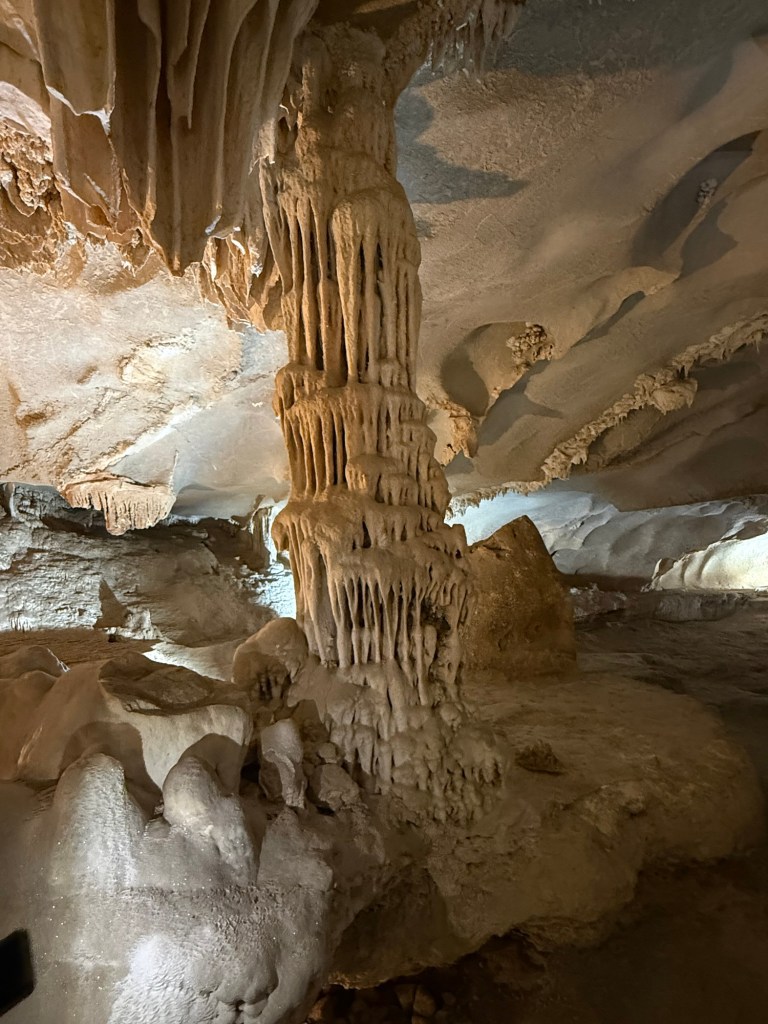
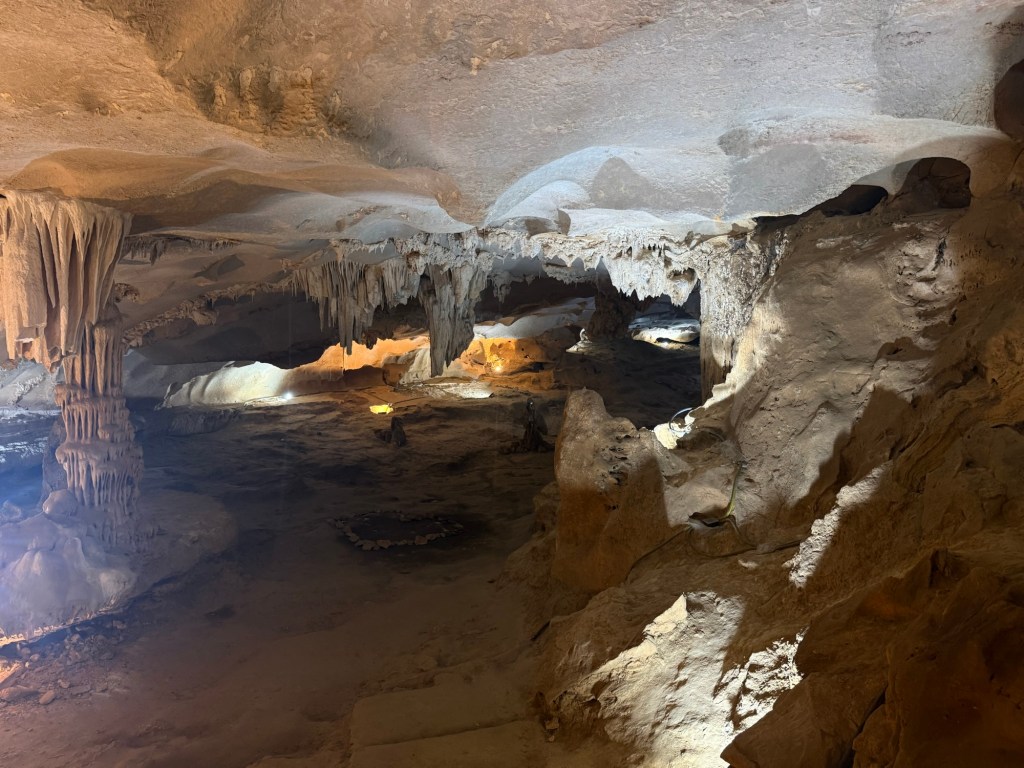
We took the tender boat ashore on Thien Canh Son (sky view mountain) to climb the karst and explore one of the many caves in Holang. The cave, beautiful, was followed by a short kayak ride around a few karsts and back to an adjoining beach. One of the cooler observation as we went along was the new coral forming at the bottom of the karsts.

Thien Canh Son
Sky View Mountain Cave
The living room
Kayaking the Karsts
Beach view
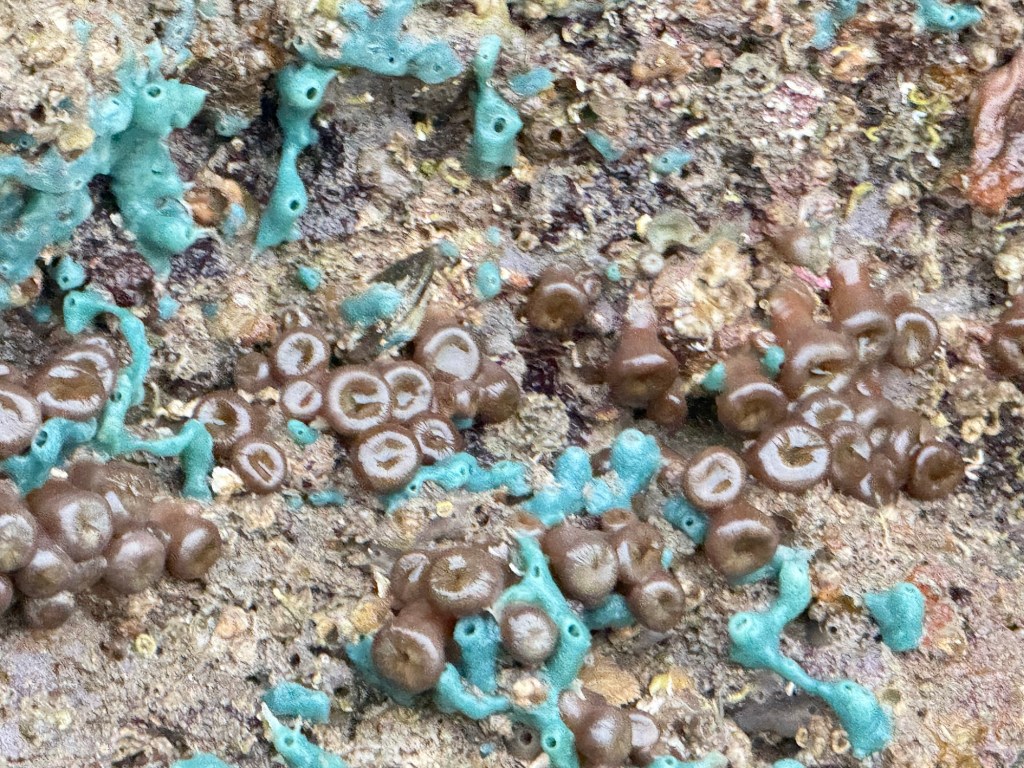
New Coral!

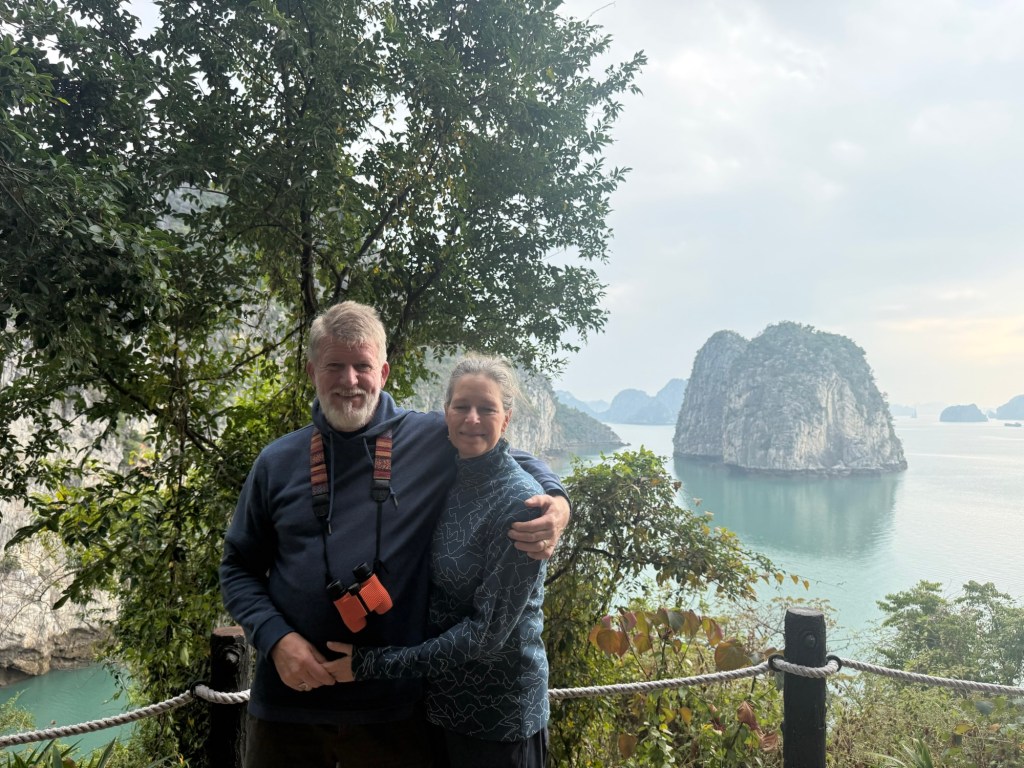
Bird check: We saw lots of black “eagles” (more likely kites), and a few pacific reef herons fishing. Large billed crows were everywhere and a few other birds we were too slow to identify. Juju has her Merlin app humming and we heard a light vented bulbul, and a thorn-tailed rayadito. Brightly colored kingfishers are on the lifetime list but no sightings yet.

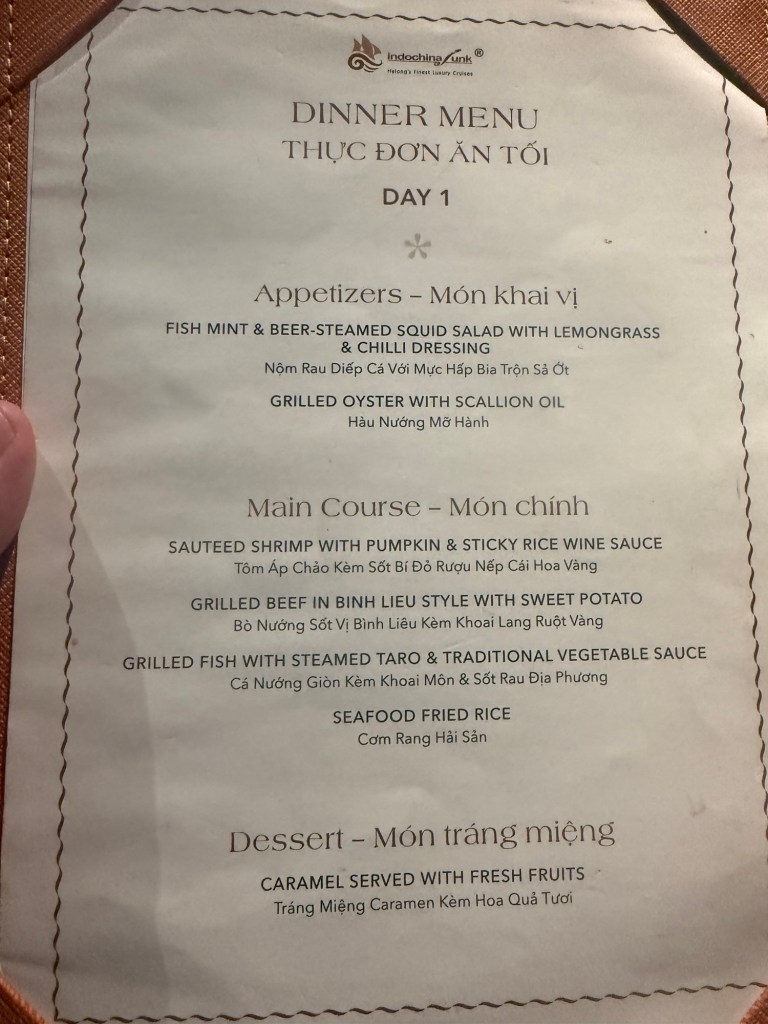
Dinner was, again, awesome. We’re kind of embarrassed that we forgot (but not disappointed!) that our boat has a dedicated chef.

Dinner aboard
Halong Feast

Pleasant, silent evening with 500 Rummy, bourbon and some very good wine. Nothing like sleeping on a boat!

Moonshine breakfast and a mountain-side market, then Back to Hanoi for Cyclo and Street Food…

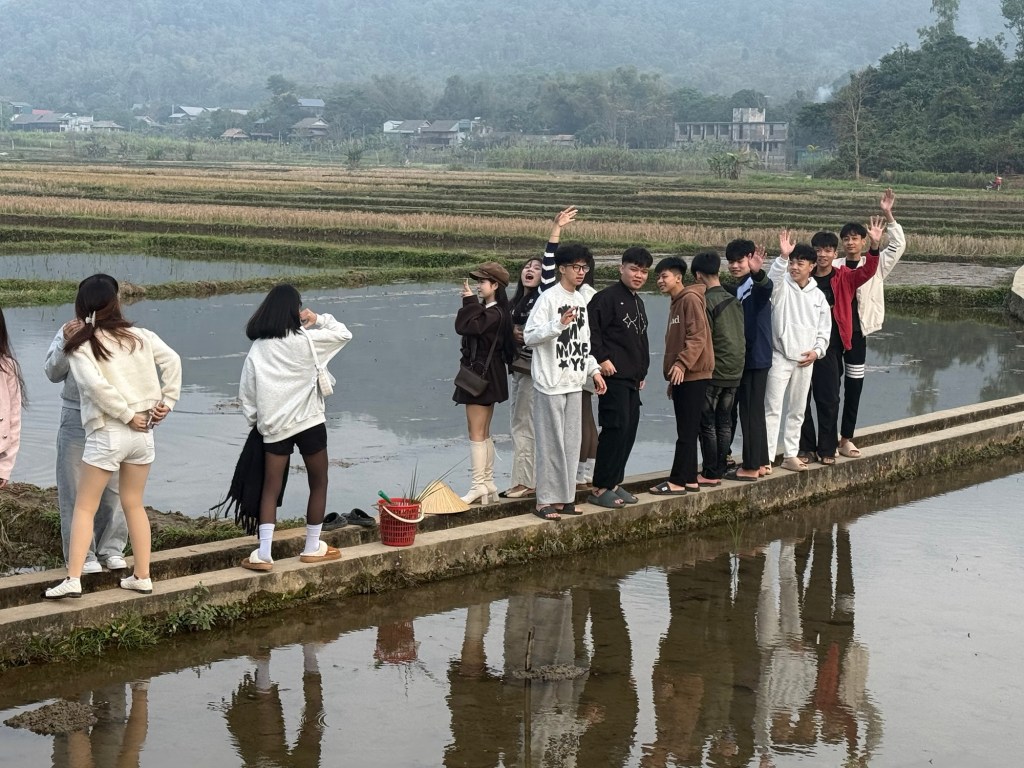
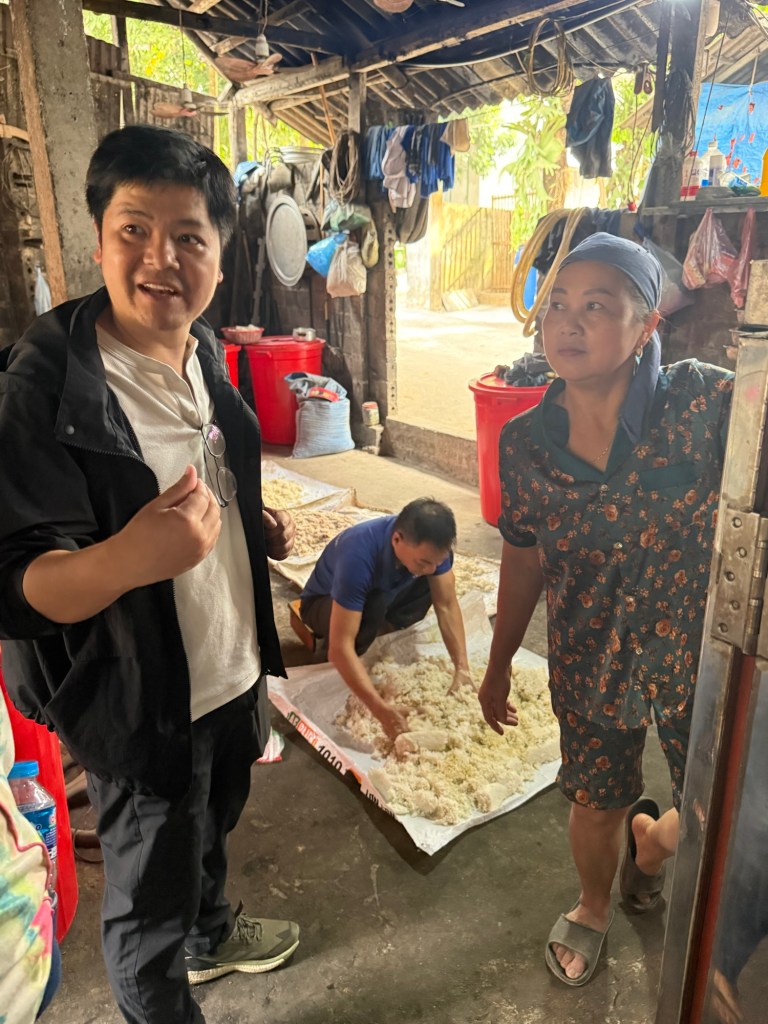
8:15 am. Apparently that’s the right pick up time for a tour of the local moonshine still. We walked a mile or so through another mob of High School students (yep, still here) and rice paddies to an adjacent village.

“Hello, where you from”
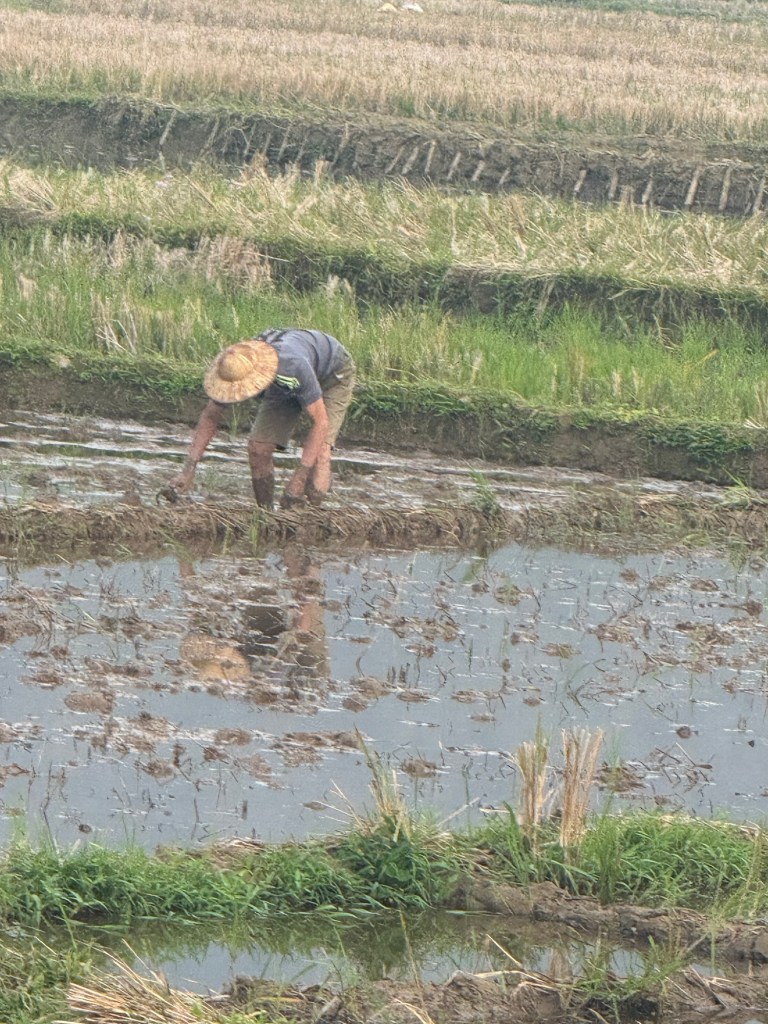
Rice. Yep, that’s right I said RICE

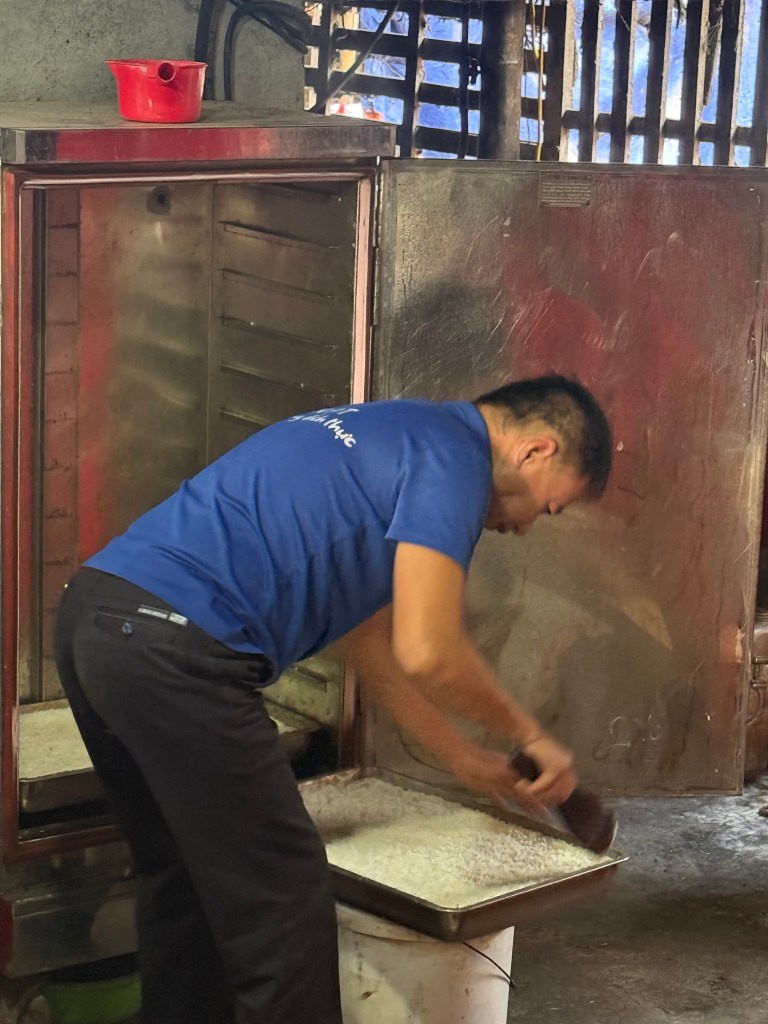
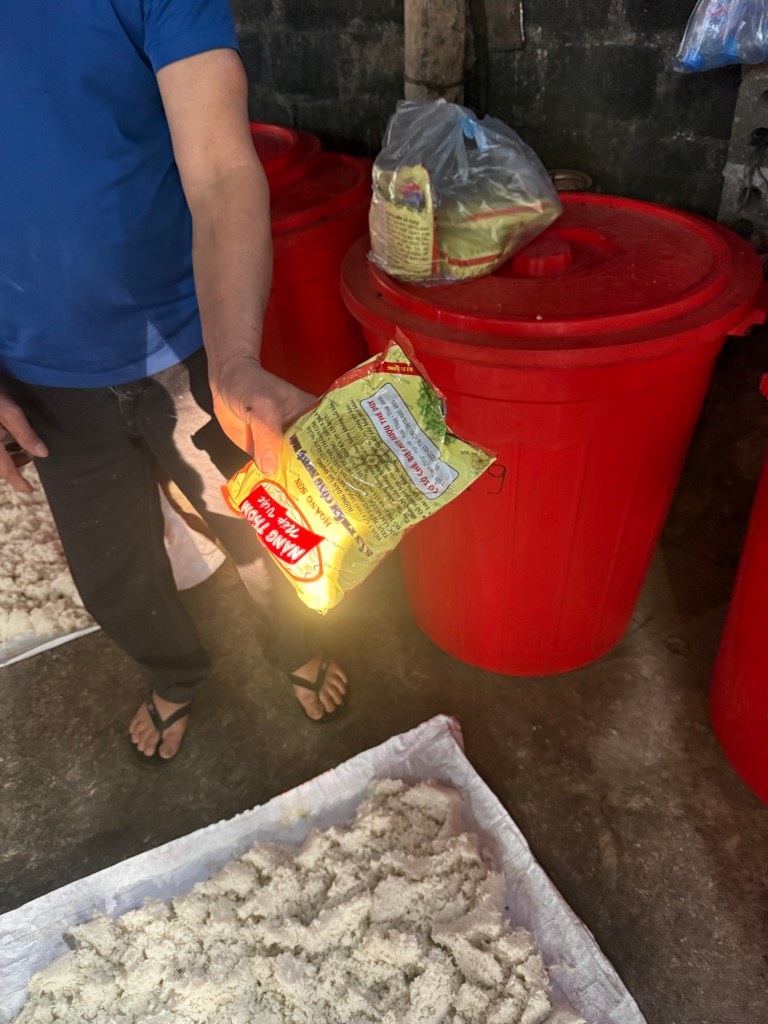
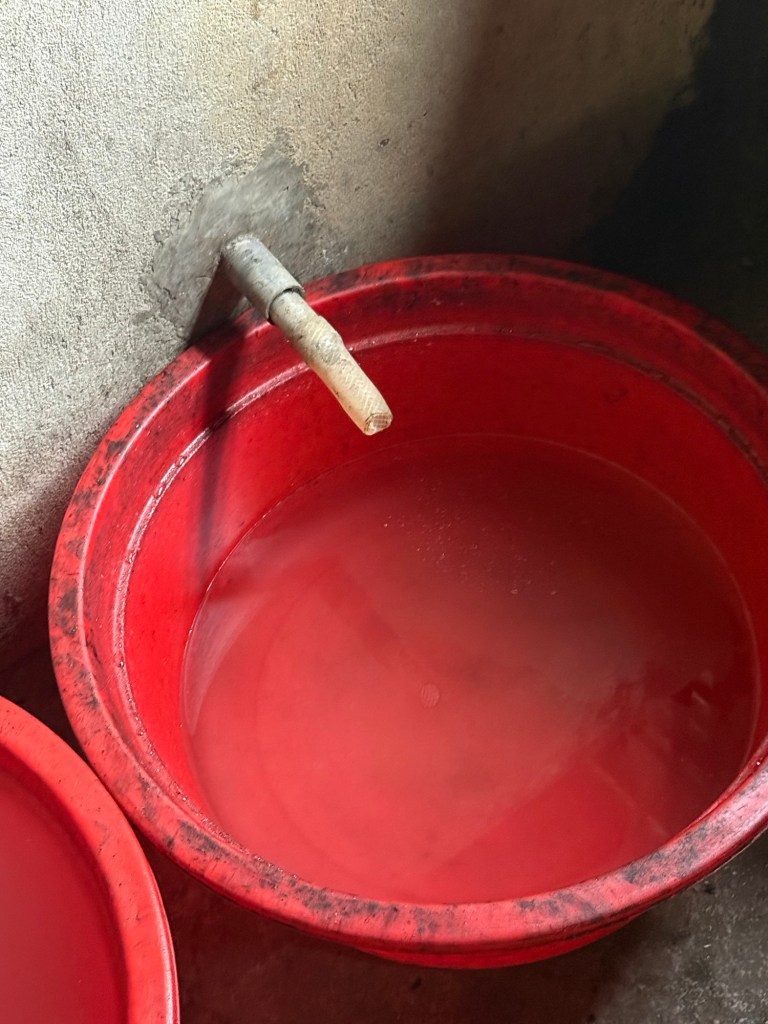
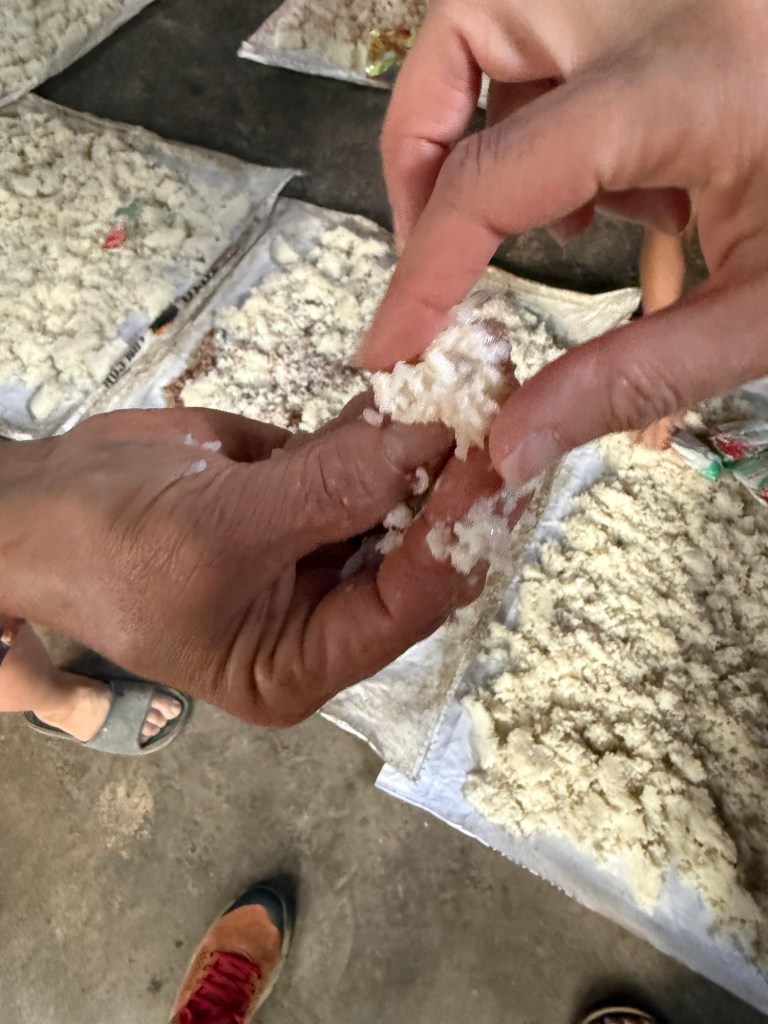
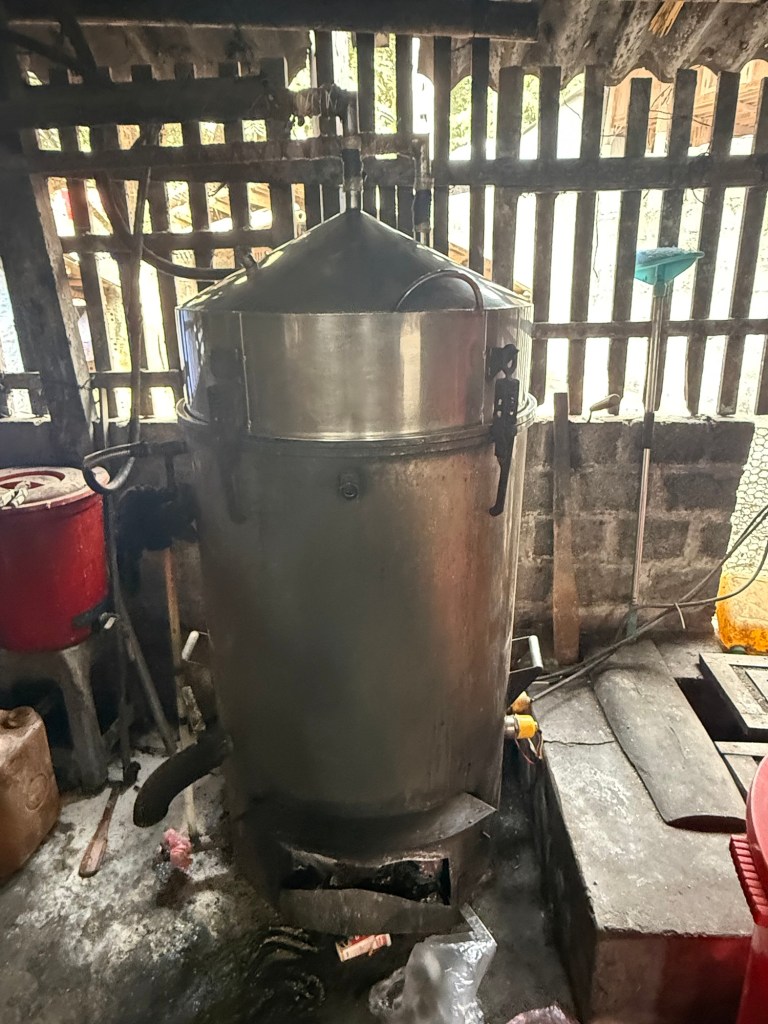
The process: Cook or recycle 50 kg (about 100 pounds) of rice and spread on metal sheets to cool. Add and mix yeast. Package in small kitchen trash cans until fermentation starts – about 2 to 3 days. Dilute this by 50%. Store this in larger plastic trash cans about 30 days. Cook the mash over charcoal, passing vapor through coils of tubing in a cold water bath. Capture filtrate (approximately 80% alcohol). This sits until it gases off to about 50% or 100 proof.

Cooking the Rice Mash
Add yeast
Mix by hand
Cook
Distill

They sell this in plastic recycled jugs to the locals. An average wedding might buy 50-100 gallons. Or they add various fruit and other “things” to soak and impart flavors.

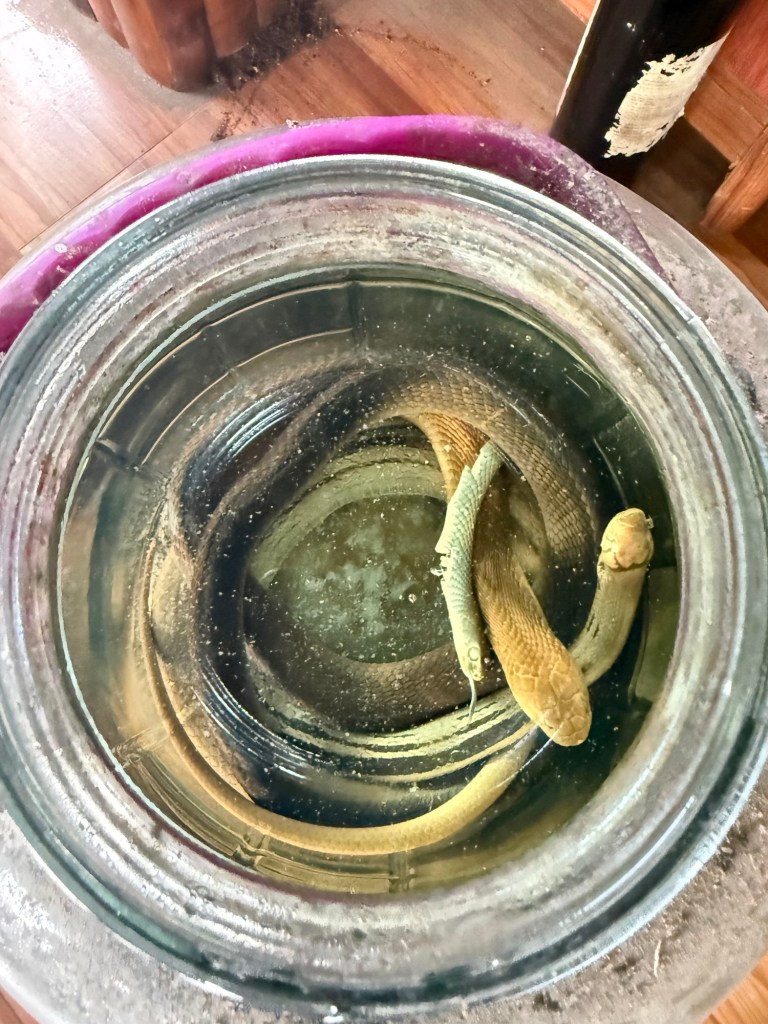
We tried the jackfruit, banana, and jujube. We smelled the cobra but it is still 5 years until it’s ready. The owner poured heavies and insisted we finish them. Whew!

Making Shine
Cobra Moonshine
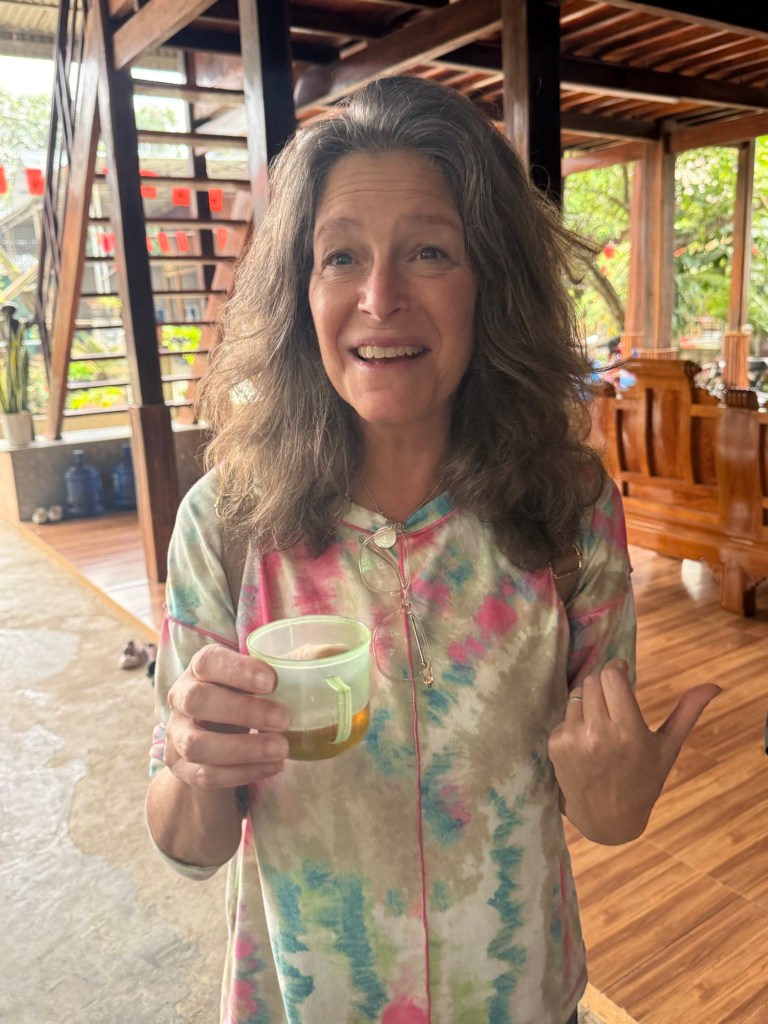
JuJu hitting the JuJuBe early

The thick mash (after the two day fermentation) is shared with the kids as porridge. Pretty tasty and the kids sleep great!

Moonshine baby food

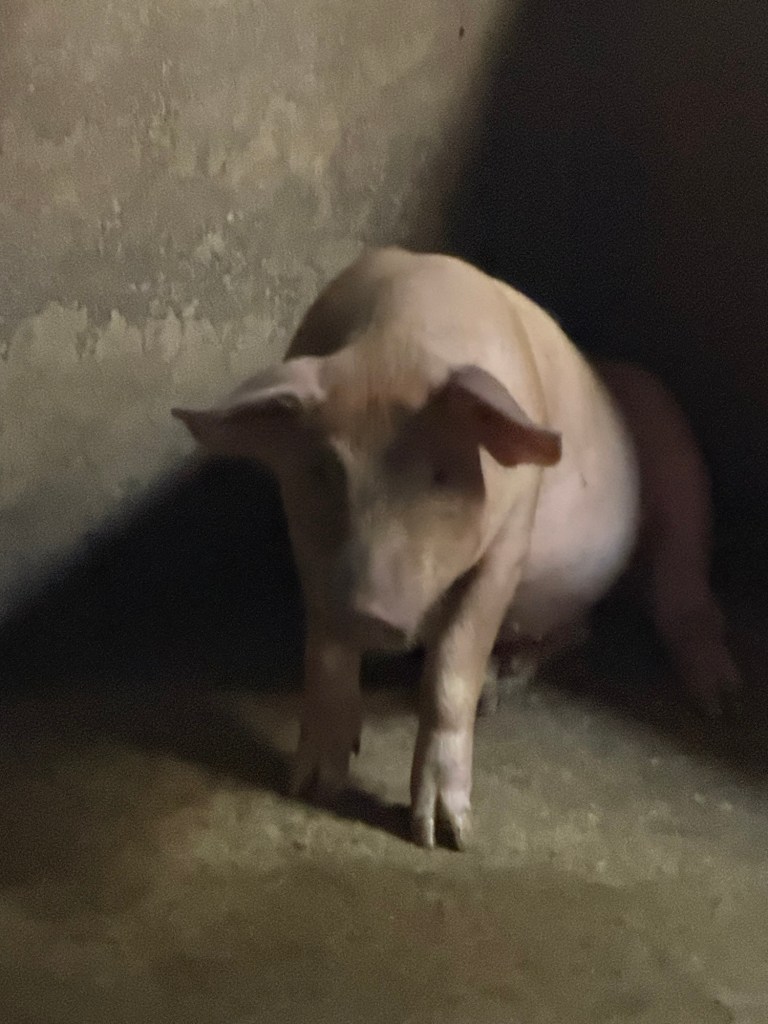
Left over mash is fed to the pigs in the back. Beautiful animals sold at a moonshine premium.

Pig – Wyeth style

As usual, our hosts were pleasant, enthusiastic – just plain lovely.

❤️

Time for some low-key drunk packing and then back to Hanoi.

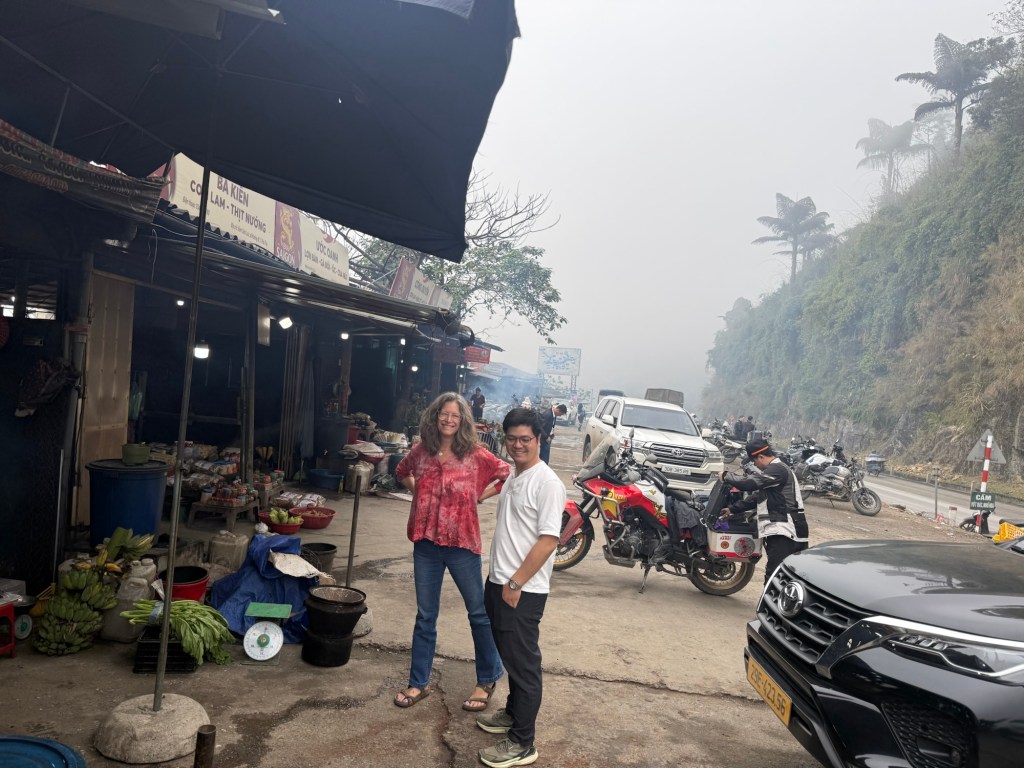
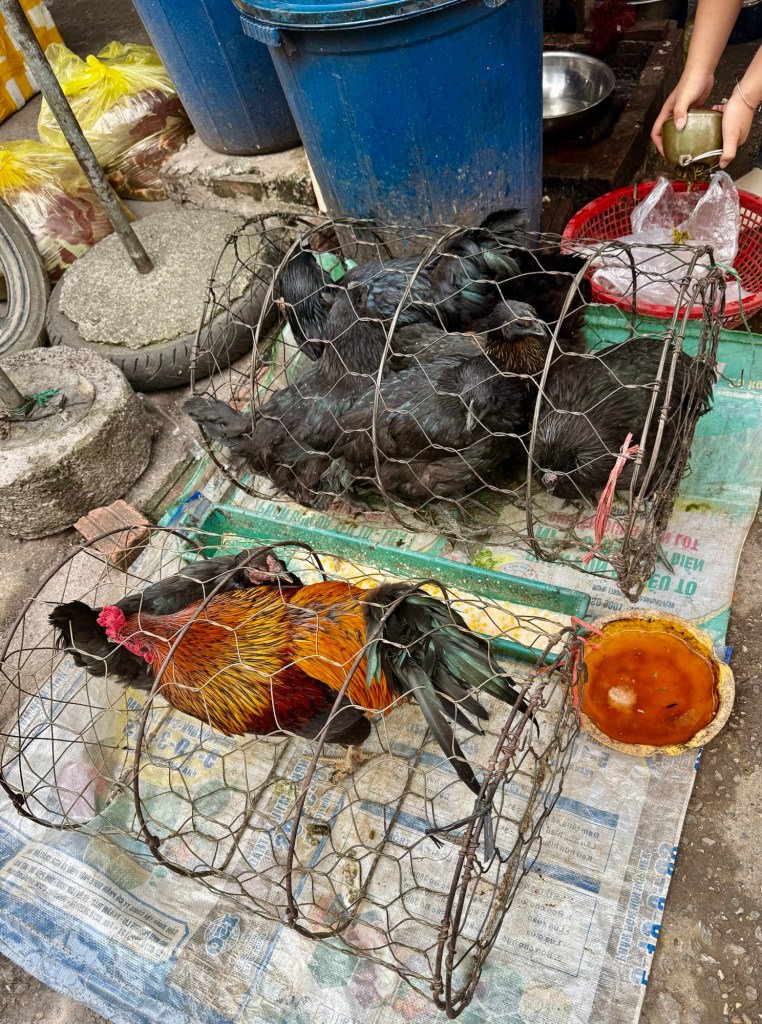
We stopped on our way at a mountainside market in search of a specific local peppercorn we LOVE. While there we were introduced to another weird chicken. “Black Chickens” used for ceremonies and healing, have pitch black flesh (also black feathers, feet, eyes and organs).

Mountain Market
Ceremonial Black Chickens

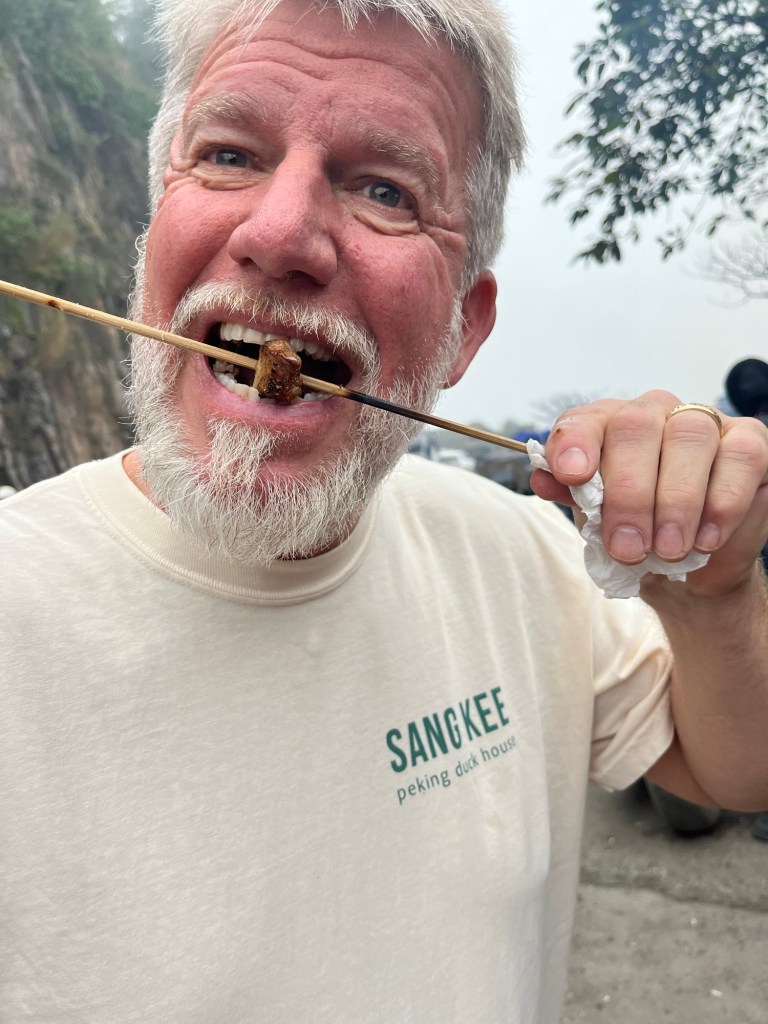
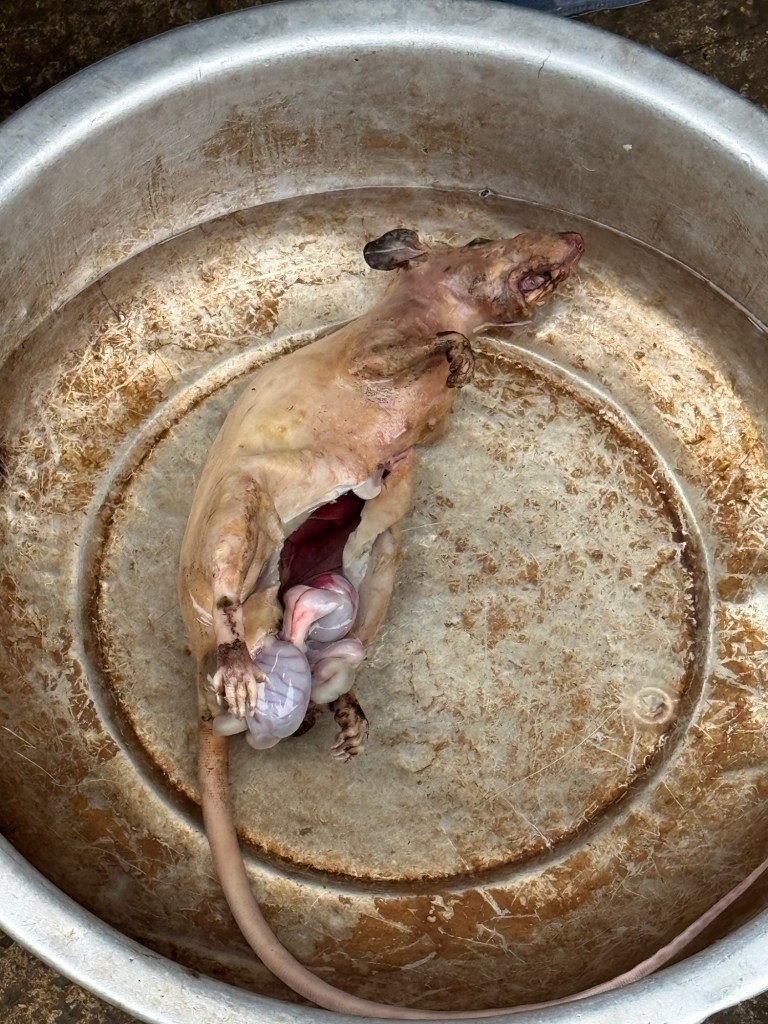
Had some fantastic pork skewers with our target pepper (but we passed on the testicle-rat)

Pork Skewer
Yum!

Another Cyclo ride through Hanoi, this one arranged by our guide with an English speaking driver. Vin is Catholic, one of less than 1% in Vietnam. Very gregarious and thrilled to be showing his town to folks of an adjacent(?) faith. As we toured the Old City, Vin let me drive for a bit. I’m absolutely SURE that’s the first time that’s ever happened in Hanoi.

Who let him drive?

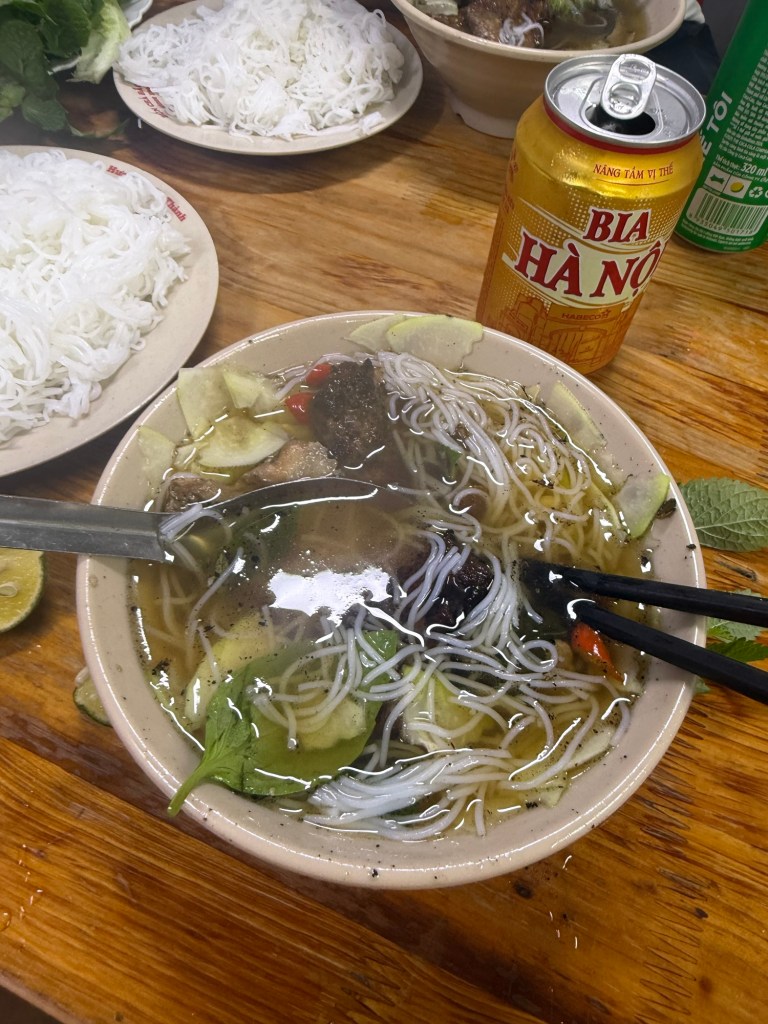
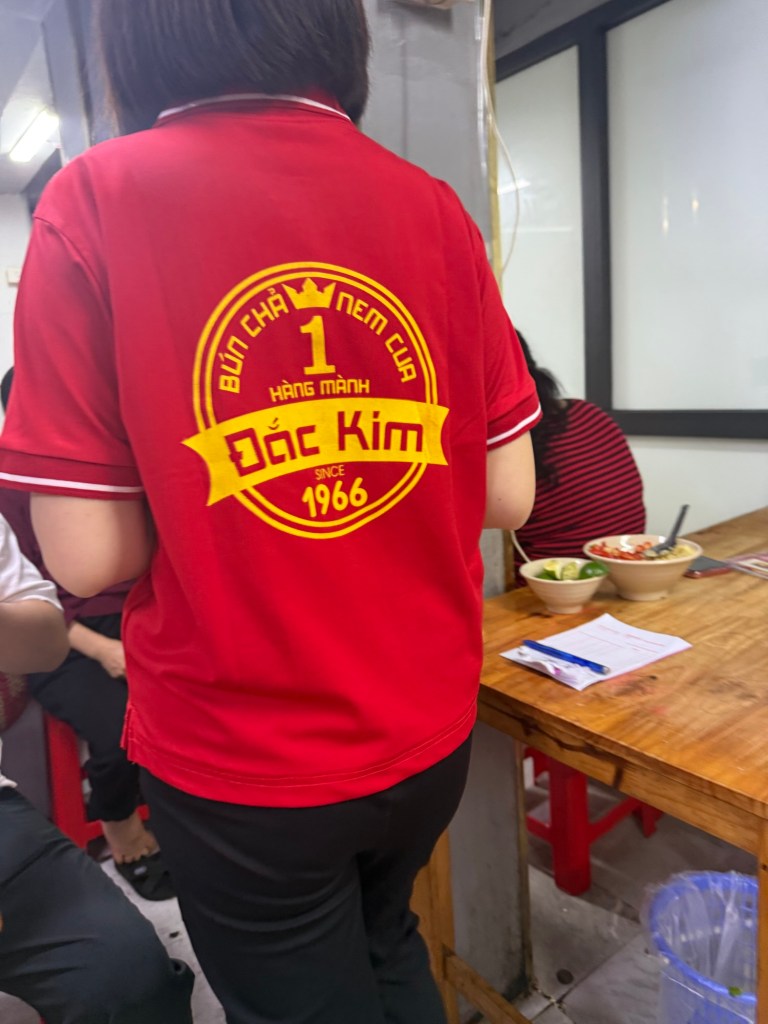
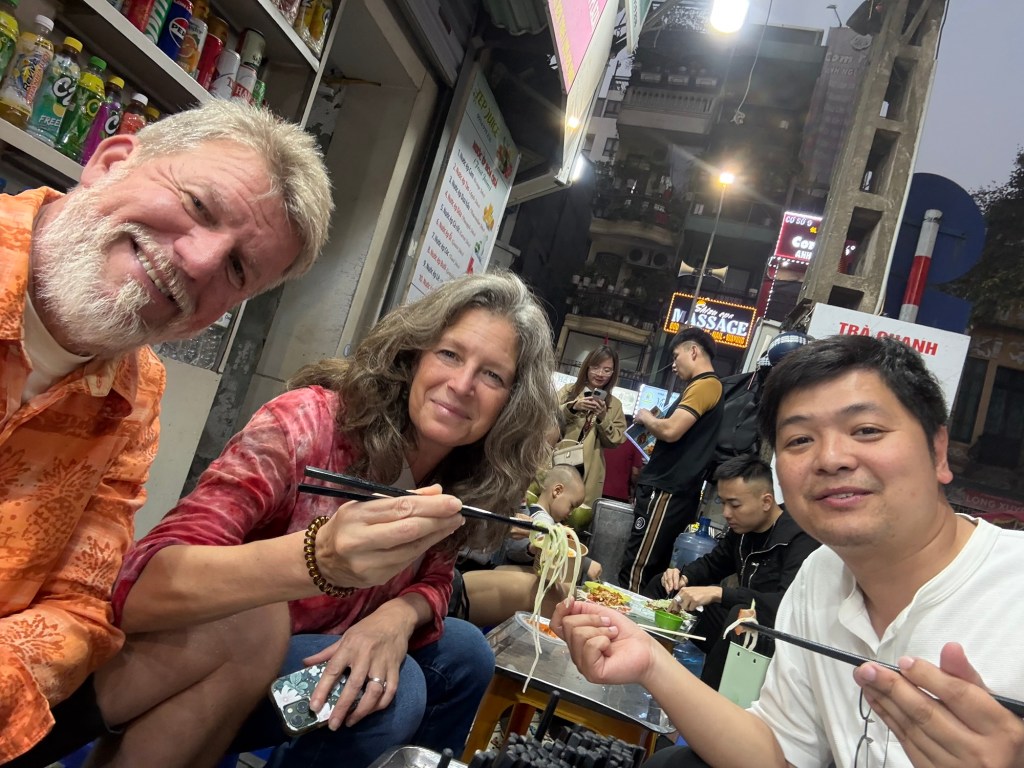
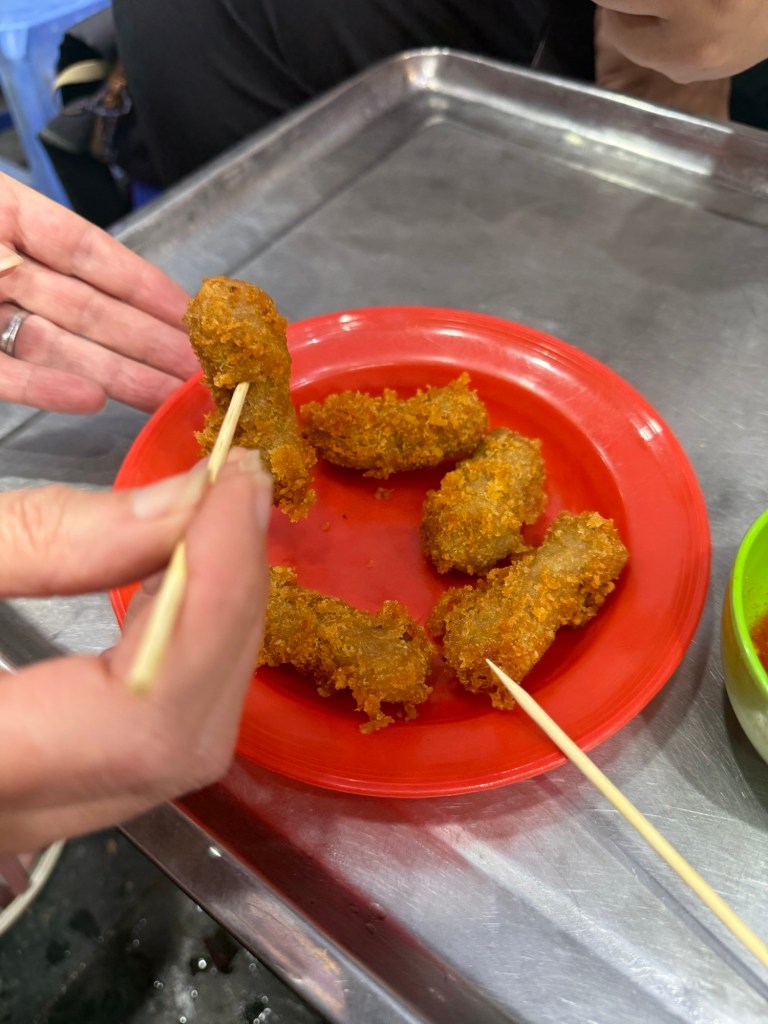
Q offered us the choice to take us for street food instead of a fancy dinner – obviously an emphatic yes from here. First stop, Anthony Bourdains favorite spot for Bun Cha – 3 kinds of BBQ pork in a delicious Pho. Then we stopped at Q’s childhood favorite for a fermented pork roll fried in corn flakes, and dried beef papaya salad. We wrapped it up with a take on Ban My including warm pate, pork belly, egg and a white sausage.

Bun Cha
Bourdain’s favorite
Street Food with Quyen
Q’s childhood favorite – pickled pork McNuggets
Bahn Mi

I tore my ankle up a bit in Mai Chau so we’re limping home to ice it and get some drinks from room service. G’night.

Mai Ha, Mai Hua & Mai Hich. Gardens in Kun and a Whole lot of Death

It’s Friday the16th. So we’ve been gone six days and on the ground in Vietnam for four. We’re settling in.

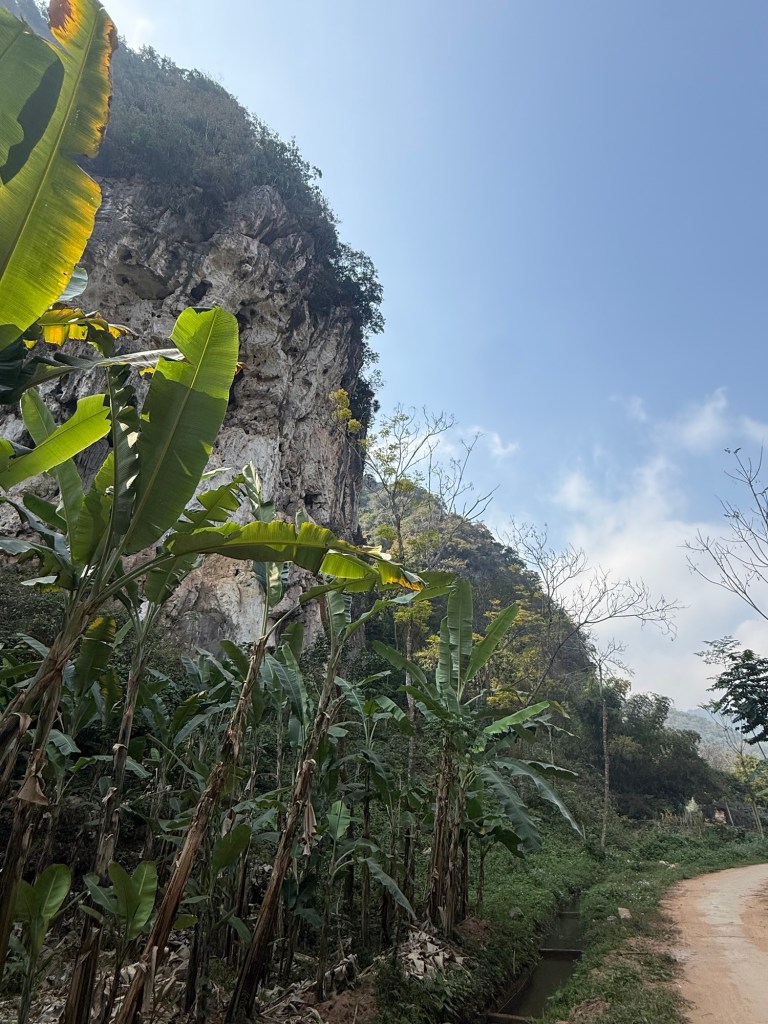
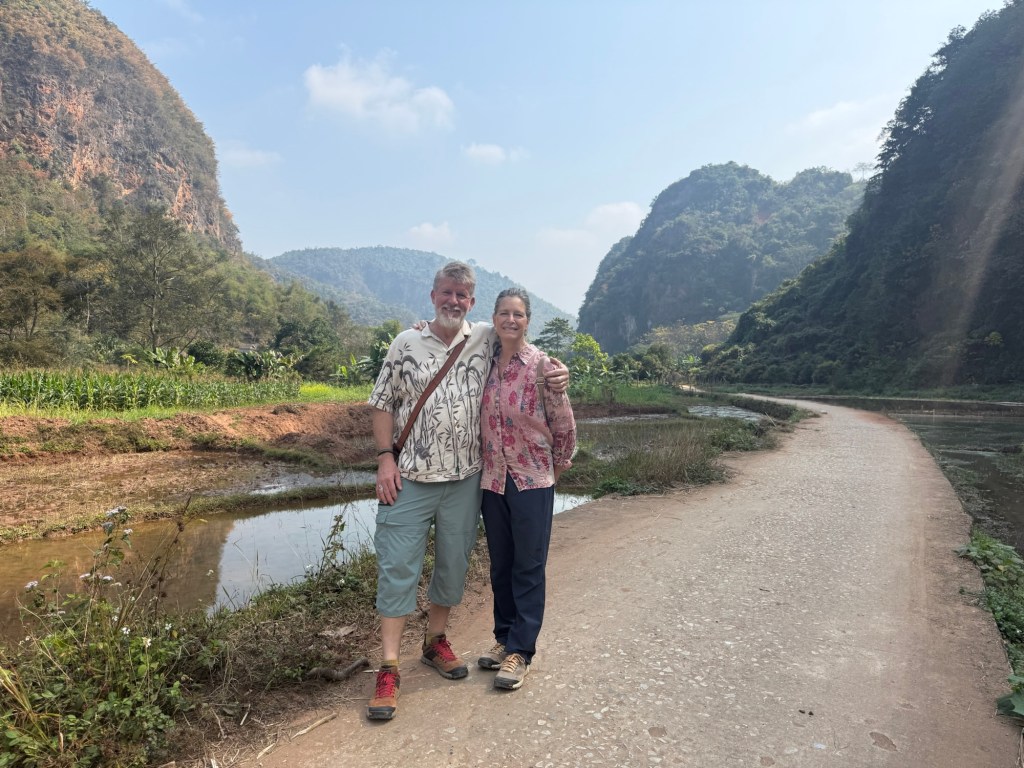
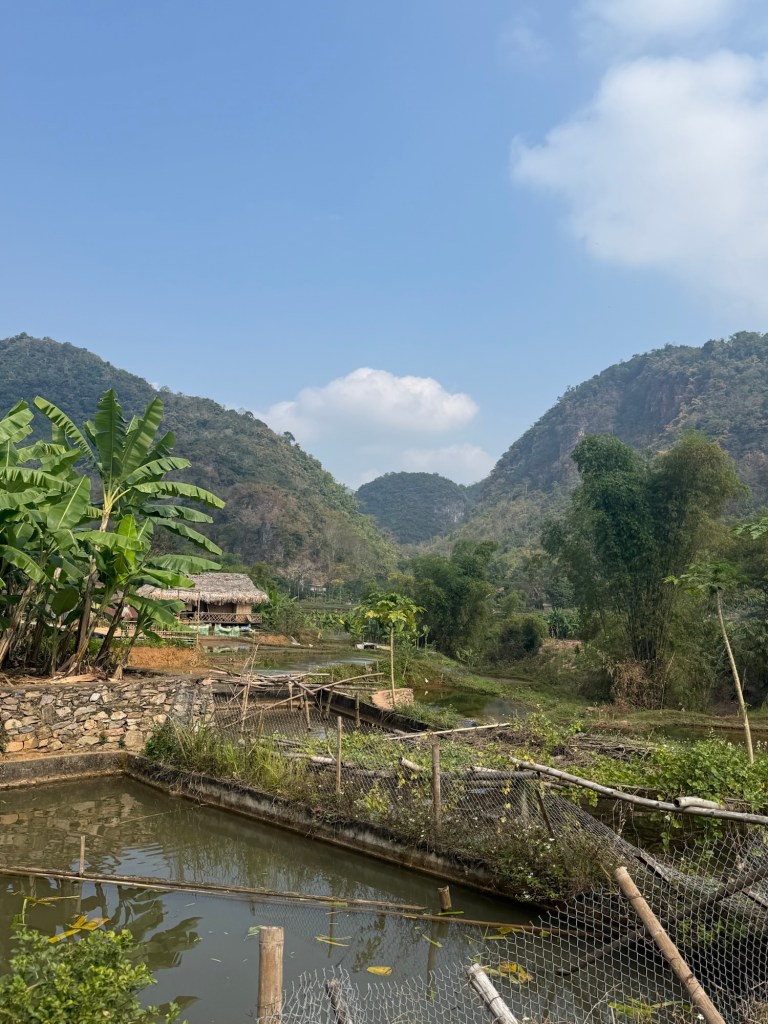
Today we took a 4 mile hike through the Mai Chau valley, the town of Mai Hua and the tiny village of Kun. The hike wound through rural villages and between amazing limestone peaks. Shy hellos from the ethnic Tai and Mhong were on offer at every step.

Cliffs above Kun
Morning hike

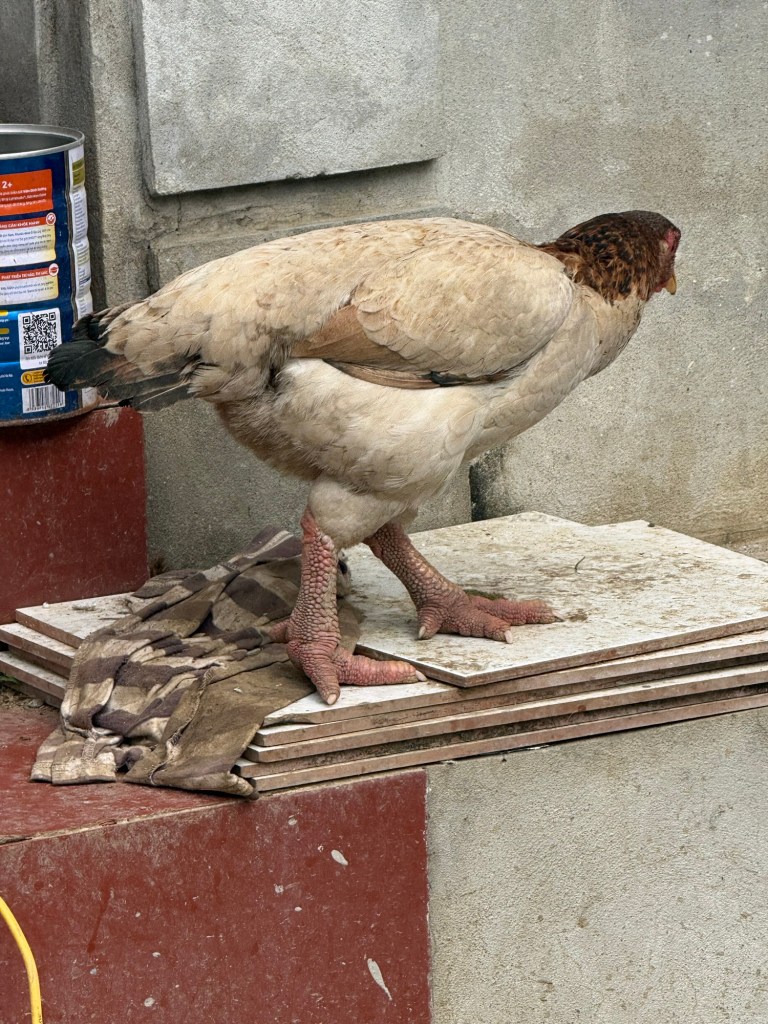
The villagers here maintain personal gardens and typically a government lease-paddy of personal rice. Dogs (all related by the look of them) and psychedelic chickens rule the path. And one particular type of chicken had been carefully bred to satisfy the chicken feet market.

Big Foot Chicken

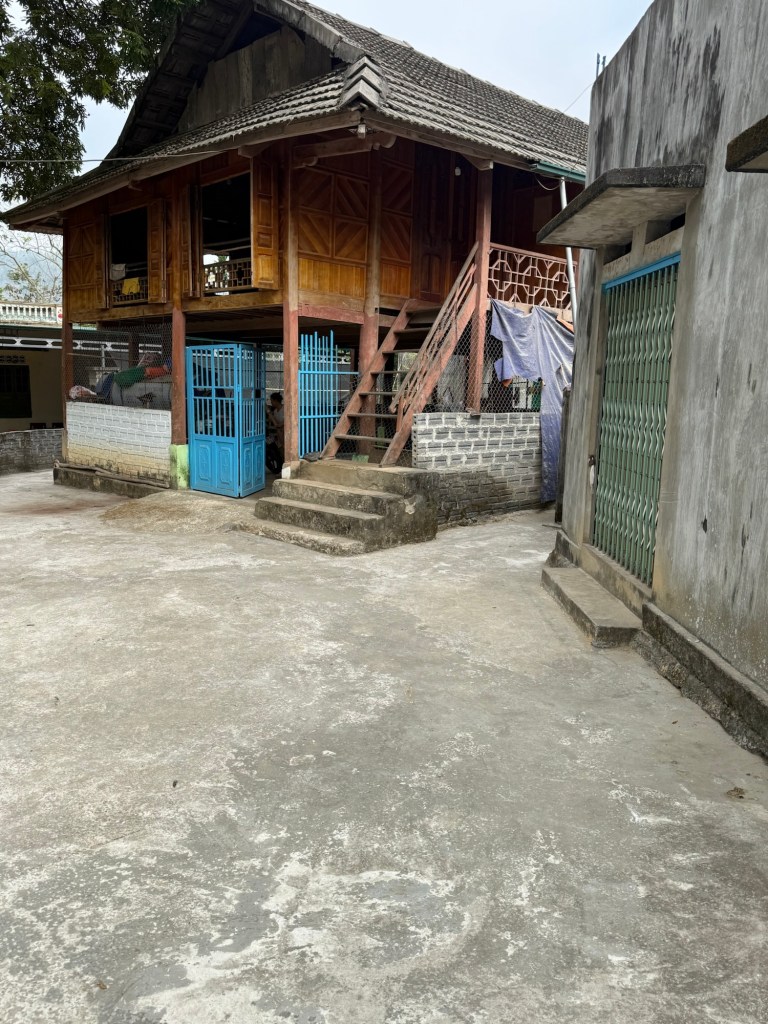
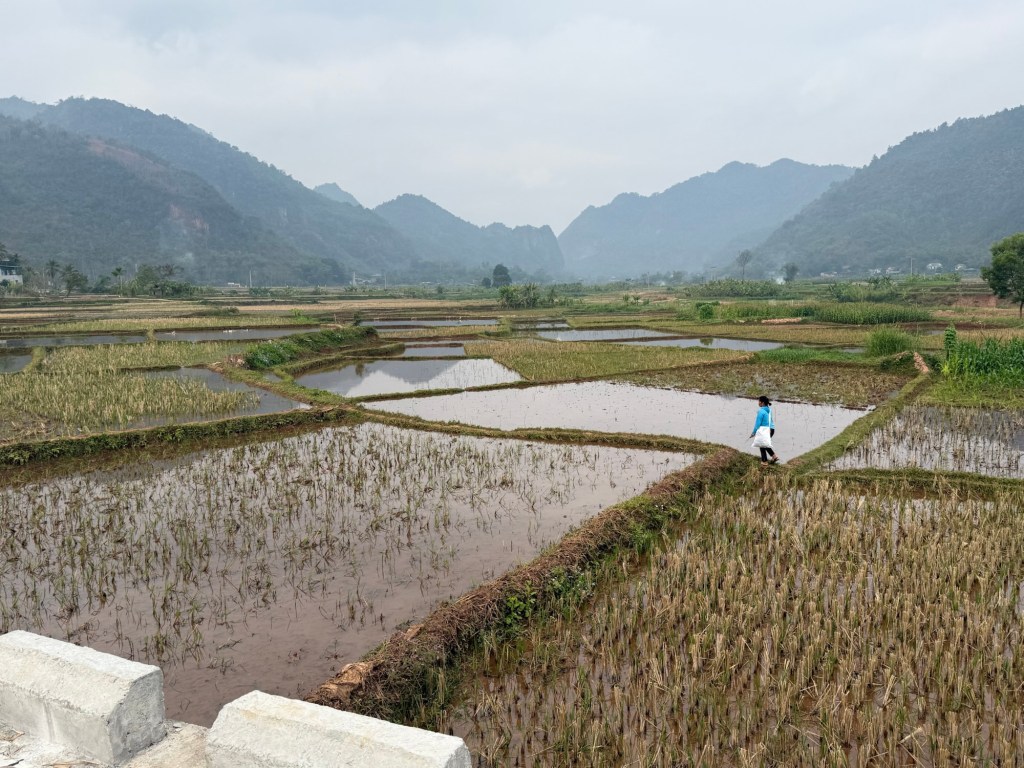
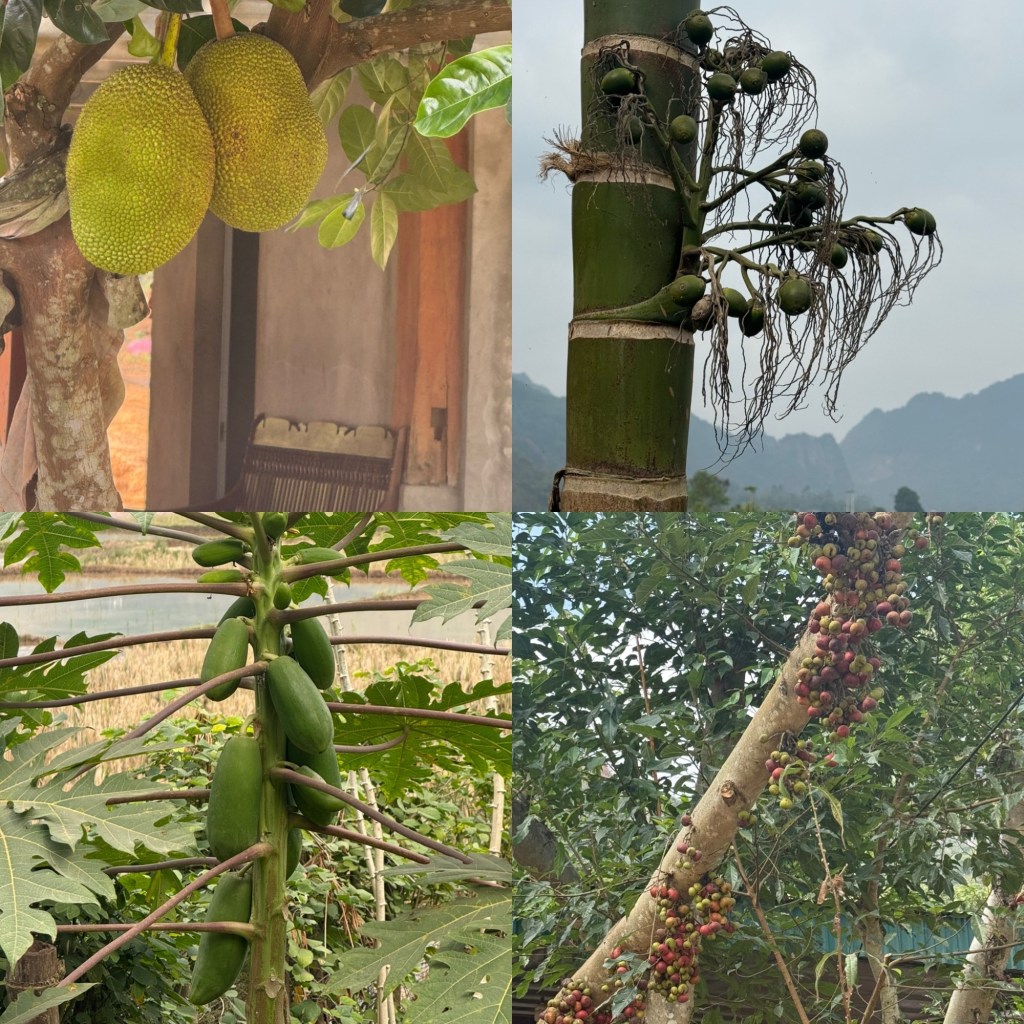
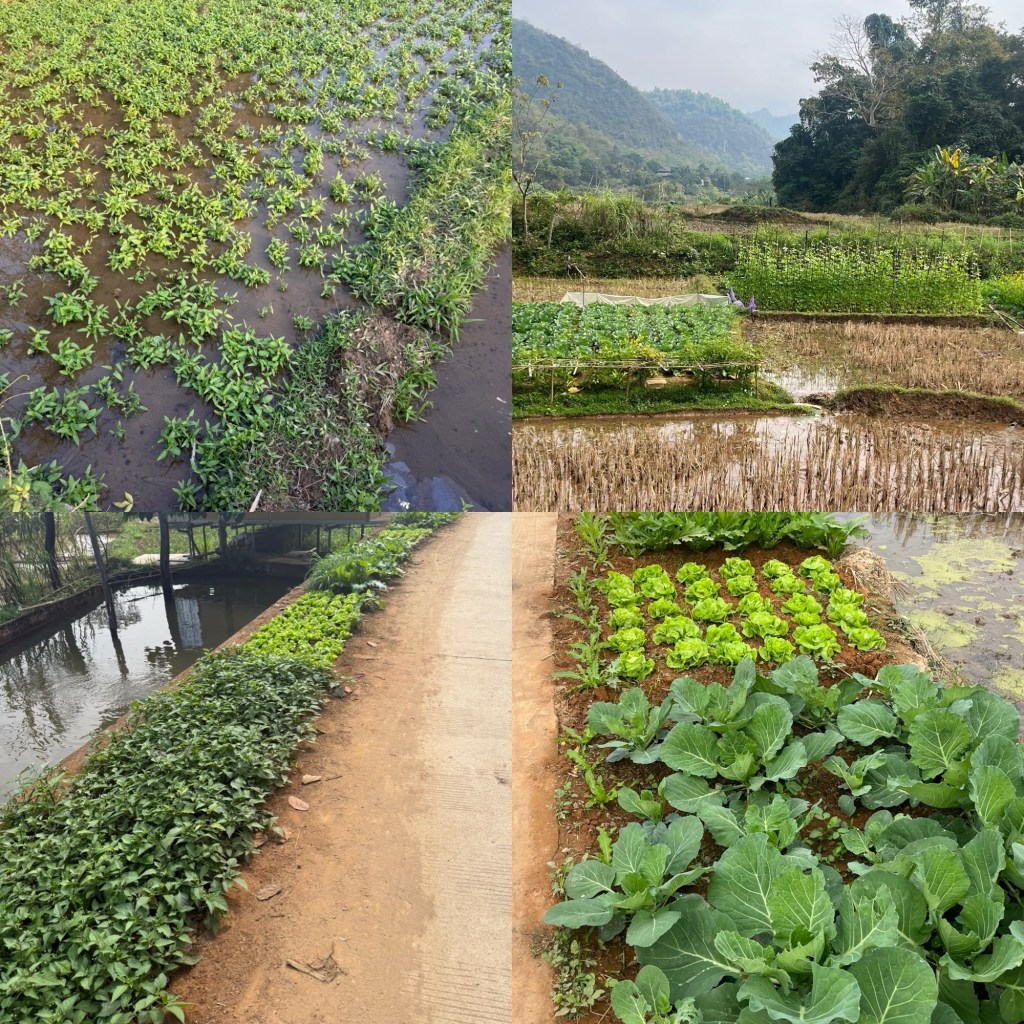
Every space in the narrow valley that isn’t green holds a stilt house. Every inch of green space that isn’t a flooded rice patty is planted with vegetables and fruit trees.

The Communists in their push to empty the cities and drive an agrarian proletariat pushed a concept called V.A.C.. I can’t give you the Vietnamese words to match the acronym but it means Garden-Pond-Barn. These are the “Three Friends” and the Party’s ideal for each homestead,

You can argue against the violently enforced banishment to this simple self sufficiency. You can point to how the model doesn’t provide education or life span or freedom to speak. It certainly require heavy subsidization.

But the net visual effect in this valley is kind of a trashy Eden.

Some pictures to tell the tale…

Stilt House
Rice paddy leases
Jackfruit, bettle nut, papaya and figs
Veggie plots
Farm in Mai Hua

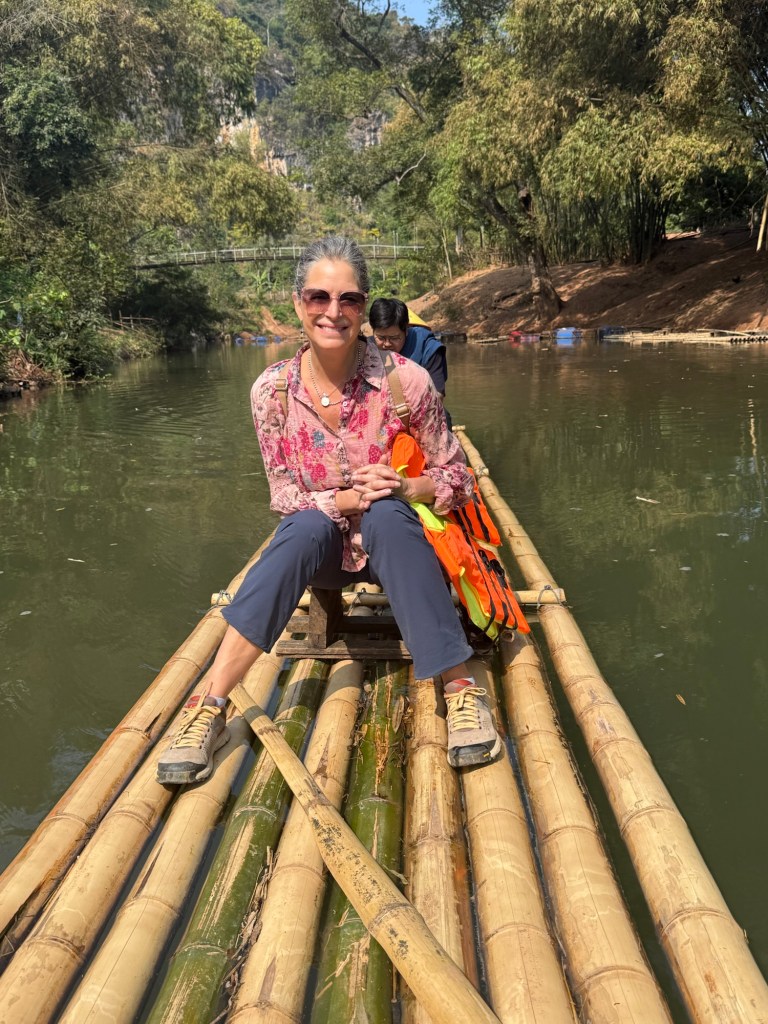
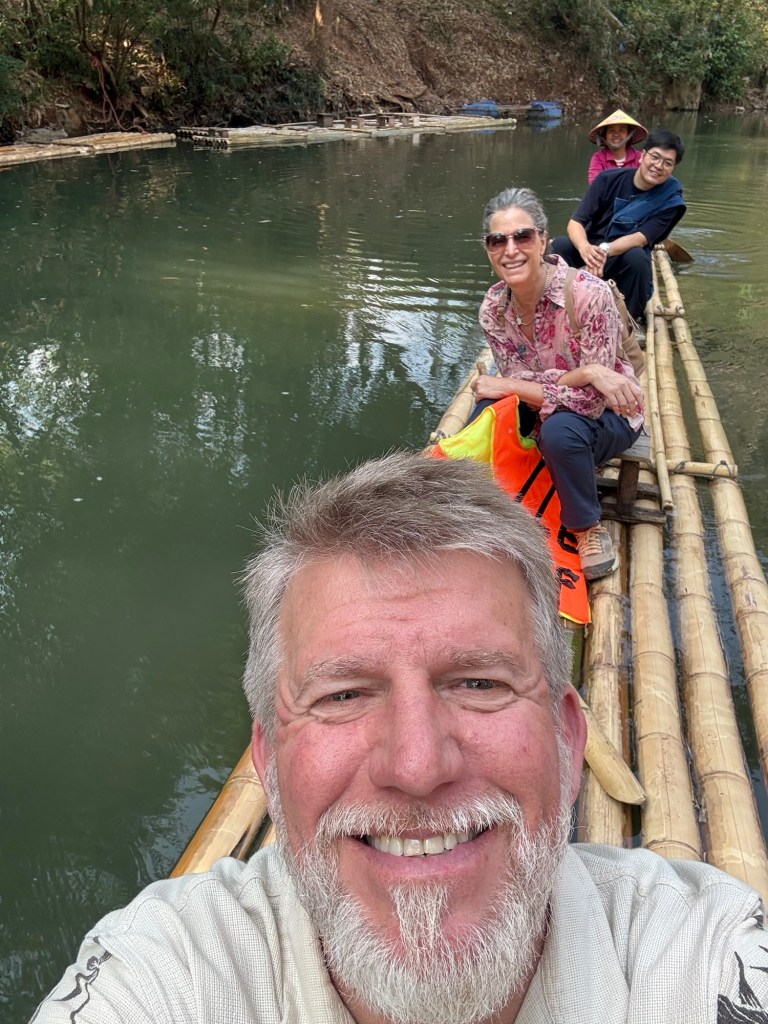
From the top of the valley we were scheduled to take a rafting trip down the Xia creek. “Rafting trip” turned out to be about a 1,000 yard float down a trash strewn creek on 10 bamboo poles.

Beauty on the Water
Braving the Rapjds

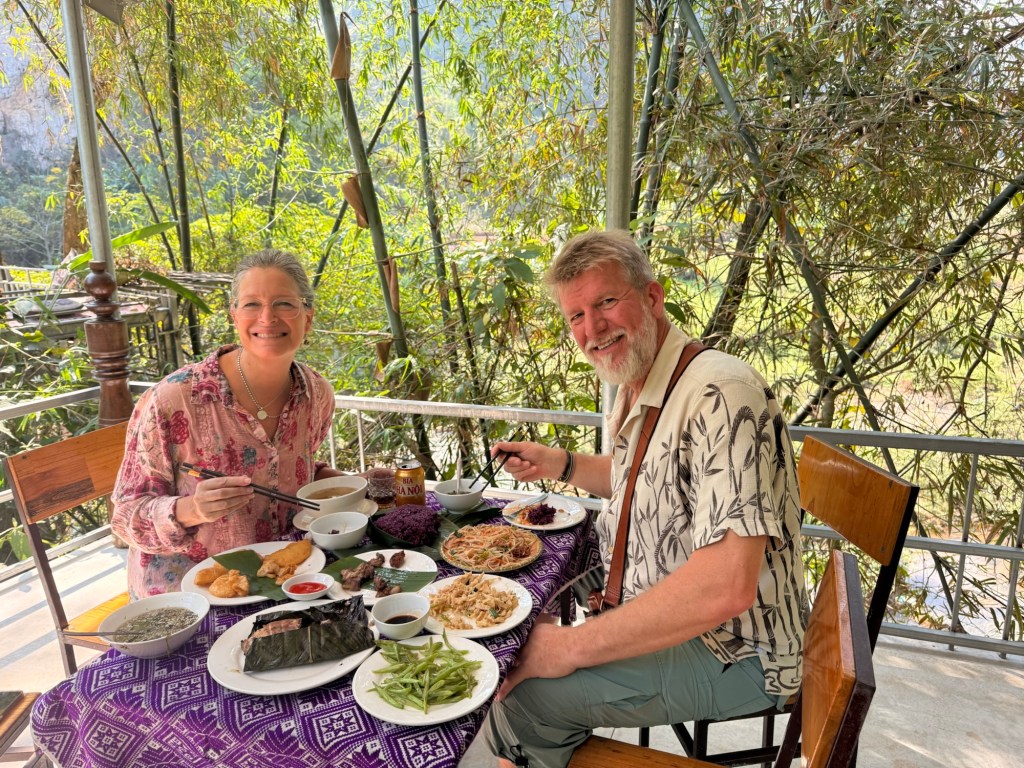
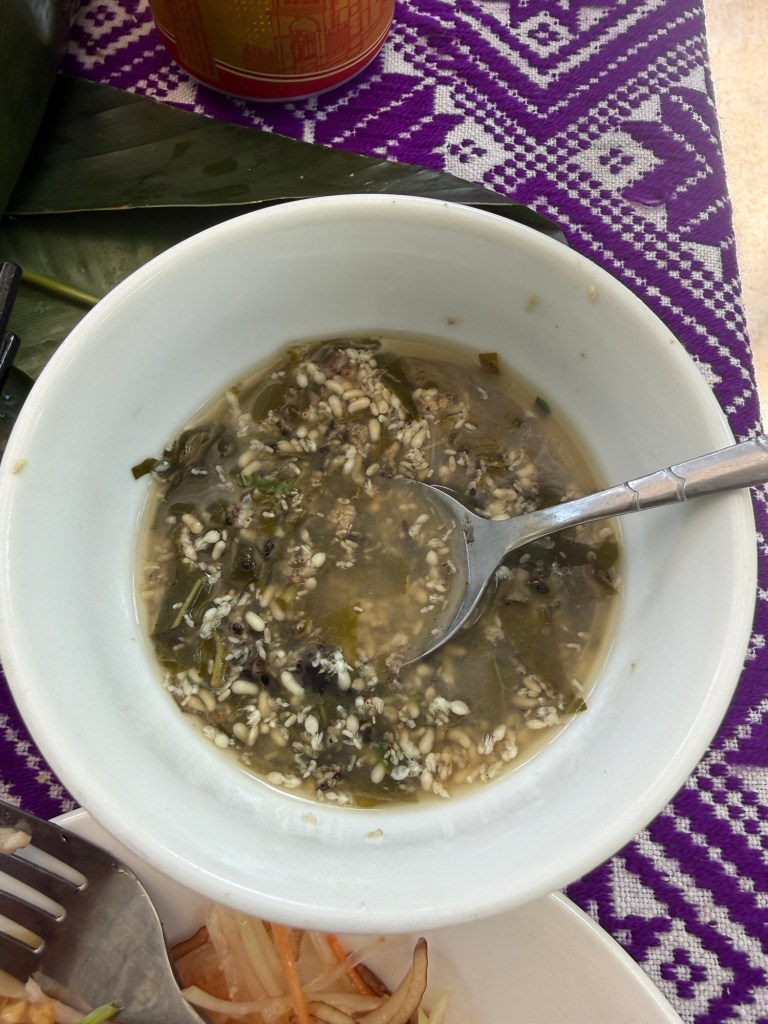
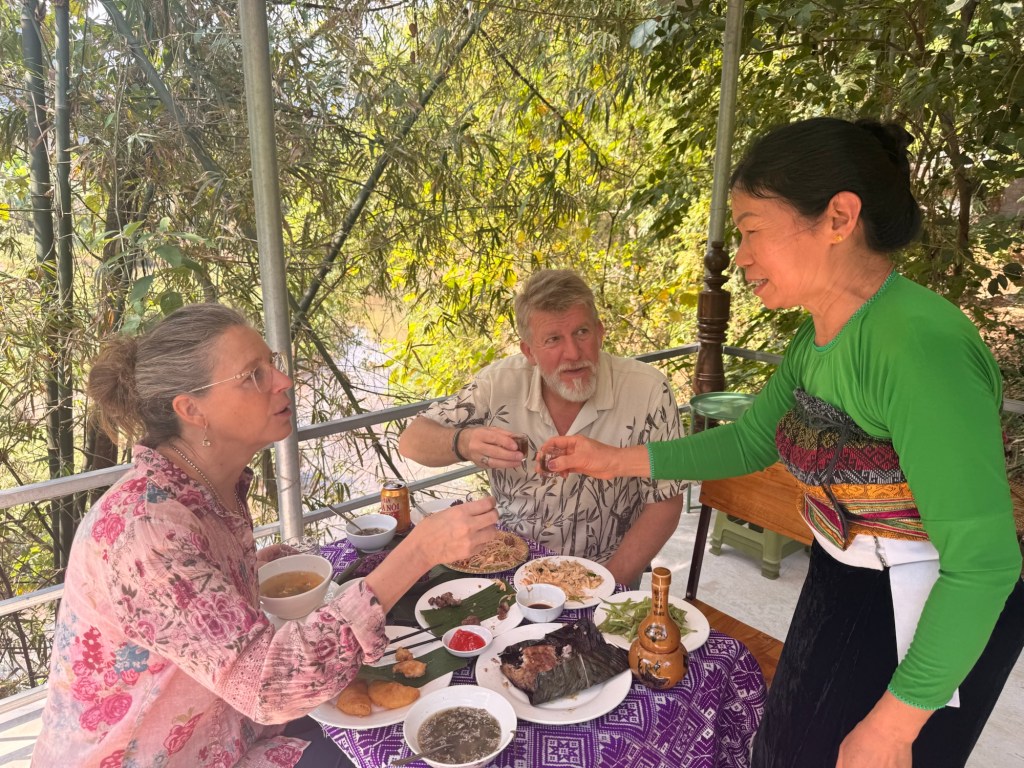
Lunch followed overlooking the creek. It included some wonderful dishes. But it also included ants egg soup (not a fan). The proprietor offered shots of banana-rice moonshine – bad form to decline.

Lunch
Aunts Egg Soup
Shots with “Mammy”
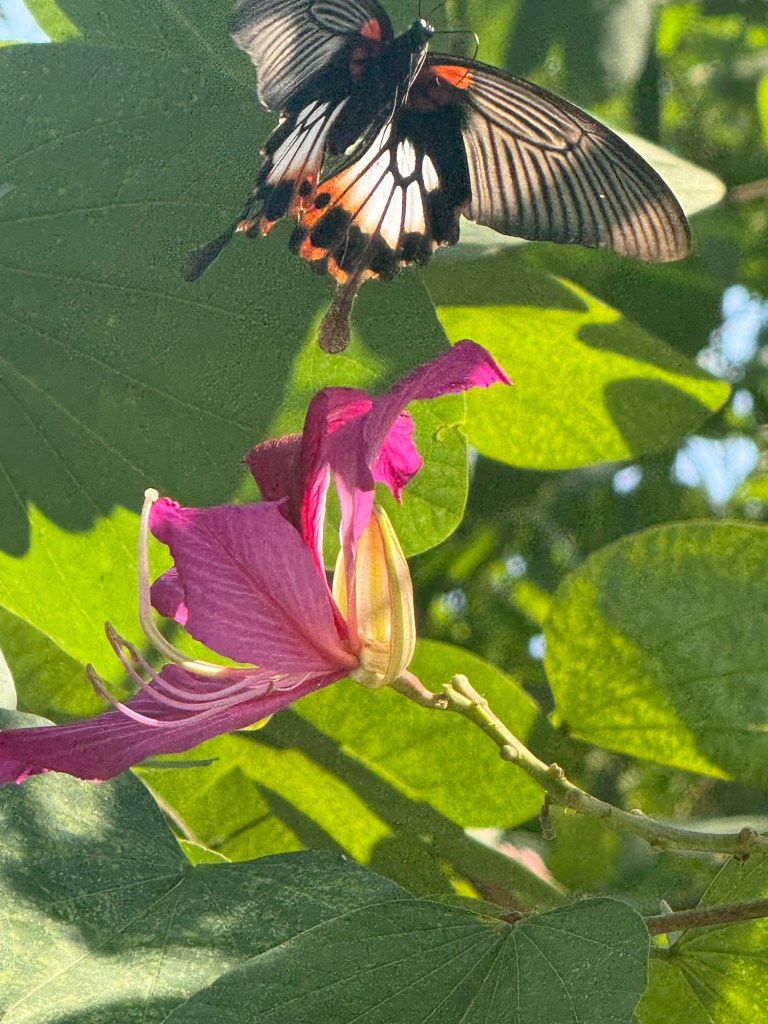
Lunch also included this beautiful little visitor.

So let’s talk about death. Maybe it’s because of 150 years of brutal colonialism, a dozen wars, or lots of communist genocide and famine. Or maybe it’s just a cultural thing. But every tour or conversation here seems to get around to it.

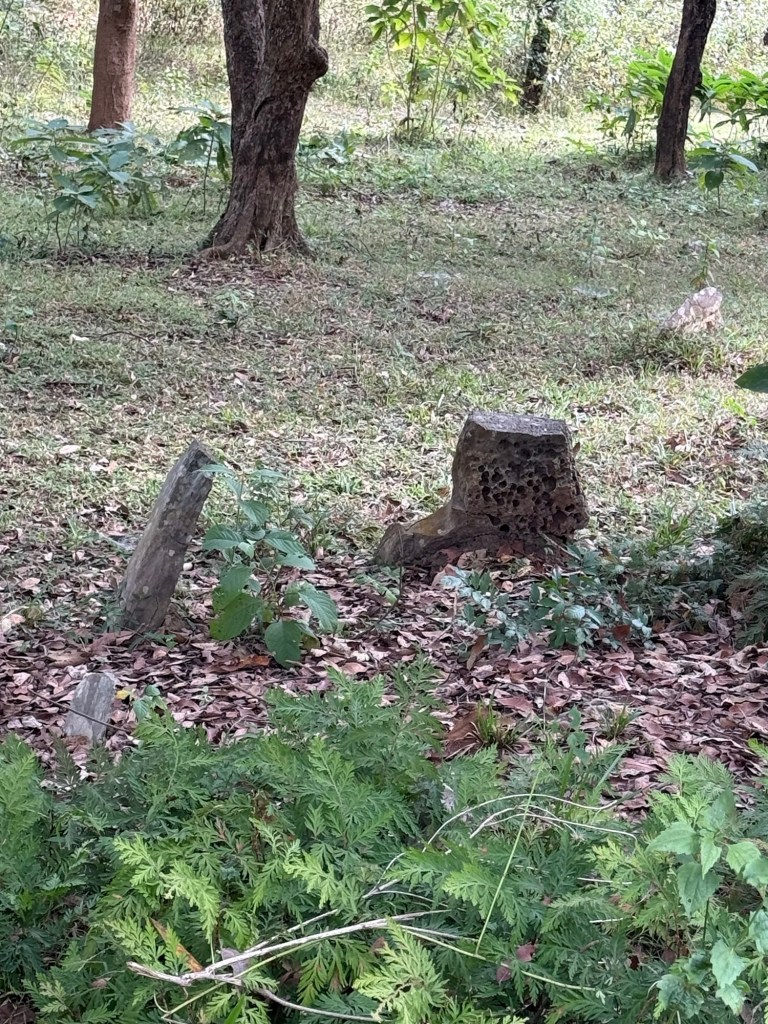
The Thai tribes bury their dead with their heads uphill and unmarked rocks for headstones. Some Northern tribes like the Viet, dig up their dead after three years of burial to see how much flesh is on the bones. This, of course tells them whether they’ve moved on, or are still hanging around haunting them.

The Thai tribe also cut their coffins from logs the day they’re born and keep them front and center their whole lives. The Muong and other mountain tribes build small Spirit Houses in their yards with offering to keep the God of the Mountain from crushing them.

The Taoists think their dead influence daily life. They burn paper coins, watches or even model houses as bribes for intercession with their Gods.

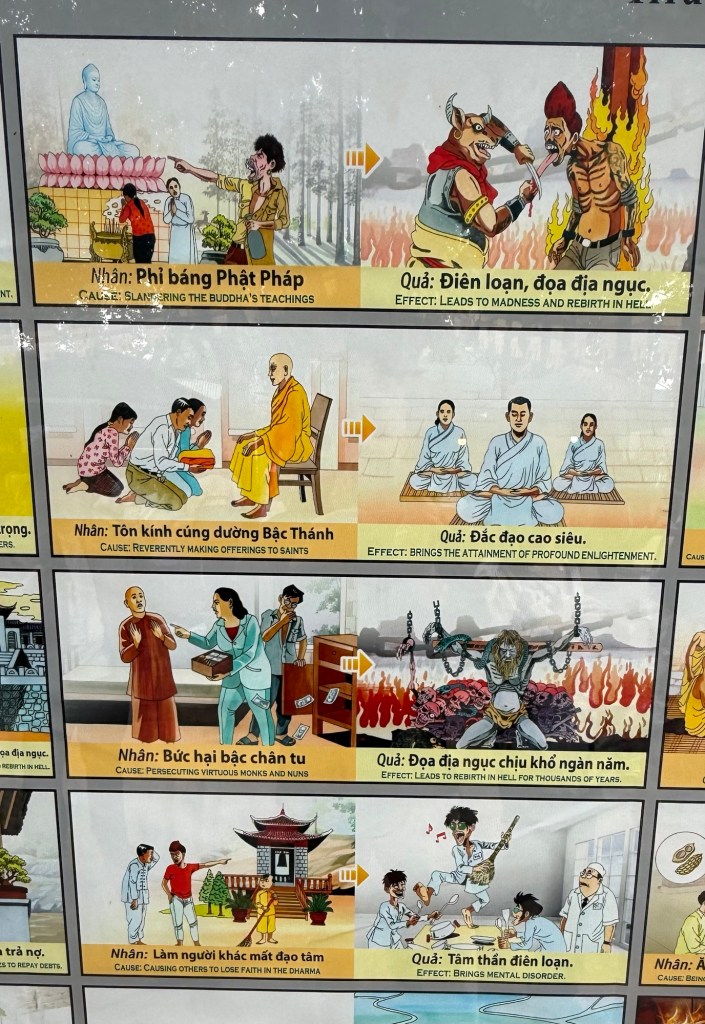
The Buddhists recycle the dead. Hopefully you’ve done your Karma right and you’re reincarnated and on your way to enlightenment. Get it wrong and coming back as a poisonous snake is also a possibility.

The Tao-Buddhist that we learned about in Hanoi combine these last two practices but we never figured who they’re trying to impress with their offering since there’s no dead ancestors and no God.

Thai Tombstone
Coffins at the ready
Muong Spirit House
Tao Buddhist Confusion
Karma Reference Guide

We haven’t seen many Christian sites and we may not. But to be fair, I’m guessing these guys would find virgin birth, resurrected bodies, Holy Spirit possession, and the whole Catholic saint deal a bit whacky as well.

We haven’t gotten to the Hindu’s or Cambodian death cults yet. But we’ll keep you posted.

Another walk around town included some textile shopping and a random tour of a hotel site under construction “come see my house!”

We had an ok dinner at the Eco Lodge and then off to bed – both feeling a little tired and grumpy tonight. Maybe it’s just beauty overload or missing our Western normal.

The Road to Mai Chau, Field Day Satan, and a Dinner with New Friends…

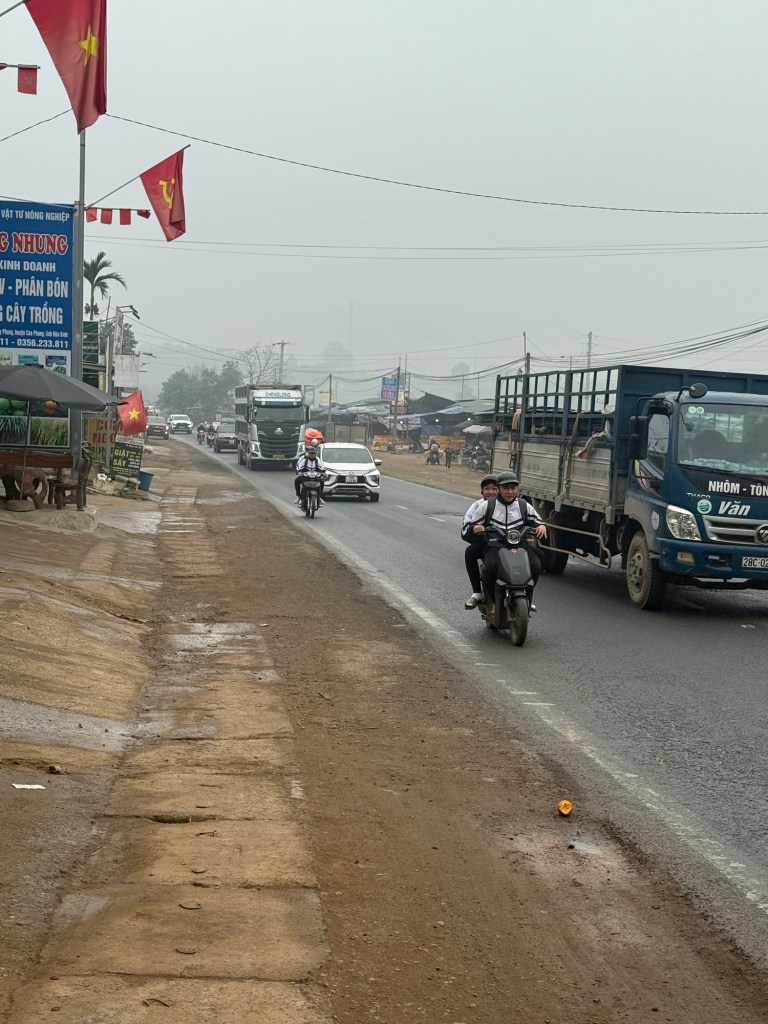
We traveled this morning by highway, 3 hours southwest to the valley of Mai Chau near the Laos border. We anticipated a rural and mountainous experience for two nights and some exposure to 6 ethnic tribes near the Laos border. It was a very busy two lane highway, but compared to the frantic streets of Hanoi conditions are practically Zen.

Dirty Roads

Q reviewed my blog along the way and found maybe 6 mistakes – dates, spellings, etc. But I think, at this point, my work is guide-approved.

Riding through small rice fields. Q explained that these fields are too small to be profitable, but that the lease owners are required to keep farming or the government will confiscate their land. They also receive a small stipend from the Party but they are pretty impoverished.

This older generation, personally familiar with economic collapse and famine sees this as a defense for their children if starvation or poverty returns. Access to rice in the experience of the Vietnamese is synonymous with survival.

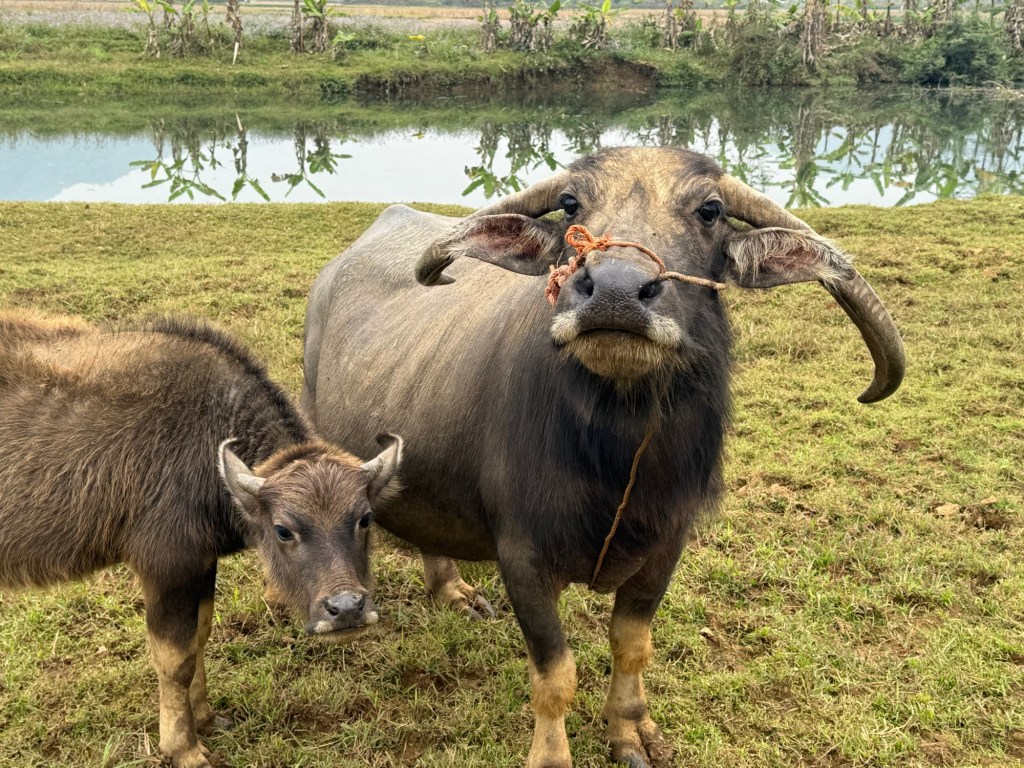
Our firstwater buffalo sighting!

This guy looks funny

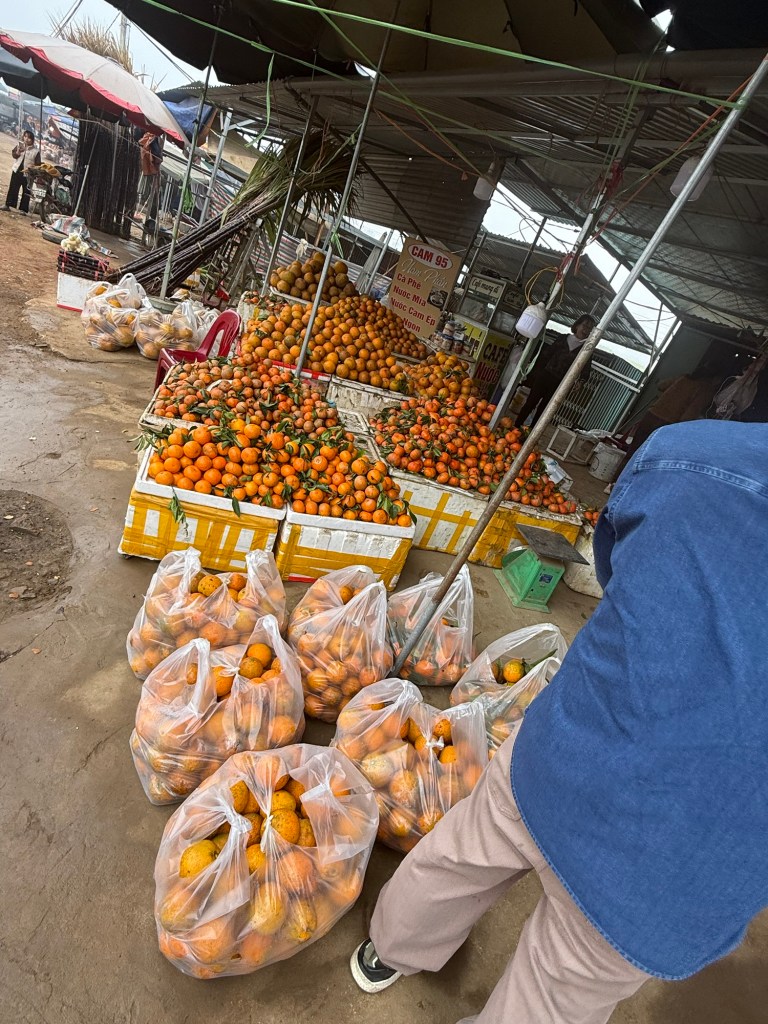
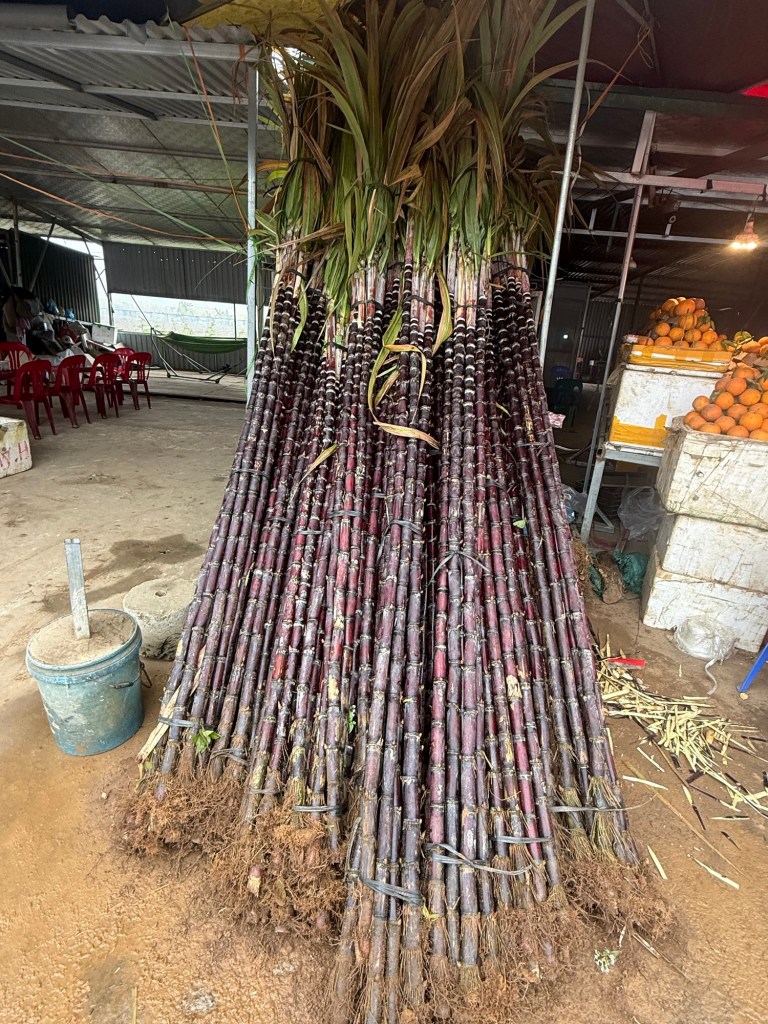
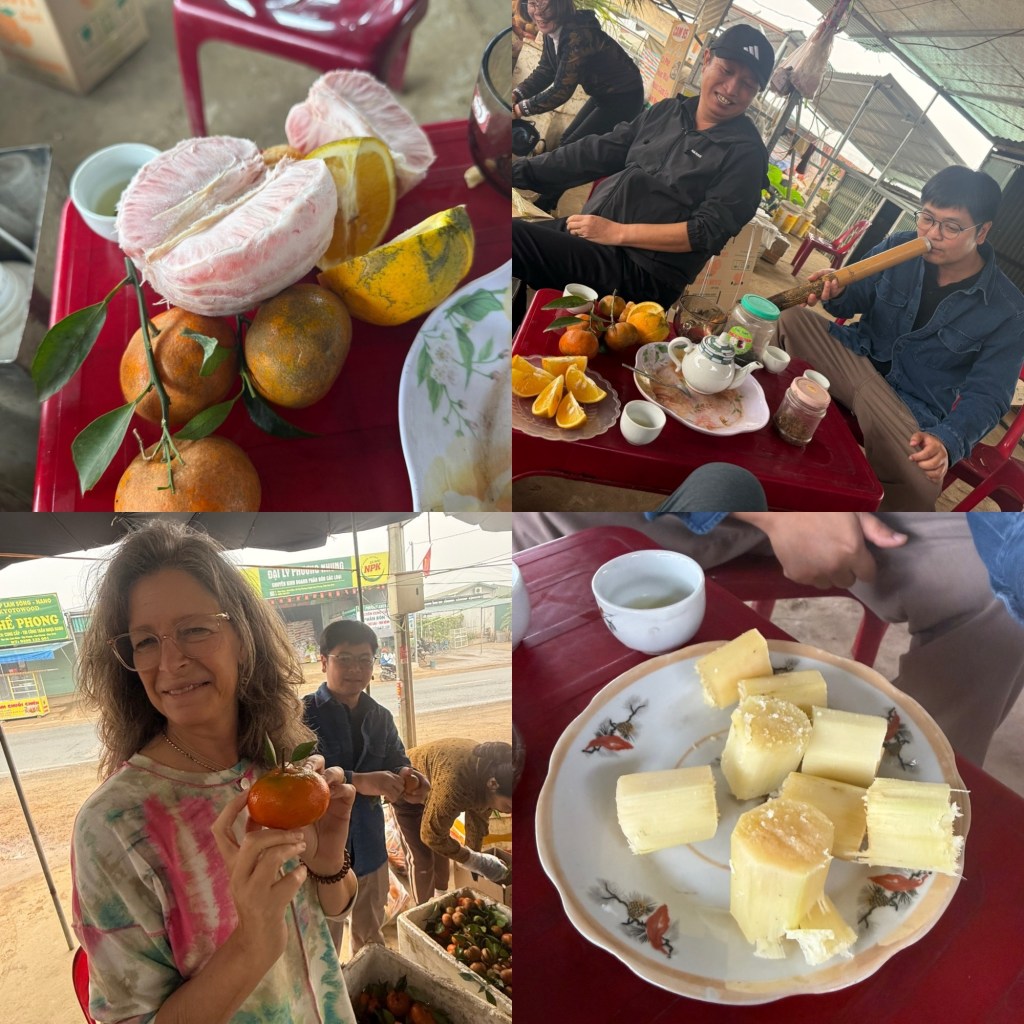
Our driver Angh is from Mai Chau. So we stopped (suddenly) at a town specializing in orange production to pick up 50 pounds (about $15) for his family. The transaction included a sit down to sample the oranges and palmello, chunks of sugar cane to chew and the omnipresent green tea.

Bulk discount
Sugar Cane
Road side tea party – not a bong

We arrived at the town of Mai Chau, the principle of 6 villages in the Mai Chau valley. Two ethnic tribes the White-Thai and Black-Thai live here. The Black-Thai live in the mountains and farm corn. The White- Thai live in the valleys and farm rice. Both have distinct traditional outfits, diets etc and have been living as separated neighbors for 600 years. Q was adamant that the Thai designation had no linkage to Thailand and kept reminding us that the black/white designation had nothing to do with skin color. Got it.

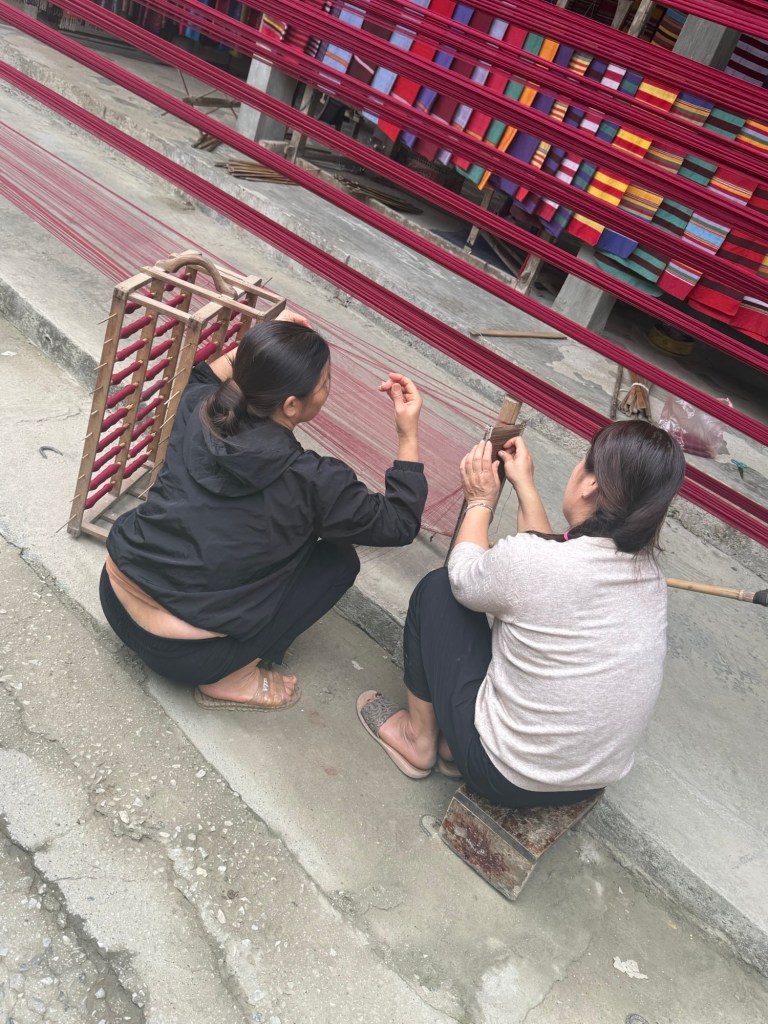
We had a traditional lunch and then walked the town. Pretty touristy with beautiful hand-woven textiles everywhere. Many of the private homes offered “Home-Stays” or rooms for rent. The main economies seemed to be rice, fabric sales, and tourism dollars.

Mai Chau lunch
Hand weaving

As we walked, the town steadily filled up with uniformed students. We figured out that we were at the start of a massive multi-school retreat, rally and field day. Within two hours one end of the town had filled with buses and we were surrounded by over 2,000(!) kids. It was pandemonium.

Happy JuJu

The kids were accompanied by a small number of teacher-chaperones who immediately started getting completely smashed on the local rice moonshine.

They were all piling into a big field where this guy was yelling at the top of his lungs through a bull horn. He kept this up, literally without stop until 10pm. Not to be too ethnocentric, but the Vietnamese language through a low quality bullhorn can be pretty jarring to Western ears. It went from culturally interesting to audio-torture pretty quickly.

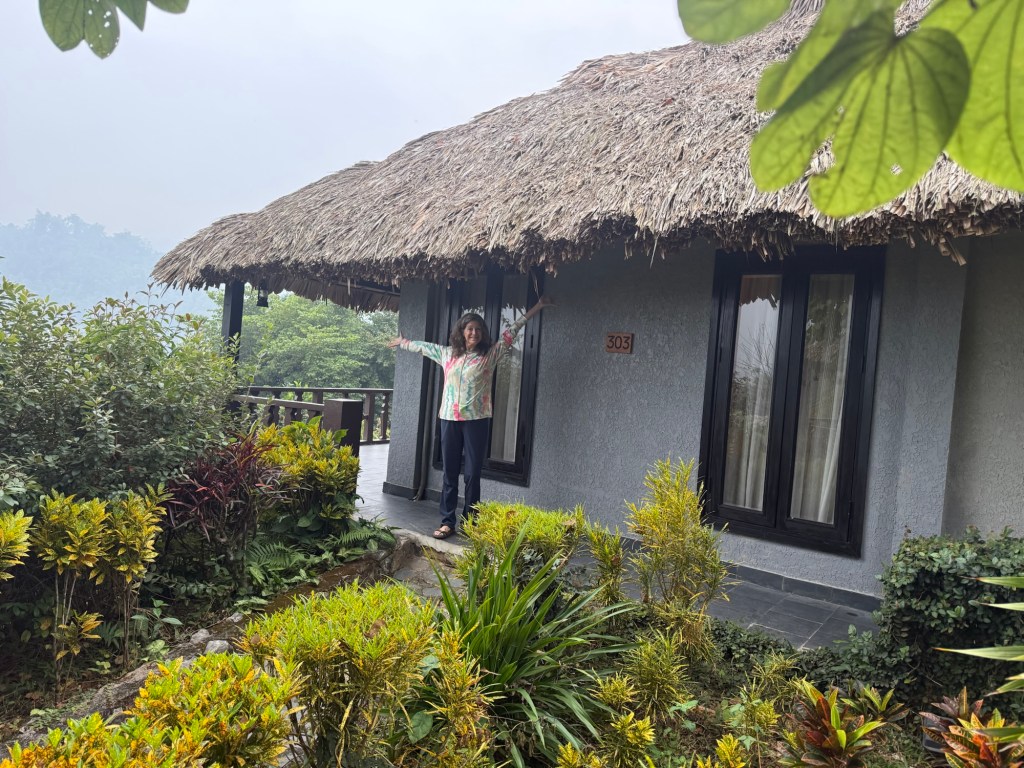
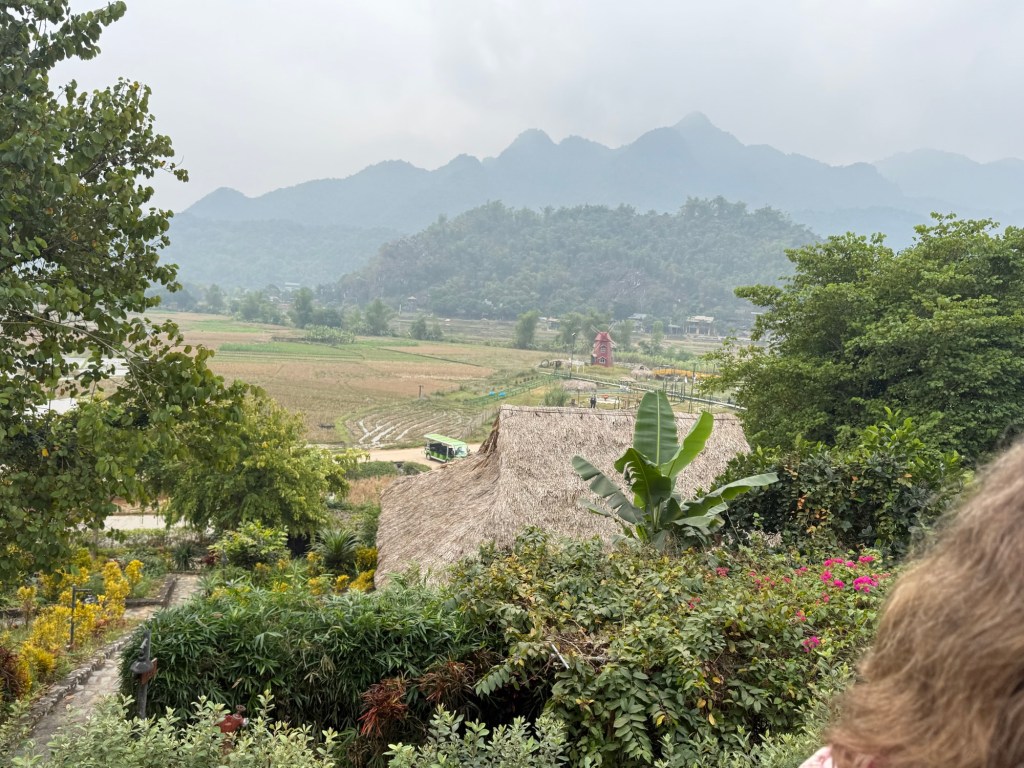
Checked into a beautiful Eco Lodge overlooking the rice paddies. We had our own well appointed thatched hut, with a big wooden tub, veranda, and comfortable beds. The bamboo and stone architecture were warm and very South East Asian. There was a pool and a bar, ethnic dancing, free moonshine, etc. Not as refined as the Metropole but Wow.
Eco-Villa
View from our porch

The only downside and it was not a small one was a constant thumping club beat from the Field Day a few hundred yards away and of course, bullhorn guy. He did not stop, He did not take a breath, He was field day Satan.
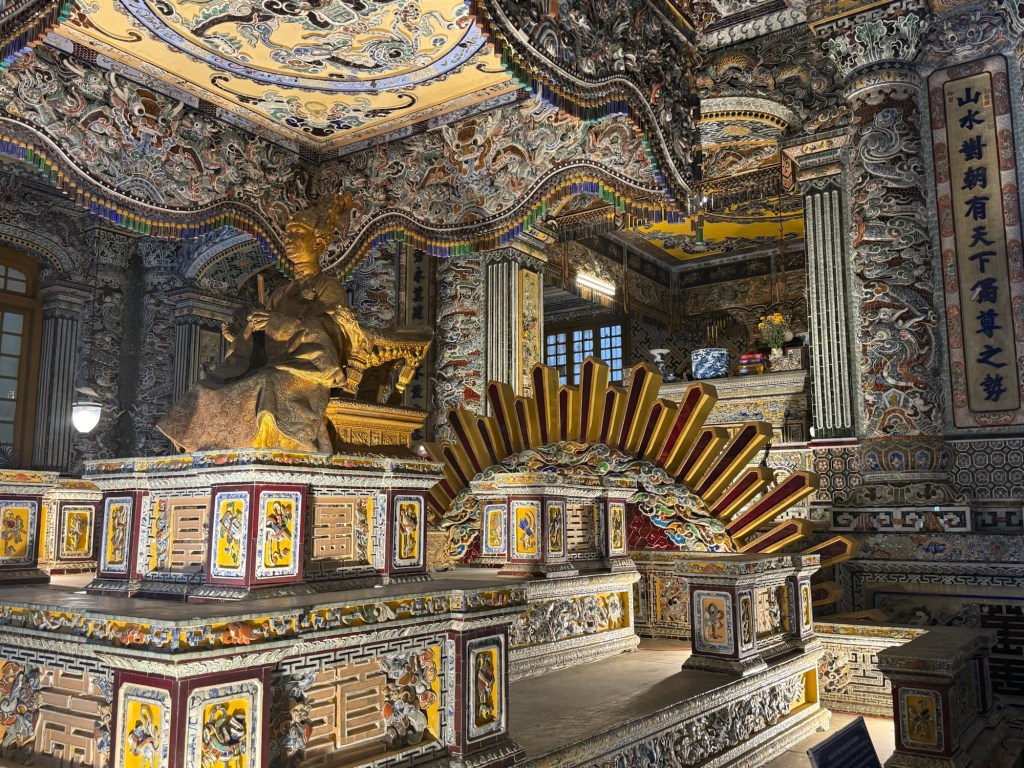
Field Day Satan

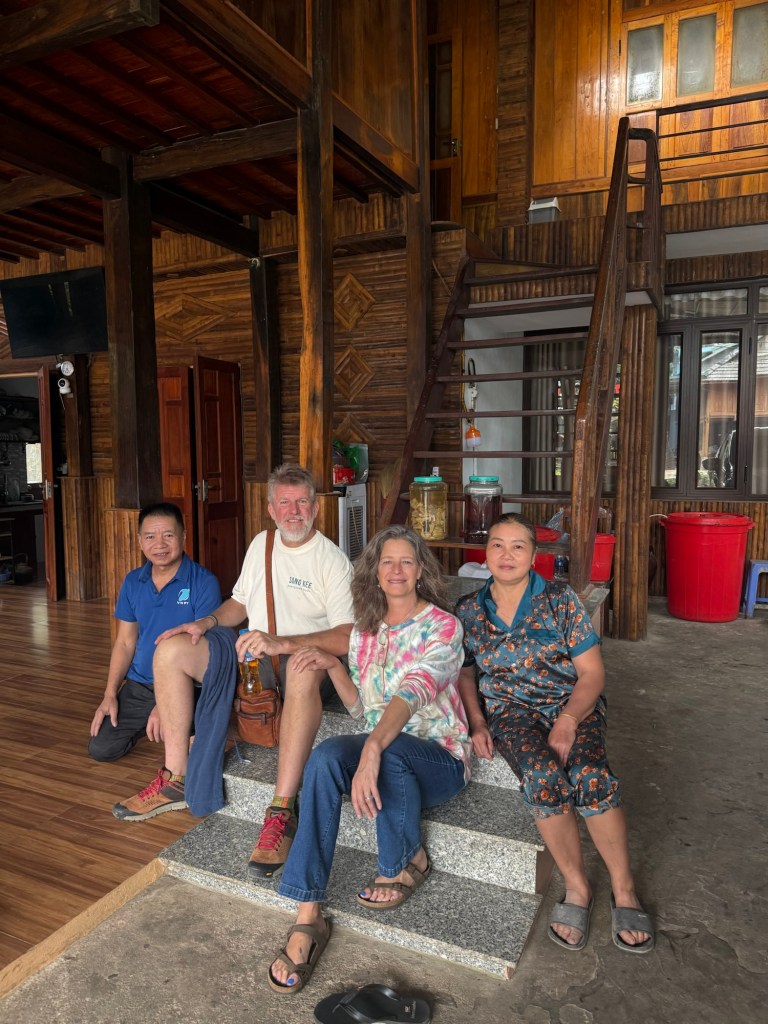
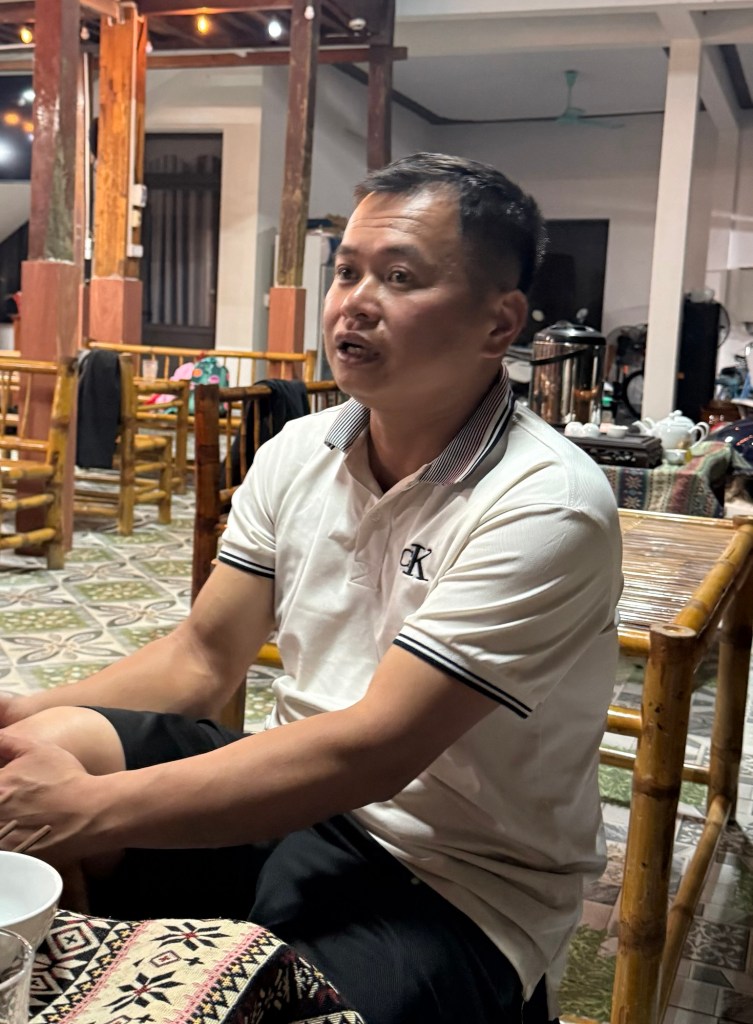
Q picked us up at 6:30 for what turned about to be a very special evening. We were invited to his friend Mr.Cho’s house for dinner. Coincidentally he’s also Drew’s South East Asian doppelgänger. He has a large guest house in town built on stilts and we gathered with him, our driver Angh and a few other new friend’s (Thuit and Hongh) for a feast and moonshine binge.

Black-Thai Drew

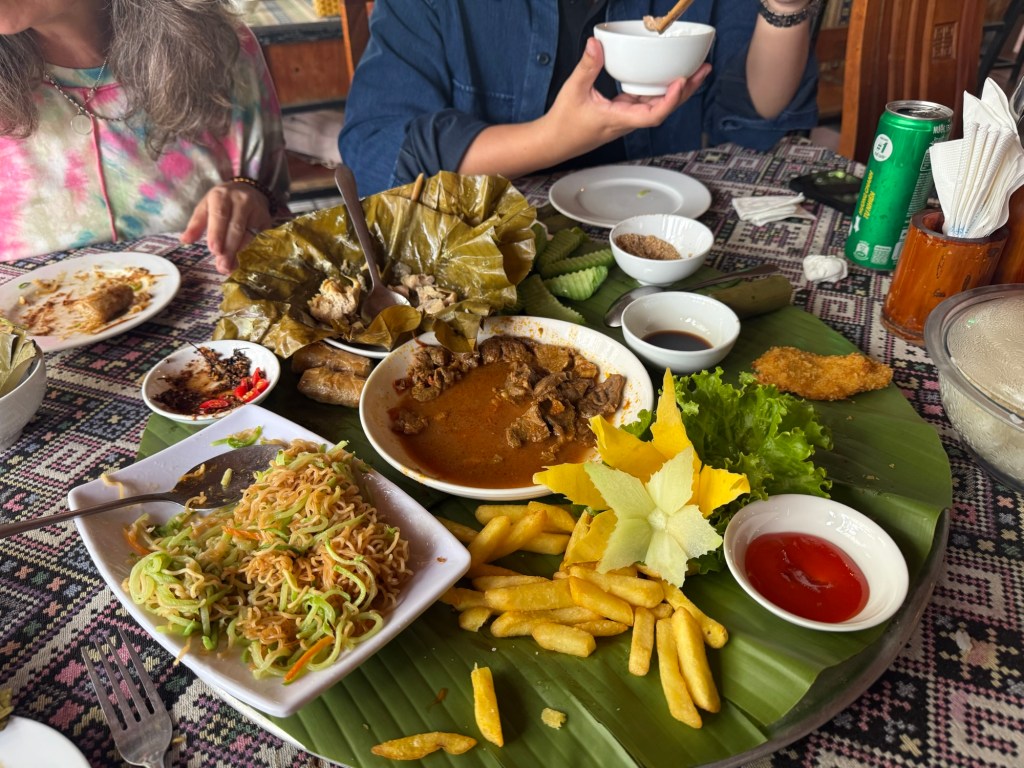
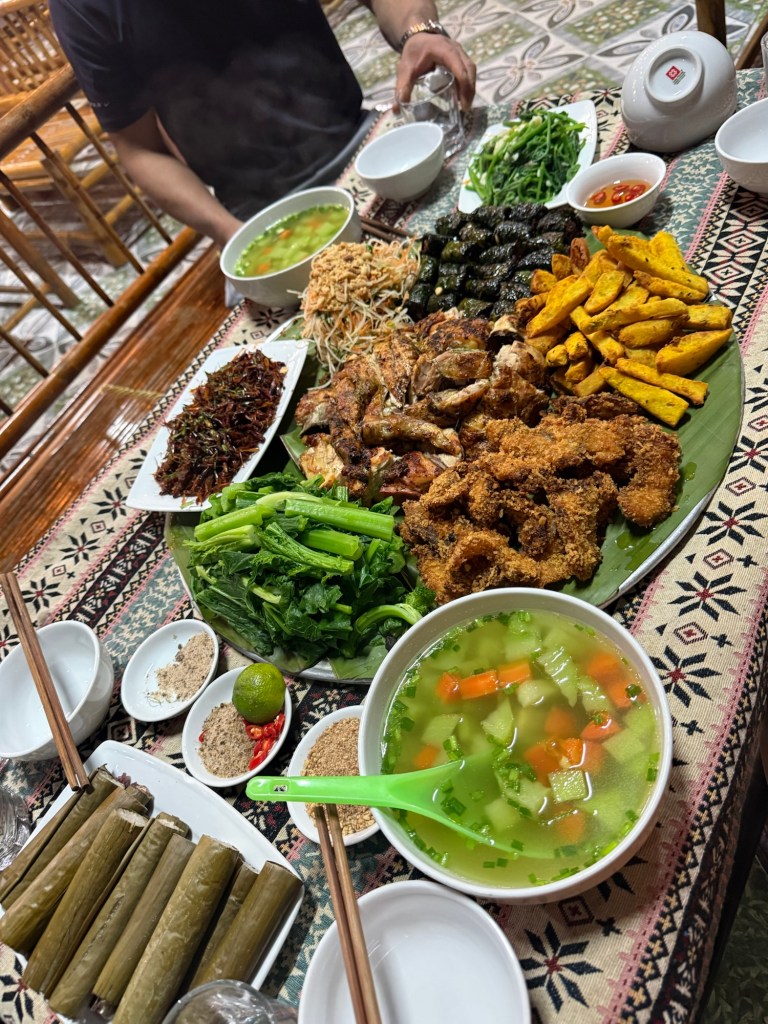
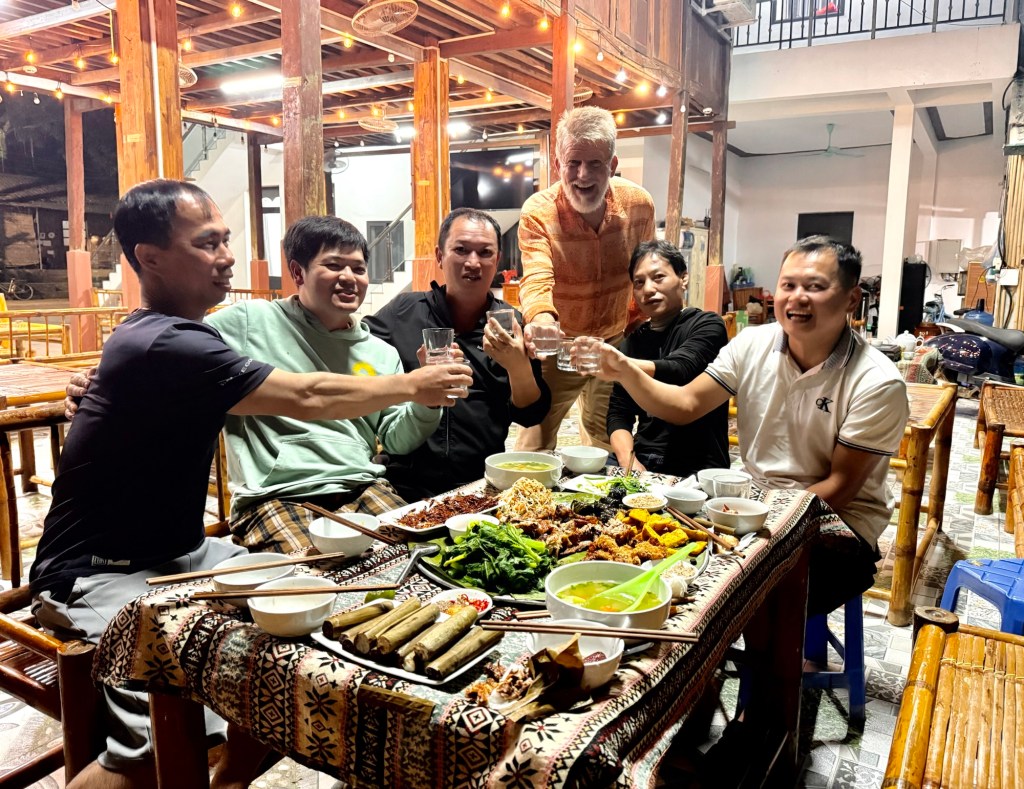
The food was a giant shared plate of chopped pepper chicken, fried fish, pumpkin greens, beef in lolott leafs, green papaya and banana leaf salad, yams and a nice, big bowl of fried grasshoppers (we had some, ok l guess). We were also taught it’s polite to reverse our chopsticks and serve from the shared plate with the opposite fat end. There was also a plastic pitcher 3/4 full of water (it turned out to be rice moonshine).

Vietnamese Friends-giving
Grasshoppers!

It was fascinating. His friends were White-Thai (though we learned Ang’s wife was Black-Thai) and they spoke a mix of a local dialect and Vietnamese. A three way interpretation fest led by Q and Angh ensued. Life experiences, children, stories, and jokes flowed back and forth. Each pause, another toast – a shot for the locals, a sip for JuJu, and me somewhere in between. Q got really funny and poked some fun at us. Angh got very drunk-emotional about his new best friends Mawcomb and DjuDju.
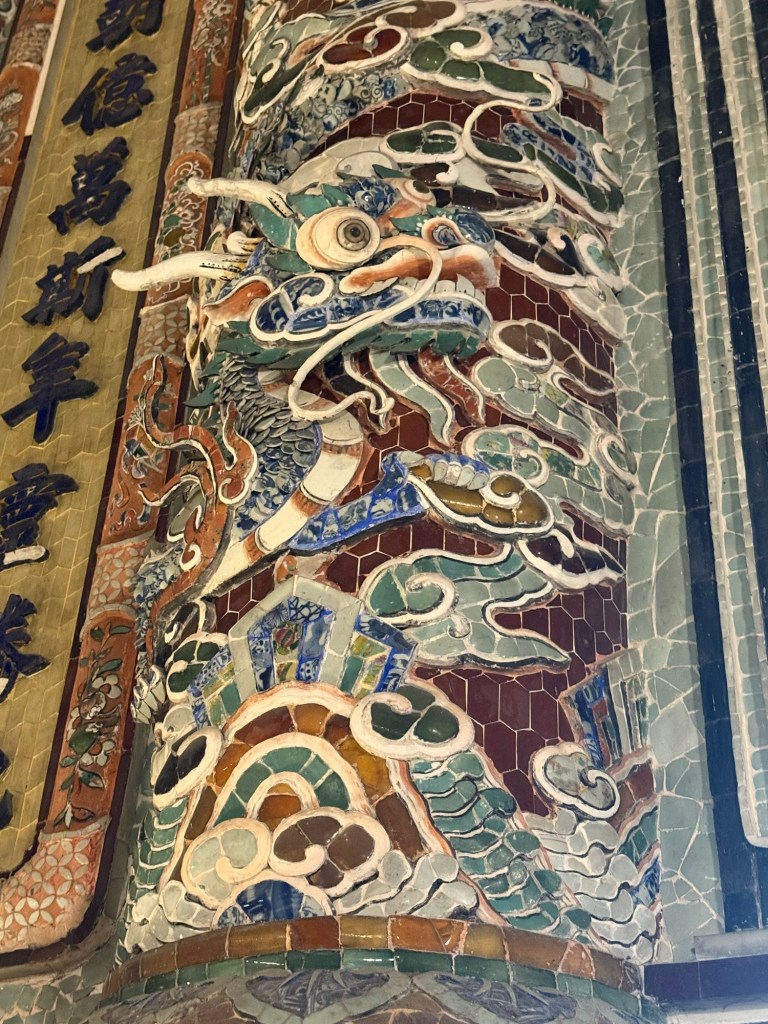
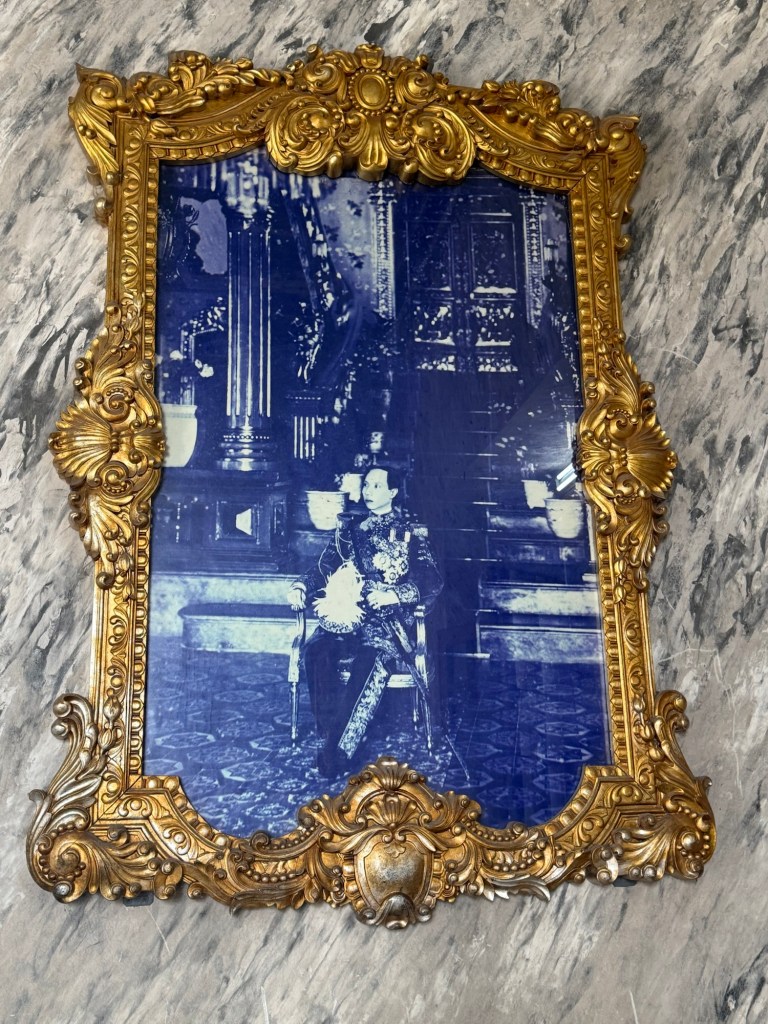
The Boys of Mai Chau

We learned a lot about their lives. Thuit and Hong were rice farmers. Cho ran a guesthouse for large charity groups (there were 15 American kids on a road building trip there that night). He also ran the local moonshine distillery.

There were lots of warm smiles, firm handshakes and eye contact as drunk Thuit left for his rice fields and the party broke up. We called a cab back to the Eco Lodge and Q and Angh settled in for a sleep over.

We came home to catch the tail end of an ethnic dance performance (Black-Hmong) at the Lodge (cool)

Hmong Dancers