We spent a full, and I mean FULL day yesterday in Hue – the Imperial Capitol of Old Vietnam.
Our new guide Tien (accent up at end) and driver Hien (accent down at end) are wonderful. Tien is 6’1″, huge by VN standards, and owns a ladies-only gym. Hien is a five foot tall lady from the rural north but learning karate. We have quite the body guards.
A long post today, and if you’re interested in Colonial Vietnamese history (1802-1945) you can ride along. You can also just scan through and look at pictures of the incredible architecture (and my beautiful smiling JuJu).
A timeline:
1601 – early Nguyen history, begins construction of the Cellestial Lady Pagoda
1802 – Nguyen Dynasty under Gia Long, first Emperor, consolidates control of Vietnam.
1845 – French colonization begins
~1900 – the Nguyen Dynasty (with French support) consolidates Vietnam, Laos and Cambodia. A series of puppet or “scarecrow” Emperors (one as young as 9) rule the populace but under strict French control
1941 – the Japanese army conquers VN, and enslaves the populous to maximize rice production for their army. Millions die and the Vichy French (now German allies) withdraw to the South
1945- the Japanese exit under terms of the Paris treaty. The French attempt to retake VN and send the last, and 13th Nguyen Emperor Bao Dai into exile in Paris
1945-54 – the French battle Ho Chi Min for control, losing the North decisively at the battle of Dien Bien Phu
1955 – the US enters VN, and sets up a South Vietnamese Government
1955-73 – The Vietnam War (the American War in VN parlance); Kennedy, Johnson and Nixon embrace the “domino theory” seeking to stop the spread of communism into South Asia. Major US ground troop involvement is from 1963-1973. America exits but the North-South civil war continues until 1975.
April 3, 1975 – Vietnam Independence Day, the Geneva Accords
Yesterday’s marathon-day was focused primarily on the Nguyen Dynasty. Our first stop is the Sky Lady or Cellestial Lady Pagoda. Construction was started in 1601 and expanded to its current state under the Nguyen leaders in 1845.
It was another sheep-dip on the Buddhist way, including discussion of the Gaurdians, the role of the Lady Buddha and the ranking systems of the monks (a top monk in yellow robes can pull down $500,000 a year and flies business class?). We’re still confused on how reincarnation, offerings to dead ancestors, karma and self-actualization all fit together.
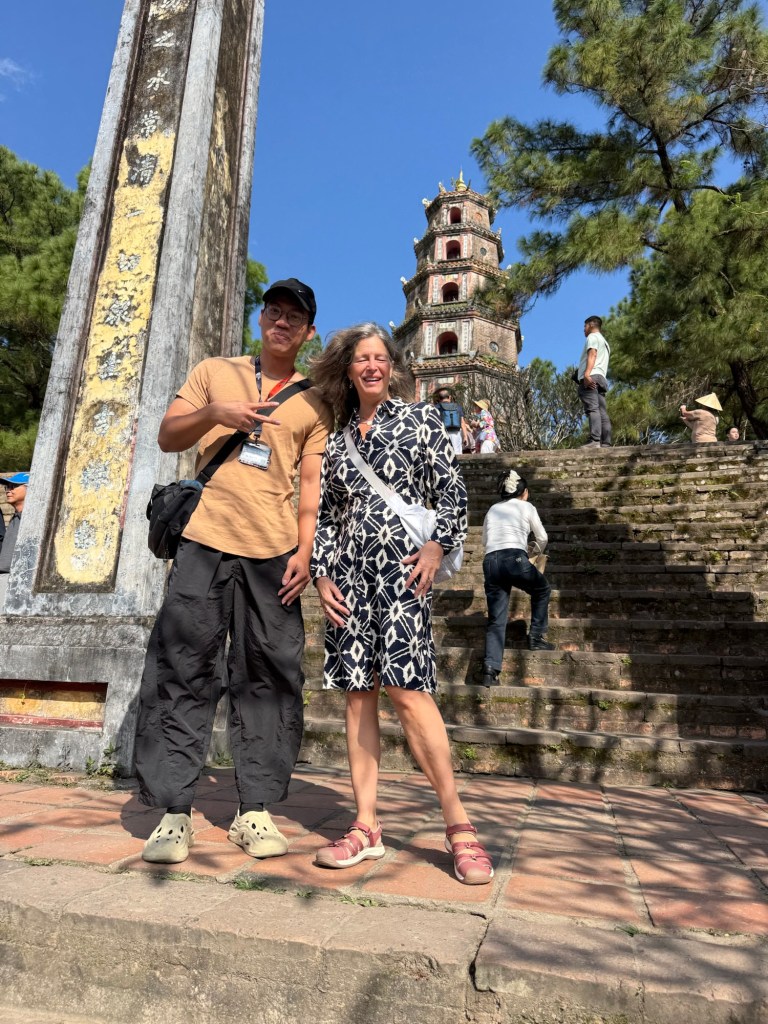
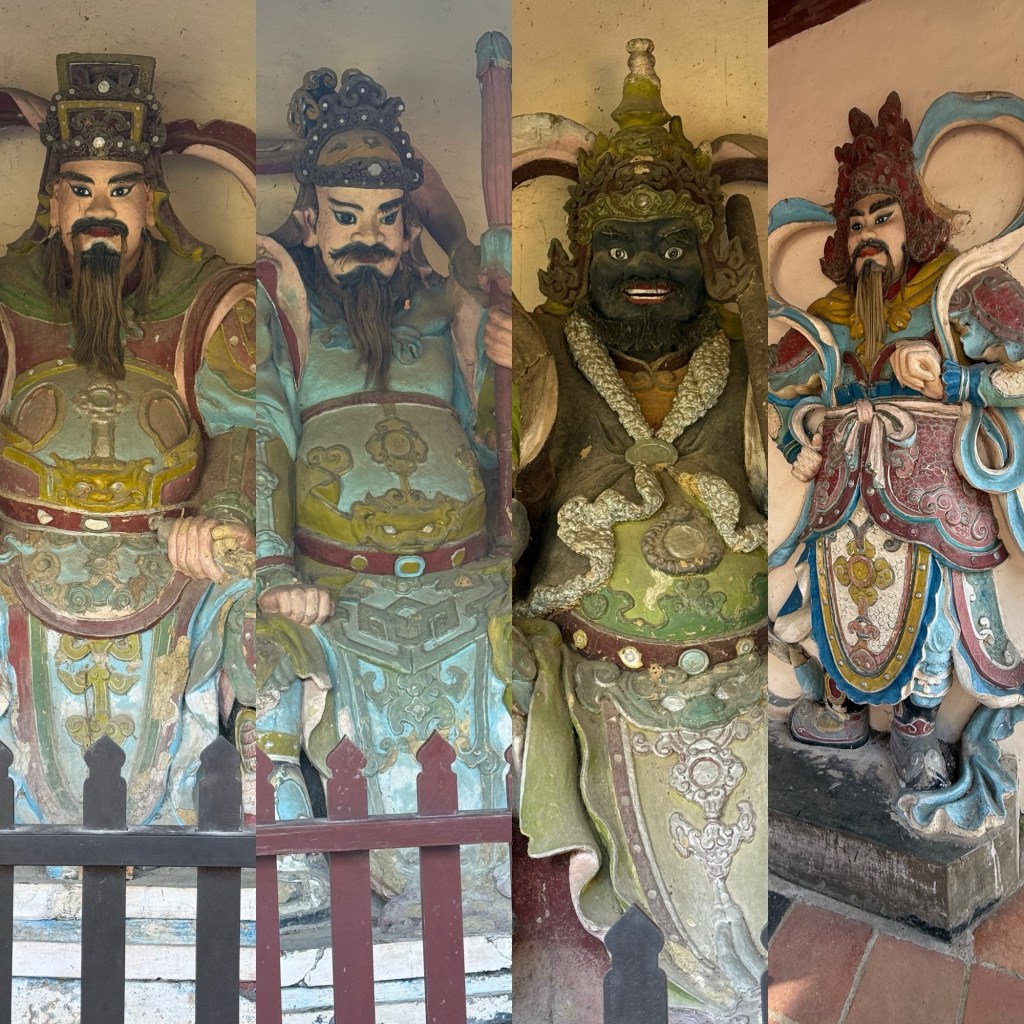
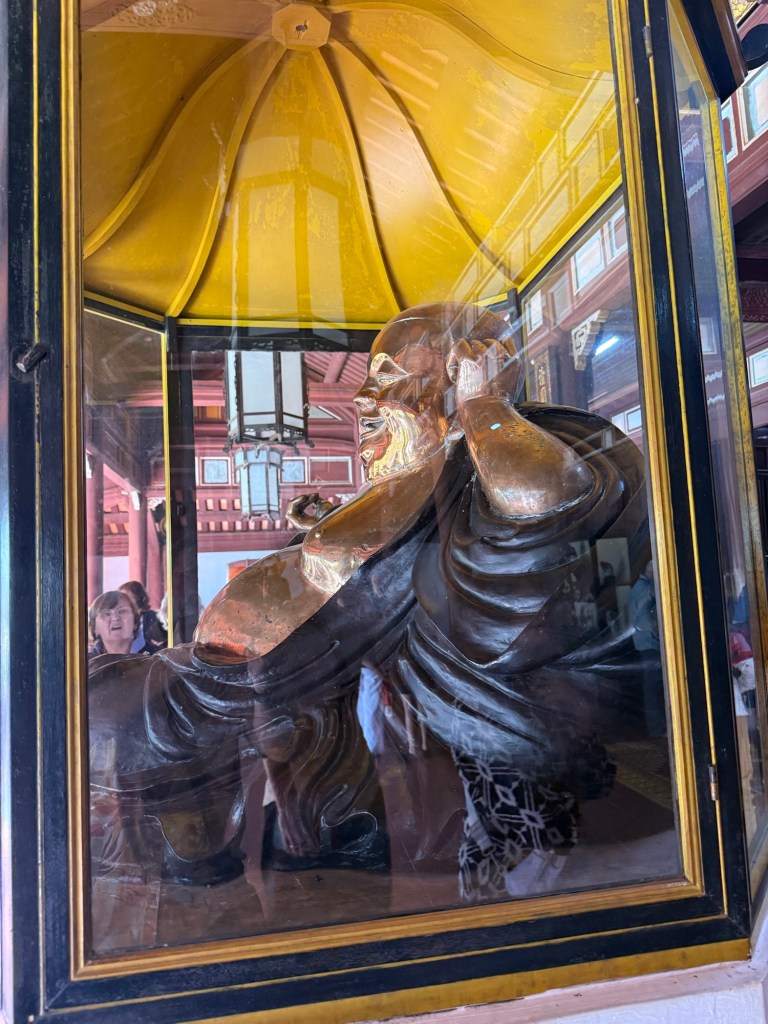
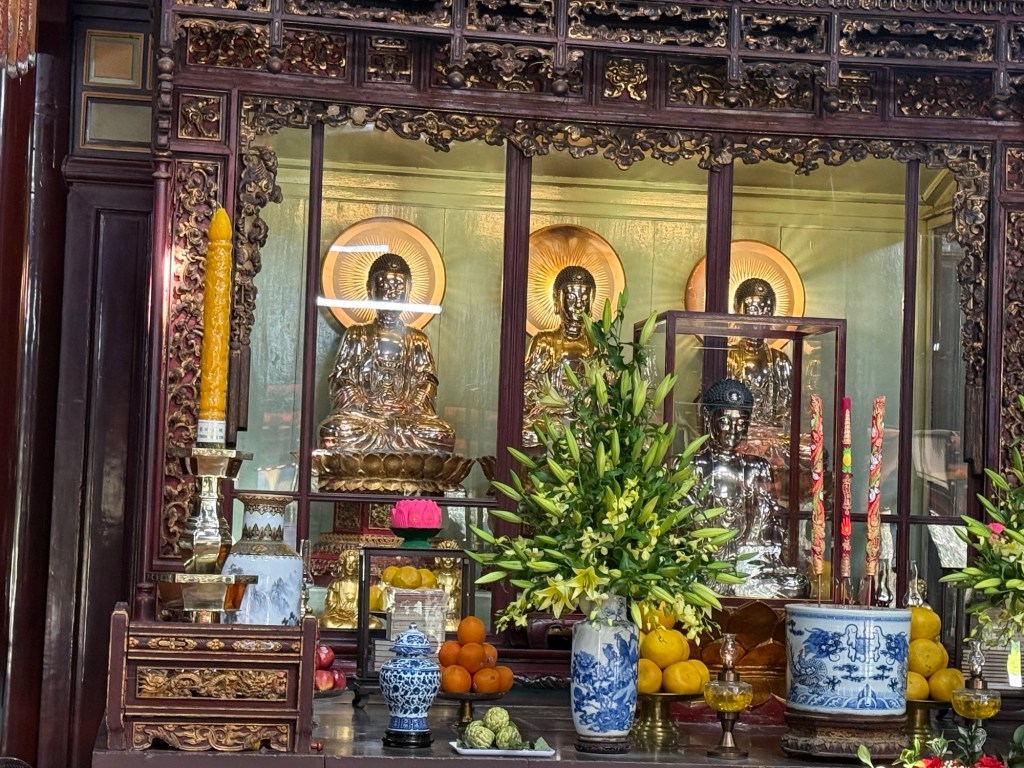
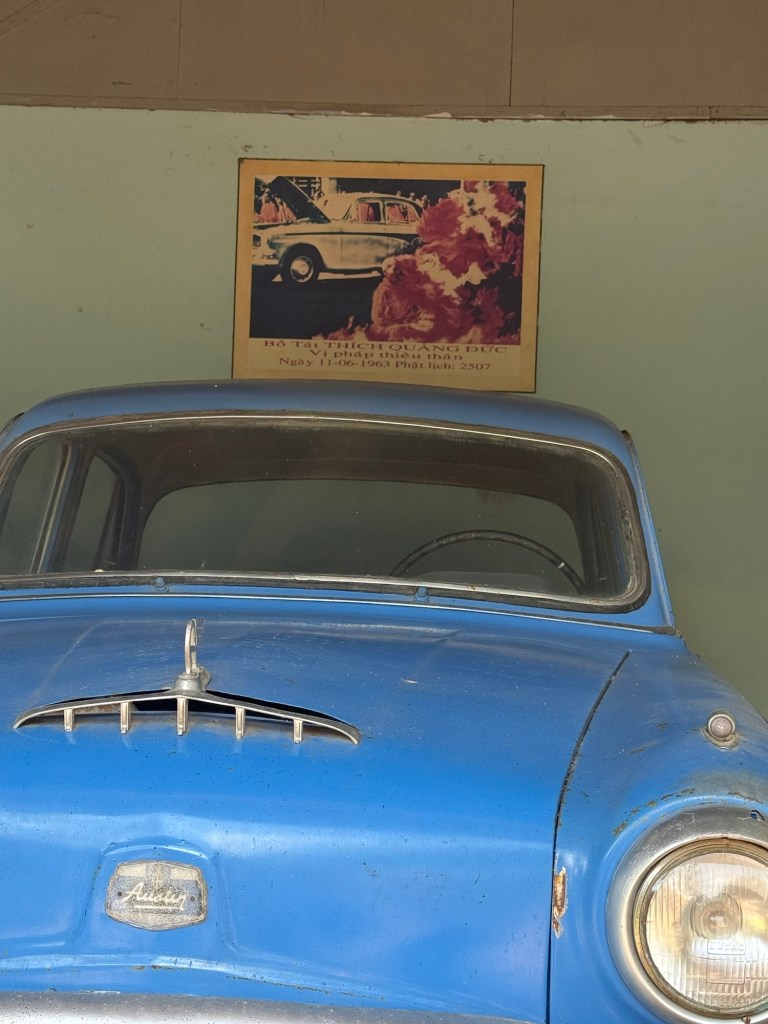
One of the exhibits commemorated the self-immolation of the monk Bo Tat Quang Duc in 1963. When the US first entered Vietnam they encouraged the new government to persecute and drive out the Buddhists (who supported Uncle Ho). Duc set himself on fire in front of the US embassy in protest, a visual that was a first wake up call to nascent protestors in the US.
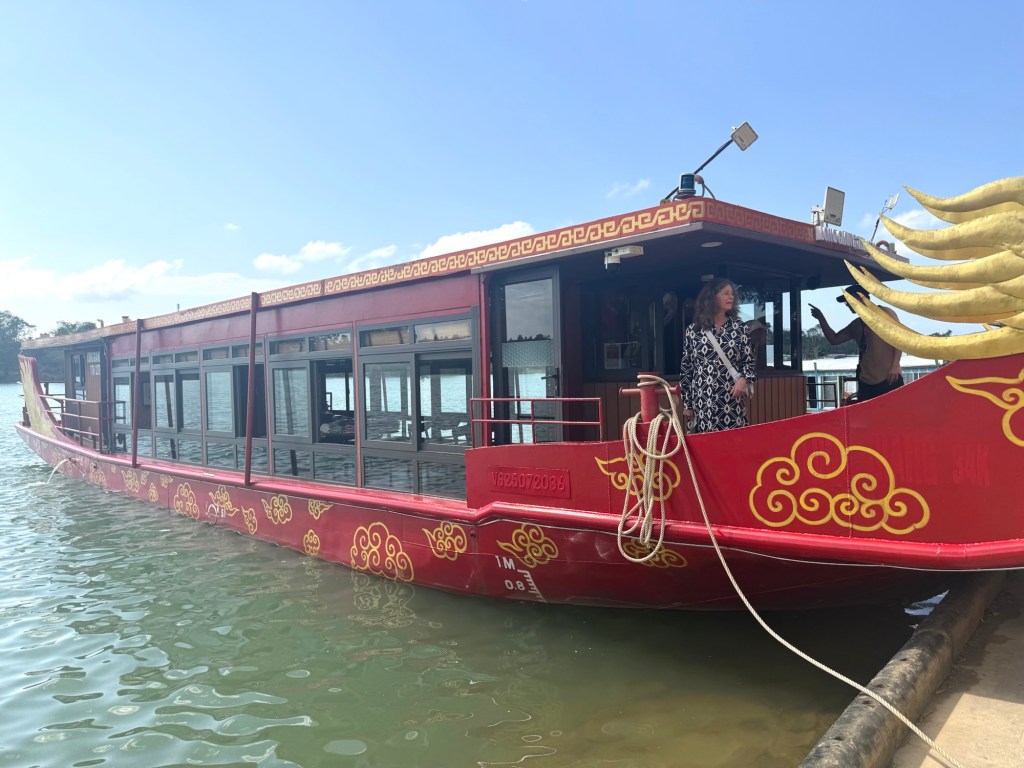
Tien put us on a boat from the Pagoda to our next stop. It was 50 foot long with seating for 30+. We were alone. Cost of transit, $27.
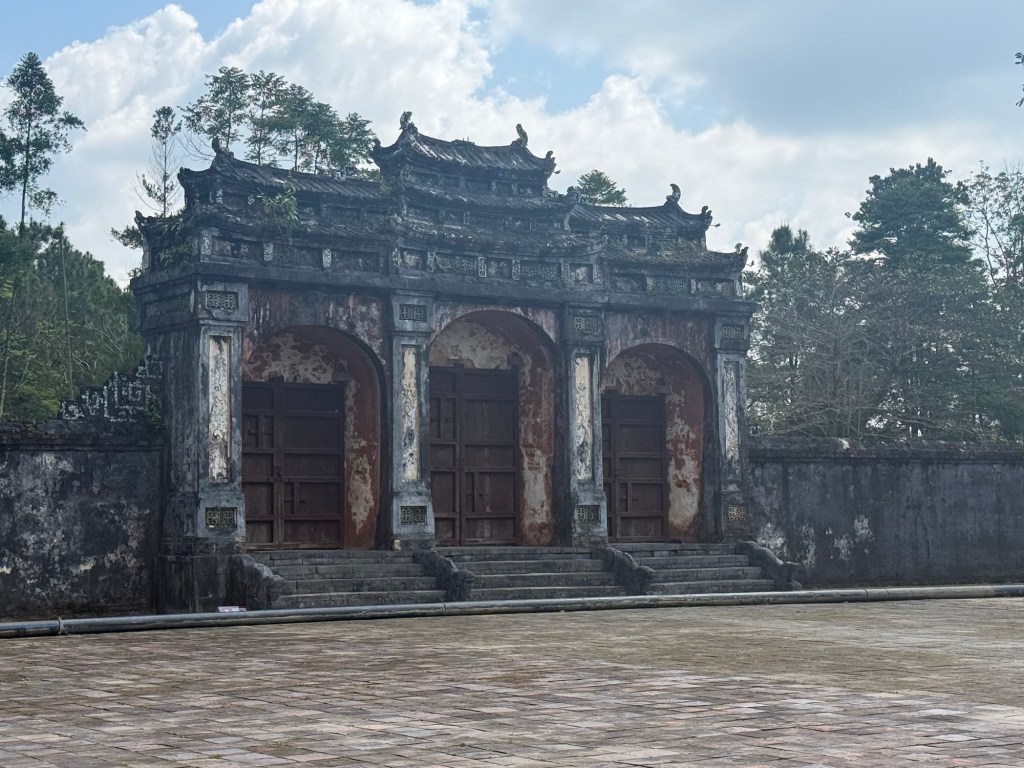
Our next stop was the tomb of Minh Mangh, the second Nguyen Empower. It was a huge complex dating to 1841 including a series of gates, homes for his Mandarins (ministers of finance, war, agriculture, etc) and his concubines. Mangh had 141 children as did many of the Emperors. A huge number of Vietnamese still have Nguyen as a surname today.
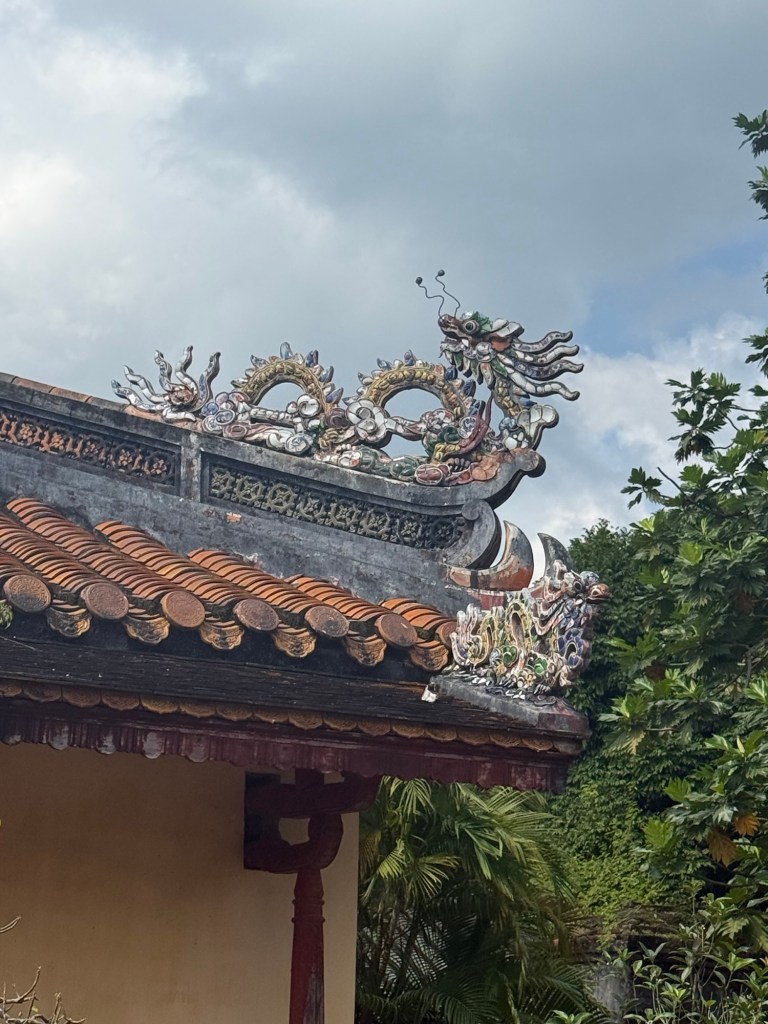
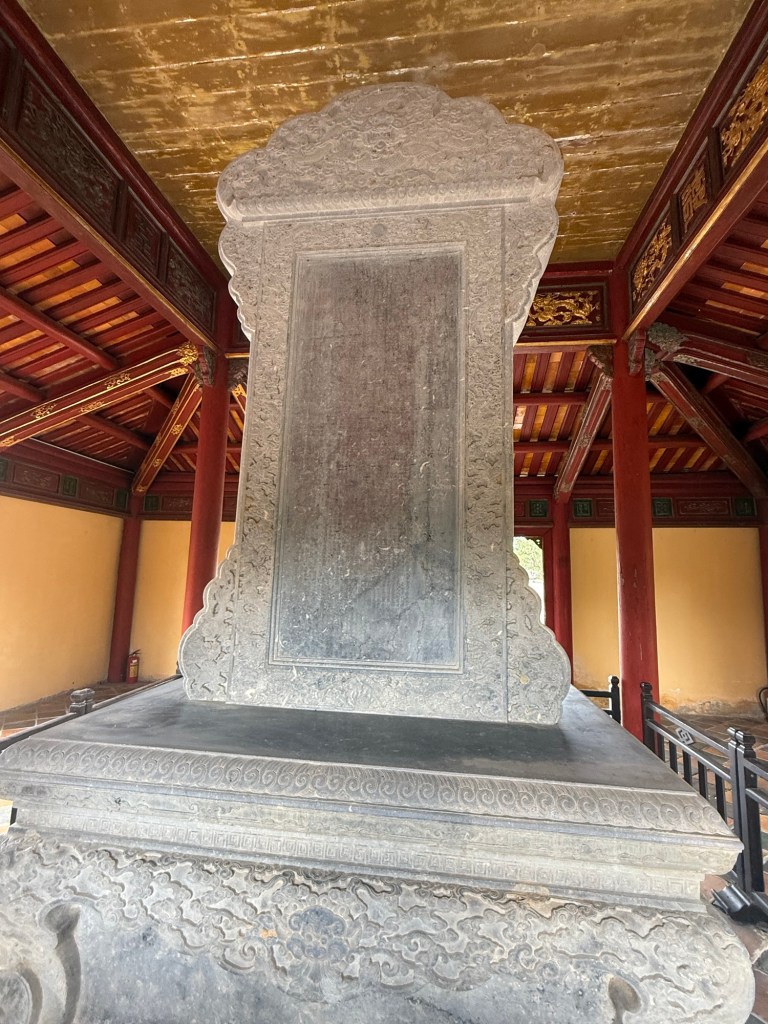

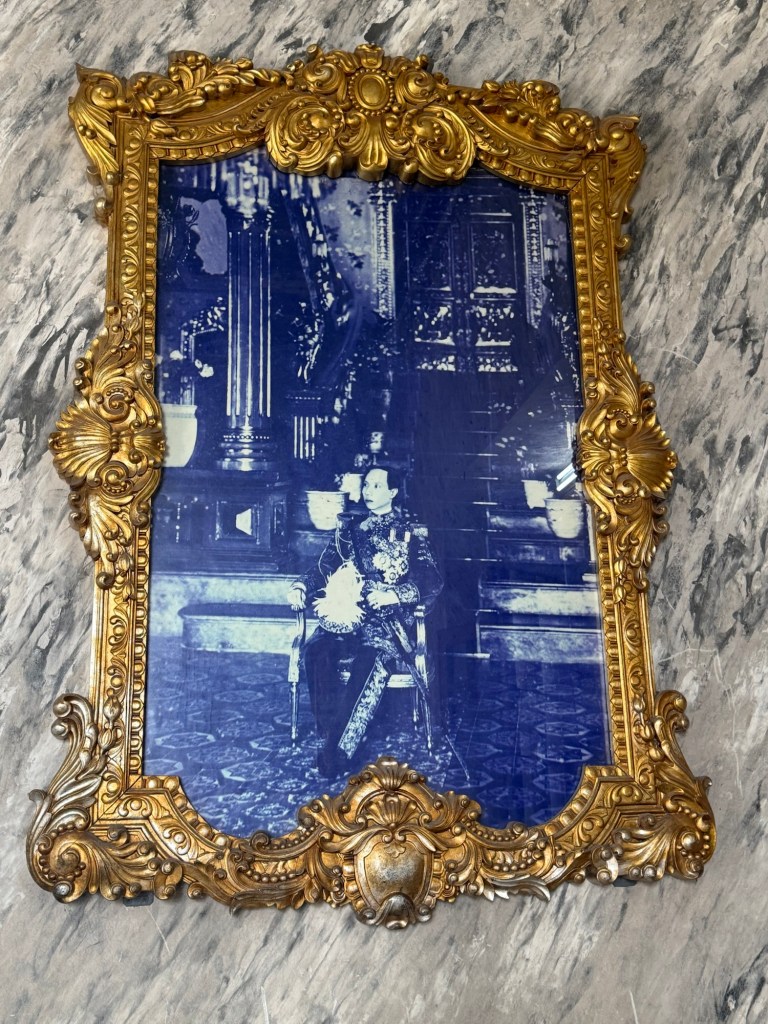
Jumping to the other end of the Dynasty we visited the Tomb of Kahl Dinh, the 12th and second to last Nguyen Emperor. Dinh was completely owned by the French. But he lived in royal splendor with all the trappings and wealth. His tomb, dating to 1925 was composed of beautiful, colorful ceramic mosaics. French influences were seen in the art, and in his ceremonial uniforms.
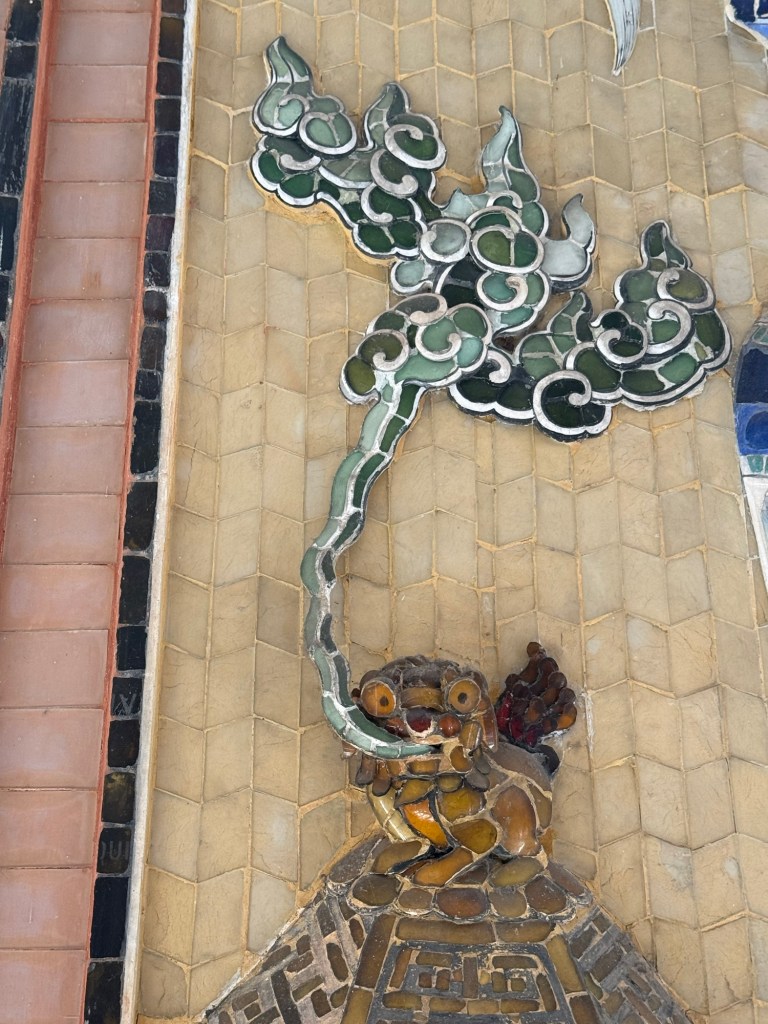
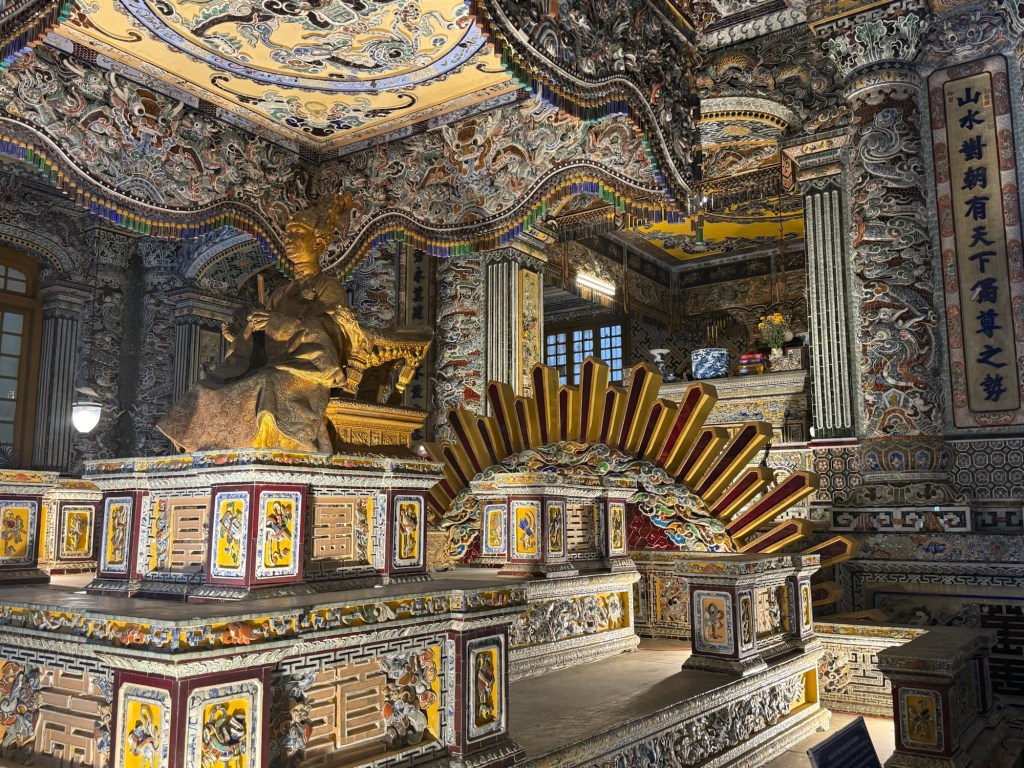
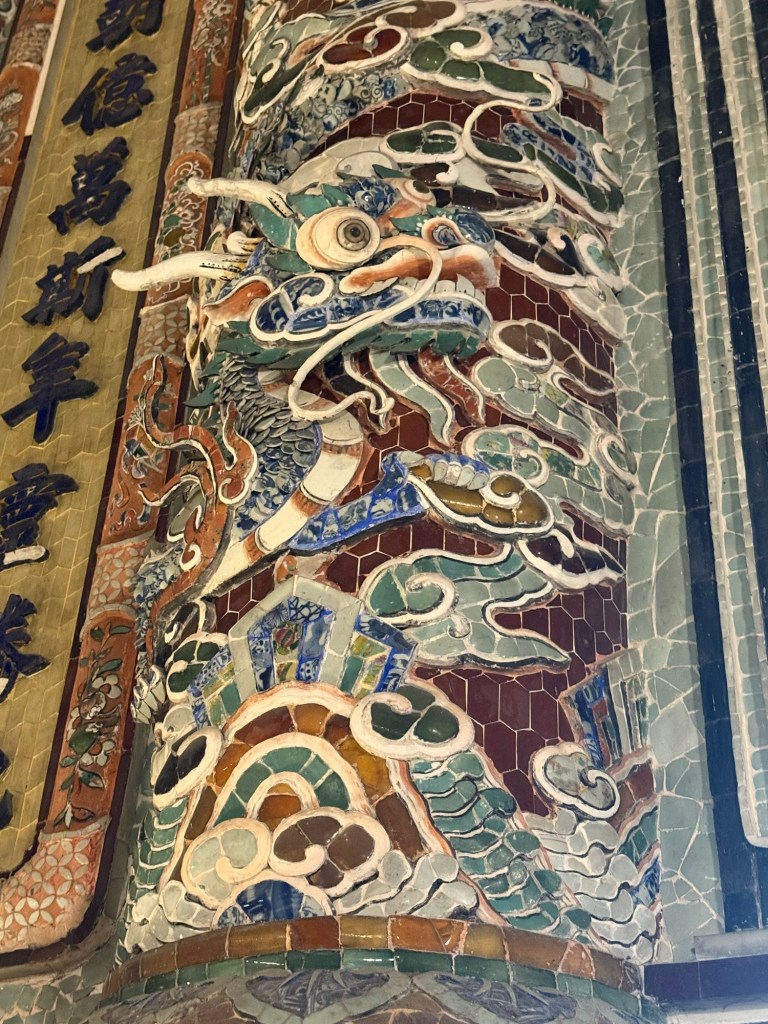
Great local lunch and more awesome coffee was arranged by Tien. Tien refers to American coffee as “Starsucks”. Some of the local flavors (sour river fish soup?) were a bit tough but the egg and salt coffee were sublime.
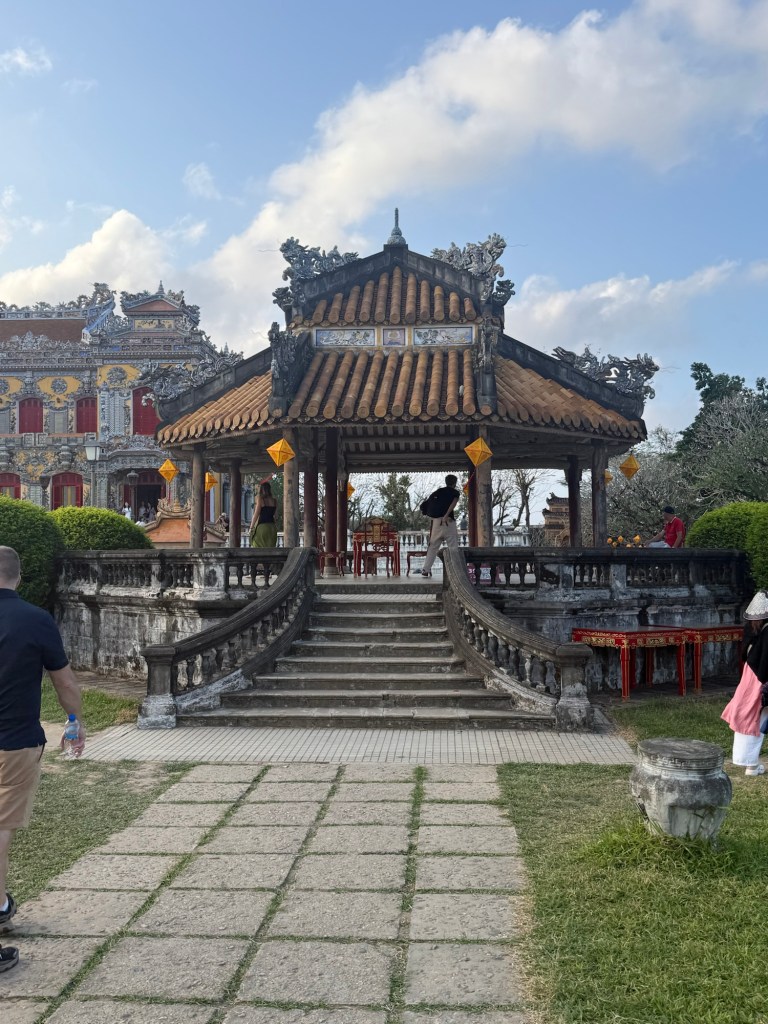
Our next stop was the Imperial City – really three cities the Citadel City for citizens, the Imperial City for the military and the Mandarins, and the Purple Forbidden City for the Emperor himself.
The Forbidden City was a huge 100 acre complex consisting of a barrier wall, a series of gates and a series of governmental management offices and temporary residences for the governing Mandarins. The complex contained the Emperors palace, library, treasury, temple, and gardens as well as palatial residences for his mother, mother in law and primary wives. More basic dormitories were on site for his hundreds of concubines.
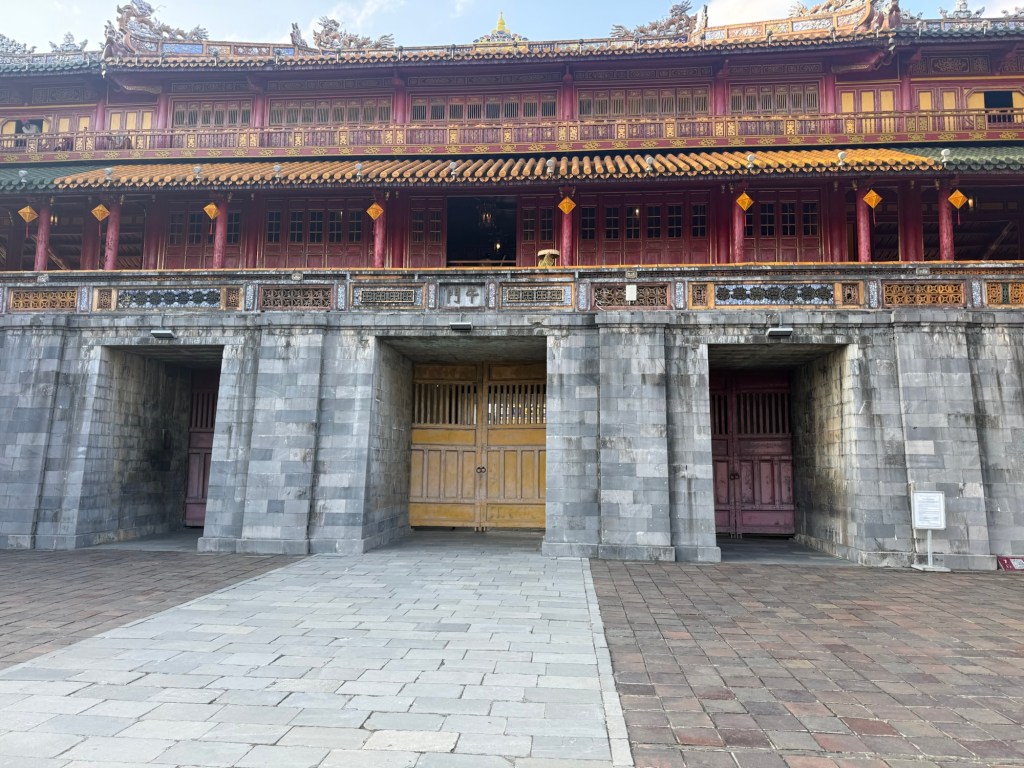
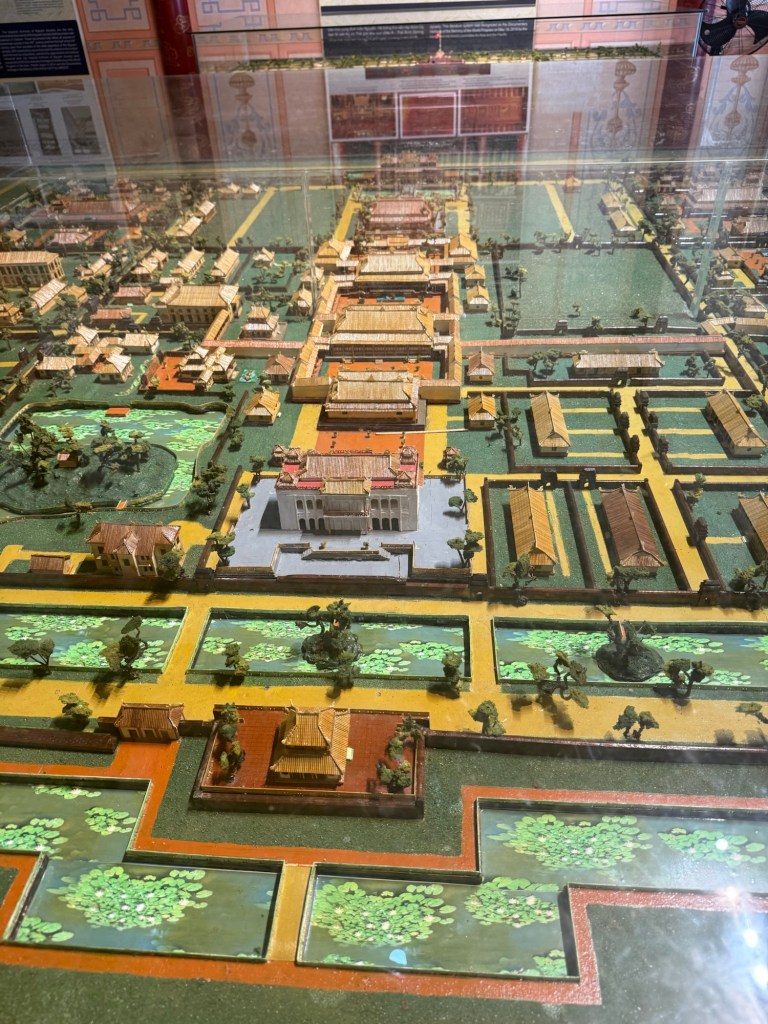
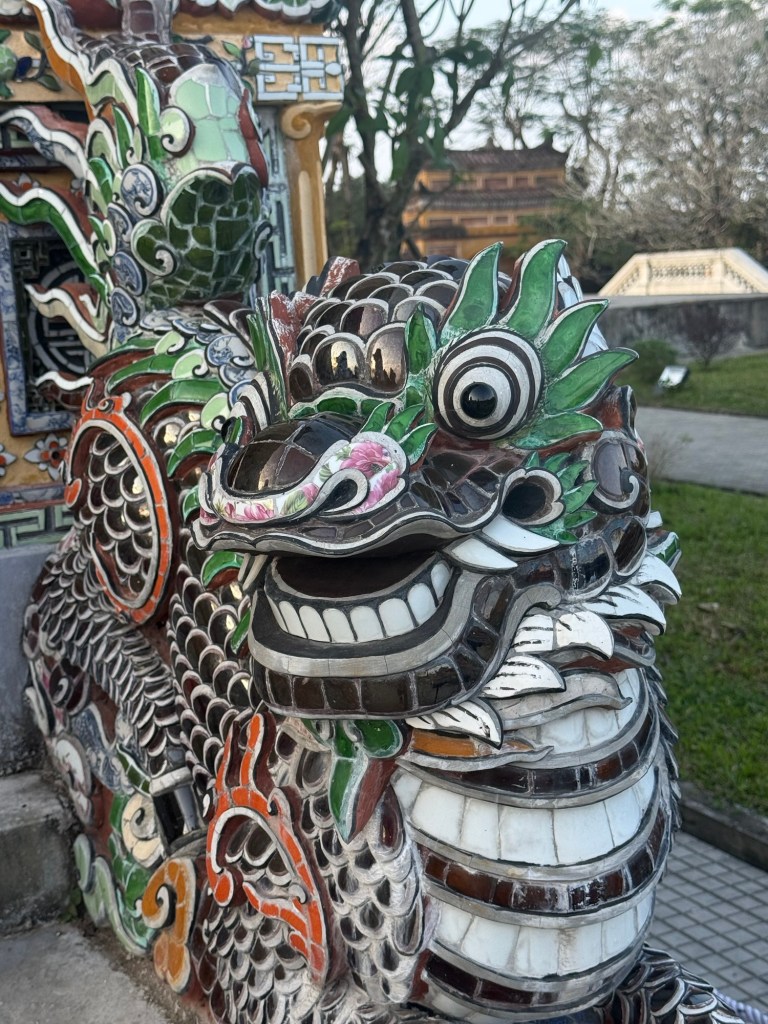
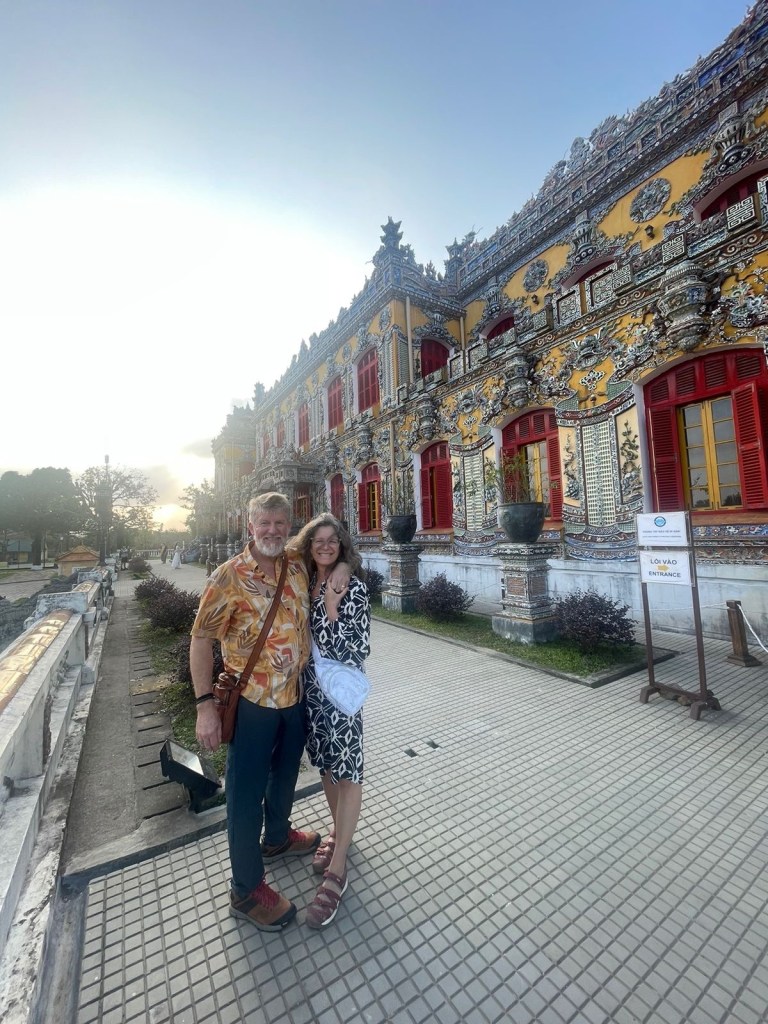
The center of the complex, including a series of three lesser palaces, had been destroyed by French bombs during a conflict with Emperor #8. They were in the early phases of reconstruction with UNESCO support.
The last stop for the day was a private dinner at the Temple of Princess Ngoc Sun Ho – actually not a Temple but one one of the private residences of a ruling Mandarin.
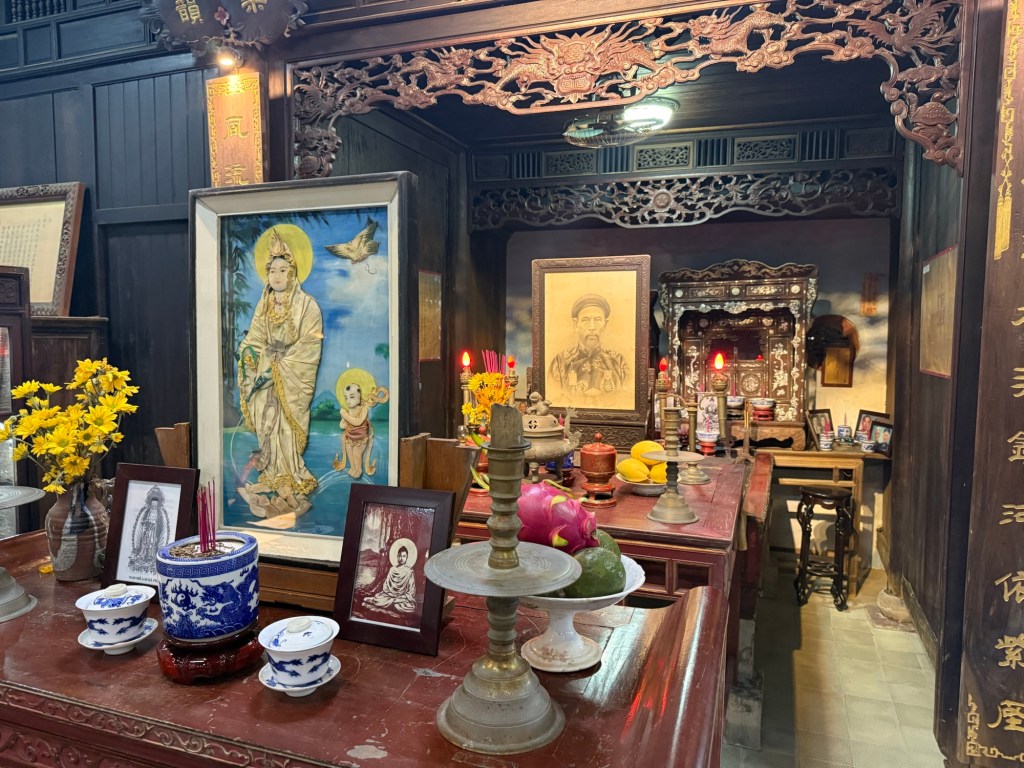
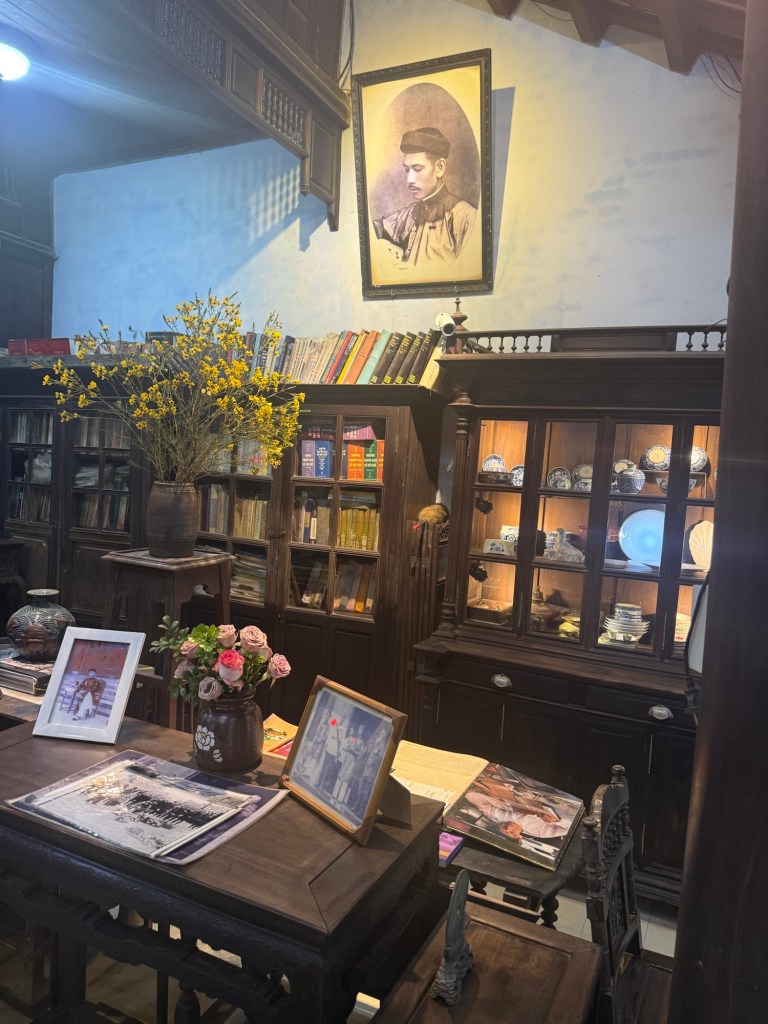
Our host Huong (perfume) carried us through the story of her 6th grandfather (a Principle of War under Emperor 12), and her 5th grandfather (a Mandarin under the last Emperor). This emperor, Bao Dai, was a bisexual French pawn who was eventually banished to Paris and died in 1997.
The Mandarin lost his first wife, a royal princess and built his home in honor of her. His second wife, with whom he had 14 children, was buried on the premises. The home was filled with photographs and historical family artifacts as well as a shrine to various ancestors.
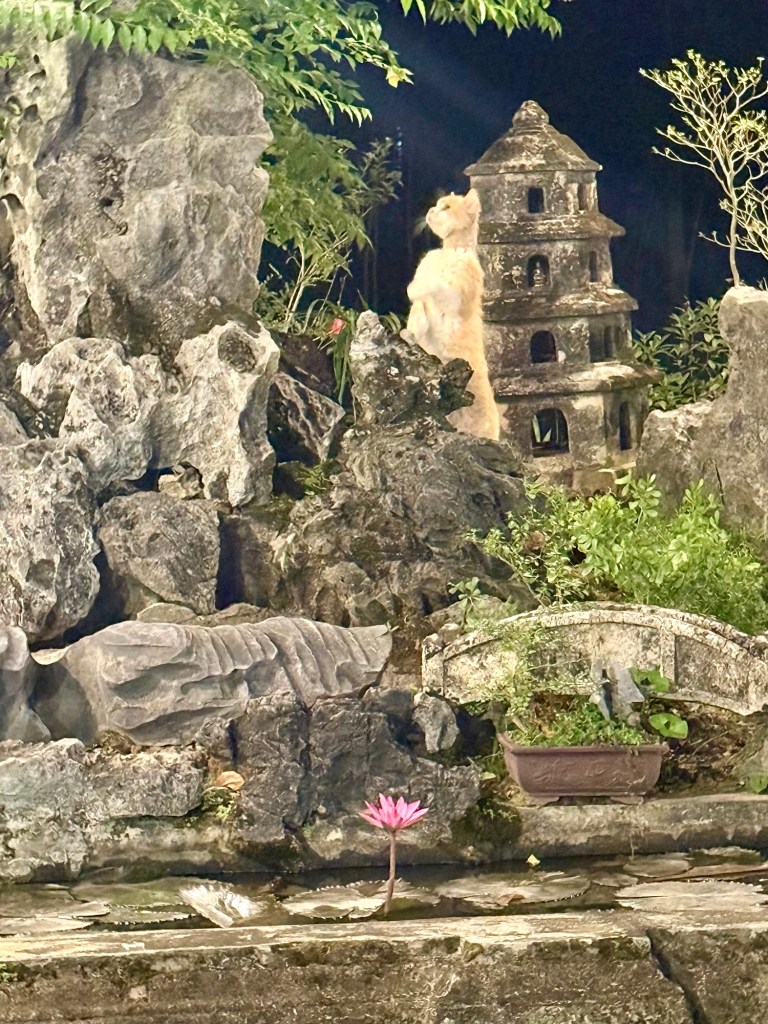
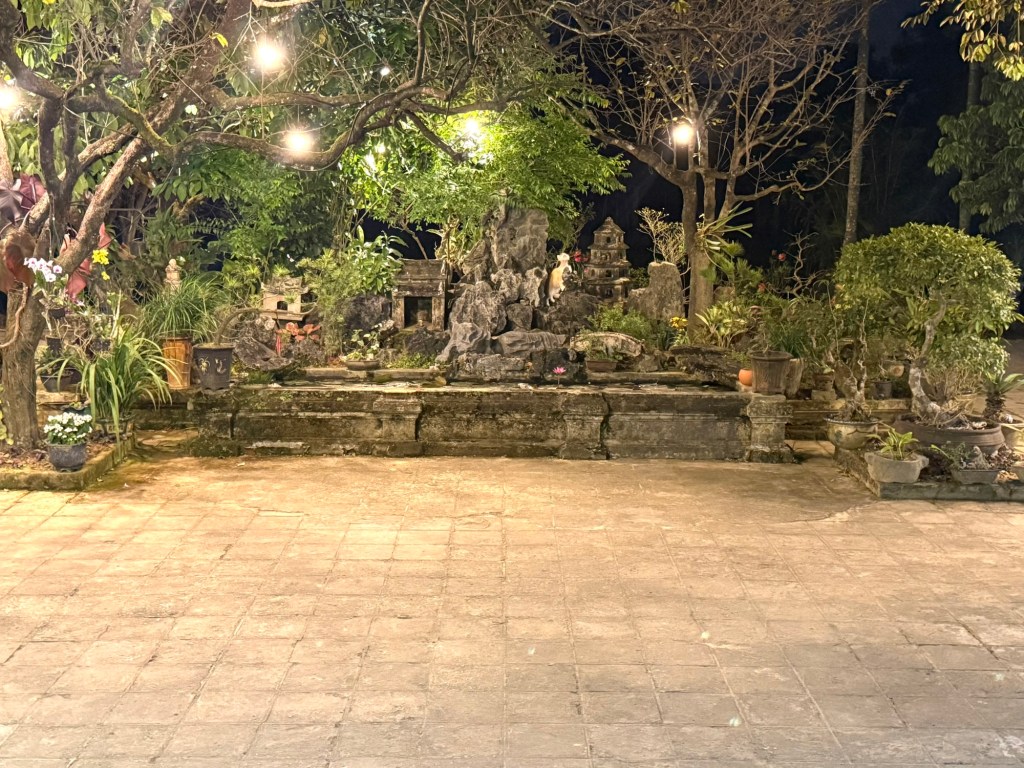
The gardens surrounding the home were incredible and Ms. Huong educated us on the feng shui principles involved in the layout of water features, seasonal gardening and stone features.
We discussed a variety of historic stories and language lessons over a traditional Mandarin dinner.
But the most interesting parts were insights into Huong’s life as a recent college graduate, fiancé, and typical 22 year old Viet trying to find her place in a changing culture.
 Mac and Juju explore Southeast Asia
Absolutely fascinating. you must be having a blast!
LikeLike